Here’s a startling truth: the average home gardener uses 30% more water than their plants actually need. In an era of increasing drought and water restrictions, this isn’t just wasteful—it’s unsustainable. Enter the soil moisture meter, a simple tool that transforms guesswork into precision, helping you become a true water-wise gardener. Whether you’re nurturing a container garden on your apartment balcony or managing a sprawling backyard vegetable plot, understanding exactly when your plants need water is the difference between thriving landscapes and costly plant losses.
But not all soil moisture meters are created equal. From basic analog probes that cost less than a latte to Bluetooth-enabled sensors that sync with your smartphone, the options can overwhelm even seasoned green thumbs. This comprehensive guide cuts through the marketing noise, focusing on the features, techniques, and scientific principles that matter most for water-conscious cultivation. We’ll explore how these devices work, what separates reliable tools from junk-drawer novelties, and how to integrate moisture data into a holistic approach to sustainable gardening.
Top 10 Soil Moisture Meters for Water-Wise Gardeners
Detailed Product Reviews
1. XLUX Soil Moisture Meter, Plant Water Monitor, Hygrometer Sensor for Gardening, Farming, Indoor and Outdoor Plants, No Batteries Required
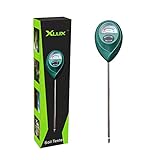
Overview: The XLUX Soil Moisture Meter is a straightforward analog tool designed for gardeners who want reliable moisture readings without digital complexity. This hygrometer uses a simple probe-and-dial mechanism to measure soil moisture levels deep within pots or garden beds, providing instant feedback that helps prevent both overwatering and underwatering.
What Makes It Stand Out: Its battery-free operation is a major advantage—just insert the probe and get immediate results. The large, easy-to-read dial displays three moisture zones across ten scales, making interpretation intuitive even for beginners. The single-probe design minimizes root disturbance compared to multi-prong alternatives, and it won’t extract significant soil when removed. The immediate reading capability means no waiting around for results.
Value for Money: At $12.99, this meter sits in the sweet spot for basic gardening tools. It’s affordable enough for casual plant owners while offering reliable performance that rivals more expensive options. While it only measures moisture, its durability and zero operating cost offset the need for battery replacements found in digital models.
Strengths and Weaknesses: Strengths include its simplicity, no battery requirement, quick readings, minimal root damage, and clear dial display. Weaknesses are its single-function limitation (moisture only), the 5-minute maximum soil contact time to prevent corrosion, inability to test hard or dry soil effectively, and lack of precision compared to digital meters. It also cannot test liquids.
Bottom Line: This is an excellent choice for gardeners seeking a fuss-free, reliable moisture meter. If you need only basic moisture detection without bells and whistles, the XLUX delivers consistent performance at a fair price. Perfect for indoor plant collections and small outdoor gardens.
2. YAMRON 4-in-1 Soil Moisture Meter, Digital Plant Temperature/Soil Moisture Test & PH Meter/Sunlight Intensity, Backlight LCD Display for Gardening, Farming and Outdoor Plants

Overview: The YAMRON 4-in-1 Soil Moisture Meter is a comprehensive digital gardening tool that consolidates four essential measurements into one device. Designed for serious gardeners and plant enthusiasts, it provides detailed analysis of soil moisture, pH levels, temperature, and sunlight intensity, enabling precise plant care decisions through scientific data rather than guesswork.
What Makes It Stand Out: This meter’s standout feature is its multifunctionality combined with user-friendly design. The large LCD screen with white backlight ensures readability in any lighting condition, while the 45° rotating head lets you check readings without bending over. The 2024 probe detection technology promises faster, more accurate measurements than older models. Visual content design on the display helps novices understand data through both numerical values and graphics.
Value for Money: At $27.98, this represents solid value considering it replaces four separate gardening tools. Purchasing individual moisture, pH, temperature, and light meters would cost significantly more. The digital precision and convenience features justify the premium over analog alternatives, especially for those managing diverse plant species with specific requirements.
Strengths and Weaknesses: Strengths include four-in-one functionality, quick accurate readings, backlight display, rotating head for ergonomic use, and low-battery alerts. Weaknesses include requiring four AAA batteries (not included), higher price point, more complex operation than simple analog meters, and inability to test liquids. It’s also unsuitable for very dry soil without pre-watering.
Bottom Line: Ideal for dedicated gardeners who want comprehensive soil analysis in one device. The YAMRON 4-in-1 justifies its higher price with genuine utility and convenience. If you’re serious about optimizing plant health through data-driven care, this digital meter is a worthwhile investment that will serve your garden well.
3. XLUX Long Probe Deep Use Soil Moisture Meter, Water Monitor Indicator Sensor, Hygrometer for Outdoor Indoor Large Pot Plants, Flower, Gardening, Farming

Overview: The XLUX Long Probe Soil Moisture Meter is a specialized variant of the standard XLUX model, engineered specifically for deep-container gardening. With a probe extended by 5.5 inches (14 cm), this tool reaches the root zone of large potted plants where moisture levels most critically affect plant health, providing the same reliable analog performance as its shorter counterpart.
What Makes It Stand Out: The elongated probe is the defining feature, allowing accurate moisture detection at the bottom of deep planters, raised beds, and large containers where surface testing fails. This prevents the common mistake of watering based on topsoil dryness while root zones remain saturated. It maintains all the benefits of the standard model: immediate readings, battery-free operation, and a clear large dial with three color-coded moisture zones.
Value for Money: Priced at $14.99—just $2 more than the standard version—this long-probe model offers exceptional value for anyone growing plants in containers deeper than 12 inches. The minimal price increase delivers significant practical benefit, making it a smart upgrade for serious container gardeners without jumping to expensive digital alternatives.
Strengths and Weaknesses: Strengths include the extended probe length, immediate readings, no battery requirement, minimal root disturbance, and easy-to-read dial. Weaknesses mirror the standard model: moisture-only measurement, 5-minute soil contact limit, unsuitability for hard or dry soil, and less precision than digital options. The longer probe may be slightly more fragile if mishandled.
Bottom Line: This is the go-to choice for gardeners with deep containers, large houseplants, or raised beds. The modest price premium over the standard model pays dividends in accurate root-zone monitoring. If your plants live in pots larger than 12 inches deep, this long-probe version is absolutely worth the upgrade.
4. XLUX Long Probe Deep Use Soil Moisture Meter Sensor, Water Monitor Indicator, Hygrometer for Outdoor Indoor Large Pot Plants, Flower, Gardening, Farming, 2 Pack

Overview: The XLUX Long Probe Soil Moisture Meter 2-Pack delivers double the utility for gardeners managing multiple planting zones. This bundle provides two identical long-probe analog meters, each featuring the extended 5.5-inch probe designed for deep container measurement, making it convenient to monitor moisture levels across different locations without constant cleaning and moving a single unit.
What Makes It Stand Out: The value proposition of receiving two professional-grade long-probe meters for under $20 is compelling. Each unit offers immediate, battery-free moisture readings with minimal root disturbance. The two-pack configuration is perfect for greenhouses, large gardens with multiple beds, or for keeping one indoors and another outdoors. It also provides a backup if one unit becomes damaged or corroded over time.
Value for Money: At $19.99 for two units, this package reduces the per-unit cost to approximately $10—making it cheaper than buying a single standard-length moisture meter elsewhere. For gardeners with extensive collections, the time saved by having dedicated meters for different areas alone justifies the purchase. This represents the best price-per-unit value in the XLUX lineup.
Strengths and Weaknesses: Strengths include exceptional bulk pricing, extended probes for deep containers, immediate readings, no batteries required, and minimal root damage. Weaknesses include the same functional limitations as single units: moisture-only detection, 5-minute maximum soil contact, unsuitability for hard soil, and analog precision limits. The two-pack may be unnecessary for casual gardeners with few plants.
Bottom Line: This 2-pack is unbeatable value for serious gardeners, greenhouse operators, or anyone with numerous plants across different locations. The combination of long-probe functionality and bulk pricing makes this a smart investment. If you need more than one moisture meter, this package saves money while delivering reliable performance.
5. SONKIR Soil pH Meter, MS02 3-in-1 Soil Moisture/Light/pH Tester Gardening Tool Kits for Plant Care, Great for Garden, Lawn, Farm, Indoor & Outdoor Use (Green)
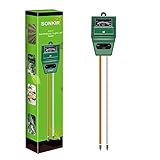
Overview: The SONKIR Soil pH Meter is a budget-friendly analog multi-tester that punches above its weight class by measuring three critical parameters: soil moisture, pH value, and sunlight intensity. This 3-in-1 tool eliminates battery concerns while providing essential diagnostics for gardeners who want more data than a simple moisture meter offers without entering the digital price tier.
What Makes It Stand Out: Its triple-function capability at a sub-$10 price point is remarkable. The function button allows easy switching between moisture, pH, and light modes, making it versatile for comprehensive plant health assessment. The sturdy, scientific design promises durability, while the compact portability makes it ideal for both indoor houseplant care and outdoor garden monitoring.
Value for Money: At $9.99, this is the most economical way to obtain three essential soil measurements. Purchasing even basic separate tools for these functions would cost two to three times more. For budget-conscious gardeners or beginners exploring soil science, this meter delivers exceptional functionality per dollar spent, with zero operating costs.
Strengths and Weaknesses: Strengths include three-in-one functionality, no battery requirement, extremely low price, portability, and sturdy construction. Weaknesses include analog limitations (slower readings, less precision), inability to test very dry soil without pre-watering, potential indicator stickiness in certain soils, and the need to manually switch functions. It cannot test liquids and requires careful cleaning between uses.
Bottom Line: This is the ideal starter tool for new gardeners or anyone wanting basic multi-parameter testing on a tight budget. While it lacks digital precision, its three-function capability and reliability make it a smart purchase. If you need more than just moisture data but aren’t ready to invest in digital equipment, the SONKIR delivers impressive value.
6. Soil Moisture Meter, 4-in-1 Moisture Meter for Plants, Tester for Moist, Light,Nutrients, pH, Soil Test Kit, Great for Garden, Lawn, Farm, Indoor & Outdoor Use, No Battery Required

Overview: This versatile 4-in-1 soil tester consolidates essential plant care diagnostics into one battery-free device. It simultaneously measures moisture, pH, nutrients, and light conditions, serving as a comprehensive solution for gardeners managing indoor and outdoor plants across diverse environments from houseplants to farm fields.
What Makes It Stand Out: The patented 90° rotating head revolutionizes user experience by eliminating the need to bend or crouch—simply adjust the dial from 1° to 90° for comfortable reading at any angle. Unlike traditional dual-probe meters that can damage delicate root systems, the upgraded single-probe design minimizes intrusion while delivering four simultaneous measurements. The inclusion of free plant growing guide and sandpaper demonstrates thoughtful attention to user needs.
Value for Money: At $15.99, this multi-function tool replaces four separate dedicated meters that could cost $50-80 combined. The analog design eliminates battery expenses and electronic failure points, offering long-term reliability. For gardeners seeking comprehensive soil analysis without accumulating multiple devices, this represents exceptional cost efficiency.
Strengths and Weaknesses: Strengths: Four functions in one compact unit; ergonomic rotating head; root-friendly single probe; instant results; no batteries required; helpful accessories included. Weaknesses: Single probe may compromise accuracy versus dedicated meters; requires 4+ inch insertion depth; analog display lacks digital precision; potential durability concerns with moving head mechanism.
Bottom Line: An innovative, cost-effective solution for serious gardeners wanting comprehensive soil diagnostics in one tool. The ergonomic design and multi-functionality outweigh minor accuracy trade-offs.
7. YINMIK Digital Soil Moisture Meter,Direct Soil EC Meter,3 in 1 Soil Hygrometer EC Indoor Plant Soil Moisture Meter for Water,House Plants,Great Hygrometer for Gardeners,Composters,Farmers,Nurseries

Overview: This digital 3-in-1 soil analyzer brings laboratory-grade precision to home gardening, measuring moisture, electrical conductivity (EC), and temperature simultaneously. Using Frequency Domain Reflectometry (FDR) technology, it provides scientifically accurate readings for serious growers who demand data-driven plant care decisions across gardens, nurseries, and composting operations. The clear LCD display eliminates guesswork by presenting exact numerical values rather than ambiguous analog scales.
What Makes It Stand Out: The FDR moisture detection method offers superior accuracy compared to analog alternatives, quantifying moisture from 0-100% with clear optimal ranges (21-40% for most plants). The EC measurement eliminates tedious soil slurry preparation by directly assessing nutrient availability through conductivity readings from 0.01-20.00 mS/cm. Combined with simultaneous temperature monitoring, this creates a complete soil health profile for precision agriculture. Unlike basic meters, it scientifically captures subtle moisture changes that prevent both overwatering and drought stress.
Value for Money: At $29.99, this digital instrument costs double basic analog meters but delivers professional-grade accuracy that prevents costly plant losses from incorrect watering or fertilization. For commercial growers, composters, and serious hobbyists, the scientific precision and time savings justify the premium over traditional probes. The ability to measure EC directly saves hours of lab work and helps optimize fertilizer investment.
Strengths and Weaknesses: Strengths: Scientific FDR accuracy; digital EC measurement; simultaneous temperature reading; clear LCD display; eliminates guesswork; suitable for hydroponics; captures subtle moisture changes. Weaknesses: Higher price point; requires careful probe cleaning; battery-powered (implied maintenance); more fragile than analog models; steeper learning curve for interpreting EC values; not suitable for casual gardeners.
Bottom Line: Ideal for data-driven gardeners and commercial growers who prioritize scientific accuracy over simplicity. The professional features justify the investment for serious plant cultivation and compost management.
8. DAQVQ Soil Moisture Meter, Plants Moisture Meter Upgraded-Large Screen-Soil Hygrometer with Light- Plant Water Meter for Indoor and Outdoor Hous Plants, Garden, Farm, Lawn Soil Tester-Spring-Green

Overview: Marketed as a 2025 upgraded model, this soil moisture meter focuses on enhanced visibility and user experience. It features an enlarged 1.96-inch dial—significantly larger than standard 1.2-inch displays—and incorporates an innovative LED lighting system for reading measurements in low-light conditions. This makes it practical for checking indoor plants in dim corners or evening garden maintenance without additional lighting equipment.
What Makes It Stand Out: The built-in LED illumination addresses a genuine pain point for gardeners, eliminating flashlight juggling during evening checks. The near 2-inch dial provides exceptional readability for users with vision difficulties. While the description mentions both “single-probe” and “two quality metal single-probes,” the dual-probe configuration likely improves accuracy while maintaining root-conscious design. The “Spring-Green” color adds aesthetic appeal to this functional tool.
Value for Money: Priced at $14.99, this meter sits in the competitive mid-range while offering premium visibility features typically absent in analog models. The LED functionality adds value without the cost of full digital conversion, making it accessible for budget-conscious gardeners wanting enhanced usability. The advanced technology claims suggest improved accuracy over basic models at minimal price premium.
Strengths and Weaknesses: Strengths: Large, easy-read dial; innovative LED lighting; upgraded accuracy claims; root-friendly probe design; intuitive operation; competitive pricing; aesthetic color option. Weaknesses: “Light” in title is misleading (no ambient light sensor); contradictory probe description; LED requires power source (battery status unclear); durability of lighting component untested; “2025 upgraded” claim is premature marketing.
Bottom Line: An excellent choice for gardeners prioritizing readability and low-light functionality. The visibility enhancements make routine moisture checks effortless, though product descriptions could be more transparent about features.
9. GROWIT Plant Moisture Meter - Accurately Tells You When to Water Your Plants - Perfect Stocking Stuffers Gift - No Battery Needed

Overview: This analog moisture meter strips plant care down to essentials, delivering instant soil moisture readings without complexity. Marketed heavily as a gift item and “stocking stuffer,” it targets casual plant owners and beginners seeking a straightforward solution to prevent overwatering—the most common cause of houseplant demise. Its cheerful branding emphasizes joy and gifting over technical specifications.
What Makes It Stand Out: The aggressive gift-oriented marketing distinguishes this from utilitarian competitors, positioning it as a thoughtful present for plant lovers. Its absolute simplicity—just insert and read—removes all barriers for technologically hesitant users. The no-battery analog design ensures immediate, hassle-free operation without maintenance concerns, making it perfect for busy individuals, elderly gardeners, or office workers maintaining desk plants.
Value for Money: At $11.99, this is among the most affordable reliable moisture meters available. The low price point makes it ideal for gifting multiples or equipping several rooms without financial strain. While it lacks advanced features, it performs its singular function competently, offering genuine value for basic moisture monitoring needs. The gift-ready presentation eliminates additional wrapping costs.
Strengths and Weaknesses: Strengths: Extremely affordable; gift-friendly marketing and packaging; simple operation; no batteries; instant readings; lightweight and portable; prevents common overwatering mistakes. Weaknesses: Limited to moisture only; less durable than premium models; analog scale may be less precise; no advanced diagnostics; marketing emphasis may oversimplify complex plant care needs; not suitable for serious gardening.
Bottom Line: Perfect for beginners, casual plant owners, and gift-giving occasions. Delivers reliable basic functionality at an unbeatable price point, though serious gardeners will require more comprehensive diagnostic tools.
10. XLUX Soil Moisture Sensor Meter Water Monitor, Hygrometer for Gardening, Farming,Plants, No Batteries Required, 2 Pack

Overview: This two-pack analog moisture meter set provides immediate soil moisture readings for gardeners managing multiple plants or locations. Each unit features a large, easy-to-read dial with three color-coded zones across ten scales, enabling quick assessment of whether soil is dry, moist, or wet without digital complexity or power requirements. The retail packaging makes it suitable for gifting or splitting between locations.
What Makes It Stand Out: The dual-pack configuration offers exceptional value for households with numerous plants or for sharing between gardening partners. The immediate needle response provides instant gratification and rapid assessment of multiple pots. The manufacturer’s explicit caution against leaving the probe in soil for more than five minutes demonstrates unusual honesty about corrosion risks, helping users avoid common mistakes that destroy lesser meters. The individual retail boxes add professional presentation.
Value for Money: At $15.99 for two units, the per-meter cost of $8 represents outstanding value. This pricing structure makes it economical to keep one meter upstairs and another downstairs, or to gift the second to a fellow gardener. The analog design eliminates ongoing battery costs, while the retail-ready individual packaging adds gifting versatility. For multi-location plant care, this two-pack approach saves time and money.
Strengths and Weaknesses: Strengths: Excellent two-pack value; immediate readings; large, clear dial; single-probe minimizes root damage; honest usage guidelines; individually packaged for gifting; no battery costs. Weaknesses: Measures moisture only; risk of corrosion if left in soil; cannot test hard soil or liquids; analog precision limitations; probe durability concerns with repeated use; requires manual cleaning after each use.
Bottom Line: Outstanding value for multi-plant households. The two-pack format and immediate readings make routine moisture checks efficient, though users must follow corrosion prevention guidelines carefully for longevity.
Why Soil Moisture Matters More Than You Think
Water-wise gardening isn’t just about using less water—it’s about using water intelligently. Your soil’s moisture content directly impacts nutrient availability, root development, and plant stress levels. A soil moisture meter becomes your underground eyes, revealing what’s happening in the root zone where it truly counts.
The Science Behind Root Health and Water Uptake
Plant roots don’t just absorb water—they require a delicate balance of moisture and oxygen to function. When soil becomes waterlogged, oxygen gets pushed out of pore spaces, suffocating roots and creating anaerobic conditions that breed root rot pathogens. Conversely, overly dry soil causes roots to desiccate and die back, reducing a plant’s ability to take up nutrients even when water returns. The sweet spot, called “field capacity,” occurs when large pores have drained but smaller ones retain moisture. A quality meter helps you identify this critical threshold consistently.
How Overwatering Silently Kills Your Plants
Overwatering is the number one cause of houseplant death and a major problem in outdoor gardens. The damage happens slowly—yellowing leaves, stunted growth, wilting despite wet soil. By the time symptoms appear, root systems may be beyond recovery. Soil moisture meters detect saturation before it becomes lethal, giving you actionable data to adjust irrigation schedules. For water-wise gardeners, this prevention translates into healthier plants and significantly reduced water bills.
Understanding Different Types of Soil Moisture Meters
The technology behind moisture measurement varies dramatically, affecting both accuracy and price. Understanding these differences helps you select a tool that matches your gardening style and precision needs.
Analog Meters: Simple, Battery-Free Solutions
Analog meters operate using a simple electrical principle: moisture conducts electricity. Two metal probes create a circuit through the soil, and the resistance measurement moves a needle across a dial. These units are inexpensive, never need batteries, and provide instant readings. However, they’re susceptible to corrosion and can give false readings in salty or heavily fertilized soils. For casual gardeners monitoring a few containers, analog models offer adequate performance at minimal cost.
Digital Meters: Precision at Your Fingertips
Digital meters convert analog electrical signals into numerical values, typically displayed on an LCD screen. Most offer multiple measurement modes (moisture, pH, light) and provide more granular readings than their analog cousins. The digital display eliminates interpretation errors—you’re not guessing whether the needle points to “moist” or “wet.” Look for models with auto-shutoff features to preserve battery life and waterproof probe connections for longevity.
Bluetooth-Enabled Smart Sensors
The newest generation of moisture meters stays buried in your soil, transmitting data wirelessly to your smartphone. These sensors track moisture trends over time, alerting you when thresholds are reached. Many integrate with weather data to predict watering needs, creating a truly intelligent irrigation system. While requiring initial setup and occasional battery changes, they excel for busy gardeners or those managing multiple zones remotely. The data logging capabilities help you understand your soil’s unique drying patterns across seasons.
Tensiometers: Professional-Grade Accuracy
Tensiometers measure soil water tension—the force roots must exert to extract moisture. A sealed tube with a porous ceramic tip is buried in the soil, and a vacuum gauge measures how hard water is being pulled from the tube. This directly correlates to plant-available water, making tensiometers the gold standard for agricultural applications. They’re more expensive and require careful installation, but provide unparalleled accuracy for serious vegetable growers and landscape professionals.
Key Features That Separate Good Meters from Great Ones
When evaluating options, certain features dramatically impact real-world usability and reliability. Prioritize these elements based on your specific gardening context.
Probe Length and Material: Getting to the Root Zone
Probe length determines how deeply you can measure—a critical factor for established perennials and vegetables. Six-inch probes work for containers and shallow-rooted annuals, but trees and shrubs need 12-inch or longer probes to reach their feeding zones. Stainless steel probes resist corrosion better than copper or aluminum, crucial for long-term accuracy. Some premium models feature interchangeable probes, letting you switch lengths based on the plant you’re testing.
Display Readability: From Garden Brightness to Dusk
You’ll often check moisture during early morning or evening watering sessions. Backlit displays are invaluable for low-light conditions, while high-contrast screens remain visible in bright sunlight. Analog dials should have clear demarcations between dry, moist, and wet zones. Digital displays with large numerals reduce squinting and misreading. Consider where and when you’ll primarily use the tool—container gardeners on sunny patios need different display features than indoor plant enthusiasts.
Battery Life and Power Options
Digital meters typically use button cell batteries lasting 6-12 months with regular use. Smart sensors may need AA or AAA batteries replaced annually. Some innovative models now feature solar panels for trickle charging, ideal for permanently installed sensors. Check battery accessibility—compartments should be easy to open without tools but sealed against moisture intrusion. Meters with auto-shutoff prevent accidental battery drain when left on.
Accuracy Matters: What Water-Wise Gardeners Need to Know
A meter’s precision determines its usefulness. Understanding accuracy limitations helps you interpret readings correctly and avoid costly watering mistakes.
Understanding Measurement Scales and Units
Most consumer meters use arbitrary scales (1-10 or dry-moist-wet) rather than scientific units like volumetric water content (VWC) or soil water potential. While less precise, these scales are easier for gardeners to interpret. Learn what number represents optimal moisture for your plants—most vegetables thrive at 4-6 on a typical 1-10 scale, while succulents prefer 2-3. Track how readings correlate with plant performance over time to develop your own calibration.
Calibration: Your Meter is Only as Good as Its Baseline
Even the best meters drift over time, especially analog models. Test your meter in distilled water (should read maximum saturation) and completely dry soil (should read minimum) monthly. Some digital models include calibration mode for resetting baseline values. For smart sensors, firmware updates often include calibration adjustments. Never assume a new meter is perfectly calibrated—verify it against known conditions before trusting its readings with your garden.
Matching Your Meter to Your Garden’s Unique Needs
Different growing situations demand different monitoring approaches. A one-size-fits-all strategy leads to inaccurate assessments and poor plant health.
Container Gardens vs. In-Ground Plantings
Containers dry out faster and unevenly—moisture at the surface can be dry while the bottom remains saturated. For pots, use meters with slender probes that reach the root ball’s center without damaging roots. Check multiple spots around the container’s perimeter. In-ground gardens benefit from longer probes that bypass surface mulch and reach the active root zone. Stationary sensors work well for permanent landscape plantings but are impractical for rotating container gardens.
Vegetable Beds: Consistent Moisture for Abundant Harvests
Vegetables, especially fruiting crops like tomatoes and cucumbers, require consistent moisture to prevent blossom end rot and cracking. Take readings at the same time daily, focusing on the 6-8 inch depth where most feeder roots reside. Create a simple log tracking moisture levels alongside harvest yields to identify optimal watering patterns. For raised beds, check near the center where soil stays moist longest, and at edges that dry faster.
Ornamental Landscapes: Diverse Plant, Diverse Needs
A mixed border containing roses, lavender, and ferns presents wildly different moisture requirements. Use a meter with a clear, quick-read display to efficiently check multiple species during one garden walk. Tag plants with similar needs together and sample representative specimens rather than testing every individual. For established landscapes, focus on new plantings and specimens showing stress—mature, healthy plants often need less frequent monitoring.
Soil Type Considerations: One Size Doesn’t Fit All
Your native soil structure dramatically affects moisture retention and meter performance. Understanding these interactions prevents misinterpretation of readings.
Sandy Soils: Fast Drainage, Frequent Checks
Sandy soils drain rapidly, often within hours of watering. Meters may show quick transitions from wet to dry, requiring more frequent monitoring. The loose structure makes probe insertion easy but can give inconsistent readings if the probe contacts a large sand particle versus moist organic matter. Take multiple readings and average them. Consider smart sensors that alert you when moisture drops below threshold, as sandy soils can catch you off-guard with sudden dryness.
Clay Soils: Slow Saturation, Overwatering Risks
Clay holds water tightly, often staying moist on a meter while plants experience water stress because roots can’t extract it. Readings may stay in the “moist” range for days after irrigation. Learn to interpret lower numbers on the scale as adequate for clay—what reads as “dry” on sandy loam might be perfect for clay. Probe insertion requires more force; wiggle the probe gently to create a pathway rather than forcing it, which can bend probes and create compaction.
Loam and Amended Soils: The Sweet Spot
Well-amended garden soil with compost provides ideal moisture consistency and meter performance. Readings accurately reflect plant-available water, and probes insert smoothly. Still, check multiple depths—amendments often concentrate near the surface. If you’ve double-dug beds or use no-till methods, probe vertically to avoid damaging soil structure you’ve worked hard to create.
Beyond Moisture: Multi-Function Meters Worth Considering
While moisture is your primary concern, additional sensors can provide valuable context for plant health decisions.
pH Monitoring: The Unsung Hero of Plant Health
Soil pH affects nutrient availability more than most gardeners realize. Meters combining moisture and pH sensors help you understand why plants struggle despite perfect watering. Blueberries need acidic conditions (pH 4.5-5.5), while most vegetables prefer slightly acidic to neutral (6.0-7.0). A combination meter lets you spot pH-related problems before they cause visible symptoms. Note that combination meters require more frequent calibration and work best in moist soil.
Light and Temperature Sensors: Complete Environmental Picture
Some advanced meters include ambient light and soil temperature readings. Soil temperature influences microbial activity and root function—most vegetables grow poorly below 50°F. Light sensors help position shade-loving plants correctly. While not essential for pure moisture management, these features help diagnose complex plant problems and optimize growing conditions holistically.
Price vs. Value: Investing Wisely in Your Garden’s Future
Soil moisture meters range from under $10 to over $200. Understanding what you get at each price point prevents overspending on unnecessary features or buying junk that fails mid-season.
What to Expect at Different Price Points
Under $20: Basic analog or simple digital meters with single-function moisture detection. Expect stainless steel probes but plastic housings that may not withstand heavy use. Accuracy is adequate for casual container gardening but may drift quickly. These are entry-level tools for learning moisture management basics.
$20-60: Mid-range digital meters with backlit displays, auto-shutoff, and often multi-function capabilities (pH, light). Build quality improves with better seals and more durable probe connections. Accuracy remains within acceptable ranges for home gardening. This is the sweet spot for most water-wise gardeners seeking reliable performance without professional-grade investment.
$60+: Smart sensors with Bluetooth connectivity, data logging, and weather integration. Build quality matches professional tools with replaceable probes and weatherproof construction. Accuracy is high and stable. Worth the investment for large gardens, serious food production, or gardeners who travel frequently and need remote monitoring.
Proper Technique: Getting Reliable Readings Every Time
Even the best meter produces garbage data with poor technique. Master these methods for consistent, actionable information.
Probe Placement: Avoiding False Readings
Never take readings against container walls or directly next to drip irrigation emitters—these create artificial wet and dry zones. Insert probes halfway between the plant stem and container edge for representative samples. In garden beds, move mulch aside and insert probes vertically into native soil. Angled insertion can cause the probe to slide along a root or rock, giving inaccurate moisture contact.
Depth Matters: Shallow Roots vs. Deep Established Plants
Annual vegetables concentrate roots in the top 6-8 inches, while established trees feed from 12-18 inches deep. Insert probes to the appropriate depth for the plant you’re testing—shallow readings for seedlings, deeper for mature specimens. For deep-rooted plants, take readings at multiple depths to understand water penetration. A wet surface with dry subsoil means water isn’t reaching roots.
Timing: When to Check for Actionable Data
Morning readings (before 10 AM) reflect overnight recovery and provide the best baseline for watering decisions. Afternoon readings can be artificially high due to heat expanding soil moisture. After irrigation, wait 30-60 minutes for water to settle before checking—immediate readings show temporary saturation, not plant-available moisture. For consistent tracking, always measure at the same time of day.
Common Mistakes That Compromise Your Readings
Learning what not to do is as important as proper technique. These errors lead to misguided watering that harms plants and wastes water.
Pushing Too Hard: Damaging Probes and Roots
Forcing a probe through compacted soil or around rocks bends sensors and creates air gaps that give false dry readings. If you meet resistance, pull back slightly and try a different spot. Never use a moisture meter as a soil auger—the delicate sensors at the probe tip break easily under lateral pressure. A bent probe is a ruined meter; replace it immediately as readings become unreliable.
Single-Spot Sampling: The Danger of Assumptions
One reading tells you about one cubic inch of soil. Take at least three readings around each plant and average them, especially in containers where moisture gradients are steep. In garden beds, sample representative areas rather than assuming uniformity. A single wet spot from a recent spill can mislead you into skipping needed irrigation.
Ignoring Temperature Effects on Readings
Cold soil increases electrical resistance, making dry soil read wetter. Hot soil does the opposite. Most meters are calibrated for 65-75°F soil temperatures. In early spring or during heat waves, readings may be off by 20-30%. Note soil temperature when taking readings and adjust your interpretation accordingly—what reads as “moist” at 50°F might be “dry” at 80°F.
Maintenance and Care: Extending Your Meter’s Lifespan
A well-maintained meter lasts years; a neglected one fails in months. Implement these practices to protect your investment.
Cleaning Protocols: Preventing Cross-Contamination
After each use, wipe probes with a clean, damp cloth to remove soil particles and prevent disease transfer between plants. For salt buildup or fertilizer residue, use a mild vinegar solution followed by distilled water rinse. Never submerge the entire meter—water entering the housing damages electronics. Dry probes thoroughly before storage to prevent corrosion.
Storage Solutions: Protecting Sensitive Electronics
Store meters indoors in a dry location, not in a humid garden shed where condensation forms. Remove batteries from digital meters during winter storage to prevent corrosion. Hang meters rather than tossing them in drawers where probes can bend. For smart sensors, bring them indoors if temperatures drop below freezing, as ice can crack ceramic tips.
When to Replace: Knowing Your Meter’s Limits
Even quality meters lose accuracy after 2-3 seasons of heavy use. If readings become erratic despite fresh batteries and proper cleaning, or if the probe develops pitting corrosion, it’s time for replacement. Keep a backup meter to periodically cross-check readings—significant discrepancies indicate one meter has failed. For smart sensors, manufacturers typically support firmware updates for 3-5 years before obsolescence.
The Environmental Impact of Precision Watering
Using a moisture meter isn’t just good for your plants—it’s a meaningful act of environmental stewardship with measurable benefits.
Water Conservation and Reduced Runoff
A typical 1,000 square foot vegetable garden uses 600 gallons per week during summer. Precision watering with meter guidance can reduce this by 30-40%, saving over 7,000 gallons annually. More importantly, it prevents runoff that carries fertilizers and pesticides into waterways. By watering only when needed, you maintain soil structure and reduce erosion, creating a healthier ecosystem in your backyard.
Integrating Moisture Data into Your Watering Routine
Collecting readings is pointless without a system to act on the information. Build moisture monitoring into your gardening workflow.
Creating a Garden Hydration Schedule
Use a simple notebook or spreadsheet to log daily readings for key plants. After two weeks, patterns emerge—perhaps your south-facing containers need water every 36 hours, while shaded beds last five days. Create zone-based schedules rather than garden-wide watering days. Adjust for weather: skip irrigation if rain is forecast and readings are borderline. Over time, you’ll water proactively based on data, not reactively based on wilting leaves.
Troubleshooting: When Your Meter Seems Wrong
Even reliable meters produce questionable readings sometimes. Knowing how to diagnose problems prevents you from abandoning a good tool.
Dealing with Erratic Readings and Soil Salinity
If readings jump wildly between locations, test your meter in a cup of distilled water (should read maximum) and air (should read minimum). Erratic behavior often indicates probe corrosion or low batteries. High soil salinity from fertilizer buildup or saltwater intrusion can make dry soil read wet because salts conduct electricity. Flush salty soils with clean water and retest after drainage.
Frequently Asked Questions
How do I know if my soil moisture meter is accurate?
Test it in known conditions: insert into a cup of distilled water for a maximum saturation reading, then into completely dry, sifted sand for a minimum reading. Compare these to the manufacturer’s specifications. For ongoing verification, take readings before and after thorough watering—moisture should increase significantly. If readings don’t change or behave erratically, clean the probes and check batteries. Cross-checking with a second meter annually helps identify drift.
Can I leave my moisture meter in the soil permanently?
Only sensors designed for continuous burial should remain in soil. Standard hand-held meters will corrode quickly when left inserted, as moisture seeps into the housing. Permanent sensors use sealed electronics and corrosion-resistant materials. If you want continuous monitoring, invest in a smart sensor specifically marketed for permanent installation. For hand-held meters, insert, read, and remove immediately, cleaning probes before storage.
What’s the difference between soil moisture and soil water potential?
Soil moisture measures water volume (how much water is present), while water potential measures water availability (how hard plants must work to extract it). Clay can have high moisture but low water potential because water binds tightly to particles. Tensiometers measure water potential directly, while most consumer meters estimate moisture content. For gardening, moisture readings are sufficient, but understanding water potential explains why plants wilt in seemingly moist clay soil.
How often should I check my soil moisture?
During active growing season, check daily for containers and every 2-3 days for in-ground plantings. Newly planted specimens need daily monitoring until established. During dormancy or cool weather, weekly checks suffice. Always verify before scheduled irrigation—many gardens are watered on calendar schedules rather than actual need. After heavy rain, check to confirm penetration rather than assuming soil is adequately moistened.
Do soil moisture meters work in all soil types?
They work in all soils but require interpretation adjustments. Sandy soils give rapid, extreme readings (wet to dry within hours). Clay soils show slow changes and may read “moist” when plants are stressed. High organic matter can insulate probes, requiring deeper insertion. Rocky soils make probe placement challenging—test in multiple spots. For best results, calibrate your interpretation based on your specific soil mix rather than relying solely on generic meter scales.
Can moisture meters detect over-fertilization?
Indirectly, yes. Excess fertilizer salts increase soil electrical conductivity, making dry soil appear wetter on electrical resistance meters. If your meter shows “moist” but plants show drought stress, suspect salt buildup. Some advanced meters include fertility scales, but these are rough estimates. A true soil test is needed for precise nutrient analysis. Use meter readings as a flag to investigate further when they contradict plant appearance.
What’s the ideal moisture level for most vegetables?
Most productive vegetables prefer consistent moisture at 40-60% of field capacity, which typically reads as 4-6 on a 1-10 scale. Leafy greens like lettuce thrive at the higher end, while tomatoes and squash produce better flavor with slight stress at the lower end. Root vegetables need steady moisture to prevent cracking. The key is consistency—wild fluctuations cause more problems than slightly suboptimal levels. Use your meter to maintain stable readings rather than chasing perfect numbers.
How deep should I insert the probe for accurate readings?
Insert to the depth of the plant’s active root zone: 2-3 inches for seedlings, 4-6 inches for most annuals and perennials, 8-12 inches for shrubs, and 12-18 inches for established trees. For deep-rooted plants, take readings at multiple depths to understand water penetration. Shallow readings miss moisture available to deep roots, while overly deep readings in containers hit the saturated bottom layer, giving false high readings.
Will my meter work in frozen soil?
No, and attempting to use it can damage the probes. Ice in soil pores prevents proper electrical contact and can crack probe ceramics. Store meters indoors during freezing weather. For smart sensors, check manufacturer specifications—some are rated for sub-freezing operation, but most should be removed and stored. Winter moisture readings are unnecessary since plants aren’t actively taking up water. Resume monitoring when soil thaws and growth begins.
How long should a quality soil moisture meter last?
With proper care, a hand-held digital meter should last 3-5 years. Analog meters may last longer but lose accuracy sooner. Smart sensors typically function 2-4 years before battery or sensor degradation. Probe corrosion is the most common failure point—cleaning after each use extends lifespan significantly. Store indoors, avoid dropping, and replace batteries annually. If readings become inconsistent despite maintenance, replace the unit rather than risk plant health on faulty data.