Transform your backyard pool from a simple swimming hole into a heart-pounding water park that delivers pure, unfiltered adrenaline. The right pool slide doesn’t just complement your pool—it redefines it, creating a centerpiece that commands attention and ignites excitement with every plunge. Whether you’re a thrill-seeker chasing that stomach-dropping sensation or a homeowner looking to elevate your entertainment game, understanding what separates a mild-mannered flume from a legitimate adrenaline factory is crucial.
This comprehensive guide dives deep into the engineering, safety protocols, and design philosophies behind high-performance pool slides. We’ll explore everything from the physics of slide dynamics to the nitty-gritty of installation requirements, ensuring you make an informed decision that balances white-knuckle excitement with rock-solid safety. No brand bias, no sponsored recommendations—just pure, expert-level analysis to help you identify the perfect slide for your aquatic adrenaline needs.
Top 10 Pool Slides for Adrenaline-Packed Splashes
Detailed Product Reviews
1. S.R. Smith 670-209-58123 Typhoon Right Curve Pool Slide, Sandstone

Overview: The S.R. Smith Typhoon Right Curve Pool Slide represents premium backyard entertainment engineered for families seeking a permanent, high-capacity aquatic attraction. Standing 8 feet 7 inches tall with an impressive 14-foot 4-inch flume, this sandstone-colored slide delivers a thrilling curved descent that accommodates both children and adults up to 275 pounds. The rotomolded construction ensures exceptional durability against UV exposure and pool chemicals.
What Makes It Stand Out: Unlike basic straight slides, the Typhoon’s engineered curves and dips create a waterpark-quality ride experience in your own backyard. The elegant rotomolded design isn’t merely aesthetic—it provides seamless structural integrity without weak points. At 275-pound capacity, it outperforms most residential slides, allowing teenagers and adults to join the fun. The substantial flume length gives riders a genuinely thrilling descent rather than a brief, underwhelming splash.
Value for Money: At $4,179.99, this is a premium investment, but comparable commercial-grade slides often exceed $6,000. You’re paying for S.R. Smith’s reputation, robust construction, and inclusive adult-rated capacity. The three-year warranty protects your investment, and the slide’s longevity means decade-plus service life, amortizing to pennies per ride over time.
Strengths and Weaknesses: Pros: Commercial-grade rotomolded construction; 275-pound weight capacity accommodates entire family; Thrilling curved flume design; 3-year warranty; UV and chemical resistant Cons: Premium price point; Requires significant deck space; Professional installation recommended; Overkill for families with only young children
Bottom Line: Ideal for homeowners wanting a permanent, commercial-quality slide that serves all ages. The Typhoon justifies its premium cost through superior capacity, durability, and ride experience. Skip if budget-constrained or space-limited.
2. Global Pool Products Splash Inground Swimming Pool Water Slide Deck Mounted Right Curve Turn Grey GPPSSP-Grey-R

Overview: The Global Pool Products Splash Slide offers a safety-focused, mid-tier option for families prioritizing compliant design over thrill factor. This right-curve grey slide features a sitting transition entry and robust construction rated for 175 pounds. Made in the USA with CPSC compliance, it balances regulatory rigor with recreational value for in-ground pool owners seeking reliable performance.
What Makes It Stand Out: The deliberate safety sitting transition sets this apart from stand-and-slide models, reducing slip risks during entry. Its large base footprint provides exceptional stability without requiring excessive deck space (7'4" x 5'6"). The enclosed plumbing creates a clean, professional appearance while protecting hardware from corrosion. Multi-point anchoring adapts to various regional installation requirements, acknowledging that soil and climate conditions vary dramatically across installations.
Value for Money: At $1,799, this slide positions itself as a value-conscious alternative to premium brands while maintaining safety compliance. You’re sacrificing some weight capacity and thrill factor compared to $2,000+ competitors, but gaining certified US manufacturing and CPSC adherence. For families with children under 150 pounds, it delivers 90% of the experience at 60% of the cost of high-end models.
Strengths and Weaknesses: Pros: CPSC safety compliant; Made in USA; Sitting transition enhances safety; Enclosed plumbing; Multi-point anchoring system; 3-year warranty Cons: 175-pound limit excludes many adults; Less thrilling than premium curves; Basic aesthetic design; Requires deck mounting; Limited to lighter riders
Bottom Line: Excellent choice for safety-conscious families with younger children. The Splash Slide delivers compliant fun at a reasonable price, but weight restrictions and modest thrills make it unsuitable for multi-generational households seeking adult-inclusive excitement.
3. S.R.Smith 660-209-5820 Slideaway Removable In-Ground Pool Slide - Gray

Overview: The S.R.Smith Slideaway addresses a unique market need: removable pool slides for seasonal or space-conscious homeowners. This gray rotomolded unit comes partially assembled with a custom dolly, allowing single-person removal and storage. Designed specifically for children up to 125 pounds, it requires minimal 3’ x 7’ deck space while delivering S.R.Smith’s signature durability in a flexible package.
What Makes It Stand Out: True portability distinguishes the Slideaway from permanent installations. The integrated dolly system transforms a typically fixed asset into a storable accessory, perfect for winter months or when entertaining adults-only gatherings. Despite its removable nature, it doesn’t compromise on safety—enclosed textured steps and integrated handholds maintain secure climbing. The taupe/gray color scheme blends subtly with contemporary pool decking.
Value for Money: At $2,299.98, you’re paying a premium for flexibility rather than capacity. Permanent slides with higher weight ratings cost similar amounts, but none offer this remove-and-store convenience. For households prioritizing deck versatility or facing HOA restrictions on permanent structures, the price premium is justified. However, families with growing children will outgrow the 125-pound limit quickly.
Strengths and Weaknesses: Pros: Removable design with custom dolly; Minimal deck space required; S.R.Smith build quality; Salt pool compatible; UV inhibitors prevent fading; Enclosed safety steps Cons: 125-pound weight limit restricts longevity; Premium price for limited capacity; Partial assembly still requires effort; Not suitable for adults; Children will outgrow it
Bottom Line: Perfect for families with young children seeking temporary slide solutions or dealing with space restrictions. The innovative portability justifies cost, but limited weight capacity means planning for eventual replacement as kids grow. Skip if you want multi-year, multi-generational use.
4. Intex 2-Pack Water Slide with Built-In Sprayers, Kool Splash Inflatable Play Center Swimming Pool Slide for Kids and Adults, Age 6 and Up

Overview: The Intex 2-Pack Water Slide democratizes pool fun with an inflatable solution costing a fraction of permanent slides. Constructed from 20-gauge vinyl with five independent air chambers, these slides accept standard garden hoses for built-in sprayers. Designed for ages six and up with a 176-pound weight limit, they work with most in-ground and above-ground pools, making them uniquely versatile.
What Makes It Stand Out: Unmatched affordability and portability define this product. The 2-pack configuration allows dual-pool setups or backup redundancy. Five separate air chambers provide critical safety redundancy—puncturing one chamber won’t cause catastrophic failure. The built-in sprayers activate via simple garden hose connection, eliminating complex plumbing. Heavy-duty climbing holes and handles offer surprising durability for an inflatable.
Value for Money: At $208.99 for two slides, this represents entry-level pricing that undercuts permanent options by 90%. While lifespan is shorter than rotomolded slides, the cost-per-use remains exceptionally low for seasonal families. The included repair patch extends service life, and the ability to deflate for winter storage prevents UV degradation. Realistically, expect 2-3 seasons of regular use.
Strengths and Weaknesses: Pros: Extremely affordable; 2-pack value; Portable and storable; No installation required; Works with above-ground pools; Five air chamber safety system; Includes repair kit Cons: Vinyl puncture risk; Shorter lifespan than permanent slides; Requires constant inflation checks; Less stable than fixed units; Aesthetic looks temporary; Not for heavy daily use
Bottom Line: Ideal for budget-conscious families or those with above-ground pools where permanent slides aren’t feasible. Delivers surprising fun for the price but requires realistic expectations about durability. Perfect as a starter slide or seasonal accessory rather than a long-term investment.
5. HELIX S.R.Smith heliX2 640-209-58124 S.R.Smith Pool Slide For In-Ground Pool, Gray Granite
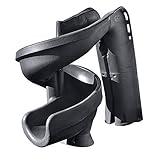
Overview: The S.R.Smith heliX2 represents the pinnacle of residential pool slide engineering, delivering a 360-degree spiral experience with an integrated fountain feature. Standing 7 feet 4 inches with a 12-foot 8-inch flume, this gray granite slide combines compact height with extended ride length. Rated for 250 pounds and fully CPSC compliant, it offers premium entertainment for diverse households.
What Makes It Stand Out: The 360-degree spiral design transforms a standard pool slide into a miniature waterpark attraction. The integrated fountain feature adds visual drama and cooling spray, enhancing the sensory experience. Unlike traditional curved slides, the helical descent prolongs ride duration while maintaining a modest footprint. Salt-pool compatibility and UV resistance ensure longevity in harsh chemical environments.
Value for Money: At $5,139.99, this is a luxury investment comparable to small pool renovations. However, commercial-grade spiral slides often exceed $8,000, making the heliX2 relatively reasonable for its category. The three-year warranty and S.R.Smith’s reputation justify the premium for buyers seeking a distinctive backyard centerpiece. It essentially functions as a permanent art installation that happens to be a slide.
Strengths and Weaknesses: Pros: Unique 360-degree spiral design; Integrated fountain feature; 250-pound capacity; CPSC compliant; Salt pool friendly; Compact height with long ride; Premium rotomolded construction Cons: Highest price point in category; Requires professional installation; Spiral may intimidate younger children; Fountain increases water usage; Still requires significant deck space
Bottom Line: The ultimate choice for homeowners prioritizing wow-factor and unique design. The heliX2 commands premium pricing but delivers an unmatched ride experience. Best suited for families with confident swimmers seeking a signature pool feature rather than basic slide functionality.
6. S.R. Smith 670-209-58223 Typhoon Left Curve Pool Slide, Sandstone

Overview: The S.R. Smith Typhoon Left Curve Pool Slide represents premium permanent pool entertainment. Standing 7 feet 4 inches tall with a 9-foot 10-inch flume, this rotomolded slide is engineered for pools with limited deck space while delivering thrilling curves and dips. The sandstone finish offers an elegant aesthetic that complements high-end pool designs without overwhelming the landscape.
What Makes It Stand Out: The Typhoon’s commercial-grade rotomolded construction ensures exceptional durability and UV resistance. Safety features include sturdy molded handrails and an enclosed ladder system, providing secure climbing for users up to 275 pounds. The deep, wide flume design accommodates both adults and children comfortably, making it a true family investment that grows with your household.
Value for Money: At $4,109.99, this is a significant investment, but it delivers permanent, professional-grade quality. Comparable commercial slides often exceed $5,000, and the 3-year warranty provides peace of mind. Unlike seasonal inflatables, this is a one-time purchase that enhances property value and eliminates replacement costs.
Strengths and Weaknesses: Strengths include exceptional build quality, comprehensive safety features, high weight capacity, and elegant design. The 3-year warranty is industry-leading. Weaknesses are the steep price point, required professional installation, and substantial footprint that may still challenge truly small decks.
Bottom Line: Ideal for discerning pool owners seeking a permanent, safe, and thrilling slide. The Typhoon justifies its premium price through superior construction and safety engineering.
7. S.R. Smith 688-209-58224 TurboTwister Left Curve Pool Slide, Gray Granite

Overview: The S.R. Smith TurboTwister is the pinnacle of residential pool slides, standing an impressive 8 feet 7 inches tall with a 14-foot 4-inch flume. This left-curve thrill ride delivers water park excitement in your backyard through its dramatic curves and dips, all wrapped in a sophisticated gray granite finish that resists fading and maintains its appearance season after season.
What Makes It Stand Out: The TurboTwister’s towering height and extended flume length create an unparalleled sliding experience that rivals commercial attractions. The rotomolded construction provides commercial-grade strength, while the design accommodates users up to 275 pounds. This isn’t just a slide—it’s a backyard centerpiece that commands attention and becomes the focal point of summer entertainment.
Value for Money: At $5,369.25, this represents the top tier of residential slides. While extraordinarily expensive, it rivals commercial water park features at a fraction of the cost. The 3-year warranty and permanent construction make it a long-term investment for serious enthusiasts who prioritize thrill and durability.
Strengths and Weaknesses: Strengths include maximum thrill factor, exceptional durability, high weight capacity, and stunning visual presence. The warranty is excellent. Weaknesses include the extreme price, significant space requirements, and mandatory professional installation. It’s overkill for casual pool users.
Bottom Line: Perfect for families wanting the ultimate water slide experience without compromise. The TurboTwister delivers premium thrills but demands premium budget and space.
8. Intex Kool Splash Durable Inflatable Play Center Swimming Pool Water Slide Accessory with Adhesive Repair Patch Kit, Age 6 and Up, 58849EP
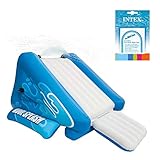
Overview: The Intex Kool Splash offers accessible water slide fun for families seeking an affordable, seasonal solution. Measuring 131 x 81 x 46 inches, this inflatable slide connects to a garden hose for built-in sprayers and works with most in-ground and above-ground pools. Designed for ages 6 and up, it provides endless summer entertainment without permanent commitment or complex installation.
What Makes It Stand Out: Five separate air chambers provide excellent safety redundancy, while the 20-gauge vinyl construction with fused seams ensures reasonable durability. The soft landing pad extension enhances safety, and the included repair patch kit extends lifespan. The inflatable stairs and stepping mat make climbing easy for younger children.
Value for Money: At $142.99, this delivers exceptional value for seasonal use. It’s a fraction of permanent slide costs and stores easily off-season. While not as durable as rotomolded options, the price point makes pool slides accessible to most families without long-term financial commitment.
Strengths and Weaknesses: Strengths include affordability, portability, easy setup, safety features, and broad pool compatibility. The 176-pound weight limit restricts adult use. Weaknesses include limited durability compared to permanent slides, potential for punctures, and requires active supervision.
Bottom Line: An excellent entry-level slide for families with children. The Kool Splash provides affordable fun but expect to replace it every few seasons with heavy use.
9. Wow Sports - Inflatable Party Pool Slide - Blow Up Waterslide for Kids & Adults - W/Water Sprinkler

Overview: The Wow Sports Inflatable Party Pool Slide targets budget-conscious families seeking portable water fun. While specific dimensions and weight capacity aren’t detailed in the listing, this blow-up waterslide features an integrated water sprinkler system designed for kids and adults. The product appears positioned as a party centerpiece for occasional use rather than daily summer entertainment.
What Makes It Stand Out: The integrated water sprinkler system enhances sliding speed and fun. Its inflatable nature ensures easy setup and storage, making it suitable for renters or those not ready for permanent installations. The party-focused marketing suggests good capacity for entertaining multiple children during gatherings and events.
Value for Money: At $142.55, it competes directly with other entry-level inflatables. However, the lack of detailed specifications makes value assessment difficult. Without knowing weight limits, materials, or dimensions, buyers take a risk compared to better-documented alternatives at similar prices.
Strengths and Weaknesses: Strengths include affordability, portability, and the water sprinkler feature. It’s suitable for temporary fun and easy to store. Weaknesses are the severely limited product information, unknown durability, unspecified weight capacity, and lack of safety details. No warranty or repair kit is mentioned.
Bottom Line: Difficult to recommend without more specifications. Buyers should prioritize alternatives like the Intex Kool Splash that provide comprehensive safety details and repair options for nearly identical pricing.
10. FibroPool Full-Sized Fiberglass Swimming Pool Slide – 10'6" Long, 6’ Tall Left Turn Slide with Stainless Steel Hardware, Surface Mount Anchors, Sprayers, and Full Installation Kit for Pools

Overview: The FibroPool Full-Sized Fiberglass Swimming Pool Slide bridges the gap between budget inflatables and premium rotomolded slides. Measuring 10'6" long and 6’ tall with a left-turn design, this permanent slide supports up to 200 pounds and includes stainless steel hardware, surface mount anchors, and integrated sprayers for a complete backyard package.
What Makes It Stand Out: The heavy-duty fiberglass construction offers smooth, fast sliding with excellent crack and fade resistance. The complete installation kit includes corrosion-resistant stainless steel hardware and surface mount anchors, ensuring secure deck mounting without wobble. Integrated sprayers provide instant water enhancement without additional purchases or complex plumbing.
Value for Money: At $2,149.99, this represents strong mid-range value. It’s significantly less expensive than S.R. Smith’s premium offerings while providing permanent installation and durable materials. The included hardware and sprayers eliminate hidden costs, making budgeting straightforward and predictable.
Strengths and Weaknesses: Strengths include durable fiberglass construction, complete installation kit, corrosion-resistant hardware, and integrated sprayers. The 200-pound weight capacity is adequate for most teens but lower than commercial-grade alternatives. Weaknesses include limited color options and lower weight capacity compared to premium brands.
Bottom Line: An excellent choice for homeowners wanting a permanent slide without the premium price tag. The FibroPool delivers solid performance and durability for most families.
Understanding Adrenaline-Fueled Pool Slides
What Makes a Pool Slide “Adrenaline-Packed”?
The adrenaline factor isn’t just about height—it’s a complex equation of velocity, G-forces, and psychological thrill. True adrenaline slides typically feature drop angles exceeding 45 degrees, creating that brief moment of weightlessness that triggers your fight-or-flight response. The flume design plays a critical role: straight drops deliver raw speed, while serpentine curves build anticipation and lateral forces. Water flow rate, measured in gallons per minute (GPM), acts as both lubricant and accelerator, with high-performance systems pushing 80+ GPM to minimize friction and maximize velocity. The psychological element matters too—transparent sections, dark tunnels, and steep initial drops prime your brain for danger, amplifying the rush before you even push off.
Types of High-Thrill Pool Slides
The spectrum of adrenaline slides breaks down into distinct categories, each delivering thrills through different mechanisms. Speed slides prioritize vertical drops with minimal curves, often featuring near-vertical starts that rocket riders into the pool in under three seconds. Serpentine slides trade pure speed for sustained excitement, using tight-radius curves to generate lateral G-forces that press riders against the flume walls. Drop-pod slides, while rare in residential settings, incorporate trap-door starts for maximum psychological intensity. Tunnel slides amplify sensory deprivation—darkness heightens anticipation while muffling sound, making the eventual splashdown more explosive. Hybrid designs combine elements, like a steep initial drop feeding into a high-banked curve sequence, delivering multi-phase thrills that keep your heart rate elevated throughout the ride.
Who Are These Slides Really For?
Adrenaline slides aren’t universal solutions—they’re specialized equipment for specific user profiles. Teenagers and young adults typically crave the steepest angles and fastest speeds, making 7-foot-plus slides with 50-degree drops ideal. Competitive swimmers and athletic families appreciate slides that double as training tools, requiring core engagement and body control at high speeds. Empty-nesters designing their dream pool often prioritize these slides as statement pieces that reflect their adventurous spirit. However, families with young children must carefully balance thrill with accessibility; a slide that’s too aggressive becomes a safety hazard, while one that’s too tame won’t deliver the promised adrenaline. The key is honest assessment of your primary users’ age, skill level, and risk tolerance—not just today, but five years from now.
Key Features That Define Performance
Slide Height and Drop Angle: The Thrill Equation
Height and angle work synergistically to determine your slide’s adrenaline quotient. Residential slides typically range from 4 to 14 feet, but adrenaline-worthy models start at 7 feet minimum. The drop angle, measured from horizontal, is the real game-changer: 30-35 degrees feels leisurely, 40-45 degrees delivers moderate excitement, while 50+ degrees creates genuine free-fall sensations. Engineers design these steep angles using calculus to control acceleration rates—too steep too fast, and riders lose contact with the flume (a phenomenon called “hydroplaning separation”), which actually reduces control and increases injury risk. The sweet spot for adrenaline combines a 7-9 foot platform height with a 48-52 degree initial drop, followed by a transition curve that smoothly converts vertical velocity into forward motion without jarring impacts.
Flume Design: Straight vs. Curved vs. Tunnel
Flume architecture dictates your ride’s personality profile. Straight flumes prioritize raw acceleration—riders can hit pool entry speeds of 15-20 mph on a well-designed 8-foot slide. The lack of curves means no speed scrubbing, but also no lateral forces to manage. Curved flumes introduce centripetal acceleration, pressing riders against the walls with forces that can exceed 1.5 Gs in tight turns. These designs require precise engineering: banked curves prevent riders from launching over edges, while radius calculations ensure smooth transitions that don’t snap necks or cause whiplash. Tunnel slides add sensory deprivation—darkness increases perceived speed by up to 30% according to psychophysical studies, while enclosed spaces trap water, creating a faster, more turbulent ride. The most advanced designs use variable-radius curves and changing tunnel diameters to create “moments of intensity” rather than consistent thrills.
Water Flow Systems: The Speed Catalyst
Your slide’s water delivery system is the unsung hero of adrenaline. Standard residential slides use 30-40 GPM flows, essentially dribbling water for lubrication. High-thrill models demand 60-100 GPM, creating a continuous sheet of water that eliminates dry spots and reduces friction coefficient to near-zero. This requires upgraded plumbing—typically 1.5-inch dedicated lines with booster pumps, not just a tapped return jet. The water entry point matters: top-down delivery creates a consistent flow but can feel like a shower, while side-entry nozzles produce a hydroplaning effect that dramatically increases speed. Advanced systems incorporate flow regulators that adjust based on rider weight, maintaining optimal velocity whether a 50-pound child or 200-pound adult is sliding. Neglecting water flow engineering is like putting low-octane fuel in a race car—you’ll never achieve peak performance.
Runout Distance: Your Stopping Power
The runout—the flat section before splashdown—is where physics meets safety. Adrenaline slides generate high entry velocities, requiring longer runouts to decelerate riders safely. The standard formula: for every 1 mph of entry speed, you need 6-8 inches of runout length. A slide producing 15 mph impacts requires a 7.5-10 foot runout minimum. Too short, and riders submarine into the pool at dangerous angles; too long, and the slide feels sluggish and anticlimactic. The runout angle also matters: a slight 5-7 degree upward pitch uses gravity to naturally brake riders, while a flat runout relies entirely on friction and water drag. Premium designs incorporate a “deceleration curve”—a slight upward bend that progressively slows riders while maintaining the sensation of speed right up to the splash.
Safety Considerations for High-Speed Slides
Weight Capacity and User Limits
Adrenaline slides face extreme forces, making weight specifications non-negotiable. Most residential high-thrill slides support 150-250 pounds per rider, but this number reflects static load, not dynamic forces. A 200-pound rider hitting a curve at 15 mph generates momentary loads exceeding 400 pounds due to centripetal force. Exceeding capacity doesn’t just risk structural failure—it compromises ride dynamics, making slides slower and less predictable. Manufacturers test slides to 3-4x rated capacity, but these safety margins assume proper installation and maintenance. Multi-rider limits are equally critical: while some slides accommodate tandem riding, most adrenaline models are strictly single-rider to prevent collisions and weight imbalances. Always verify both individual rider weight and simultaneous user limits before purchasing.
Material Durability and UV Resistance
The material science behind pool slides directly impacts both safety and performance longevity. Rotomolded polyethylene, the industry standard, offers excellent impact resistance and UV stability, but thickness matters—adrenaline slides need 3/8-inch minimum wall thickness to withstand repeated high-velocity impacts. Fiberglass slides provide superior smoothness and can achieve steeper angles, but they’re prone to osmotic blistering and require gel coat maintenance to prevent fiber exposure. UV inhibitors are non-negotiable: unprotected plastic loses 30-40% of its tensile strength after 5,000 hours of sun exposure (roughly 3-4 years in southern climates). Premium slides incorporate UV8+ rated resins and titanium dioxide stabilizers, maintaining structural integrity for 10+ years. Inspect material specifications for fade resistance ratings—F1 rating indicates minimal color and strength loss, while F4 indicates rapid degradation.
Anchoring and Installation Integrity
A slide is only as safe as its connection to the deck. Adrenaline slides generate significant dynamic loads that can pull inadequate anchoring straight out of concrete. The gold standard uses 3/8-inch stainless steel wedge anchors embedded 4-6 inches into reinforced concrete, with torque specifications exceeding 25 ft-lbs. The deck itself must be 4-inch minimum thickness with rebar reinforcement—not just pavers or thin concrete overlay. Some high-end slides require poured-in-place anchor bolts during deck construction, making retrofitting impossible. Wind loads matter too: a 10-foot slide presents a 15-20 square foot sail area; in hurricane zones, slides must withstand 120+ mph gusts. Always obtain the slide’s installation engineering packet before purchase—reputable manufacturers provide detailed load calculations and anchor specifications, not just vague instructions.
Safety Features Beyond the Basics
True adrenaline slides incorporate advanced safety systems that go far beyond molded handrails. Look for integrated ladder gates that prevent unsupervised access—essential for households with children. Anti-entrapment water intakes use perforated covers that prevent hair or limbs from being sucked into the pump system. Some designs feature emergency water shutoff switches at both top and bottom, allowing instant flow cessation if a rider gets stuck. The flume exit should have a “splash guard lip” that prevents riders from launching out of the slide prematurely, while still allowing smooth water flow. Reflective striping or LED lighting integrated into the flume edges enhances visibility for twilight riding. These features distinguish serious adrenaline equipment from glorified playground slides.
Installation and Space Requirements
Deck Space and Clearance Zones
Adrenaline slides demand significant real estate beyond the slide’s footprint. You need a 3-foot clear perimeter around the entire structure for maintenance access and emergency egress. The slide’s “fall zone”—the area where a rider could potentially exit the flume—requires 6 feet of clearance from any hard obstacles, including pool edges, walls, or landscaping. Overhead clearance is critical: trees, power lines, and roof eaves must be at least 8 feet above the highest point of the slide path. Consider the approach path too; riders need 10-15 feet of open deck space to safely climb and queue without crowding. For curved slides, the lateral clearance zone expands to accommodate the centrifugal “drift” that can push riders toward the outer edge of curves. Measure twice, buy once—many homeowners underestimate these spatial requirements.
Water Depth Regulations
The pool depth at slide exit isn’t arbitrary—it’s calculated to prevent catastrophic injuries. For adrenaline slides exceeding 7 feet in height, most municipalities require 9-12 feet of water depth at the splashdown point, extending 10-15 feet from the slide exit. This depth prevents riders from striking the pool bottom, which can occur at speeds over 12 mph even with proper entry angle. The depth must be maintained across a “safety zone” that accounts for variable rider trajectories—heavier riders penetrate deeper into the water. Some insurance carriers mandate depth markers and “no diving” signage near slide exits, regardless of actual depth. If your pool doesn’t meet these specifications, you’ll need structural modifications that can add $5,000-$15,000 to your project. Always verify local and insurance requirements before finalizing slide selection.
Professional vs. DIY Installation
The complexity of adrenaline slide installation makes DIY a risky proposition for all but the most experienced contractors. Professional installation typically costs $2,000-$5,000 but includes critical services: structural engineering review, anchor pull-tests, water flow calibration, and safety certification. DIY installers must understand concrete curing times (28 days minimum for full strength), anchor torque sequences, and hydraulic balancing. The water system alone requires precise pressure calculations—too little pressure and the slide is slow; too much and you waste water and create overspray. Many manufacturers void warranties if not installed by certified technicians. Consider this: a poorly installed slide can shift just 1/4 inch, creating a seam gap that catches skin or swimsuits at high speed. For adrenaline-level equipment, professional installation isn’t just recommended—it’s essential for safety and performance.
Materials and Construction Quality
Rotomolded Plastic vs. Fiberglass
The material debate centers on performance characteristics, not just cost. Rotomolded polyethylene offers superior impact resistance—essential for high-velocity slides where riders may carry debris or have jewelry that could crack more brittle materials. The seamless construction eliminates weak points, and modern double-wall rotomolding creates insulated, rigid structures that maintain shape under load. Fiberglass, while more expensive, achieves glass-smooth interior finishes that reduce friction and increase speed. It’s also repairable—gouges and cracks can be gel-coated, whereas plastic damage is often permanent. However, fiberglass delamination is a real risk in freeze-thaw cycles, and the material’s stiffness transmits more impact force to riders. For pure adrenaline, many experts recommend rotomolded slides for the drop section (durability) with fiberglass curves (speed), though hybrid construction is rare in residential markets.
Hardware and Fastening Systems
The metallurgy of slide hardware separates toys from serious equipment. All fasteners must be 316 stainless steel—nicknamed “marine grade” for its resistance to chlorinated water and salt systems. Cheaper 304 stainless will corrode within 2-3 years, compromising structural integrity. Bolt heads should be countersunk and covered with UV-resistant caps to prevent skin abrasion during high-speed contact. Look for nylon-insert lock nuts that resist vibration loosening—a common issue in slides with high water flow rates. Ladder rungs deserve special attention: they should be textured aluminum with stainless steel cores, not hollow plastic that becomes brittle. The connection points between slide sections need gasket seals that compress under bolt tension, preventing water leakage that undermines anchor stability. Request a complete hardware manifest before purchase—reputable manufacturers list every bolt, nut, and washer specification.
Longevity in Harsh Pool Environments
Pool slides endure a chemical warfare zone: UV radiation, chlorine or salt, pH fluctuations, and thermal cycling from 50°F to 120°F. Premium slides undergo accelerated aging tests simulating 10 years of exposure in just 6 months. Look for ASTM F2371 compliance, which certifies resistance to weathering, impact, and chemical degradation. Saltwater pools are particularly brutal—salt concentration above 3,000 ppm accelerates galvanic corrosion in any non-stainless components. Some slides feature sacrificial anodes, like those on boat hulls, to protect metal hardware. Colorfastness matters too—fading indicates polymer breakdown. Request test data on tensile strength retention after UV exposure; quality slides maintain 90%+ of original strength after 2,000 hours in a QUV weatherometer. Warranty length is telling: 5-year warranties suggest basic durability, while 10-15 year warranties indicate confidence in advanced material formulations.
Design Aesthetics and Customization
Color Fading and Styling
Color choice impacts more than aesthetics—it affects heat absorption and rider safety. Dark colors absorb up to 40% more solar heat, making slides uncomfortably hot to touch and accelerating plastic degradation. Lighter colors reflect heat but show dirt and algae more readily. The sweet spot: medium blues, grays, and tans with UV-stable pigments. Some manufacturers offer custom color matching to pool tile or decking, using in-mold labeling that won’t peel or fade. Consider visibility too—bright colors help supervisors monitor rider positions from a distance. For night riding, opt for slides with integrated translucent sections that can be backlit with LED strips, creating a dramatic visual effect while improving safety. Avoid slides with painted surfaces; paint flakes off and clogs pool filters, while molded-in color lasts the slide’s lifetime.
Integrating with Pool Landscaping
An adrenaline slide should complement, not dominate, your outdoor living space. Position slides to preserve sightlines from the house for supervision. Use landscaping to create a “water park” feel—boulder outcroppings can disguise support structures, while tropical plants soften the industrial look. Consider the slide’s visual axis: a slide visible from the main entertaining area becomes a conversation piece, while one hidden behind structures feels like a secret thrill. Sound design matters too—water cascading from a 10-foot slide creates white noise that can mask traffic sounds. Work with a landscape architect to integrate the slide’s plumbing and electrical into the overall design, hiding pumps in faux rock enclosures. The goal is creating a cohesive experience where the slide feels like a natural, intentional element rather than a bolted-afterthought.
Custom Water Features and Enhancements
Elevate your slide from standard to spectacular with performance-enhancing add-ons. Water jets positioned at curve entrances can boost speed by 2-3 mph by reducing surface tension. Misters at the top platform create a cooling effect and visual drama. For ultimate customization, consider a variable-flow pump system with user controls—riders can dial up flow for maximum speed or reduce it for younger users. Some advanced systems integrate pool automation, allowing you to activate the slide via smartphone and monitor water usage. LED lighting kits installed along the flume edges transform night riding into a psychedelic experience while providing critical visibility. Water curtains at the exit create a dramatic splash effect and help dissipate rider velocity. These enhancements require upfront plumbing and electrical planning but deliver exponential returns in thrill factor.
Maintenance and Upkeep
Cleaning High-Velocity Flumes
Adrenaline slides develop unique cleaning challenges due to their steep angles and high water flow. Biofilm forms faster in the thin water sheets, creating slippery (not in a good way) and unsanitary surfaces. Use enzymatic cleaners weekly, not just chlorine—enzymes break down organic oils that chlorine misses. Avoid abrasive brushes; microfiber mops on extension poles clean effectively without scratching. Pay special attention to curve interiors where water velocity drops, allowing algae to colonize. For tunnel slides, invest in a pressure washer with a flexible wand that can navigate bends—annual deep cleaning prevents permanent staining. Never use acid-based cleaners; they etch plastic and fiberglass, creating drag that slows the slide. Instead, opt for pH-neutral formulations designed for pool surfaces. Inspect cleaning results by sliding a white cloth through the flume—any discoloration indicates remaining contamination.
Winterization Strategies
Freezing temperatures pose existential threats to adrenaline slides. Water trapped in mounting bolts expands with 2,000+ psi of force, cracking anchors and compromising structural integrity. The process begins with thorough drainage—remove all water from the flume, ladder tubes, and plumbing lines using compressed air. Disconnect and store removable components like spray nozzles and hoses indoors. For slides with integrated pumps, add RV antifreeze to the housing (never automotive antifreeze—it’s toxic to pools). Cover the slide with a breathable mesh cover, not plastic tarps that trap moisture and promote mold. In regions with heavy snowfall, install temporary support bracing under overhanging sections to prevent ice load deflection. The final step: apply a UV-protectant wax to all exposed surfaces, creating a barrier against winter sun and spring pollen. Proper winterization takes 3-4 hours but prevents thousands in spring repairs.
Inspecting for Wear and Damage
High-speed operation accelerates wear patterns invisible on casual inspection. Monthly checks should include running a hand along the entire flume interior, feeling for scratches, gouges, or delamination that increase friction and reduce speed. Inspect anchor bolts with a torque wrench—vibration can loosen them by 10-15% annually. Look for stress whitening at bolt holes and curve transitions; this indicates plastic deformation and impending failure. For fiberglass slides, tap the surface with a coin—dull thuds suggest delamination and water intrusion. Check water distribution nozzles for calcium buildup that disrupts flow patterns. Annual professional inspections should include ultrasound testing of anchor embedment and load testing of critical fasteners. Document everything photographically; progressive wear photos help warranty claims and identify failure trends before they become emergencies.
Budgeting for Your Adrenaline Slide
Price vs. Performance Reality
The relationship between cost and thrill isn’t linear—it’s exponential. Entry-level “thrill” slides ($3,000-$6,000) offer 5-7 foot heights and moderate angles, suitable for families but disappointing for true adrenaline junkies. Mid-range performers ($6,000-$12,000) deliver 8-10 foot heights with engineered curves and adequate water systems. True adrenaline slides ($12,000-$25,000+) feature heights over 10 feet, custom-engineered flume geometry, and integrated high-flow systems. But the sticker price is just the beginning. Installation adds 30-50%, and upgrading your pool’s plumbing or depth can double the total investment. Budget-conscious adrenaline seekers should prioritize slide design over bells and whistles—a well-engineered 8-foot slide with proper water flow outperforms a poorly designed 12-foot model every time. Consider total cost of ownership: a $15,000 slide lasting 15 years costs $1,000 annually, while a $5,000 slide needing replacement after 5 years costs the same but delivers inferior performance throughout.
Hidden Costs to Anticipate
The purchase price blinds many buyers to substantial ancillary expenses. Upgrading your pool pump to deliver 80+ GPM can cost $1,500-$3,000, including electrical work. Structural deck reinforcement often requires $2,000-$5,000 in concrete and rebar. Many municipalities require engineered drawings and permits for slides over 8 feet, adding $500-$1,500 in fees. Insurance premiums can increase 10-15% after installing a high-thrill slide, and some carriers require additional liability coverage. Landscaping to meet clearance zones might mean removing mature trees or regrading yard sections. Don’t forget ongoing costs: increased water usage (200-500 gallons per hour of operation), higher chemical demand, and annual professional inspections at $200-$400. Budget an additional 40-60% of the slide’s purchase price for these hidden costs to avoid financial shock.
ROI and Property Value Impact
While no slide directly pays for itself, adrenaline models can significantly impact property appeal. Real estate studies show that well-integrated pool slides increase backyard entertainment value by 5-8% in family-oriented markets. However, they can also limit buyer pools—some families view them as safety liabilities. The key is quality and integration: a premium slide that looks like a permanent architectural feature adds value, while a bolt-on toy slide detracts. Document all engineering and safety certifications; these reassure future buyers and insurance companies. In vacation rental markets, a legitimate adrenaline slide can increase nightly rates by $50-$100 and occupancy by 20-30%, creating actual ROI. For primary residences, view the investment through the lens of experiential value: if your family uses it 100+ times per summer for 10 years, the per-use cost becomes trivial compared to water park admissions.
Regulations and Compliance
Local Building Codes and Permits
Adrenaline slides trigger stringent regulatory scrutiny due to their height and user speeds. Most jurisdictions classify slides over 7 feet as “structures,” requiring building permits with engineered stamped drawings. Code requirements often specify minimum deck thickness (4 inches), rebar spacing (12 inches on center), and anchor embedment depths (6 inches minimum). Some areas mandate fencing around the slide platform, treating it like a diving board. Setback requirements from property lines can be 10-15 feet, not the standard 5 feet for pools. Homeowners associations frequently have additional restrictions on height, color, and visibility. The permitting process can take 4-8 weeks and requires site plans, structural calculations, and sometimes geotechnical reports for soil stability. Starting construction without permits risks stop-work orders, fines, and forced removal. Always contact your local building department before purchasing—code compliance is non-negotiable.
HOA Considerations
Homeowners associations wield surprising power over slide installations, often with restrictions stricter than municipal codes. Common HOA limitations include maximum height (frequently 6 feet, eliminating true adrenaline models), approved color palettes (earth tones only), and prohibitions on “visible from street” installations. Some HOAs require architectural review board approval, a process that can take months and offers no guarantee of acceptance. Review your Covenants, Conditions, and Restrictions (CC&Rs) with a fine-tooth comb, paying special attention to sections on “structures,” “additions,” and “recreational equipment.” Even if your HOA seems lenient, get written approval before purchasing—verbal assurances hold no legal weight. Propose your slide with professional renderings showing landscaping integration; HOAs are more likely to approve aesthetically pleasing installations. Be prepared to compromise: a slightly shorter slide in the right location often beats a perfect slide that violates regulations.
Insurance Implications
Installing an adrenaline slide fundamentally changes your property’s risk profile. Most homeowner’s policies require notification of “attractive nuisances,” and failure to disclose can void coverage. Expect premium increases of $200-$500 annually, and some carriers may require a separate umbrella policy of $1-2 million. Insurance adjusters will scrutinize installation documentation—professional installation certificates, engineering approvals, and compliance with ASTM standards become critical for claims. Some carriers maintain a list of “approved slide manufacturers”; installing an off-brand model can result in non-coverage. Document everything pre-installation with photos and videos of the area; this establishes a baseline if damage claims arise. Consider requiring guests to sign waivers before using the slide—while not legally bulletproof, they demonstrate due diligence. The insurance conversation should happen before purchase, not after installation when you’re already committed.
Making the Final Decision
Assessing Your Pool’s Compatibility
Not every pool can safely accommodate an adrenaline slide, regardless of desire. Start with a professional pool structural assessment—your deck must handle dynamic loads exceeding 1,000 pounds at anchor points. Measure actual water depth at the proposed exit point during both high and low water levels; many pools lose 6-12 inches of depth due to filtration cycles. Evaluate your equipment pad’s capacity—adding a booster pump may overload existing electrical circuits or filter systems. Consider pool shape: freeform pools with irregular depths make consistent runout depth nearly impossible. Rectangular pools with deep ends are ideal. If your pool is vinyl-lined, installation becomes exponentially more complex; slides must anchor through the liner without creating leak points. Concrete pools offer the most flexibility. Be brutally honest: retrofitting an incompatible pool often costs more than building a new one designed around the slide.
Family Needs vs. Thrill Factor
The ultimate slide satisfies both adrenaline cravings and practical family use—a challenging balance. Families with wide age ranges should consider modular designs with adjustable water flow, allowing you to tune speed based on the rider. Dual-entry platforms (lower and higher start points) offer versatility but compromise the pure adrenaline experience. Think about usage patterns: if 90% of slides will be by teens and adults, prioritize thrill and accept that younger kids may need to wait a few years. Conversely, if the slide must entertain a 6-year-old today and a 16-year-old tomorrow, opt for a moderate design with excellent water flow that can be upgraded later. The most successful installations involve family discussions about risk tolerance, expected usage, and long-term goals. A slide that terrifies half the family becomes an expensive ornament; one that bores the thrill-seekers gets used twice and ignored.
Creating Your Shortlist
Narrowing options requires systematic evaluation against your specific criteria. Create a matrix scoring each candidate on: height/angle (30% weight), water flow capability (25%), material quality (20%), safety features (15%), and warranty terms (10%). Eliminate any slide lacking independent safety certifications like NSF or ASTM compliance. Verify manufacturer reputation through pool professional networks, not just online reviews—installers know which brands honor warranties and which engineer corners. Request detailed installation manuals before buying; vague instructions signal poor engineering. Visit showrooms to physically test slides if possible; the tactile feel of handrails and platform stability reveals quality that photos hide. Finally, contact three installers for quotes on your shortlisted models—wildly different quotes often indicate installation complexity issues the manufacturer downplays. Your shortlist should have 2-3 finalists, not a dozen maybes.
Frequently Asked Questions
What height qualifies a pool slide as “adrenaline-packing”?
Slides under 7 feet rarely deliver genuine adrenaline. The thrill threshold typically begins at 8 feet with drop angles exceeding 45 degrees. For true stomach-dropping sensations, look for 10-12 foot models with 50+ degree initial drops.
Can I install a high-thrill slide on an existing pool deck?
Only if your deck meets structural requirements: 4-inch minimum thickness, rebar reinforcement, and no cracks or settling. A structural engineer must evaluate load capacity. Most existing decks need reinforcement, costing $2,000-$5,000.
How much water does an adrenaline slide use?
High-performance slides consume 60-100 gallons per minute during operation. Running the slide for one hour uses 3,600-6,000 gallons—equivalent to a typical pool’s daily evaporation. Expect a $30-$50 monthly increase in water bills with regular use.
Are these slides safe for young children?
Adrenaline slides are designed for riders 8+ years old and typically have 48-inch height requirements. Younger children lack the core strength and risk assessment abilities. Consider a separate smaller slide for kids if your household has mixed ages.
Do I need a special pump for my slide?
Standard pool pumps deliver 40-60 GPM. Adrenaline slides need 80+ GPM, requiring a booster pump ($800-$1,500) and often a dedicated 1.5-inch plumbing line. Your main filter system may also need upgrading to handle the increased flow.
How long does installation take?
Professional installation typically requires 2-3 days: one day for anchoring and assembly, one day for plumbing and electrical, and one day for testing and calibration. DIY installations stretch to 1-2 weekends and risk improper setup.
Can I use a saltwater pool with these slides?
Yes, but verify the slide is specifically rated for saltwater (3,000+ ppm). All hardware must be 316 stainless steel. Salt accelerates corrosion, so inspect fasteners quarterly instead of annually. Some manufacturers void warranties if used in saltwater without approval.
What maintenance is required weekly?
Test water flow rate and inspect for clogs, clean the flume with enzymatic cleaner, check anchor bolts for tightness, and ensure safety signage is visible. Monthly, inspect the entire structure for cracks or wear. Annual professional inspection is mandatory for warranty compliance.
Will adding a slide increase my insurance?
Expect a 10-15% premium increase, typically $200-$500 annually. Most carriers require notification and may mandate additional liability coverage. Some insurers maintain approved manufacturer lists; using an unapproved brand can void coverage.
How do I winterize an adrenaline slide?
Drain all water, disconnect pumps and store indoors, blow out plumbing lines with compressed air, apply UV-protectant wax, and cover with a breathable mesh cover. In snow regions, add temporary support bracing. Improper winterization can cause $2,000+ in freeze damage.