The commercial landscaping industry is entering a new era of power and precision, and at the heart of this evolution lies the zero-turn mower with a true commercial-grade engine. As we move through 2026, the gap between residential equipment and professional machinery has never been wider—or more critical to understand. Whether you’re managing a fleet for a growing landscaping business or investing in a single machine for expansive private property, the engine pulsing beneath that steel frame determines everything from daily productivity to long-term profitability.
What makes this year’s market particularly compelling is the convergence of advanced engineering, stricter emissions standards, and intelligent technology integration. Commercial-grade engines now deliver not just raw power, but sophisticated fuel management, remote diagnostics, and service interval optimization that directly impacts your bottom line. This guide cuts through marketing noise to examine the essential features, performance metrics, and ownership considerations that separate exceptional equipment from expensive mistakes.
Top 10 Zero-Turn Mowers with Commercial-Grade Engines
Detailed Product Reviews
1. Husqvarna MZ61 61 in. 24 HP Kawasaki Hydrostatic Zero Turn Riding Mower
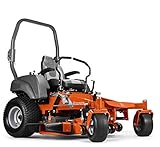
Overview: The Husqvarna MZ61 represents the pinnacle of residential zero-turn mowing, engineered for property owners managing substantial acreage. Powered by a robust 24 HP Kawasaki engine, this machine delivers reliable startups and impressive ground speeds that dramatically reduce mowing time. The 61-inch fabricated 11-gauge steel cutting deck tackles vast expanses efficiently while maintaining precise cutting performance.
What Makes It Stand Out: Safety takes center stage with the integrated roll-over protection system (ROPS), a critical feature rarely standard on residential models. The ergonomically designed deck lifting system allows on-the-fly adjustments without leaving the operator’s position, enhancing productivity. Comfort features including a high-back seat with armrests, foam-padded hand grips, and vibration dampeners enable extended operation without fatigue, transforming all-day mowing from chore to manageable task.
Value for Money: At $6,679, the MZ61 sits at the premium end of residential mowers but justifies its cost through commercial-grade components and durability. Comparable professional units often exceed $8,000, making this an intelligent investment for properties exceeding three acres. The versatility of discharge, mulching, and bagging capabilities (attachments sold separately) adds long-term value.
Strengths and Weaknesses: Strengths include exceptional cutting width, superior comfort features, robust safety systems, and legendary Kawasaki reliability. The fabricated steel deck promises decades of service. Weaknesses center on the premium price point and additional costs for mulching kits and bagging systems. The large footprint may challenge smaller properties with tight spaces.
Bottom Line: For homeowners with substantial properties seeking professional results without commercial contractor prices, the MZ61 delivers outstanding performance, safety, and comfort that warrant the investment.
2. Husqvarna MZ61 (61") 24HP Kawasaki Zero Turn Lawn Mower w/ROPS
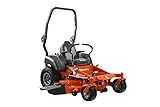
Overview: This Husqvarna MZ61 variant shares the same DNA as its sibling, targeting serious homeowners and light commercial users who demand uncompromising performance. The 24HP/726cc Kawasaki FR730V V-Twin engine provides exceptional torque and reliability, while the 61-inch three-blade fabricated deck handles expansive cutting tasks with precision.
What Makes It Stand Out: The Hydro Gear ZT-3100 commercial-grade hydrostatic transmission represents a significant upgrade over residential-grade systems, delivering smoother operation and extended durability under heavy loads. A generous five-gallon fuel capacity minimizes refueling interruptions during marathon mowing sessions. The standout feature is the comprehensive four-year consumer warranty, providing peace of mind that rivals many commercial offerings.
Value for Money: Priced at $6,699, this model commands a premium but includes professional-grade components that justify the investment. The commercial transmission alone adds significant value, potentially saving thousands in future repairs. For properties over four acres or frequent mowing schedules, the durability and warranty protection make this financially sensible compared to cheaper, less robust alternatives.
Strengths and Weaknesses: Strengths include the commercial transmission, large fuel tank, extensive warranty coverage, and powerful Kawasaki engine. The ROPS enhances safety for uneven terrain. Weaknesses remain the high initial cost and separate purchase requirements for mulching and bagging accessories. The mower’s size may prove excessive for properties under two acres.
Bottom Line: If your budget accommodates professional-grade equipment, this MZ61 configuration offers superior transmission technology and warranty protection that make it a wise long-term investment for demanding mowing applications.
3. Husqvarna Z254F 54 in. 23 HP Kawasaki Zero Hydrostatic Turn Riding Mower
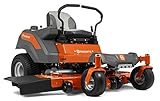
Overview: The Z254F bridges the gap between residential and commercial mowing, offering Husqvarna quality at a more accessible price point. The 23 HP Kawasaki engine delivers reliable power and a 6.5 MPH maximum speed, while the 54-inch ClearCut deck efficiently manages medium to large properties with professional-grade results.
What Makes It Stand Out: The ClearCut deck technology features a deep design with optimized airflow and high-performance blades that significantly improve cut quality and bagging efficiency compared to standard decks. The hydrostatic, no-maintenance transmission eliminates service concerns while providing responsive control. Thoughtful design elements like the ergonomic control panel and anti-slip foot area enhance operator confidence and safety.
Value for Money: At $3,899, the Z254F represents exceptional value, costing nearly $2,800 less than its larger MZ61 siblings while retaining core quality components. This pricing makes professional zero-turn performance accessible to homeowners managing 1-3 acres. The reduced fuel consumption and maintenance requirements further improve long-term affordability.
Strengths and Weaknesses: Strengths include the innovative ClearCut deck, lower purchase price, reliable Kawasaki power, and maintenance-free transmission. The compact 54-inch deck offers better maneuverability in tighter spaces. Weaknesses include slightly less power than the MZ61 and reduced cutting width extending mowing time on very large properties. Attachment costs add to the initial investment.
Bottom Line: For homeowners seeking Husqvarna durability and performance without flagship pricing, the Z254F delivers an outstanding balance of capability, comfort, and value that will handle most residential properties with ease.
4. Ariens Edge (42") 20HP Briggs Zero Turn Lawn Mower 915283

Overview: The Ariens Edge 915283 positions itself as an entry-level zero-turn solution for homeowners transitioning from traditional tractors. Powered by a 20HP Briggs & Stratton EXi2000 engine, this compact mower focuses on maneuverability and value, making zero-turn technology accessible to a broader audience.
What Makes It Stand Out: The 42-inch two-blade fabricated deck excels in navigating gates, tight corners, and landscaped obstacles that challenge larger mowers. The Hydro-Gear EZT transmission provides reliable hydrostatic operation without the complexity of commercial systems. Its moderate 6 mph forward speed ensures controlled cutting while remaining efficient for properties up to two acres.
Value for Money: Priced at $3,649, the Edge undercuts most competitors while delivering essential zero-turn capabilities. This represents an excellent value for homeowners with smaller properties who want maneuverability advantages without premium costs. The Briggs & Stratton engine offers reliable service with widely available parts and service networks.
Strengths and Weaknesses: Strengths include exceptional maneuverability, affordable pricing, compact storage footprint, and reliable Briggs power. The smaller deck excels in obstacle-rich environments. Weaknesses include limited power for thick or wet grass, small two-gallon fuel tank requiring frequent refills, and reduced ground speed compared to larger models. The narrow cut width increases mowing time on larger properties.
Bottom Line: Ideal for suburban homeowners with gated yards or numerous obstacles, the Ariens Edge delivers zero-turn convenience and reliability at a price point that won’t strain budgets, provided your property size remains modest.
5. 803cc Zero-Turn Riding Lawn Mower - 62" Commercial Gasoline Lawn Mower Tractor for Heavy-Duty Grass Cutting, Ideal for Large Gardens and Lawns

Overview: This commercial-grade zero-turn mower targets professional landscapers and homeowners with extensive acreage, featuring a powerful 803cc gasoline engine and an expansive 62-inch cutting deck. Built with a heavy-duty steel frame and rugged wheels, it handles demanding cutting conditions and varied terrain with professional competence.
What Makes It Stand Out: The extra-wide 62-inch deck surpasses most residential offerings, maximizing efficiency on large properties. The 803cc engine delivers commercial-grade power for tackling overgrown or dense vegetation. Adjustable high-back seating with padded armrests and an ergonomic control panel ensure operator comfort during extended commercial use. The zero-turn capability provides exceptional maneuverability despite the large footprint.
Value for Money: At $6,306.59, this mower undercuts premium branded commercial models by $1,500-$2,000 while offering comparable specifications. For professional users or homeowners with 5+ acres, the productivity gains from the 62-inch deck offset the investment quickly. However, the generic branding may impact resale value and support accessibility.
Strengths and Weaknesses: Strengths include the massive cutting width, robust commercial construction, powerful engine, and competitive pricing. The heavy-duty frame ensures durability. Weaknesses include unknown brand reputation, potentially limited warranty and parts availability, and excessive size for typical residential use. The generic nature raises questions about long-term support.
Bottom Line: A compelling option for budget-conscious professionals or large property owners willing to accept some brand risk for significant cost savings and maximum cutting efficiency.
6. Speedy Zero Turn Riding Lawn Mower, 25HP 803cc Engine, Commercial Grade Tractor
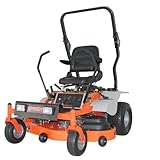
Overview: The Speedy Zero Turn Riding Lawn Mower enters the commercial market with a robust 25HP 803cc engine designed for professional-grade performance. Built for demanding conditions, this tractor-style mower targets landscaping professionals and property owners managing extensive acreage. Its zero-turn capability provides exceptional maneuverability, enabling precise cutting around obstacles while significantly reducing overall mowing time compared to traditional lawn tractors.
What Makes It Stand Out: This model distinguishes itself with heavy-duty steel frame construction and a reinforced deck engineered specifically for commercial applications. The adjustable high-back seat with armrests addresses operator fatigue during extended operations—a critical feature for full-day productivity. Multiple height adjustment settings offer versatility across various grass types and terrain conditions. The combination of commercial build quality and ergonomic comfort features positions it as a serious workhorse rather than a consumer-grade upgrade.
Value for Money: At $6,065.63, this Speedy mower sits competitively in the mid-commercial segment. It delivers comparable power to premium brands costing $1,500-2,000 more, while including essential commercial features like reinforced construction and ergonomic seating. For landscaping businesses requiring reliable daily performance, the ROI becomes evident within the first season. Residential users with 3+ acres benefit from time savings that justify the investment over $3,000 consumer alternatives, though brand recognition remains a consideration.
Strengths and Weaknesses: Pros: Commercial-duty steel frame and reinforced deck; Powerful 25HP engine handles dense growth; Comfortable high-back seating with armrests; Precise zero-turn maneuverability; Multiple cutting height adjustments.
Cons: Limited brand recognition compared to Husqvarna/Toro; Dealer network may be restricted; Uncertain resale value; Feature specifications lack transmission details; Warranty terms less established.
Bottom Line: Ideal for commercial operators and serious residential users prioritizing durability and performance over brand prestige. The Speedy delivers professional capabilities at a competitive price, but verify local service support before committing.
7. Husqvarna Z242F (42") 21.5HP Kawasaki Zero Turn Lawn Mower

Overview: The Husqvarna Z242F bridges the gap between consumer and commercial mowing, pairing a reliable 21.5HP Kawasaki engine with innovative design in a nimble 42-inch deck. This zero-turn mower serves homeowners with large properties and light commercial operators seeking premium brand reliability. The hydrostatic, no-maintenance transmission eliminates service concerns while delivering smooth power across varying cutting conditions and terrain.
What Makes It Stand Out: Husqvarna’s patent-pending park brake system automatically engages when steering levers move outward, enhancing safety without operator intervention. The 42-inch deck optimally balances maneuverability for gated yards with productive cutting width. Versatile clipping management supports discharge, mulching, or bagging (with optional attachments), providing year-round lawn care flexibility. The Kawasaki engine’s reputation for longevity offers confidence in sustained performance and reduced downtime.
Value for Money: Priced at $3,799, the Z242F delivers exceptional value by offering premium brand engineering at a mid-tier price point. It undercuts many comparable models by $500-800 while including innovative safety features. The maintenance-free transmission reduces long-term ownership costs, while Husqvarna’s extensive dealer network ensures ready parts and service access. For properties of 1-3 acres, it provides professional performance that justifies the 30-40% premium over budget alternatives.
Strengths and Weaknesses: Pros: Automatic park brake enhances safety; Reputable Kawasaki engine ensures durability; Maintenance-free hydrostatic transmission; Versatile clipping management; Compact 42" deck navigates tight spaces; Strong dealer support network.
Cons: 21.5HP may struggle with dense, overgrown grass; Mulching kit and bagger sold separately; Smaller deck increases time on large properties; Light-commercial build may not endure heavy daily use; Premium brand pricing.
Bottom Line: Perfect for quality-conscious homeowners with 1-3 acres who value safety innovation, brand reliability, and low maintenance. The Z242F delivers professional-grade performance at a consumer-accessible price, backed by Husqvarna’s service network.
8. Husqvarna Z560L Commercial Zero-Turn Mower 60" Deck 27HP Kawasaki Engine

Overview: The Husqvarna Z560L represents the apex of commercial zero-turn mowing, engineered for landscape professionals demanding maximum productivity. Its muscular 27HP Kawasaki engine drives an expansive 60-inch cutting deck, enabling crews to maintain vast properties with exceptional efficiency. This flagship model features commercial-grade construction throughout, including a robust frame and heavy-duty transmission designed for thousands of hours of reliable operation in demanding daily conditions.
What Makes It Stand Out: The massive 60-inch deck dramatically reduces mowing time on large commercial properties, directly translating to increased profitability. Husqvarna integrates premium operator comfort with a high-back suspension seat and ergonomic controls that minimize fatigue during extended workdays. The commercial Kawasaki engine delivers superior torque for handling dense, wet grass without performance loss. Advanced cutting system design ensures excellent discharge and mulching quality, while zero-turn precision allows surgical navigation around landscaping obstacles.
Value for Money: At $13,999, the Z560L commands a premium but delivers proportional value for dedicated professionals. It competes with models costing $15,000-18,000 from other premium brands while offering Husqvarna’s renowned reliability and comprehensive dealer support. The productivity gains from the 60-inch deck can reduce labor costs by 25-30% compared to 48-inch models, generating ROI within two busy seasons. For residential use, this investment only makes sense for properties exceeding 5 acres with professional maintenance requirements.
Strengths and Weaknesses: Pros: Massive 60-inch deck maximizes productivity; Powerful 27HP Kawasaki commercial engine; Premium suspension seating for all-day comfort; Exceptional maneuverability; Strong resale value and brand reputation; Extensive dealer service network.
Cons: Premium pricing limits audience to professionals; Oversized for typical residential properties; Requires substantial storage space; Higher fuel consumption; Excessive for light commercial applications.
Bottom Line: The ultimate choice for serious landscaping professionals prioritizing productivity and durability. The Z560L justifies its premium price through labor-saving efficiency and commercial longevity, representing a strategic business investment.
9. Speedy 62-Inch Zero Turn Riding Lawn Mower, 764cc Commercial Gas Engine, Garden Tractor

Overview: The Speedy 62-Inch Zero Turn Mower targets commercial operators with its expansive cutting width and 764cc commercial gas engine, offering an alternative to premium brand equipment. This garden tractor configuration emphasizes productivity for large properties and professional landscaping. Zero-turn radius technology enables precise navigation around obstacles while maintaining exceptional efficiency across vast lawn areas. Heavy-duty steel construction throughout ensures durability under sustained commercial use.
What Makes It Stand Out: The extra-wide 62-inch cutting deck surpasses most competitors, delivering maximum coverage per pass and significantly reducing job completion times. Padded armrests and an ergonomic control panel demonstrate attention to operator comfort during extended sessions. Robust wheel design enhances stability on uneven terrain, reducing scalping and ensuring consistent cut quality. The commercial-grade engine provides reliable performance across diverse grass conditions, while the reinforced deck handles challenging environments.
Value for Money: Priced at $8,256.10, this Speedy model undercuts comparable 60+ inch commercial mowers by $2,000-4,000, presenting attractive value for budget-conscious professionals. The productivity gains from the 62-inch deck justify the investment for operators maintaining multiple large properties weekly. However, the brand’s limited market presence may affect long-term parts availability and resale value. For residential users with 4+ acres, the time savings offset the premium over consumer models, though brand recognition remains a concern.
Strengths and Weaknesses: Pros: Exceptional 62-inch cutting width maximizes efficiency; Commercial-grade engine and construction; Comfortable seating with padded armrests; Stable handling on varied terrain; Competitive pricing for deck size; Zero-turn precision reduces trimming.
Cons: Lesser-known brand impacts service access; Uncertain resale value; Feature specifications less detailed; Limited dealer network; May lack advanced features like suspension seats; Warranty support unknown.
Bottom Line: An excellent value proposition for commercial operators prioritizing cutting width and affordability. The Speedy delivers professional productivity at a mid-tier price, though buyers must verify local service support and warranty terms before purchasing.
10. 25HP 803cc Zero-Turn Riding Lawn Mower Tractor - Heavy-Duty Grass Cutting Machine for Large Yards, Residential & Commercial Use
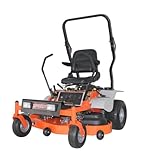
Overview: This 25HP 803cc Zero-Turn Riding Mower bridges residential and commercial applications, offering professional power at an accessible price point. With identical engine specifications to pricier models but at a significant discount, it targets large property owners seeking commercial durability. Zero-turn radius steering provides precise obstacle navigation, while commercial-grade components promise longevity for demanding mowing schedules. The adjustable high-back seat and ergonomic controls ensure comfortable extended operation.
What Makes It Stand Out: The dual positioning as both residential and commercial equipment offers flexibility for property owners who may occasionally handle light commercial work. The 25HP engine delivers ample power for most applications without the fuel consumption penalties of larger commercial units. Heavy-duty construction throughout the frame and drivetrain suggests durability exceeding typical consumer mowers. The ergonomic control panel simplifies the transition from traditional lawn tractors to zero-turn platforms for novice users.
Value for Money: At $4,206.01, this mower dramatically undercuts similarly-powered alternatives, offering exceptional value for large property owners. It provides approximately 90% of the performance of $6,000+ commercial units at a 30% discount. The commercial-grade build ensures durability that justifies the investment over $2,500 consumer models for properties exceeding 2 acres. However, generic branding may affect warranty support and parts availability compared to established competitors, requiring careful pre-purchase verification.
Strengths and Weaknesses: Pros: Powerful 25HP engine at competitive price; Commercial-grade construction enhances durability; Comfortable ergonomic design; Versatile for residential and light commercial use; Significant cost savings over premium brands; Zero-turn maneuverability improves efficiency.
Cons: Generic brand limits dealer support network; Feature specifications lack detail; Uncertain resale value; May not withstand heavy daily commercial use; Quality control consistency unknown; Limited advanced features.
Bottom Line: Outstanding value for large property owners seeking commercial durability at a residential price. Ideal for 2-4 acre properties where consumer mowers prove inadequate but premium commercial units represent overkill. Verify warranty terms and parts availability before purchasing.
Understanding Commercial-Grade Engine Classification
What Separates Commercial from Residential Powerplants
Commercial-grade engines are engineered for continuous duty cycles that would destroy their residential counterparts within months. The distinction begins with internal components: forged steel crankshafts replace cast iron, premium bearings handle sustained high-RPM operation, and advanced oil filtration systems maintain lubrication during all-day use. These powerplants typically feature displacement ranges from 720cc to over 999cc, with service life expectancies exceeding 2,000 hours compared to 500-750 hours for residential units.
The cooling systems represent another critical differentiator. Commercial engines employ pressurized lubrication with oil coolers and dual-element air filtration systems that capture fine dust particles before they reach the combustion chamber. This matters because a landscaping crew in dry conditions can ingest enough particulate matter in one season to score cylinder walls and destroy piston rings on an unprotected engine.
Engine Displacement and Power Ratings Explained
When evaluating 2026 models, you’ll encounter both gross horsepower and torque specifications. For zero-turn applications, torque delivery curve is arguably more important than peak horsepower. Commercial engines typically produce 22 to 38 horsepower, but the key metric is how that power is delivered between 2,400 and 3,600 RPM—the range where mowers operate under load.
Displacement directly impacts low-end torque and cooling efficiency. A 27-horsepower engine at 852cc will typically outlast a 27-horsepower engine at 724cc because the larger displacement runs at lower RPMs to achieve the same power output, reducing heat and wear. For 2026, leading manufacturers have standardized on electronic fuel injection (EFI) across most commercial tiers, eliminating cold-start issues and improving fuel economy by 15-25% over carbureted predecessors.
Key Performance Metrics That Actually Matter
Torque vs. Horsepower in Real-World Applications
Horsepower determines maximum blade tip speed under ideal conditions, but torque maintains that speed when encountering dense, wet grass or uphill grades. Commercial mowers require high torque-to-horsepower ratios—typically 1.2:1 or better—to prevent blade slowdown that creates uneven cuts and clumping. This is why professional-grade engines are often detuned from their maximum potential horsepower; the tuning prioritizes torque delivery and engine longevity over peak power numbers.
Consider a 34-horsepower engine producing 54 foot-pounds of torque at 2,600 RPM. Under heavy load, this engine might drop to 28 horsepower while maintaining 50 foot-pounds of torque, preserving cutting quality. A residential engine with similar peak horsepower but 30% less torque would bog down completely, forcing the operator to reduce speed dramatically.
Fuel Efficiency and Runtime Considerations
With diesel hovering around $3.80 per gallon and gasoline fluctuating near $3.40 in most markets, fuel costs represent 12-18% of total operating expenses. Commercial EFI engines in 2026 models achieve 1.2 to 1.5 gallons per hour in typical mowing conditions, while carbureted units from previous generations consumed 1.8 to 2.2 GPH. For a crew running 600 hours annually, this translates to $720-$1,200 in direct fuel savings.
Larger fuel tanks—now standard at 12-14 gallons on premium models—extend runtime beyond eight hours, eliminating mid-day refueling stops. More importantly, integrated fuel gauges with low-level warnings prevent air from entering EFI systems, which can cause injector damage and costly repairs.
Deck Design and Cutting Performance
Deck Fabrication: Welded vs. Stamped Steel
Commercial cutting decks utilize 7-gauge (3/16-inch) continuously welded steel construction with reinforced spindle mounts and welded seams. This fabrication method eliminates flex that causes uneven cutting heights and premature belt wear. Stamped decks, common on residential models, use 10- to 12-gauge steel formed in presses, resulting in stress points that crack under commercial use.
The internal baffling system within commercial decks is engineered for specific discharge patterns. In 2026, most manufacturers have adopted modified dome-style baffles that create superior lift without the turbulence that scatters clippings. Look for decks with replaceable wear strips on leading edges and skid plates—these $50 components protect $2,500 deck shells from concrete and tree root damage.
Deck Size Optimization for Your Property
While 60-inch decks dominate commercial fleets for their productivity sweet spot, the optimal size depends on property characteristics. A 52-inch deck navigates gates and tight spaces while sacrificing only 13% productivity versus a 60-inch model. For open acreage exceeding five acres, 72-inch decks reduce mowing time by 25% but require more horsepower and increase trim work complexity.
The relationship between deck size and engine power follows a simple formula: each blade inch requires approximately 0.5 horsepower for optimal performance. A 60-inch deck with three 20-inch blades needs 30 horsepower minimum. Underpowered combinations lead to excessive clutch engagement wear and poor cut quality in challenging conditions.
Durability Factors in Professional Mowers
Frame Construction and Weight Distribution
Commercial zero-turn frames use tubular steel construction with gauge ratings between 1.5mm and 2.0mm wall thickness. The critical design element is weight distribution—ideal models position the engine forward of the rear axle, creating a 60/40 front-to-rear weight split that prevents the rear-drive wheels from spinning on hills while maintaining steering traction.
Look for fully welded frame joints rather than bolted connections, which loosen under vibration. Powder-coat finishes have improved significantly in 2026, with leading manufacturers applying two-stage processes that resist chipping from debris impact. The telltale sign of premium construction? A mower weighing 1,200 to 1,400 pounds—lightweight units simply lack the mass for stability and component durability.
Hydrostatic Transmission Systems
Commercial-grade transmissions separate themselves through pump and wheel motor displacement ratings measured in cubic centimeters. Professional systems use 16cc to 21cc pumps paired with 18cc to 24cc wheel motors, delivering ground speeds up to 12-14 mph while maintaining precise control. Residential-grade transmissions typically max out at 10 mph with 10cc pumps that overheat during extended use.
Integrated cooling fans and oil reservoirs with 3-quart capacity extend service life beyond 1,000 hours. For 2026, many premium systems feature service ports that allow fluid changes without removing components—a task that previously required three hours of labor. Check for filtration systems; spin-on oil filters capture contaminants that would otherwise score precision-machined surfaces inside $800 wheel motors.
Operator Comfort for All-Day Use
Suspension Systems and Vibration Dampening
A commercial mower operator experiences 4-6 hours of continuous vibration exposure daily, which OSHA identifies as a workplace hazard linked to chronic back injuries and nerve damage. Leading 2026 models address this with four-point seat suspension systems offering 3-4 inches of travel and adjustable spring rates for operator weight. Air-ride seats, once a luxury, now appear on mid-tier models and reduce spinal compression by up to 30%.
Platform isolation mounts using rubber bushings or coil springs separate the footrest from the frame, preventing vibration transmission through the operator’s legs. The most advanced systems employ progressive-rate springs that stiffen under aggressive maneuvering but soften during straight-line mowing—maintaining stability while maximizing comfort.
Ergonomic Controls and Adjustable Features
Control lever positioning affects fatigue and precision. Commercial mowers now offer adjustable control towers that slide forward and back 4-6 inches, accommodating operators from 5'2" to 6'6". Lever tension should be adjustable without tools—look for knobs that allow fine-tuning of neutral return force.
Digital displays have replaced analog hour meters, providing real-time data on engine temperature, oil pressure, fuel consumption rates, and maintenance countdowns. Bluetooth connectivity enables fleet managers to monitor operator behavior, including maximum speeds and idle time, directly from a smartphone app. This data identifies training opportunities and prevents abuse that voids warranties.
Advanced Technology Integration in 2026 Models
EFI and Electronic Governor Systems
Electronic Fuel Injection has become non-negotiable in commercial applications. These systems automatically adjust air-fuel ratios for altitude changes, temperature fluctuations, and fuel quality variations. The result? Consistent performance whether you’re mowing at sea level or 6,000 feet elevation. Cold-start capabilities have improved dramatically—most EFI engines fire within two cranking rotations at temperatures as low as 20°F.
Electronic governor systems maintain blade speed within ±25 RPM of target, compared to mechanical governors that allow ±100 RPM variance. This precision eliminates the “surging” sensation when encountering heavy grass and reduces operator fatigue. The technology also enables “auto-throttle” features that reduce engine RPM during transport, cutting fuel consumption by an additional 8-12%.
Telematics and Fleet Management Capabilities
Modern commercial mowers function as connected devices. Cellular-based telematics systems transmit location, runtime, and diagnostic codes every 15 minutes. If an operator triggers a fault code—say, low oil pressure—the fleet manager receives instant notification with GPS coordinates. This prevents catastrophic engine failures that cost $3,000-$5,000 to repair.
Usage tracking allows for precise maintenance scheduling based on actual operating hours rather than calendar dates. Some systems even monitor blade engagement cycles, automatically flagging decks for spindle greasing after every 50 hours of cutting time. For operations with three or more mowers, telematics typically deliver ROI within 14 months through prevented downtime and optimized service intervals.
Maintenance Requirements and Total Cost of Ownership
Service Intervals and Accessibility
Commercial engines require oil changes every 100-150 hours using synthetic 15W-50 oil that costs $12-$15 per quart. However, 2026 models featuring extended-life oil filtration and cooler operation stretch this to 200-hour intervals in light-duty applications. The critical maintenance point is air filter service—every 25 hours in dusty conditions, 50 hours otherwise. Neglecting this $45 filter can destroy a $4,000 engine.
Accessibility defines true commercial design. Premium models position oil filters, drain plugs, and air filter canisters on the same side of the engine with 12-inch clearance, allowing service without removing body panels. Spin-on fuel filters with water separators prevent ethanol-related fuel system issues, a common failure point in humid climates. Look for mowers with grease zerks on every pivot point—there should be 18-24 fittings requiring attention every 50 hours.
Warranty Coverage and Manufacturer Support
Commercial warranties typically cover the engine for three years or 2,000 hours, whichever comes first, while the mower frame and drivetrain carry three-year unlimited hour coverage. The crucial detail is whether the warranty is “commercial” or “residential” rated—some manufacturers offer pro-rated coverage that reduces reimbursement after the first year.
For 2026, leading brands have introduced “fleet warranties” that pool hours across multiple units. If you operate five mowers, the 2,000-hour engine warranty applies to the total fleet hours, not each individual machine. This benefits operations that rotate equipment seasonally. Always verify that warranty work can be performed by independent dealers, not just company-owned service centers, which may be located hundreds of miles away.
Matching Mower Specifications to Your Needs
Property Size and Terrain Analysis
The standard formula for mower sizing is: acres × 1.5 = required deck inches. A three-acre property needs a minimum 52-inch deck, while ten acres demands 60 inches or larger. However, terrain complexity modifies this calculation. Properties with slopes exceeding 15 degrees require mowers with lower centers of gravity and wider wheelbases—typically 60-inch models or larger that provide stability.
For rough terrain with exposed roots or potholes, consider a mower with a fabricated deck featuring a quarter-inch reinforced leading edge and 6-inch depth. Shallower decks clog easily in tall grass, while deeper decks maintain airflow and discharge velocity. Properties with numerous obstacles benefit from 52-inch decks that reduce trim time by maneuvering closer to trees and landscaping beds.
Grass Type and Cutting Conditions
Bermuda and zoysia grasses, common in southern regions, require precise cutting heights between 1-2 inches and benefit from decks with minimal turbulence that prevents scalping. Tall fescue and bluegrass, prevalent in northern climates, thrive with 3-4 inch cutting heights and need decks with strong vacuum lift to stand blades upright before cutting.
Wet mowing conditions demand aggressive discharge capability. Look for decks with high-tip-speed ratings (18,500+ feet per minute) that throw clippings clear rather than allowing them to clump. In 2026, many commercial decks feature adjustable baffle systems that can be reconfigured for mulching, side discharge, or bagging in under 15 minutes without tools—critical versatility for operators serving diverse clients.
Fuel Type Considerations: Gas, Diesel, and Propane
Pros and Cons of Each Fuel Category
Gasoline engines dominate the commercial market due to lower initial cost and widespread fuel availability. Modern EFI gasoline engines achieve 90% of diesel efficiency while weighing 30% less, critical for minimizing soil compaction on premium turf. However, gasoline has a 30-day shelf life before ethanol separation occurs, requiring fuel stabilizers for seasonal storage.
Diesel engines excel in fuel longevity and torque characteristics, making them ideal for 72-inch decks and rough-cutting applications. A diesel mower consumes 1.0-1.2 GPH compared to 1.4-1.6 GPH for equivalent gasoline power, but the $3,000-$4,000 price premium requires 1,500+ hours to amortize through fuel savings. Diesel particulate filters, mandatory on 2026 models above 25 horsepower, add maintenance complexity and $800 replacement costs every 1,000 hours.
Propane offers emissions benefits for municipalities and corporate campuses with sustainability mandates. Propane engines run cleaner, extending oil change intervals by 50%, but experience 10-15% power reduction versus gasoline. Fuel storage requires DOT-certified cylinders and secondary containment, adding $1,500-$2,000 in infrastructure costs. Runtime per tank is typically 6-7 hours versus 8-10 hours for gasoline.
Future-Proofing Your Investment
Consider fuel availability in your service area. Rural operators may find diesel more accessible, while urban contractors face increasing restrictions on gasoline storage quantities. Some manufacturers now offer tri-fuel engines that convert between gasoline and propane with a $400 kit, providing operational flexibility as client requirements evolve.
Emissions regulations will tighten further by 2028. Gasoline engines below 25 horsepower currently face fewer restrictions, making 24-horsepower models an attractive option for operators wanting to avoid catalytic converter systems that add cost and heat management challenges. Forward-thinking buyers are selecting EFI engines with O2 sensors and catalytic converters now, ensuring compliance with anticipated standards.
Safety Features and Compliance Standards
Rollover Protection and Operator Presence Systems
Commercial zero-turn mowers must include Rollover Protection Structures (ROPS) that meet OSHA 1928.53 standards. These structures must withstand static loads of 2.5 times the mower’s weight applied to the roof and 1.5 times the weight applied laterally. In 2026, most ROPS feature quick-fold mechanisms that reduce height for trailer transport while maintaining structural integrity when deployed.
Operator Presence Systems (OPS) have evolved beyond simple seat switches. Modern systems use pressure sensors that detect operator weight distribution, disengaging blades if the operator shifts weight to exit the seat while leaving the engine running. This prevents the common accident of reaching for obstacles while blades remain engaged. Systems now include a 3-second delay for intentional blade re-engagement, preventing accidental activation.
Compliance with OSHA and ANSI Standards
ANSI B71.4-2026 standards now require automatic deck lift systems that raise cutting decks when traveling in reverse above 3 mph. This prevents high-speed backing accidents and reduces liability exposure. Commercial mowers must also include decibel rating labels; models exceeding 95 dB at operator ear level require hearing protection warnings and may violate noise ordinances in residential areas operated before 7 AM.
Look for mowers with ISO 4254-1 certification, which validates that control layouts, visibility zones, and emergency shutdown procedures meet international safety protocols. This certification is increasingly required for municipal and state contracts, making it a de facto necessity for contractors pursuing commercial clients.
Price vs. Value: Making the Smart Investment
Understanding Price Tiers in Commercial Mowers
Commercial zero-turn mowers cluster in three price tiers for 2026. Entry-level commercial models ($6,500-$9,000) feature commercial-grade engines but may use lighter-gauge decks and residential-style transmissions. These suit operators with 300-500 annual hours. Mid-tier units ($9,000-$13,000) offer fully welded decks, premium transmissions, and basic suspension seats—ideal for 500-1,000 hours annually.
Premium models ($13,000-$18,000) justify their cost through telematics, air-ride seats, 72-month financing options, and 2,000-hour engine warranties. For operations exceeding 1,000 hours annually, the total cost of ownership often favors premium tiers due to reduced downtime and higher resale values. A three-year-old premium mower with 1,500 hours retains 45-50% of its original value, while entry-level models depreciate to 25-30%.
ROI Calculations for Professional Users
Calculate ROI by dividing purchase price by projected annual revenue. A $12,000 mower generating $75 per hour of billable work over 600 hours annually produces $45,000 revenue. The equipment cost represents 26% of revenue, within the 25-30% industry benchmark for healthy profitability. Factor in operating costs: fuel ($2,400), maintenance ($800), insurance ($600), and depreciation ($4,800), leaving $36,400 in gross profit.
Time savings also contribute to ROI. A 60-inch commercial mower cuts 4.2 acres per hour versus 2.8 acres for a 48-inch residential unit. On a 15-acre property, this saves 1.4 hours per visit. At $75 per hour billing, each service generates an extra $105 in capacity, allowing one additional daily service call that compounds weekly revenue.
Dealer Networks and After-Sales Support
Importance of Local Service Availability
A commercial mower down for two days during peak season can cost a contractor $1,500 in lost revenue. Local dealer support with loaner programs becomes invaluable. Evaluate dealers based on technician certification levels—look for shops with factory-trained staff holding EFI diagnostics credentials and hydraulic system certifications. These qualifications ensure warranty work is performed correctly the first time, avoiding repeat visits.
Parts stocking levels separate professional dealers from retail outlets. A commercial dealer should maintain inventory of high-wear items: spindles, belts, blades, filters, and hydrostatic transmission filters. Ask about their emergency parts ordering process—overnight shipping capabilities for critical components can reduce downtime from five days to one. Some premium manufacturers provide dealers with emergency parts lockers containing essential components available 24/7 via access codes.
Parts Availability and Turnaround Times
OEM parts availability has improved significantly through regional distribution centers, but certain components like complete engine assemblies or transmission units may still require 7-10 day lead times. Smart operators maintain a “critical spares” inventory: one set of blades per mower, spare spindle assemblies, hydro filters, and a complete belt set. This $800 investment can prevent weeks of downtime.
Aftermarket parts compatibility varies by manufacturer. Some commercial engines use proprietary fuel injectors or electronic control modules that only function with OEM components, while others adopt industry-standard fittings and sensors. Research parts commonality before purchasing—a mower sharing filters and belts with other equipment in your fleet simplifies inventory management and reduces carrying costs.
Environmental Considerations and Regulations
EPA Emissions Standards for 2026
EPA Phase 3 standards for small spark-ignition engines now require catalytic converters on all commercial engines exceeding 25 horsepower. These systems reduce hydrocarbon emissions by 70% but add $400-$600 to manufacturing costs. More significantly, they require ultra-low ash oil formulations to prevent catalyst poisoning—using standard oil can clog the converter within 200 hours, creating a $1,200 repair.
Diesel engines face Tier 4 Final compliance, mandating diesel particulate filters (DPF) and selective catalytic reduction (SCR) on engines above 25 horsepower. The DPF regeneration process—burning off accumulated soot—occurs automatically but requires the engine to run at high RPM for 20-30 minutes every 8-10 hours. Interruptions can cause filter clogging, necessitating manual cleaning at $300-$500 per service.
Noise Ordinances and Community Impact
Many municipalities now enforce 65 dB noise limits at property lines during early morning hours. Commercial mowers typically generate 88-95 dB at the operator position, translating to 75-82 dB at 50 feet. Manufacturers have responded with redesigned mufflers and engine encapsulation that reduce noise by 3-5 dB without sacrificing power. Propane models run 2-3 dB quieter than gasoline equivalents.
Consider electric commercial mowers for noise-sensitive environments. While initial cost remains 40-50% higher than gasoline models, they operate at 72-75 dB and eliminate fuel costs entirely. Battery technology now supports 6-8 hours of runtime with 2-hour recharge cycles, making them viable for second-shift operations or residential contracts with strict noise restrictions.
Future Trends Shaping Commercial Mowing
Electrification and Hybrid Technologies
Battery-electric commercial mowers have crossed the viability threshold in 2026. Lithium-iron-phosphate battery packs rated at 20-25 kWh deliver consistent power output throughout the discharge cycle, unlike lead-acid predecessors that degraded after 300 cycles. These packs warrantied for 1,500 charge cycles maintain 80% capacity, translating to 4-5 years of commercial use.
Hybrid systems combining a small gasoline engine with electric wheel motors are emerging as bridge technology. The engine runs at constant RPM to generate electricity while electric motors provide instant torque and regenerative braking on slopes. This architecture reduces fuel consumption by 30-35% and eliminates transmission maintenance, though it adds $5,000-$7,000 to purchase price.
Autonomous Features on the Horizon
GPS-guided mowing with centimeter-level accuracy is transitioning from golf courses to commercial landscaping. These systems use boundary wire installation or RTK base stations to navigate properties without operator input. Current technology handles open areas efficiently but requires manual trimming around obstacles. The business model implications are significant—one operator can supervise three autonomous units simultaneously, tripling productivity.
For 2026, semi-autonomous features are more practical: automatic speed reduction in tight turns, blade auto-lift when reversing, and programmable transport speeds between properties. These features reduce operator error and training time while maintaining human oversight for quality control and safety.
Frequently Asked Questions
What exactly defines a commercial-grade engine versus a residential engine?
Commercial engines feature forged internal components, pressurized oil cooling, dual-stage air filtration, and service life ratings exceeding 2,000 hours. They use cast-iron cylinder liners, premium bearings, and heavy-duty cooling systems designed for continuous operation. Residential engines typically last 500-750 hours and lack the filtration and cooling capacity for all-day use.
How many hours should I expect from a commercial zero-turn mower before major repairs?
With proper maintenance, commercial mowers average 1,500-2,000 hours before requiring major engine or transmission work. Decks and frames often exceed 3,000 hours. Key factors include air filter service frequency, oil change adherence, and avoiding operation in extreme dust without supplemental pre-cleaners. Telematics-equipped units that monitor maintenance needs typically achieve 20% longer service life.
Is investing in a commercial mower worth it for a 5-acre residential property?
For 5 acres mowed weekly, a commercial mower completes the job in 1.5 hours versus 2.5 hours with residential equipment. Over a 28-week season, you save 28 hours—valuable time that may justify the $4,000-$6,000 price premium. Additionally, commercial mowers last 15-20 years in residential use, while residential models require replacement every 5-7 years, making the lifetime cost comparable.
What’s the realistic maintenance schedule for commercial use?
Daily: check oil level, clean debris from engine and deck, inspect blades. Every 25 hours: service air filter (dusty conditions) or 50 hours (normal conditions), grease all fittings. Every 100 hours: change oil and filter, inspect belts, sharpen blades. Every 200 hours: replace fuel filter, check spark plugs, inspect transmission fluid. Every 500 hours: replace hydrostatic transmission fluid and filters, service cooling system, replace deck belts.
EFI versus carbureted engines: which is better for commercial applications?
EFI systems are superior in every commercial metric. They reduce fuel consumption by 15-25%, eliminate cold-start issues, maintain consistent power in altitude changes, and prevent fuel flooding during transport. The electronic governor maintains blade speed within 25 RPM under load. While EFI adds $400-$600 to purchase price, fuel savings alone recover this cost within 300-400 operating hours.
How much should I budget for a quality commercial zero-turn mower in 2026?
Entry-level commercial mowers with 52-inch decks and 24-horsepower engines start around $6,500. Mid-tier 60-inch models with EFI engines and premium transmissions range from $9,000 to $13,000. Premium 72-inch units with telematics, air-ride seats, and 35+ horsepower engines reach $15,000-$18,000. Plan an additional $800-$1,200 for essential accessories: mulching kit, stripe kit, spare blades, and maintenance supplies.
Can commercial zero-turn mowers handle steep slopes safely?
Most commercial mowers safely operate on slopes up to 15 degrees (27% grade) when equipped with ROPS and seat belts. Low-center-of-gravity models with wide wheelbases manage 20-degree slopes (36% grade) in dry conditions. However, zero-turn mowers are inherently less stable on slopes than tractor-style mowers due to their pivoting front casters. Always mow up and down slopes, never across, and engage the parking brake when stopped.
What deck size offers the best versatility for mixed commercial work?
A 60-inch deck provides the optimal balance of productivity and maneuverability for most commercial operators. It cuts 4.2 acres per hour while fitting through 66-inch gates common on residential properties. For contractors serving mostly large commercial properties, 72-inch decks increase productivity by 25%. For mixed residential/commercial work with many fenced properties, a 52-inch deck sacrifices minimal productivity while accessing 90% of gated areas.
Are battery-electric commercial mowers viable for full-time use in 2026?
Electric mowers now support 6-8 hours of continuous mowing with 2-hour recharge cycles, making them viable for two-shift operations or routes with midday breaks. They excel on flat, open properties but struggle with continuous hills that drain batteries rapidly. Initial cost remains 40-50% higher than gasoline, but operators save $2,000-$3,000 annually in fuel and maintenance. Most contractors deploy electric units on specific, noise-sensitive accounts rather than as fleet-wide replacements.
What warranty coverage should I expect on a commercial mower purchase?
Standard coverage includes a three-year unlimited hour warranty on the frame and drivetrain, and a three-year/2,000-hour warranty on the engine. Premium manufacturers offer five-year engine warranties with registration. Look for warranties that cover commercial use without pro-rating, include pickup and delivery for service within a 50-mile radius, and provide loaner equipment during major repairs. Avoid warranties requiring all service to be performed at selling dealerships, which limits flexibility when equipment is deployed remotely.