There’s something almost meditative about a perfectly striped lawn that looks like it belongs on the 18th green at Augusta. For decades, achieving that flawless, carpet-like finish meant firing up a heavy, gas-guzzling rotary mower and accepting the compromise—decent results at the cost of noise, fumes, and a cut that actually tears grass blades rather than slicing them cleanly. But what if you could get that professional-grade, golf-green quality without the environmental guilt, the ear-splitting engine, or the complicated maintenance?
Manual reel mowers—sometimes called push reel mowers or cylinder mowers—have evolved far beyond the clunky, rust-prone contraptions your grandfather wrestled with. Today’s precision-engineered models deliver a scissor-like cut that rotary mowers simply cannot match, promoting healthier turf while giving you the quiet satisfaction of human-powered lawn care. This guide dives deep into what separates a truly exceptional manual reel mower from the rest, and how to choose one that will transform your lawn into the envy of the neighborhood.
Top 10 Manual Reel Mowers for Golf-Green Cut
Detailed Product Reviews
1. American Lawn Mower Company 1725-16GC 16-inch 7-Blade Reel Mower with Grass Catcher, Specialty Grass Mower, Green

Overview: The American Lawn Mower Company 1725-16GC is a specialized 16-inch reel mower engineered for premium turf grasses like Bermuda, zoysia, bent, and tiff. Its unique 7-blade design delivers exceptionally clean cuts on dense, low-growing grasses that standard mowers damage. The mower combines traditional manual operation with modern ergonomic improvements, including a comfortable T-handle and 10-inch wheels for enhanced maneuverability.
What Makes It Stand Out: The 7-blade reel is the star feature, offering cutting precision that rivals professional equipment. This high blade count creates more cuts per inch, essential for maintaining healthy specialty grasses. The adjustable 0.5"-2.5" cutting range accommodates various preferences, while the included grass catcher adds convenience rarely found in manual mowers. Heat-treated alloy steel blades stay sharp for years, reducing maintenance.
Value for Money: At $149, it’s a mid-range investment that pays dividends for specific lawn types. Standard rotary mowers damage fine grasses and cost more long-term through fuel and maintenance. Cheaper reel mowers lack the blade count and durability for these turf types. The specialized design justifies the premium for homeowners prioritizing lawn health over convenience.
Strengths and Weaknesses: Pros: 7-blade reel perfect for specialty grasses; durable construction; comfortable T-handle; included grass catcher; wide height adjustment range Cons: Not suitable for tall fescue or ryegrass; requires more effort on thick lawns; premium price for manual tool
Bottom Line: Ideal for dedicated homeowners with Bermuda or zoysia lawns who prioritize precision cutting. The specialized design justifies its price for the right user, delivering professional-grade results without gas, noise, or emissions.
2. American Lawn Mower Company 1204-14 14-Inch 4-Blade Push Reel Lawn Mower, Red

Overview: The American Lawn Mower Company 1204-14 provides a compact, lightweight solution for small lawn maintenance. Weighing just 19 pounds, this 14-inch, 4-blade reel mower excels in maneuverability and storage convenience. Designed for most common turf grasses, it offers an eco-friendly alternative to powered mowers for urban and suburban homeowners seeking simplicity and zero emissions.
What Makes It Stand Out: Its featherlight construction is the defining advantage—nearly anyone can operate it comfortably. The scissor-action cut delivers healthier grass than rotary blades by slicing cleanly rather than tearing. The adjustable 0.5"-1.75" height range works well for typical lawns, and the maintenance-free design means no oil, gas, spark plugs, or charging ever required.
Value for Money: At $89.99, this represents excellent entry-level value, costing less than a single professional lawn service visit. It eliminates ongoing fuel and maintenance expenses while outperforming similarly-priced electric mowers in reliability. The polymer wheels reduce costs while maintaining adequate durability for flat terrain. It’s an economical choice for budget-conscious buyers.
Strengths and Weaknesses: Pros: Extremely lightweight; affordable; zero emissions; quiet operation; low maintenance; gentle on grass Cons: Struggles with grass over 4 inches; narrow width requires more passes; polymer wheels less durable; not for dense southern grasses
Bottom Line: Perfect for small yards and budget-conscious buyers seeking simplicity. If you mow regularly and don’t let grass grow too tall, this reliable reel mower delivers exceptional value with minimal environmental impact.
3. 15-Inch Lawn Mowers Push Mower Reel Mower Push, Adjustable Cutting Height with Grass Catcher 5 Steel Blades Easy to Use for a Green Healthy Lawn

Overview: This generic 15-inch push reel mower positions itself as the ultimate budget-friendly, family-oriented lawn care solution. With five steel blades and a removable grass catcher, it targets first-time homeowners and those seeking maximum simplicity. The manufacturer emphasizes ease of use, even suggesting suitability for children aged 8 and up, making it unique in the manual mower market for family accessibility.
What Makes It Stand Out: The remarkably low price combined with an included grass catcher creates exceptional value. Its narrow profile navigates tight spaces better than wider models, while the five-blade design offers a middle ground between basic 4-blade and premium 7-blade mowers. The tool-less height adjustment lever enables quick changes in under 10 seconds, enhancing user-friendliness.
Value for Money: At $59.99, it’s the most affordable option here, costing less than most power tool accessories. While build quality may not match premium brands, the price allows for replacement every few years while still saving money versus gas mowers. The included catcher adds $15-20 value compared to competitors selling it separately, maximizing budget efficiency.
Strengths and Weaknesses: Pros: Lowest price; includes grass catcher; very lightweight; simple assembly; eco-friendly; child-friendly operation Cons: Very limited height range (12-15mm); questionable durability; vague brand reputation; struggles with thick grass
Bottom Line: Best for tiny lawns, tight budgets, or as a backup mower. The extremely limited cutting height range restricts versatility, but for maintaining very short grass on small, flat yards, it’s a functional, family-friendly tool.
4. Great States 204-14 Hand Reel 14 Inch Push Lawn Mower
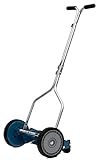
Overview: The Great States 204-14 delivers traditional reel mowing in a proven, no-frills package. This 14-inch mower features a 4-blade reel and classic design that has remained effective for decades. Built by a reputable brand in manual lawn care, it offers reliable performance for homeowners with small to medium-sized yards featuring common grass varieties like fescue, bluegrass, and ryegrass.
What Makes It Stand Out: Great States’ reputation for durability distinguishes this model from generic alternatives. The heat-treated alloy steel blades can be resharpened multiple times, extending lifespan beyond disposable competitors. Its scissor-action cut delivers professional-quality results when used correctly, promoting healthier lawn growth through clean slicing rather than tearing or bruising grass blades.
Value for Money: At $79.45, it strikes a balance between cheap generics and premium models. You’re paying for proven brand reliability and serviceable parts rather than throwaway construction. This mower will likely outlast two or three budget alternatives, making it more economical over 5-10 years. It eliminates all fuel and maintenance costs associated with powered mowers while providing consistent performance.
Strengths and Weaknesses: Pros: Reputable brand; resharpenable blades; durable alloy steel; lightweight; true scissor cut; environmentally friendly Cons: Narrow cutting width; struggles with tall/wet grass; no grass catcher; polymer wheels; requires regular mowing
Bottom Line: A solid choice for buyers seeking reliability without premium pricing. If you maintain a consistent mowing routine and have a typical cool-season lawn, this time-tested design delivers excellent results with minimal environmental impact and long-term value.
5. Fiskars Push Mower, Cut Width Manual Reel Mower with No Motor, Eco-Friendly Manual Reel Lawn Care, 18", Black

Overview: The Fiskars StaySharp Max represents the pinnacle of manual reel mower engineering. This 18-inch powerhouse features advanced technologies that address traditional reel mower weaknesses. Designed for all grass types including tough southern varieties like St. Augustine, Bermuda, and Zoysia, it combines eco-friendly operation with performance that rivals entry-level powered mowers while remaining emissions-free.
What Makes It Stand Out: The InertiaDrive reel delivers twice the cutting power of standard reel mowers, while the StaySharp system eliminates sharpening needs entirely. VersaCut technology offers an industry-leading 1"-4" height range, accommodating everything from putting-green short to standard lawn height. The reversible grass chute and one-touch handle adjustment demonstrate thoughtful ergonomic design missing from competitors.
Value for Money: At $266.85, it’s a significant investment but justifies the premium through innovation and durability. The blade system alone saves $30-50 in professional sharpening costs over the mower’s lifetime. When compared to $300+ electric or gas mowers requiring fuel and maintenance, it pays for itself within two years for typical users. The three-year warranty provides additional peace of mind.
Strengths and Weaknesses: Pros: Twice the cutting power; self-sharpening blades; widest height range; excellent ergonomics; handles all grass types; large 18" width; premium build quality Cons: Highest price in category; still requires physical effort; heavy compared to basic models; overkill for tiny yards
Bottom Line: The best manual mower money can buy. For homeowners serious about lawn health who want gas-mower capability without emissions, this premium reel mower delivers unmatched performance and long-term value.
6. American Lawn Mower Company 1604-16 16-Inch 5-Blade Walk Behind Reel Mower with Grass Catcher

Overview: The American Lawn Mower Company 1604-16 delivers traditional reel mowing with modern ergonomic touches. This 16-inch manual mower features a 5-blade reel and includes a grass catcher, positioning itself as a complete eco-friendly lawn care solution for small to medium yards.
What Makes It Stand Out: The generous height adjustment range from ½ to 2½ inches accommodates various grass types better than many competitors. The cushion-grip T-handle design significantly reduces hand fatigue during extended mowing sessions. As a product from an established brand with over a century of experience, it carries a reputation for durability and customer support that generic alternatives lack.
Value for Money: At $131.47, this mower sits in the mid-range price bracket. While not the cheapest option available, the inclusion of a grass catcher ($20-30 value) and the brand’s proven track record justify the premium. Comparable models without brand recognition typically cost $90-110, making this a reasonable investment for quality-conscious buyers.
Strengths and Weaknesses: Pros: Excellent ½" to 2½" cutting height range suits most grass varieties. Comfortable T-handle design reduces user strain. Included grass catcher adds convenience. Established brand with reliable warranty support. Quiet, emission-free operation.
Cons: Price point higher than generic alternatives. 16-inch width requires more passes than wider models. May struggle with tall or thick weeds.
Bottom Line: Ideal for homeowners seeking a reliable, brand-name reel mower with versatile cutting options. The American Lawn Mower Company 1604-16 offers solid performance and comfort for those willing to invest slightly more in proven quality.
7. 16" Push Reel Lawn Mower – Manual 5-Blade Hand Mower with Adjustable 3-Position Cutting Height (0.5"–1.75") – Lightweight, Eco-Friendly, Steel Blades – 2-Year Warranty
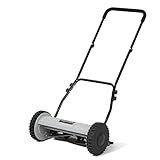
Overview: This no-frills 16-inch push reel mower delivers essential manual mowing capabilities at an entry-level price point. With five steel blades and a lightweight frame, it targets budget-conscious homeowners with small, flat lawns who prioritize simplicity over advanced features.
What Makes It Stand Out: The standout feature is undoubtedly the 2-year warranty, which is exceptional for a sub-$100 manual mower. The large 8.5-inch wheels provide stable, smooth rolling across even terrain. Its straightforward 3-position height adjustment system eliminates complexity, making it approachable for first-time reel mower users.
Value for Money: Priced at $99.95, this represents one of the best values in the manual mower market. The combination of steel construction, ball bearing reel, and a 2-year warranty at this price point undercuts most competitors by $30-50. For homeowners with modest lawn care needs, the cost-to-feature ratio is compelling.
Strengths and Weaknesses: Pros: Exceptional price point under $100. Industry-leading 2-year warranty provides peace of mind. Lightweight design for easy maneuverability. Simple, intuitive operation. Steel blades with ball bearings ensure durability.
Cons: Limited 0.5"-1.75" height range restricts grass type compatibility. Only 3 height positions lacks fine-tuning ability. No brand name may raise support concerns. Narrower cutting path than premium options.
Bottom Line: A smart choice for budget-minded buyers with small, flat yards. While height options are limited, the warranty and price make this an attractive starter reel mower that delivers core functionality without unnecessary frills.
8. Sun Joe MJ502M Reel Mower w/ 8.5-Gallon, 9-Position Height Adjustment, Foam Grip, Compact Design, Green, 20-Inch Manual w/Grass Catcher

Overview: The Sun Joe MJ502M maximizes cutting efficiency with an impressive 20-inch width, the broadest in this category. This manual reel mower features five steel blades and a substantial 8.5-gallon grass catcher, designed for homeowners who want to cover more ground with fewer passes while maintaining eco-friendly operation.
What Makes It Stand Out: The 9-position height adjustment lever offers unparalleled customization up to 2.44 inches, surpassing most competitors. Its 20-inch cutting path significantly reduces mowing time for small to medium lawns. The generous grass catcher capacity means fewer emptying stops, enhancing overall efficiency during lawn maintenance sessions.
Value for Money: At $139.99, the Sun Joe commands a slight premium but delivers proportional value through its extra-wide cutting path and superior height adjustability. Compared to 16-inch models in the same price range, the 25% wider cut translates to meaningful time savings, justifying the cost for efficiency-focused users.
Strengths and Weaknesses: Pros: Widest 20-inch cutting path saves time and effort. Excellent 9-position height adjustment (up to 2.44"). Large 8.5-gallon grass catcher reduces interruptions. Dual-wheel design enhances maneuverability. Foam grip provides comfortable handling.
Cons: Wider deck requires more storage space. May be challenging to push on uneven terrain. Premium price for manual mower category. Foam grip durability concerns in harsh weather.
Bottom Line: Perfect for homeowners prioritizing efficiency over compact storage. The Sun Joe MJ502M’s wide cutting path and excellent adjustability make it the productivity champion of manual reel mowers, ideal for medium-sized lawns.
9. Scotts 18-Inch 7-Blade Push Manual Reel Lawn Mower
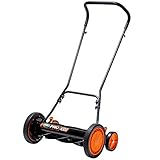
Overview: Scotts brings premium engineering to manual mowing with this 18-inch, 7-blade reel mower. Designed for discerning homeowners, the additional blades provide an exceptionally clean cut, particularly beneficial for fine-bladed grasses like Bermuda and Zoysia that demand precise trimming for optimal health.
What Makes It Stand Out: The 7-blade reel is a rarity in this price class, delivering scissor-like precision that 5-blade models cannot match. Large 10-inch dual tracking wheels maintain superior stability and balance across varied terrain. The heat-treated alloy steel blades retain sharpness significantly longer than standard steel, reducing maintenance frequency.
Value for Money: Priced at $139.99, this mower competes directly with premium options while offering specialized cutting technology. For homeowners with fine-textured lawns, the 7-blade system justifies the investment through improved cut quality and grass health. Comparable professional-grade reel mowers often exceed $200, making this a relative bargain.
Strengths and Weaknesses: Pros: 7-blade reel provides superior cutting precision. Large 10-inch wheels offer excellent stability. Heat-treated alloy steel blades stay sharp longer. Generous 1"-3" height adjustment range. Comfortable cushioned grip handle.
Cons: Overkill for coarse fescue or ryegrass lawns. Heavier than 5-blade models. Premium price may not suit all budgets. More blades require slightly more pushing effort.
Bottom Line: The Scotts 18-Inch mower is the go-to choice for fine lawn enthusiasts seeking professional results. Its 7-blade precision and durable construction make it worth the premium for those wanting golf-course quality on Bermuda, Zoysia, or similar grass types.
10. Manual Reel Lawn Mower, 16 Inch 5-Blade Cordless Push Mower Manual with Adjustable Cutting Height and Grass Catcher for Push Reel Lawn Mower for Yard, Garden

Overview: This generic-branded 16-inch reel mower targets the ultra-budget segment without sacrificing core functionality. Featuring five heat-treated manganese steel blades and a 9-position height adjustment system, it attempts to deliver premium features at a fraction of the cost of name-brand competitors.
What Makes It Stand Out: The remarkably low $75.99 price point makes this the most affordable option in the manual mower category. The U-shaped handle design and four-wheel configuration provide stability uncommon in budget models. Nine height positions offer surprising customization typically reserved for premium units, reaching up to 2.52 inches.
Value for Money: This mower redefines value, costing 25-40% less than branded alternatives while including desirable features like a grass catcher and extensive height adjustment. The manganese steel blades promise hardness and wear resistance, though long-term durability remains unproven without established brand backing. For cost-conscious buyers, the risk-to-reward ratio is compelling.
Strengths and Weaknesses: Pros: Unbeatable price under $76. 9-position height adjustment (1.34"-2.52"). Manganese steel blades offer hardness advantages. U-shaped handle provides ergonomic benefits. Includes grass catcher for complete package.
Cons: Unknown brand raises quality control concerns. “Cordless” designation is misleading marketing. Build quality uncertainty compared to established brands. Limited warranty and support expectations. Assembly instructions may be unclear.
Bottom Line: A bold choice for extreme budget shoppers. While the features exceed expectations for the price, buyers should approach with realistic expectations about long-term durability. Perfect for small yards and occasional use where cost is the primary factor.
The Science Behind the Golf-Green Cut
The secret to that coveted golf-green finish isn’t just about cutting height—it’s about how the grass is cut. Rotary mowers act like miniature helicopters, spinning blades at high speeds that tear and shred grass tips, leaving them vulnerable to disease and browning. Manual reel mowers operate on an entirely different principle: a cylinder of curved blades rotates against a stationary bottom blade, creating a shearing action identical to a pair of scissors.
This clean, precise cut seals the grass blade immediately, reducing moisture loss and preventing pathogens from entering the wound. The result? A lawn that stays greener, healthier, and recovers faster from mowing. Golf courses have used reel mowers for over a century precisely because this cutting method allows them to maintain extremely low cutting heights—sometimes under half an inch—while keeping turf dense and vibrant. For the homeowner, this means even at standard residential heights of 1-3 inches, you’re getting superior turf health and that unmistakable manicured appearance.
Why Manual Reel Mowers Deliver Superior Results
The Vibration-Free Advantage
Gas-powered reel mowers might seem like a convenient upgrade, but they introduce a critical flaw: engine vibration. This constant shaking compromises the precise blade alignment essential for that scissor-cut quality. Manual models eliminate this variable entirely, giving you a pure, uninterrupted cutting action where blade spacing remains consistent across your entire lawn. You’ll feel the difference immediately—the smooth, quiet snick-snick-snick of blades slicing cleanly through grass stems.
Physical Feedback and Connection
When you push a manual reel mower, you’re not just exercising; you’re receiving constant tactile feedback about your lawn’s condition. You’ll instantly detect thick patches that require slower passes, feel when the blades begin to dull, and notice uneven terrain that needs attention. This connection creates a more intuitive mowing experience and helps you address lawn issues before they become visible problems.
Key Features That Separate Premium from Budget Models
Blade Quality and Heat Treatment
The heart of any reel mower is its blade cylinder, and this is where premium manufacturers invest heavily. Look for blades made from hardened steel that has undergone proper heat treatment. This process increases durability and allows the edges to hold their sharpness through dozens of mowing sessions. Budget models often use softer steel that dulls quickly, requiring frequent adjustments and delivering increasingly ragged cuts within a single season.
Bearing Systems and Smooth Operation
High-quality reel mowers feature sealed ball bearings rather than simple bushings. Bearings reduce friction dramatically, making the mower easier to push while maintaining consistent blade speed. This consistent speed is crucial—when blades slow down in thick grass, they begin to push rather than cut, leaving uncut stragglers and an uneven finish. A smooth-bearing system maintains momentum and cutting efficiency.
Frame Rigidity and Alignment
A wobbly frame is the enemy of a precise cut. Premium models use solid steel or heavy-gauge alloy frames that resist flexing and maintain critical blade-to-bed-knife alignment. Cheaper models with plastic components or thin metal frames can twist slightly during use, throwing off the delicate blade spacing and creating missed patches or uneven cutting heights.
Blade Count Matters: Finding Your Sweet Spot
The number of blades on the reel cylinder directly impacts cut quality and mowing effort, yet it’s one of the most misunderstood specifications.
Five-blade reels are the traditional standard, offering a good balance between cutting ability and pushing effort. They work best for lawns mowed regularly (every 4-5 days) at heights above 1.5 inches. The wider spacing between blades means less resistance, making them ideal for those new to manual mowing or with moderately sloped yards.
Seven-blade reels represent the sweet spot for most homeowners seeking golf-green quality. The additional blades create more cuts per inch of travel, delivering a finer finish and better performance in thicker grass types like fescue or Kentucky bluegrass. They require slightly more effort but reward you with noticeably cleaner cuts and better mulching of clippings.
Nine or more blades are specialized tools designed for extremely low cutting heights and fine-bladed grasses like Bermuda or bentgrass. While they deliver the ultimate in precision, they demand significant pushing effort and require near-perfect lawn conditions. For most residential applications, these are overkill and will make mowing feel like a chore rather than a pleasure.
Understanding Cutting Width and Your Lawn Size
Cutting width determines both how quickly you can mow and how easily you can navigate obstacles. 14-inch models excel on small, intricately landscaped lawns where maneuverability around flower beds, trees, and pathways is paramount. They’re lightweight and store easily but require more passes, making them impractical for lawns over 2,500 square feet.
16 to 18-inch widths hit the residential sweet spot, offering a balance between coverage and agility. An 18-inch mower can handle a 5,000 square foot lawn efficiently while still fitting through most garden gates and around typical yard features. This range is where you’ll find the best selection of quality models.
20-inch and wider mowers are built for large, open lawns where efficiency is key. The trade-off comes in weight and maneuverability—these models can feel cumbersome in tight spaces and require more strength to turn. However, on a flat, obstacle-free half-acre, they’ll cut your mowing time significantly while delivering that signature reel mower finish.
The Importance of Weight and Maneuverability
A common misconception is that heavier mowers cut better. While some heft provides stability and helps the mower hug the ground, excessive weight makes mowing exhausting and can actually damage your lawn by creating ruts in soft soil.
Quality manual reel mowers typically weigh between 20 and 35 pounds. The secret isn’t just total weight, but weight distribution. Models with weight balanced over the rear roller rather than the cutting cylinder glide more easily and require less downward pressure to maintain cutting height. Look for mowers where you can lift the handle with minimal effort—the cutting cylinder should feel almost weightless when properly balanced.
Handle design dramatically affects perceived weight. Ergonomic, height-adjustable handles with padded grips reduce fatigue and allow you to apply force more efficiently. Some premium models feature curved handles that position your hands naturally, reducing wrist strain during longer mowing sessions.
Height Adjustment Systems Explained
Single-Lever vs. Individual Wheel Adjustments
The height adjustment mechanism reveals much about a mower’s engineering quality. Single-lever systems raise and lower all wheels simultaneously, ensuring perfect levelness and allowing quick height changes. This is invaluable when transitioning between seasons or adjusting for different grass types. However, these systems add complexity and potential failure points.
Individual wheel adjustments are simpler and more reliable but require careful measurement to ensure all wheels are set identically. A difference of just 1/8 inch between wheels creates an uneven cut and scalped patches. Quality individual systems feature detents or markings at common heights, making accurate setup easier.
Precision and Range
Golf-green quality demands precise height control. Look for mowers offering quarter-inch increments rather than half-inch jumps. The adjustment range matters too—premium models adjust from as low as 1/2 inch for specialized applications up to 3-4 inches for standard residential heights. Avoid mowers with limited ranges that lock you into either too-short or too-tall cutting.
Material Matters: Steel, Alloy, and Composite Construction
The materials used in construction determine not just durability, but also maintenance requirements and long-term performance.
Solid steel components offer unmatched longevity and can be sharpened and adjusted indefinitely. Powder-coated steel resists rust better than painted surfaces, though scratches will eventually rust if not touched up. Steel’s main drawback is weight—solid steel mowers tip toward the heavier end of the spectrum.
Aluminum alloys provide excellent corrosion resistance and reduce weight significantly. High-grade alloys are surprisingly durable, though they can be more expensive. The trade-off is that aluminum is softer than steel, so adjustment threads and mounting points may wear faster under heavy use.
Composite plastics appear in handles, height adjusters, and some frame components. Quality composites are UV-stabilized and incredibly durable, but they can become brittle after years of sun exposure. Avoid mowers with plastic gears or critical structural components—these are common failure points on budget models.
The Role of Roller Design in Striping
That iconic striped finish isn’t just cosmetic—it reflects light differently based on grass blade direction, creating the appearance of alternating light and dark bands. The rear roller is what creates this effect by bending grass blades forward as you mow.
Solid steel rollers provide the most pronounced striping effect due to their weight and smooth surface. They also offer excellent traction on slopes. However, they can compact soil in wet conditions and may leave visible tracks if your lawn is soft.
Composite or rubber-coated rollers are gentler on the lawn and work better in damp conditions, though they produce slightly less dramatic striping. Some premium models feature adjustable rollers that can be raised or lowered to control striping intensity—ideal for those who want subtle patterns versus bold stripes.
Maintenance: Keeping Your Scissors-Sharp Edge
Backlapping vs. Professional Sharpening
Maintaining that golf-green cut requires sharp blades, but sharpening reel mowers isn’t like sharpening a rotary blade. Backlapping is the traditional method where you apply a fine abrasive compound and rotate the reel backward, honing the blades against the bed knife. Quality mowers include backlapping kits, and this simple process, done annually, keeps edges razor-sharp.
Professional sharpening involves grinding the reel and bed knife on specialized equipment. While more expensive, it’s necessary every 3-5 years to restore severely worn blades or correct damage from hitting rocks. Premium mowers are designed for easy removal of the cutting cylinder, making professional service straightforward.
Cleaning and Storage Best Practices
After each mow, brush off grass clippings from the reel and bed knife. Clippings hold moisture and promote rust. A light spray of silicone lubricant on the blades after cleaning prevents corrosion. Store your mower indoors or under cover—never leave it exposed to rain. During winter, apply a thin coat of oil to all metal surfaces and store it hanging vertically to save space and prevent flat spots on rollers.
Common Mistakes That Ruin Your Cut Quality
Mowing when wet is perhaps the most damaging error. Wet grass clumps on the reel, clogs the cutting mechanism, and bends rather than cuts, leaving a ragged finish. Wait until grass is dry, typically after 10 AM on mowing days.
Letting grass grow too long defeats the purpose of a reel mower. These machines are designed for frequent mowing—ideally every 3-5 days during peak growth. Cutting more than one-third of the grass blade height in a single pass stresses the plant and overwhelms the mower, resulting in missed patches and excessive clumping.
Pushing too fast seems counterintuitive, but speed kills cut quality. The reel must rotate fast enough to create clean shearing action. Pushing too quickly causes the blades to push grass over rather than cut it. Find a pace where you feel consistent, moderate resistance—typically a comfortable walking speed.
Ignoring blade adjustment leads to poor performance. The reel-to-bed-knife clearance should be paper-thin; too wide and grass slips through uncut, too tight and the mower becomes hard to push. Check adjustment monthly during mowing season by slowly rotating the reel—it should make a slight, even scraping sound.
Lawn Preparation: Setting Yourself Up for Success
Even the finest reel mower can’t compensate for a poorly prepared lawn. Leveling is critical—reel mowers follow ground contours precisely, so any bumps or depressions result in scalping or missed spots. Top-dress with sand or compost in fall to smooth minor irregularities.
Debris removal takes on new importance. Rotary mowers can pulverize small sticks and acorns, but reel mowers will jam or nick blades. Walk your lawn before each mow and remove anything larger than a dime. Consider installing edging to keep gravel and mulch off your lawn.
Grass type selection affects success. Fine-bladed grasses like fescue, Kentucky bluegrass, and perennial ryegrass respond best to reel mowing. Thick, coarse grasses like tall fescue or St. Augustine can be challenging and may require more frequent mowing or a higher blade count.
Cost vs. Value: Investing in Quality
Manual reel mowers range from under $100 to over $500, and the difference isn’t just marketing. Budget models ($80-$150) typically feature five blades, basic steel construction, and plastic components in high-stress areas. They work adequately for small, flat lawns but rarely deliver true golf-green quality and often require replacement within 3-5 years.
Mid-range models ($200-$350) offer seven blades, better bearings, and improved materials. This is where most homeowners find the best value—durable enough for a decade of use with proper maintenance, and capable of delivering professional results.
Premium models ($400+) justify their price through exceptional engineering, lightweight alloys, precision adjustments, and warranties that can extend 20+ years. For the lawn enthusiast committed to the reel mower lifestyle, this is a lifetime investment that pays dividends in cut quality and mowing pleasure.
Consider total cost of ownership: a $300 reel mower lasting 15 years costs $20 annually, while replacing a $100 mower every 3 years costs $33 annually plus the frustration of declining performance.
Environmental Impact Beyond Zero Emissions
The zero-emissions benefit of manual reel mowers is obvious—no gas, no oil, no exhaust. But the environmental advantages run deeper. Noise pollution reduction creates a more peaceful neighborhood and protects local wildlife. You can mow at 7 AM on a Saturday without earning dirty looks from neighbors.
Soil health improves dramatically without the weight and vibration of gas engines. Soil compaction decreases, allowing better water infiltration and root growth. Earthworms and beneficial insects thrive without chemical exposure from fuel spills or exhaust deposition.
Carbon footprint calculations favor manual mowers even when accounting for manufacturing. A gas mower’s production creates roughly 70 kg of CO2, then emits 40-50 kg annually during use. A manual mower’s production creates about 30 kg of CO2 and generates zero operational emissions. Over a 15-year lifespan, the difference is staggering—equivalent to driving a car 3,000 miles.
Frequently Asked Questions
1. Can a manual reel mower really cut as low as a golf course green?
Yes, premium manual reel mowers can cut as low as 1/2 inch, but achieving this requires perfect lawn conditions, daily mowing, and specialized grass varieties like bentgrass. For most homeowners, cutting at 3/4 to 1 inch with a seven-blade reel provides that golf-green appearance without the intensive maintenance.
2. How often do I need to sharpen the blades?
With proper backlapping annually and avoiding debris, quality blades stay sharp for 3-5 years before needing professional grinding. Budget steel may require attention every 1-2 years. The key is maintaining the bed knife alignment—sharp blades misaligned still cut poorly.
3. Will a reel mower work on my sloped lawn?
Manual reel mowers handle moderate slopes well, especially models with heavier steel rollers that provide traction. Steep slopes over 15 degrees become challenging. Consider mowing across the slope rather than up and down, and look for mowers with pneumatic tires if your yard is particularly hilly.
4. What grass types are unsuitable for reel mowers?
Very coarse grasses like tall fescue (wide-bladed varieties), St. Augustine, and Bahiagrass can be problematic. Their thick stems may bend rather than cut cleanly. If you have these grasses, choose a nine-blade reel and mow more frequently, or consider that rotary mowing might be more practical.
5. Why does my mower leave uncut strips of grass?
This typically indicates one of three issues: blades are too dull, the reel-to-bed-knife clearance is too wide, or you’re pushing too fast. Check adjustment first—tighten until you hear slight, even contact. If the problem persists, backlap the blades or slow your pace.
6. How small of a lawn is too small for a reel mower?
There’s no lower limit—reel mowers excel on tiny lawns where maneuverability matters. For lawns under 500 square feet, a 14-inch model is perfect. The real question is lawn shape; if you have numerous obstacles, a narrower width becomes more important than overall lawn size.
7. Can I mulch leaves with a reel mower?
Reel mowers aren’t designed for leaf mulching. They’ll shred light leaf coverage into fine pieces that decompose quickly, but heavy leaf fall will clog the mechanism. It’s best to rake or blow leaves first, then mow. Some models offer attachments that improve leaf handling, but results are modest.
8. Is it normal for the mower to be hard to push?
Manual reel mowers require more effort than pushing an unpowered rotary mower, but it shouldn’t feel like a workout. If it’s excessively difficult, the blades are likely adjusted too tightly, or you’re cutting too much grass at once. Properly adjusted, a quality reel mower should move with steady, moderate resistance.
9. How do I achieve the striped pattern I see on golf courses?
Striping comes from the rear roller bending grass blades in alternating directions. Mow in straight, slightly overlapping passes, then make your next pass in the opposite direction. For best results, mow the perimeter last to clean up turn marks. The effect is most visible when the sun is low.
10. What’s the biggest mistake new reel mower owners make?
Waiting too long between mowings. Reel mowers work best as a maintenance tool, not a bush hog. Set a schedule to mow every 3-5 days during growing season, even if the lawn doesn’t look like it needs it. This keeps grass at optimal height, prevents thatch buildup, and makes each mowing session quick and effortless.