If you’ve ever felt your riding mower lurch violently when you simply wanted to ease forward, or watched in frustration as it struggled uphill despite a powerful engine, the culprit likely isn’t mechanical failure—it’s hydrostatic transmission fluid. This often-overlooked hydraulic lifeblood is what transforms your foot’s gentle pressure into seamless, infinitely variable speed control. Yet most owners treat it as an afterthought, grabbing whatever’s convenient and wondering why their $3,000 machine performs like a bucking bronco.
Understanding hydrostatic transmission fluid isn’t just about preventing problems; it’s about unlocking the buttery-smooth operation manufacturers promised. The difference between a mower that glides across your lawn with precision and one that fights you at every turn often comes down to a few quarts of properly specified fluid. Let’s dive deep into what makes this specialized oil so critical and how you can ensure your mower delivers that coveted seamless performance for years to come.
Top 10 Hydrostatic Transmission Fluid for Riding Mowers
Detailed Product Reviews
1. TRIAX Trans Zero 20W-50 Full Synthetic Hydro-Static Transmission Oil for Zero-Turn Mowers (1 Quart)

Overview: The TRIAX Trans Zero 20W-50 is a full synthetic hydrostatic transmission fluid engineered specifically for zero-turn mowers. Designed to handle extreme operating conditions, this commercial-grade oil delivers reliable performance across temperature extremes with a remarkable -50°F pour point and exceptional high-temperature stability. Its formulation is compatible with virtually all major mower brands including SCAG, Toro, Ferris, Gravely, and John Deere.
What Makes It Stand Out: This fluid’s commercial-grade credentials set it apart from standard options. The high zinc concentration prevents gear scuffing and glazing, while its shear-resistant formula maintains viscosity under heavy loads. Most impressively, it offers up to three times the OEM drain intervals, significantly reducing maintenance downtime. The corrosion protection lasts up to two years, making it ideal for seasonal equipment storage.
Value for Money: At $15.99 per quart ($0.50 per ounce), this premium fluid commands a higher price than conventional alternatives. However, the extended drain intervals translate to fewer oil changes over your mower’s lifetime, potentially offsetting the initial cost. For commercial operators logging long hours, the reduced maintenance frequency and enhanced protection justify the investment compared to standard OEM fluids.
Strengths and Weaknesses: Strengths include full synthetic formulation, exceptional temperature range, broad compatibility, extended service life, and commercial-grade durability. The high zinc content provides superior gear protection. Weaknesses are the premium price point and quart size, which may be insufficient for larger transmission systems requiring multiple quarts. The specialized nature makes it overkill for light residential use.
Bottom Line: For commercial landscapers and serious property owners demanding maximum protection and extended service intervals, this TRIAX fluid is an excellent investment. The performance benefits outweigh the cost premium for high-usage applications.
2. TRIAX Trans Zero 20W-50 Full Synthetic Hydro-Static Transmission Oil for Zero-Turn Mowers (1 Gallon)

Overview: This one-gallon version of TRIAX Trans Zero 20W-50 delivers the same full synthetic, commercial-grade protection as its quart-sized counterpart, but in a more economical bulk format. Engineered for zero-turn mower hydrostatic transmissions, it maintains flawless operation across extreme temperatures from -50°F to intense summer heat. The formulation serves all major commercial brands and is specifically designed for high-load, continuous operation in demanding landscaping environments.
What Makes It Stand Out: The gallon container provides substantial cost savings while maintaining the premium features that define this product line. Its true all-season capability eliminates seasonal fluid changes, and the extended drain interval formula reduces maintenance frequency by up to two-thirds compared to standard OEM fluids. The high film strength prevents metal-to-metal contact under maximum load, while advanced corrosion protection safeguards internal components during extended storage.
Value for Money: At $39.49 per gallon ($0.31 per ounce), this bulk option offers significant savings over purchasing four individual quarts, delivering approximately 38% better value. For commercial operations maintaining multiple mowers or for owners with larger transmission capacities, the economy is compelling. When factoring in tripled drain intervals, the total cost of ownership becomes highly competitive with conventional fluids.
Strengths and Weaknesses: Key strengths include exceptional per-ounce value, full synthetic formulation, comprehensive brand compatibility, and extended service life that minimizes downtime. The gallon size reduces plastic waste and ensures adequate supply for complete fluid changes. The primary weakness is the larger upfront investment, and the container may be cumbersome for occasional users with limited storage. Over-purchase could be an issue for single-mower owners.
Bottom Line: The gallon jug is the smart choice for landscaping businesses and multi-mower owners. The substantial per-ounce savings and reduced packaging waste make it a practical, economical solution for high-volume users seeking premium protection.
3. Honda 08208-HST02 Hydrostatic Fluid -12oz

Overview: Honda’s 08208-HST02 is a genuine OEM hydrostatic transmission fluid specifically formulated for Honda zero-turn and riding mowers. This 12-ounce bottle provides the exact factory-specified lubricant designed to maintain optimal transmission performance and warranty compliance. As a direct replacement for part numbers 08208-HST01 and 32243504-97200C020, it ensures precise compatibility with Honda’s hydrostatic systems.
What Makes It Stand Out: The primary distinction is its genuine OEM status, guaranteeing perfect formulation match and warranty protection for Honda equipment. Unlike universal fluids, this product eliminates any guesswork regarding compatibility. The factory-engineered additive package is specifically calibrated for Honda transmission components, ensuring smooth operation and maximum component life. For Honda owners, this provides peace of mind that aftermarket alternatives cannot match.
Value for Money: At $15.49 for 12 ounces ($1.29 per ounce), this is premium-priced fluid. The cost per ounce is significantly higher than universal alternatives. However, for Honda owners seeking to maintain warranty coverage or preferring OEM parts, the premium may be justified. The small bottle size is convenient for single applications but expensive for multiple fluid changes. Most users will require several bottles for a complete system refill.
Strengths and Weaknesses: Strengths include guaranteed Honda compatibility, OEM quality assurance, warranty compliance, and precise formulation for Honda transmissions. The compact size suits emergency top-offs. Weaknesses are the extremely high per-ounce cost, limited 12-ounce quantity requiring multiple purchases, and brand exclusivity that offers no value for non-Honda equipment. The price premium over quality universal fluids is substantial without proportional performance benefits.
Bottom Line: Only purchase this fluid if you own Honda equipment and prioritize OEM parts or require warranty compliance. For most users, high-quality universal alternatives offer better value without compromising performance.
4. Power Performance 33006 SAE 20W-50 Hydrostatic Transmission Fluid

Overview: Power Performance 33006 offers a budget-conscious SAE 20W-50 hydrostatic transmission fluid suitable for agricultural, lawnmowing, and industrial equipment. This one-quart bottle provides basic all-season protection for hydrostatic systems without the premium price tag of full synthetic formulations. Designed for general-purpose use, it serves as an accessible option for residential mower owners and light commercial applications.
What Makes It Stand Out: The primary appeal is its aggressive pricing, making it one of the most affordable options on the market. The all-season formula provides year-round usability in moderate climates, eliminating the need for seasonal fluid changes. Its versatility across equipment types—from lawn mowers to agricultural machinery—adds flexibility for users maintaining multiple machines. The straightforward formulation delivers essential protection without complexity.
Value for Money: At $14.99 per quart ($0.47 per ounce), this fluid offers excellent upfront affordability. For residential users performing annual maintenance, the low cost is highly attractive. However, without specified extended drain intervals or extreme temperature performance claims, the long-term value proposition is less compelling than premium synthetics. The savings may be offset by more frequent changes and potentially reduced component life under heavy loads.
Strengths and Weaknesses: Strengths include low purchase price, all-season versatility, multi-equipment compatibility, and adequate performance for light-duty applications. The simple formulation reduces cost without unnecessary additives for basic needs. Weaknesses are the lack of full synthetic base stocks, no specified extended drain interval, potentially inferior extreme-temperature performance, and limited brand recognition. It may not withstand continuous commercial use as effectively as premium alternatives.
Bottom Line: This is a solid choice for budget-minded residential users with light to moderate mowing needs. Commercial operators and those in extreme climates should invest in higher-tier fluids for better long-term protection and reduced maintenance frequency.
5. Lucas Oil 11300 Hydrostatic Lawn Mower Transmission Fluid | Heavy Duty Synthetic Blend SAE 20W-50-1 Quart (Pack of 6)

Overview: Lucas Oil’s 11300 is a heavy-duty synthetic blend SAE 20W-50 hydrostatic transmission fluid offered in a convenient six-quart pack. This formulation combines synthetic and premium base oils with advanced additive technology to deliver robust protection for lawn mower transmissions. Lucas’s reputation for high-performance lubricants makes this an attractive option for both residential and commercial users seeking reliable bulk purchasing.
What Makes It Stand Out: The six-quart packaging provides exceptional convenience for complete fluid changes or maintaining multiple machines. The synthetic blend formulation includes premium anti-wear protection, corrosion inhibitors, and enhanced oxidation resistance. Unique dispersancy and detergency additives keep internal components clean, potentially extending transmission life. Lucas’s established brand reputation for heavy-duty applications inspires confidence.
Value for Money: At $63.99 for six quarts ($10.66 per quart, or $0.33 per ounce), this package offers the best per-ounce value among reviewed products. Bulk purchasing eliminates multiple trips to the store and ensures consistent fluid for all equipment. The synthetic blend strikes a balance between full synthetic performance and conventional oil pricing, delivering strong value for users needing multiple quarts while maintaining quality protection.
Strengths and Weaknesses: Strengths include outstanding bulk pricing, reputable brand name, synthetic blend quality, added detergency for cleanliness, and convenient multi-pack format. The heavy-duty formulation suits commercial applications. Weaknesses include being a blend rather than full synthetic, potentially limiting extreme-temperature performance compared to premium synthetics. The six-quart quantity may be excessive for single-mower owners, requiring storage space. Individual quart purchases aren’t available.
Bottom Line: This six-pack is ideal for landscaping businesses, equipment rental fleets, or homeowners with multiple machines. The unbeatable per-quart price and Lucas quality make it a smart bulk purchase, provided you have adequate storage and usage needs.
6. Tuff Torq Genuine Hydrostatic Transmission Oil, Tuff Tech 3 Liters 5W50-187Q0899000

Overview: The Tuff Torq Genuine Hydrostatic Transmission Oil is the manufacturer-recommended lifeblood for your lawn equipment’s hydrostatic transmission. This 3-liter bottle of Tuff Tech 5W-50 fluid is specifically engineered to meet the precise demands of Tuff Torq transmissions, ensuring optimal performance across varying temperature conditions.
What Makes It Stand Out: As a genuine OEM product, this oil features a precisely calibrated 5W-50 viscosity rating that maintains consistent flow characteristics whether you’re mowing in early spring chill or mid-summer heat. The formulation addresses the unique requirements of hydrostatic systems, providing proper lubrication for the variable displacement pumps and motors that power your equipment. The durable plastic bottle includes an ergonomic design for controlled pouring, reducing waste and mess during maintenance.
Value for Money: At $1.48 per fluid ounce, this premium-priced fluid reflects its OEM status. While significantly more expensive than generic alternatives, using manufacturer-specified oil protects your warranty and ensures compatibility. For equipment owners who prioritize longevity and factory-specified maintenance, the investment is justified compared to potential transmission repairs costing hundreds of dollars.
Strengths and Weaknesses: Strengths include genuine OEM formulation, excellent cold-weather performance, and quality packaging. The 3-liter quantity suits most residential mower transmissions. Weaknesses center on the premium price point and limited compatibility—it’s formulated specifically for Tuff Torq systems, making it unsuitable for other brands requiring different viscosities.
Bottom Line: This is the definitive choice for Tuff Torq transmission owners who demand factory-specified fluids. The premium cost is offset by guaranteed compatibility and peace of mind. For those with compatible equipment, it’s a worthwhile investment in long-term reliability.
7. Lucas 5-Quarts SAE 20W-50 Synthetic Blend Hydrostatic Transmission Fluid
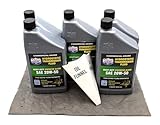
Overview: Lucas Oil’s 5-quart synthetic blend hydrostatic transmission fluid offers a robust solution for maintaining lawn and garden equipment. This package delivers a performance-oriented 20W-50 viscosity fluid enhanced with synthetic components, plus practical accessories including an oil absorbent pad and funnel for cleaner maintenance.
What Makes It Stand Out: The synthetic blend formulation provides superior thermal stability and wear protection compared to conventional oils, while maintaining cost-effectiveness versus full synthetics. The included accessories demonstrate thoughtful packaging—an absorbent pad prevents garage floor stains, and the funnel simplifies filling without spills. Lucas’s reputation for heavy-duty lubricants translates into a product designed for demanding hydrostatic systems.
Value for Money: At $56.99 for five quarts plus accessories, this package delivers solid mid-range value. The fluid alone costs less than premium OEM options, while the bundled pad and funnel (worth approximately $5-8 separately) add convenience. For equipment requiring 20W-50 viscosity, it’s competitively priced against other synthetic blends.
Strengths and Weaknesses: Strengths include the synthetic blend formulation, reputable brand backing, and useful included accessories. The 20W-50 viscosity suits most warm-weather operations and provides excellent film strength. Weaknesses include potential cold-weather thickening in freezing temperatures and the absence of filters for a complete service. The synthetic blend, while improved, doesn’t match full synthetic performance.
Bottom Line: An excellent choice for DIY maintenance enthusiasts seeking quality fluid with practical accessories. The synthetic blend offers meaningful performance gains over conventional oil without breaking the bank. Ideal for moderate climates and standard-duty equipment.
8. Lucas 5-Quart 20W-50 Hydrostatic Transmission Fluid Change Kit with 2-Filters, Prevents Corrosion

Overview: Lucas delivers a comprehensive maintenance solution with this complete change kit featuring five quarts of 20W-50 hydrostatic transmission fluid, two compatible filters, an absorbent pad, and funnel. This all-in-one package eliminates guesswork and multiple store trips for transmission service.
What Makes It Stand Out: The inclusion of two Hydro Gear 52114-compatible filters transforms this from a simple fluid purchase into a complete service kit. The corrosion-prevention additives in the fluid protect internal components from moisture damage, extending transmission life. Every necessary component arrives together, ensuring you have the right filter for your application.
Value for Money: At $74.99, this kit commands a premium over fluid-only options, but the math works in your favor. Quality hydrostatic filters typically retail for $12-18 each, meaning you’re getting $24-36 worth of filters plus accessories. When factoring the convenience of a single purchase, the value proposition strengthens for those due for a complete service.
Strengths and Weaknesses: Major strengths include the complete kit convenience, filter compatibility with common Hydro Gear systems, and corrosion-prevention formulation. The five-quart quantity suits most residential zero-turn mowers. Weaknesses include the higher upfront cost and potential filter incompatibility with non-Hydro Gear systems. The 20W-50 viscosity may be too thick for equipment specifying lighter grades.
Bottom Line: This kit is perfect for equipment owners ready for a full transmission service. The convenience factor alone justifies the cost, and the included filters eliminate compatibility concerns. Verify your filter requirements before purchasing to ensure proper fitment.
9. Stens Shield 770-738 SAE 20W-50 Hydrostatic Transmission Fluid Gallon

Overview: Stens Shield offers a straightforward, budget-conscious approach to hydrostatic transmission maintenance with this one-gallon container of SAE 20W-50 fluid. Positioned as a no-frills alternative to premium brands, it provides essential lubrication for lawn equipment without premium pricing.
What Makes It Stand Out: The aggressive pricing at $0.31 per fluid ounce makes this the most economical option in its class. Stens has built a reputation for providing aftermarket parts and fluids that meet or exceed OEM specifications at accessible price points. The single-gallon size is perfect for smaller transmissions or top-off applications where purchasing larger quantities would be wasteful.
Value for Money: Exceptional value defines this product. At $39.99 for a gallon, it undercuts most competitors by 30-50% on a per-ounce basis. For equipment owners performing regular maintenance on multiple machines or operating on tight budgets, the savings compound significantly. The performance-to-price ratio makes it attractive for commercial operators with fleets to maintain.
Strengths and Weaknesses: Strengths include unbeatable pricing, adequate performance for standard-duty applications, and a recognizable aftermarket brand. The 20W-50 viscosity suits most common equipment. Weaknesses include the lack of included accessories (funnel, pad), limited quantity for larger systems, and potentially shorter additive package life compared to premium synthetics.
Bottom Line: For budget-minded consumers seeking reliable fluid without premium costs, Stens Shield delivers. It’s ideal for standard residential mowers and multi-unit maintenance. While it lacks frills, the core lubrication performance meets expectations. Stock up if you maintain several pieces of equipment.
10. Stens Sheild 770-740 SAE 20W-50 Hydrostatic Transmission Fluid

Overview: Stens Shield 770-740 represents a performance-focused formulation within the budget-friendly brand’s lineup. This SAE 20W-50 hydrostatic transmission fluid emphasizes shear stability and advanced additive technology to protect transmissions under demanding conditions, making it suitable for heavy-duty residential and light commercial applications.
What Makes It Stand Out: Unlike basic fluids, this formulation specifically addresses heavy-use scenarios through shear-stable polymers that resist viscosity breakdown during extended operation. The anti-wear additive package provides enhanced protection for pump components, while oxidation and corrosion inhibitors combat the moisture and heat common in hydrostatic systems. This represents Stens’ premium tier within their value-oriented portfolio.
Value for Money: At $0.47 per fluid ounce, this fluid positions itself between budget and premium options. The advanced additive package delivers benefits typically found in higher-priced synthetic blends, making it a smart value for equipment subjected to heavy loads, hills, or commercial-duty cycles. The price reflects enhanced performance without reaching OEM premium levels.
Strengths and Weaknesses: Strengths include the robust additive technology, shear stability for demanding applications, and corrosion resistance. The formulation addresses key failure modes in hydrostatic transmissions. Weaknesses include unclear container size (likely smaller than gallon), lack of accessories, and Stens’ aftermarket status may concern warranty-conscious owners.
Bottom Line: An excellent middle-ground option for those needing enhanced protection without OEM prices. The shear-stable formulation makes it particularly suitable for challenging terrain and heavy-use equipment. Verify compatibility with your specific transmission requirements, but expect reliable performance in demanding conditions.
What Is Hydrostatic Transmission and Why Does Fluid Matter?
Hydrostatic drive systems have revolutionized riding mowers by replacing clunky gear-based transmissions with fluid power. Instead of mechanical gears grinding through preset speeds, a pump pressurizes fluid that drives a motor, giving you infinite speed variability with just a pedal or lever. This closed-loop hydraulic system delivers instant response and exceptional maneuverability—but only if the fluid can maintain precise pressure under extreme conditions.
The fluid does far more than transfer power. It lubricates precision-machined components spinning at thousands of RPMs, carries away tremendous heat generated by continuous pumping, prevents metal-to-metal contact under loads exceeding 1,000 PSI, and protects against corrosion during months of seasonal storage. Using the wrong viscosity or additive package is like running your engine with water instead of oil—the mechanics might work temporarily, but catastrophic wear is inevitable.
The Science Behind Smooth Shifts: Viscosity and Flow Dynamics
Smooth operation depends entirely on the fluid’s ability to flow consistently through microscopic clearances in the pump and motor. When you press the forward pedal, the swashplate angle changes instantly, demanding immediate fluid displacement. If the oil is too thick, you’ll experience delayed response and jerky starts. Too thin, and internal leakage creates a mushy, unresponsive feel with reduced power.
Viscosity Index (VI) becomes critical here. A high VI means the fluid maintains consistent thickness across temperature swings. Morning dew might cool your mower to 50°F, while afternoon sun bakes the transmission to 180°F. Quality hydrostatic fluids boast VI ratings above 150, ensuring that first cold start feels as responsive as midday operation.
Understanding Viscosity Grades for Mower Applications
Most manufacturers specify 20W-50 or 10W-40 grades for hydrostatic transmissions, but these aren’t the same as engine oils. The “W” rating matters less than the fluid’s shear stability. Hydrostatic systems subject oil to mechanical shearing forces that can permanently thin inferior fluids within 50 hours of operation. Look for fluids labeled “anti-shear” or “high shear stability” rather than just focusing on the base grade.
Some commercial mowers require ISO 46 or ISO 68 hydraulic oils, which follow a different grading system entirely. These are measured at 104°F (40°C) and provide more precise viscosity control for sustained heavy-duty use. Never assume automotive engine oil will suffice—the additive packages are fundamentally different and can cause seal swelling or inadequate lubrication.
Temperature Performance: Cold Starts vs. Hot Operation
Your transmission’s worst enemy is temperature extremes. Cold thick fluid starves components of lubrication during critical first minutes, while overheated fluid oxidizes rapidly, forming sludge that clogs filters and valves. Premium fluids contain pour point depressants that keep them flowing at temperatures below -20°F, and robust antioxidant packages that withstand sustained operation above 200°F.
The ideal fluid exhibits less than 10% viscosity change across your operating range. This stability prevents that common complaint: “My mower works fine after warming up but is terrible for the first 10 minutes.” That behavior screams improper viscosity grade or degraded fluid that has sheared down to water-like thinness.
Key Fluid Properties That Define Performance
Beyond viscosity, five critical properties separate exceptional hydrostatic fluids from mediocre ones. Understanding these helps you evaluate any fluid, regardless of brand.
Anti-Wear Additives: Protecting Your Investment
Zinc dialkyldithiophosphate (ZDDP) and ashless anti-wear compounds form sacrificial protective layers on metal surfaces. In hydrostatic transmissions, these additives must activate under boundary lubrication conditions—when the fluid film is temporarily broken during shock loads or direction changes. Insufficient anti-wear protection leads to microscopic pitting on pistons and cylinder blocks, which progresses to catastrophic failure.
Look for fluids meeting Eaton-Vickers 35VQ25 or Denison HF-0 specifications, even if your mower manual doesn’t require them. These industrial standards guarantee the additive package can handle the 3,000+ PSI spikes common during abrupt direction changes.
Oxidation Stability: Longevity in Extreme Conditions
Every hour of operation introduces oxygen, heat, and metal catalysts that break down fluid molecules. Quality fluids contain hindered phenol and amine antioxidants that interrupt this chain reaction. The difference is dramatic: conventional fluids might last 200 hours before oxidation necessitates a change, while premium synthetics exceed 500 hours.
The ASTM D943 test measures oxidation life in hours. Fluids exceeding 2,000 hours in this test will easily protect your mower for multiple seasons. Check technical data sheets for “TAN” (Total Acid Number) limits—quality fluids stay below 2.0 mg KOH/g even after extended use.
Foam Suppression: Maintaining Consistent Pressure
Air entrainment is a silent killer in hydrostatic systems. When fluid foams, compressibility increases, causing spongy pedal feel and power loss. Worse, collapsing bubbles erode metal surfaces through cavitation, a process that can destroy a pump in under 100 hours.
Silicone-based antifoam agents are added in precise concentrations—typically 5-10 parts per million. Too much actually stabilizes foam. Quality fluids meet ASTM D892 foam sequence tests, maintaining zero foam after 10 minutes. If your transmission reservoir looks like a root beer float after operation, your fluid has failed.
OEM Specifications vs. Universal Fluids: Making the Right Choice
Manufacturers like John Deere, Cub Cadet, and Husqvarna each publish proprietary fluid specifications (J20C, Hy-Gard, etc.). These specs guarantee performance in their specific pump designs, which may have unique seal materials, clearances, or pressure requirements. Using OEM fluid during warranty period is non-negotiable—deviation can void coverage.
However, after warranty, premium universal fluids meeting multiple OEM specs can save money without compromising performance. The key is verifying the fluid lists your manufacturer’s specification on the label, not just claiming “suitable for use.” Reputable universal fluids undergo extensive compatibility testing and often exceed OEM requirements in oxidation stability and temperature range.
Decoding Fluid Labels: What Those Certifications Actually Mean
That label alphabet soup isn’t marketing fluff—it’s your roadmap to performance. “API GL-4” indicates gear protection level. “ISO 11158 HM” confirms industrial hydraulic performance. “AGMA 250.04” proves gear wear protection. The most important for mowers is often “ASTM D2882,” which tests vane pump wear directly applicable to hydrostatic units.
Be wary of vague claims like “high performance” or “premium blend” without specific test data. Legitimate fluids publish performance metrics. If the manufacturer won’t share a technical data sheet, consider it a red flag. Look for phrases like “shear stable,” “high viscosity index,” and “extended drain interval” backed by actual test numbers.
The Hidden Cost of Using the Wrong Fluid
That $5 gallon of universal hydraulic fluid might seem like a bargain until it costs you a $800 transmission rebuild. The economics are stark: proper fluid costs roughly $0.03 per operating hour, while a transmission replacement runs $0.50 per hour over the mower’s life. Skimping on fluid is the most expensive “savings” you’ll ever achieve.
Mechanical Damage from Improper Lubrication
Wrong fluid causes damage through multiple pathways. Too thin: accelerated wear from fluid film collapse. Too thick: cavitation erosion from pump starvation. Wrong additives: seal degradation leading to internal leaks. Wrong base oil: sludge formation that blocks cooling passages. Each pathway leads to the same destination: a transmission that slips, overheats, or seizes entirely.
Efficiency Loss and Fuel Economy Impact
Degraded or improper fluid increases internal friction and leakage, forcing the engine to work harder. A transmission with worn fluid can consume 15-20% more engine power to deliver the same ground speed. On a typical 25HP mower, that’s 4-5 horsepower wasted—enough to notice in fuel consumption and cutting performance on hills. Over a season, the extra gas cost exceeds the price of proper fluid.
When to Change Your Hydrostatic Transmission Fluid
The old “change it every 300 hours” rule is outdated. Modern fluids and condition monitoring allow for optimized intervals that save money while ensuring protection. The key is understanding your usage pattern.
Hour-Based Intervals vs. Condition-Based Maintenance
For residential mowers (under 50 hours/year), annual changes suffice regardless of hours. Commercial operators should follow a tiered approach: conventional fluids at 200 hours, premium synthetics at 400-500 hours. However, condition-based monitoring using oil analysis can safely extend intervals to 800+ hours for synthetics.
Oil analysis costs about $30 but measures viscosity, contamination, wear metals, and oxidation. If results show the fluid is sound, you’re wasting money changing it. This data-driven approach is standard in commercial fleets and increasingly viable for high-end residential mowers.
Visual Inspection: What Your Fluid Is Telling You
Pull the dipstick when the transmission is warm. Fresh fluid is translucent amber or red, depending on dye. Dark brown indicates oxidation. Milky appearance means water contamination from condensation or external leaks. Metallic shimmer signals internal wear. A burnt smell confirms overheating. Any of these symptoms demand immediate change, regardless of hours.
Check the fluid level religiously. Low fluid causes aeration and overheating. Most systems hold only 4-6 quarts, so losing even half a quart creates a 10-15% deficiency that dramatically impacts performance. Always check on level ground with the transmission fully purged of air.
DIY Fluid Change: Step-by-Step Best Practices
Changing hydrostatic fluid isn’t complicated, but doing it wrong introduces air locks that can destroy a transmission in minutes. Follow these proven steps.
Essential Tools and Safety Precautions
You’ll need: a suction pump or turkey baster for reservoir removal, drain pans, new filters, the exact fluid specification, and a torque wrench for filter installation. Never mix fluid types—if switching brands, flush the system completely. Wear safety glasses; pressurized fluid can inject through skin, requiring emergency surgery.
Work on a level surface with the engine cold. Disconnect the spark plug wire to prevent accidental starting. Clean the reservoir cap and surrounding area meticulously—one grain of sand can score a $400 pump component.
The Proper Purging Procedure Explained
After refilling, the critical step is purging air from the closed loop. With the drive release lever pulled (allowing freewheeling), start the engine and idle for 30 seconds. Stop, check level, and repeat three times. Then, with the engine running, slowly cycle the pedals forward and reverse 5-6 times, holding each for 5 seconds. You’ll hear the pump noise change from whining to a smooth hum as air evacuates.
Never drive the mower immediately after a fluid change. Air pockets cause cavitation that can destroy the pump within minutes. The purging process takes 15 minutes but saves your transmission.
Common Symptoms of Transmission Fluid Problems
Recognizing early warning signs prevents catastrophic failures. Jerky operation when cold that improves as it warms indicates viscosity breakdown. Gradual loss of power on hills suggests fluid thinning from shear or overheating. Inability to hold speed on inclines points to worn fluid causing internal leakage.
Unusual whining or groaning, especially when changing direction, signals aeration or contamination. If the mower creeps forward in neutral with a hot transmission, the fluid’s friction modifiers have degraded. Address these symptoms immediately—continued operation accelerates wear exponentially.
Seasonal Considerations for Transmission Fluid
Your mower’s transmission experiences greater temperature swings than your car’s engine, yet receives less attention. Seasonal maintenance is crucial.
Winter Storage: Protecting Your System
Before storage, change the fluid if it’s near its interval. Old fluid contains acidic oxidation byproducts that corrode precision components during months of inactivity. Run the engine for 10 minutes after the change to circulate fresh fluid throughout the system.
Store with the transmission fully purged and the reservoir filled to the maximum mark. This minimizes condensation space. Consider adding a fuel stabilizer that also conditions seals, preventing them from drying out and leaking come spring.
Summer Heat: Preventing Breakdown
During heat waves, check fluid level weekly. Ambient temperatures above 90°F push transmission oil temperatures past 200°F, accelerating oxidation. If mowing in extreme heat (over 100°F), consider switching to a fluid with a higher viscosity grade for that season. Some commercial operators run ISO 68 instead of ISO 46 during summer months for added protection.
Take breaks during heavy cutting. Continuous operation without cooling periods lets heat build beyond the fluid’s design limits. Five minutes of idling every hour drops transmission temperature by 30-40°F, dramatically extending fluid life.
Synthetic vs. Conventional: A Performance Comparison
The synthetic versus conventional debate isn’t about marketing—it’s about molecular engineering. Conventional fluids start with crude oil containing paraffin, naphthene, and aromatic molecules of varying sizes. Synthetics are built from pure chemical feedstocks, creating uniform molecules that perform predictably.
This molecular consistency gives synthetics: 50% better viscosity index, 30% lower pour point, 3x the oxidation life, and 40% better foam suppression. The real-world result is smoother cold starts, consistent performance in heat, and intervals extended from 200 to 500+ hours.
The cost difference is typically $8-12 per gallon. For a 5-quart system, that’s a $10-15 premium per change. Spread over 500 hours versus 200, synthetic costs $0.03/hour versus conventional at $0.05/hour. The math clearly favors synthetics for any mower seeing over 25 hours annually.
Environmental Factors and Fluid Selection
Your lawn’s terrain and climate should influence fluid choice. Sandy soils create fine dust that infiltrates seals and contaminates fluid. In dusty conditions, use a fluid with enhanced demulsibility (water separation) and change it more frequently—dust acts as a catalyst for oxidation.
Wet or hilly terrain demands maximum anti-wear protection. Constant speed changes on slopes create pressure spikes that challenge boundary lubrication. Here, OEM-spec fluids with proven pump tests are worth the premium. Flat, open mowing allows more flexibility with universal fluids.
Coastal areas with salt air require fluids with rust inhibitors that pass ASTM D665B (saltwater corrosion test). Standard fluids may protect against freshwater condensation but fail against salt’s aggressive corrosion.
Troubleshooting Shifting Issues Related to Fluid
Before assuming mechanical failure, perform fluid diagnostics. Start with a simple “stall test”: on a slight incline, press the forward pedal fully. If engine RPM drops but the mower barely moves, fluid is likely aerated or worn. If it moves well but gradually slows, the fluid is overheating.
Check for external causes first: a clogged cooling fan or debris-packed transmission case raises fluid temperature 50°F, causing temporary viscosity loss. A pinched supply line creates cavitation that feels like low fluid. Always resolve mechanical issues before condemning the fluid.
If you’ve recently changed fluid and problems appear, you likely have the wrong specification or air in the system. Re-purge and verify the part number matches your manual exactly. Some manufacturers have multiple fluid specs that appear similar but aren’t interchangeable.
Professional Maintenance vs. Home Servicing
While DIY fluid changes save money, professional service offers advantages. Dealerships use fluid analysis to optimize intervals and have specialized purge equipment that removes 98% of old fluid versus 70% with DIY draining. They also inspect internal filters and magnets for wear debris, catching problems early.
Consider professional service every third change or 500 hours. They’ll pressure-test the system, check for internal leakage, and update any software in electronic transmissions. For mowers under warranty, always use dealer service—documentation is crucial if a claim arises.
For home servicing, invest in a quality suction pump that reaches the reservoir bottom. Simply draining removes only 60% of old fluid; suction extraction gets 90%. Always replace the filter with each change—it’s a $15 component protecting a $2,000 system.
Frequently Asked Questions
Can I use automatic transmission fluid (ATF) in my hydrostatic mower transmission? No. While ATF works in some older systems, modern hydrostatic transmissions require specific anti-wear and viscosity properties ATF doesn’t provide. ATF’s friction modifiers can cause chatter and its lower viscosity leads to premature wear. Always use fluid meeting your manufacturer’s specification.
How do I know if my transmission fluid is low if there’s no dipstick? Many sealed units have a sight glass on the side of the transmission case. Check it with the mower on level ground and the transmission warm. If no sight glass exists, locate the fill plug on top of the transmission—fluid should be level with the bottom of the threads. When in doubt, consult your manual; running low causes more damage than overfilling slightly.
Will using a premium fluid void my warranty? Only if the fluid doesn’t explicitly meet the manufacturer’s specification on its label. The Magnuson-Moss Warranty Act prohibits voiding warranties for using aftermarket fluids that meet or exceed OEM standards. Keep receipts and the fluid’s technical data sheet as proof.
Why does my transmission whine after a fluid change? Whining indicates air in the system. You likely skipped or rushed the purging procedure. Immediately stop driving, park on level ground, and properly purge the system by cycling the pedals with the drive release engaged. Continued operation with aerated fluid causes cavitation damage within hours.
Can I mix synthetic and conventional hydrostatic fluid? While technically compatible, mixing defeats the purpose of using synthetic. The resulting blend has reduced performance and unpredictable change intervals. If switching, drain completely and purge the system. Never mix different brands or specifications, even if both are conventional.
How does altitude affect my transmission fluid choice? Altitude itself doesn’t change fluid requirements, but the resulting temperature swings do. High-altitude locations often see 40°F temperature drops overnight, stressing viscosity stability. Use a high-VI fluid (above 180) and consider a synthetic with excellent cold-flow properties if operating above 5,000 feet.
What causes transmission fluid to turn black quickly? Rapid darkening (within 50 hours) indicates severe oxidation from overheating or contamination. Check for clogged cooling systems, overloading, or internal wear generating excessive heat. Also verify you’re using the correct fluid—some engine oils turn black instantly in hydrostatic systems due to thermal instability.
Should I change fluid in a new mower after the break-in period? Absolutely. Most manufacturers recommend a “first oil change” at 50-75 hours for hydrostatic transmissions. Break-in generates fine metal particles from component mating that contaminate the initial fill. Changing this fluid early removes these particles before they cause progressive wear.
Can I reuse my old fluid after filtering it? Never. Used fluid has permanently sheared down in viscosity and contains depleted additives that can’t be restored by filtering. The cost savings are negligible compared to the risk. Used fluid belongs in the recycling container, not back in your transmission.
Why does my mower move slower in reverse than forward even with new fluid? Most hydrostatic transmissions are designed with asymmetric flow, intentionally limiting reverse speed to 30-50% of forward speed for safety. This is normal and unrelated to fluid condition. If reverse speed has decreased over time, that indicates wear or fluid issues, but a new mower’s reverse performance is by design.