There’s something almost meditative about lifting the lid of your Kamado after eight hours of low-and-slow cooking—the way the aromatic smoke curls upward, revealing a brisket wrapped in a mahogany bark so perfect it looks like competition BBQ. But here’s the truth that pitmasters don’t always share: that magic has less to do with secret rubs and more to do with physics. The ceramic heat deflector sitting quietly beneath your grate is the unsung hero, transforming explosive charcoal heat into gentle, convective warmth that renders collagen into gelatin without scorching the surface. As we move into 2026, these essential tools have evolved from simple plates into sophisticated thermal management systems, incorporating advanced materials science and smart design that would seem futuristic just five years ago.
Whether you’re upgrading your existing setup or diving into your first serious low-and-slow session, understanding the nuances of modern ceramic heat deflectors will fundamentally change your results. The market has shifted beyond one-size-fits-all solutions, with innovations in thermal mass distribution, multi-zone capabilities, and durability that demand a more educated approach to selection and use. This guide cuts through the marketing noise to focus on what actually matters for achieving competition-level consistency in your backyard.
Top 10 Ceramic Heat Deflectors for Kamado Cooking
Detailed Product Reviews
1. Quantfire Half-Moon Ceramic Heat Deflector Plates for Kamado Joe Classic I, II, III,Big Green Egg BBQ Accessories 2-Pack,White

Overview: The Quantfire heat deflector plates deliver a compelling third-party alternative to official Kamado Joe accessories. This 2-pack of half-moon ceramic plates provides broad compatibility across multiple kamado grill brands, including Kamado Joe Classic series and Big Green Egg. Constructed from food-grade cordierite, these plates promise safe, indirect cooking for everything from artisan pizza to slow-smoked brisket.
What Makes It Stand Out: Unlike generic alternatives, Quantfire emphasizes material safety with explicitly stated food-grade cordierite construction. The comprehensive cleaning instructions demonstrate serious attention to longevity—recommending spatula scraping, warm water soaking, and explicitly warning against soap use. This educational approach helps users avoid common maintenance mistakes that compromise ceramic stones.
Value for Money: At $49.99, these plates position themselves squarely in the mid-tier market—roughly 25% cheaper than official Kamado Joe deflectors yet premium over budget options. For multi-brand grill owners, the broad compatibility eliminates the need for separate accessories, creating additional value beyond pure cost savings.
Strengths and Weaknesses: Strengths include certified food-safe materials, detailed care instructions, and versatile brand compatibility. The half-moon design integrates seamlessly with existing Divide and Conquer systems. Weaknesses involve potential quality variance common with third-party manufacturers and lack of official warranty support. Users report occasional sizing discrepancies, making pre-purchase measurement verification absolutely essential.
Bottom Line: A reliable middle-ground choice offering safety certification and brand flexibility without the premium OEM price tag.
2. Kamado Joe Indirect Cooking Half-Moon Ceramic Heat Deflector Plates for Classic Joe Charcoal Grill and Smokers in White 2-Pack, Model KJ-HDP

Overview: As the official OEM accessory, Kamado Joe’s heat deflector plates represent the gold standard for Classic Joe owners. This 2-pack of half-moon ceramic plates is engineered specifically for the Divide and Conquer Flexible Cooking System, ensuring perfect integration with Classic I, II, and III models. The pristine white ceramic design promises optimal heat retention for low-and-slow smoking and high-temperature baking alike.
What Makes It Stand Out: Authenticity is the defining feature—this is the exact component designed by Kamado Joe’s engineers for their proprietary system. The ceramic formulation is optimized for thermal shock resistance and longevity in kamado environments. Owners gain peace of mind knowing these plates meet exact factory specifications and won’t compromise their premium grill’s performance or warranty.
Value for Money: At $79.99, you’re paying a 40% premium over third-party alternatives. This cost buys guaranteed compatibility, consistent quality control, and full manufacturer support. For Classic Joe owners who’ve invested $1,000+ in their grill, the upcharge ensures system integrity and eliminates the trial-and-error of aftermarket parts.
Strengths and Weaknesses: Strengths include perfect dimensional accuracy, proven durability, and brand-backed warranty coverage. The ceramic excels at maintaining stable temperatures for 12+ hour cooks. Weaknesses center on premium pricing and limited cross-brand utility—these are strictly for Kamado Joe Classics, offering zero flexibility for other grill brands.
Bottom Line: The definitive choice for purists prioritizing factory-spec performance and warranty protection over cost savings.
3. BBQ Future Ceramic Heat Deflector Plates for Kamado Joe Classic I, II, III,Half-Moon 2-Pack, White
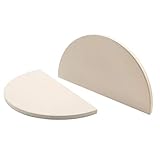
Overview: BBQ Future positions these ceramic heat deflector plates as a direct competitor to OEM parts at a more accessible price point. The 2-pack of 15-inch half-moon stones targets Kamado Joe Classic owners seeking reliable indirect cooking capabilities. With explicit thermal shock warnings and usage guidelines, the brand demonstrates awareness of ceramic limitations while promising versatility for everything from pizza baking to brisket smoking.
What Makes It Stand Out: The company’s proactive customer service approach stands out—they openly acknowledge fragility during shipping and encourage immediate contact with issues. The detailed thermal shock prevention instructions (no sudden heating/cooling, never apply water to hot surfaces) show educational commitment. This transparency builds trust that many generic brands lack.
Value for Money: Priced at $52.99 ($26.50 per plate), these sit comfortably between budget generics and premium OEM parts. The cost savings over official plates is substantial enough to matter, while the price point suggests better quality control than ultra-cheap alternatives. The 15-inch sizing matches OEM specs exactly.
Strengths and Weaknesses: Strengths include proactive customer support, clear usage guidelines, and precise sizing. The plates perform well for low-and-slow smoking and high-heat baking. Weaknesses involve third-party quality uncertainty and potential shipping fragility despite protective packaging. Some users report longer heat-up times compared to OEM ceramic.
Bottom Line: A trustworthy aftermarket option combining decent savings with strong customer support and clear operational guidance.
4. 15 inch Half Moon Ceramic Heat Deflector Plates for Kamado Joe Classic I, II, III,Big Green Egg Grill parts, 2-Pack,White

Overview: This budget-friendly 2-pack of half-moon ceramic deflector plates targets cost-conscious kamado enthusiasts. Marketed for Kamado Joe Classic series and Big Green Egg compatibility, these 15-inch cordierite stones promise excellent heat circulation for baking and roasting. Notably, the manufacturer openly addresses the cordierite odor issue that occurs during initial heating—a rare display of transparency for economy-priced accessories.
What Makes It Stand Out: Honesty about the initial odor sets these apart. The manufacturer explains the smell is non-toxic, from natural cordierite, and provides specific instructions for indoor pre-heating to dissipate it before cooking. This candor helps manage expectations and prevents user alarm. The thermal shock resistance claim, attributed to cordierite’s natural properties, suggests thoughtful material selection.
Value for Money: At $37.99, this is the most economical half-moon 2-pack reviewed. The price undercuts competitors by 20-50% while maintaining standard sizing. For experimenters or new kamado owners, the low financial risk is appealing. Even with potential quality compromises, the cost-per-use remains attractive if the plates last one season.
Strengths and Weaknesses: Strengths include unbeatable price, multi-brand compatibility, and transparent communication about odor. The cordierite construction handles high heat adequately. Weaknesses involve reported quality inconsistencies, longer odor dissipation than advertised, and thinner ceramic profile affecting heat retention. Warranty support is minimal compared to premium brands.
Bottom Line: Ideal entry-level plates for budget-minded grillers willing to accept some compromises for significant savings.
5. AUPLEX 13’’ Heat Deflector Conveggtor for Kamado Accessories, Ceramic Pizza Stone with 3 Legs, Smoking Plate Grill Accessories Plate Setter-Extra Thick

Overview: The AUPLEX Heat Deflector breaks from the half-moon paradigm with a unique 13-inch circular plate featuring three integrated legs. Designed specifically for AUPLEX 16-inch grills but potentially adaptable to other kamados, this thick ceramic stone offers double-sided functionality. The leg design allows height adjustment by flipping the plate, providing versatile heat deflection distances for different cooking styles.
What Makes It Stand Out: The three-leg architecture is genuinely innovative, eliminating the need for separate accessories to adjust cooking height. At 0.6 inches thick, it’s substantially more robust than many competitors. The double-sided design effectively creates two products in one—use legs-up for low-and-slow smoking or legs-down for higher-heat pizza baking.
Value for Money: At $38.99 for a single plate, the value depends entirely on your grill’s compatibility. For AUPLEX owners, it’s perfectly priced OEM gear. For others, the unique features must justify potential fitment challenges. The 90-day refund policy mitigates purchase risk, making experimentation less financially stressful.
Strengths and Weaknesses: Strengths include innovative adjustable-height design, impressive thickness, and high-temperature tolerance (2000°F+). The leg structure provides stable, secure placement. Weaknesses center on non-standard sizing—13 inches may be too small for Classic Joes, and the circular shape doesn’t integrate with Divide and Conquer systems. It’s a specialist tool, not a universal solution.
Bottom Line: A clever, robust solution for AUPLEX owners or grillers seeking adjustable-height deflection, but poor fit for standard half-moon systems.
6. Hongso 18" Ceramic Heat Deflector Conveggtor Pizza Stone Accessories for 18" Large Big Green Egg Grill, Kamado Grills, Char-Griller AKORN Kamado, Indirect Plate Setter with 3 Legs

Overview: The Hongso 18" Ceramic Heat Deflector serves as a versatile conveggtor plate for 18-inch kamado-style grills. Designed to fit Large Big Green Egg, Char-Griller AKORN, and other 18" kamado models, this three-legged ceramic stone transforms your grill into an indirect cooking system. With 3/4-inch thickness and premium ceramic construction, it protects food from direct flames while enabling low-and-slow smoking, baking, and roasting applications.
What Makes It Stand Out: The three-leg design provides superior stability compared to flat stones, preventing wobbling during cooking. Its universal 18-inch diameter compatibility makes it a cross-brand solution for kamado owners. The SGS certification ensures the ceramic meets safety and performance standards, while the 2.25-inch height creates adequate clearance for heat circulation. This single-plate design simplifies setup compared to two-piece half-moon systems.
Value for Money: At $75.99, this deflector positions itself as a mid-tier alternative to brand-name options costing $100+. The universal fit across multiple 18" grill brands delivers exceptional versatility, essentially providing three functions in one: heat deflection, pizza stone, and indirect cooking plate. For owners of compatible grills, it eliminates the need for manufacturer-specific accessories at a 25-40% cost savings.
Strengths and Weaknesses: Strengths include stable three-leg architecture, cross-brand compatibility, certified quality, and multi-purpose functionality. The solid ceramic construction retains heat exceptionally well for consistent temperatures. Weaknesses involve potential size mismatches (requiring pre-purchase measurement), ceramic fragility during thermal shock, and a price point that may exceed budget alternatives. The single-plate design also lacks the flexibility of half-moon configurations.
Bottom Line: This Hongso deflector is an excellent investment for 18" kamado grill owners seeking a stable, certified alternative to OEM accessories. While not the cheapest option, its universal compatibility and robust three-leg design justify the price. Measure carefully before ordering, and follow proper heating/cooling protocols to maximize longevity.
7. Kamado Joe Indirect Cooking Half-Moon Ceramic Heat Deflector Plates for Big Joe Charcoal Grill and Smokers in White 2-Pack, Model BJ-HDP

Overview: These official Kamado Joe half-moon ceramic plates represent the OEM solution for Big Joe grill owners seeking indirect cooking capabilities. Designed specifically for the Divide and Conquer Flexible Cooking System, this two-pack provides the foundation for multi-level cooking configurations. The pure ceramic construction delivers professional-grade heat retention and distribution for low-and-slow smoking, baking, and roasting.
What Makes It Stand Out: As genuine Kamado Joe accessories, these plates guarantee perfect compatibility and optimal performance with Big Joe I, II, and III models. The half-moon design enables unprecedented cooking flexibility, allowing simultaneous direct and indirect heat zones. This configuration lets you sear steaks over open flame while slow-cooking vegetables on the deflected side. The premium ceramic formulation offers superior thermal mass compared to aftermarket alternatives.
Value for Money: Priced at $79.99, these deflectors command a premium over generic options. However, the cost reflects authentic manufacturer engineering, guaranteed fitment, and integration with the Divide and Conquer system. For Big Joe owners who’ve invested $1,500+ in their grill, spending 5% more for OEM accessories ensures warranty compliance and peak performance. Generic alternatives may save $30-40 but risk improper fit or inferior heat dynamics.
Strengths and Weaknesses: Strengths include flawless Big Joe compatibility, exceptional heat retention, modular half-moon flexibility, and durable construction backed by brand reputation. The plates enable true two-zone cooking impossible with single-plate deflectors. Weaknesses center on the high price point and requirement for two plates to create full indirect coverage. The half-moon design also demands proper placement within the Divide and Conquer rack system.
Bottom Line: For Big Joe owners committed to their grill’s ecosystem, these OEM deflectors are worth every penny. The half-moon design unlocks the full potential of the Divide and Conquer system, making them essential for serious kamado enthusiasts. Budget-conscious buyers may consider alternatives, but compromise on functionality.
8. Half-Moon Ceramic Heat Deflector Plates for Kamado Joe Classic I, II, III,Big Green Egg BBQ Accessories 2-Pack,White

Overview: This budget-friendly two-pack of half-moon ceramic deflectors targets Kamado Joe Classic and Big Green Egg owners seeking affordable indirect cooking solutions. The 15-inch diameter plates are designed for use with the Divide and Conquer system, enabling versatile cooking configurations. These ceramic stones facilitate low-and-slow smoking, baking, and roasting by creating convection-style heat circulation.
What Makes It Stand Out: The remarkably low $39.99 price point makes these among the most economical deflectors available. Despite the cost, they offer genuine multi-functionality for baking pizzas, breads, cookies, and smoking meats. The half-moon shape provides flexibility for two-zone cooking setups, allowing simultaneous direct and indirect heat applications. The manufacturer explicitly addresses thermal shock concerns, providing crucial usage guidelines.
Value for Money: At less than half the price of OEM alternatives, these plates deliver outstanding value for casual grillers. The two-pack configuration undercuts Kamado Joe’s official accessories by 50% while maintaining similar functional capabilities. However, the extreme price differential raises questions about manufacturing consistency and long-term durability. For occasional use or budget-limited buyers, the savings are compelling. Serious enthusiasts may question quality control.
Strengths and Weaknesses: Strengths include exceptional affordability, half-moon versatility, clear usage instructions, and broad compatibility claims. The plates enable convection cooking and protect food from direct flames effectively. Weaknesses involve significant quality concerns, with explicit warnings about transportation fragility and thermal shock. The unknown brand reputation and potential size discrepancies require careful pre-purchase verification. Customer service responsiveness remains unproven.
Bottom Line: These deflectors serve as a viable entry-level option for kamado owners prioritizing cost over brand assurance. While functional, the fragility warnings and unknown quality control make them best suited for occasional use rather than heavy-duty smoking sessions. Verify sizing carefully and handle with extreme caution to maximize value.
9. Quantfire Half-Moon Ceramic Heat Deflector Plates for Kamado Joe Big Joe I, II, III,Big Green Egg BBQ Accessories 2-Pack, White
Overview: Quantfire’s half-moon ceramic plates offer a mid-range alternative for Big Joe owners seeking OEM-style performance without premium pricing. Constructed from food-grade cordierite, these two-pack deflectors prioritize safety while delivering excellent heat circulation and retention. Designed for Kamado Joe Big Joe I, II, and III models, they integrate with the Divide and Conquer system for versatile cooking configurations.
What Makes It Stand Out: The food-grade cordierite material distinguishes these from standard ceramic alternatives, ensuring no harmful substances or odors contaminate food. The manufacturer provides explicit, detailed cleaning instructions emphasizing no soap usage and proper cooling protocols. This educational approach helps users maximize product lifespan. The plates enable a wide range of applications from pizza baking to low-and-slow brisket smoking.
Value for Money: At $63.99, Quantfire positions itself between budget generics ($40) and OEM plates ($80). The food-grade material certification justifies the modest premium over cheapest alternatives while offering $16 savings compared to official Kamado Joe accessories. For health-conscious buyers, the cordierite composition provides peace of mind worth the small upcharge. The price reflects quality materials without brand-name markup.
Strengths and Weaknesses: Strengths include food-safe cordierite construction, Big Joe compatibility, comprehensive care instructions, and versatile half-moon design. The material offers excellent thermal properties and odor resistance. Weaknesses involve the unestablished brand reputation, potential quality variance between batches, and lack of third-party certifications like SGS. The half-moon configuration requires two plates for complete coverage, increasing handling complexity.
Bottom Line: Quantfire delivers a compelling value proposition for Big Joe owners wanting food-safe materials at a reasonable price. The cordierite construction and detailed care guidance demonstrate thoughtful product development. While brand recognition lags behind Kamado Joe, the quality appears solid for the price. Recommended for health-conscious buyers comfortable with aftermarket accessories.
10. Hongso 17 5/8" Smokin’ Pizza Stone for Char-Griller 6201 AKORN Kamado Grills, Heat Deflector Plate Setter for Char-Griller AKORN Kamado Models 16620, 26720, 06620, 6520, 6020

Overview: Hongso’s specialized pizza stone addresses a specific niche: Char-Griller AKORN kamado owners seeking a precise-fit heat deflector. With an outer diameter of 17 5/8 inches and inner diameter of 13 1/2 inches, this ceramic plate is engineered for AKORN models 16620, 26720, 06620, 6520, and 6020. The unique ring design diverts heat around the grill perimeter while creating a convection oven environment.
What Makes It Stand Out: The exacting AKORN compatibility sets this apart from universal deflectors that often fit poorly. The ring design with central opening optimizes airflow for Char-Griller’s specific vent configuration, enhancing temperature consistency. SGS certification validates quality and safety standards. This single-plate solution transforms the AKORN into a competent outdoor oven for pizzas, breads, roasts, and even turkey.
Value for Money: Priced at $41.59, this deflector offers exceptional value for AKORN owners. Generic 18-inch plates often cost more while providing inferior fitment. The specialized design eliminates hot spots common with ill-fitting universal stones. For AKORN-specific applications, it’s arguably the best value on the market, delivering OEM-level precision at aftermarket pricing. The durability justifies the investment for dedicated AKORN users.
Strengths and Weaknesses: Strengths include precise AKORN model compatibility, SGS certification, innovative ring design for optimized airflow, and multi-purpose functionality. The ceramic construction withstands high temperatures while protecting food from direct flame. Weaknesses are the extremely limited compatibility—unsuitable for standard Big Green Egg or other kamado brands. The inner diameter reduces usable cooking surface area compared to full-plate designs. Availability may be restricted compared to universal options.
Bottom Line: This Hongso deflector is a must-have accessory for Char-Griller AKORN owners wanting perfect fitment and performance. The specialized engineering justifies the narrow compatibility, delivering results superior to universal alternatives. If you own a compatible AKORN model, this offers unmatched value. All other kamado owners should seek alternative solutions.
The Science Behind Ceramic Heat Deflectors
Ceramic heat deflectors operate on a principle of thermal transformation that separates amateur cooks from pitmasters. When placed between your charcoal fire and cooking grate, these engineered plates absorb intense infrared radiation from the coals and re-radiate it as gentle, ambient heat. This conversion process eliminates direct hot spots that would otherwise torch the underside of your pork shoulder while the top remains raw.
The material’s crystalline structure creates millions of microscopic air pockets that act as individual insulators, slowing heat transfer to a controlled, predictable rate. Unlike metal alternatives that conduct heat rapidly and create temperature spikes, quality ceramics release energy gradually, maintaining steady cooking environments for 12+ hour sessions without constant vent adjustments.
How Convection Transforms Your Cook
Once direct radiation is blocked, your Kamado becomes a true convection oven. Hot air circulates around your protein, cooking it uniformly from all sides. This airflow pattern is why placement matters as much as the deflector itself—offset positioning creates natural vortex currents that carry smoke flavor while maintaining even temperatures. In 2026 designs, engineered channels and surface textures are being incorporated to enhance these convection patterns, reducing the temperature differential between grate edges and center from 50°F to less than 15°F.
Why Low-and-Slow Cooking Demands Precision
Low-and-slow isn’t just about patience—it’s about maintaining a precise temperature window (typically 225-275°F) where connective tissue breaks down without moisture loss accelerating. A variance of just 25°F can add hours to your cook time or dry out your meat. Ceramic deflectors provide the thermal stability that makes this possible, but their effectiveness depends on understanding your specific unit’s heat signature.
Your Kamado’s ceramic body already provides insulation, but without a deflector, you’re still subject to radiant heat spikes every time you open the lid or add wood chunks. Modern deflectors buffer these fluctuations, recovering baseline temperature within 3-5 minutes instead of 15-20, preserving both fuel efficiency and cook consistency.
The Evolution of Ceramic Deflector Design (2026 Outlook)
The deflectors of 2026 bear little resemblance to the simple half-moon plates of 2020. Manufacturers have embraced computational fluid dynamics modeling to optimize heat distribution patterns, resulting in shapes that look more like aerospace components than grill accessories. Expect to see asymmetric designs that account for natural hot zones near your lower vent, with thicker ceramic in high-stress areas and tapered edges to improve airflow.
Multi-Zone Ceramic Arrays
Single-plate deflectors are becoming obsolete for serious enthusiasts. New modular systems use interlocking ceramic tiles that let you configure direct and indirect zones simultaneously. This means you can sear a steak at 600°F on one side while slow-roasting vegetables at 350°F on the other—something previously impossible without removing hot ceramics mid-cook. The tiles nest together with minimal gaps, preventing heat leakage while offering unprecedented flexibility.
Advanced Glazing Technologies
Traditional unglazed ceramics absorb grease and moisture, leading to cracking and odor transfer. 2026’s nano-ceramic glazes create a molecular barrier that’s hydrophobic yet heat-transparent. These micro-thin coatings prevent fat penetration while actually improving thermal emissivity by 8-12%, meaning more efficient heat transfer and easier cleanup. The glaze also eliminates the “break-in” period where older ceramics would off-gas manufacturing residues at high temps.
Key Features to Evaluate Before Buying
When comparing deflectors, focus on metrics that impact real-world performance rather than marketing claims. Thermal mass density—measured in pounds per square inch—directly correlates with temperature stability. A deflector that’s too light (under 1.5 lbs for a Large Big Green Egg size) won’t buffer temperature swings effectively. Conversely, excessively heavy plates (over 4 lbs) create dangerously long heat-up times and waste fuel.
Surface texture matters more than you’d think. Slightly roughened ceramics create better air turbulence for smoke adhesion, while overly porous surfaces trap contaminants. The sweet spot is a 120-180 grit equivalent texture—enough to promote bark formation without becoming a cleaning nightmare.
Thermal Mass and Heat Retention Metrics
Quality deflectors should maintain surface temperatures within 5°F variance for at least 45 minutes after your vents are set. Test this by heating your Kamado to 250°F with a probe on the deflector surface. If it fluctuates more than 10°F in 30 minutes without vent changes, you’re fighting poor thermal mass. In 2026, look for products that publish their specific heat capacity ratings—reputable manufacturers now provide this data, with optimal ranges between 0.84-0.92 J/g°C.
Material Composition: Not All Ceramics Are Created Equal
Cordierite remains the gold standard for its exceptional thermal shock resistance, but 2026 formulations include mullite and alumina composites that increase durability by 40% while reducing weight. Avoid deflectors marketed simply as “ceramic” without specification—they’re often pressed clay that’ll crack within a year. True refractory ceramics will feel slightly metallic when tapped and produce a clear ring, while inferior versions thud dully.
Size and Compatibility: The Goldilocks Principle
A deflector that’s too small leaves hot zones around the edges where radiant heat sneaks past. Too large, and it restricts airflow, creating pressure differentials that cause temperature stratification. The ideal deflector should leave a 1/2 to 3/4 inch gap between its edge and your Kamado’s firebox wall. This gap size optimizes the convection vortex while blocking 98% of direct radiation.
Measure your fire ring’s interior diameter, not the grill’s nominal size. A “Large” Kamado from different brands can vary by up to 1.5 inches. In 2026, adjustable deflectors with telescoping segments are entering the market, but these introduce potential failure points—traditional fixed sizing remains more reliable if accurately matched.
Understanding Heat Deflection Patterns
Every deflector creates a unique heat map. Place six temperature probes at different grate positions during a test run with your new deflector. You’ll likely find a 30-50°F gradient from center to edge. Smart pitmasters use this knowledge strategically—placing brisket points toward the hotter zone to render fat, and flats toward the cooler edge to prevent drying.
Direct vs. Indirect Heat Mapping
Even with a deflector installed, some direct heat leakage occurs. The 2026 approach involves “heat mapping” your specific setup: run a 2-hour cook with bread slices covering the grate. The toasting pattern reveals exactly where heat penetrates, letting you position proteins optimally. This is especially critical with multi-tier cooking systems where upper grates receive more radiative heat.
Durability Factors That Matter
Thermal cycling—repeated heating and cooling—causes microscopic stress fractures that eventually lead to catastrophic failure. Premium 2026 deflectors undergo “pre-stressing” at the factory, where they’re cycled from 200°F to 800°F twenty times before shipping. This process relieves internal stresses, doubling effective lifespan. Ask manufacturers if they pre-stress; it’s becoming an industry standard for quality brands.
Thermal Shock Resistance
The moment you drop a cold deflector into a hot Kamado, you risk thermal shock. Quality ceramics can handle a 500°F differential, but cheaper versions crack at 200°F. Never place a frozen deflector directly in a hot grill—always let it come to room temperature first. New 2026 designs incorporate gradient materials, with denser ceramic at the center (facing coals) and more shock-resistant formulations at the edges where temperature changes are most extreme.
Structural Integrity Over Time
Hairline cracks are inevitable after 50+ cooks, but they don’t necessarily mean failure. The concern is crack propagation—when small fissures grow with each cycle. High-alumina ceramics (over 40% Al₂O₃ content) resist this propagation significantly better than standard cordierite. Inspect your deflector monthly by tapping it lightly with a metal utensil; a change in tone indicates growing internal cracks.
Maintenance Protocols for Longevity
Never clean a hot deflector with water—the steam explosion can crack it instantly. Let it cool completely, then scrape with a plastic putty knife. For grease buildup, burn it off at 600°F for 20 minutes rather than using chemical cleaners that absorb into the ceramic and off-gas during subsequent cooks.
Store deflectors vertically in a dry environment. Stacking them flat traps moisture between surfaces, leading to freeze-thaw damage in winter and mold growth in humid climates. In 2026, antimicrobial ceramic additives are becoming common, but they’re not substitutes for proper storage.
Common Pitfalls That Ruin Your Deflector
The number one killer is moisture entrapment. Rain-soaked deflectors that go into a hot Kamado have a 70% chance of cracking. Always preheat stored deflectors in a 200°F oven for 30 minutes before use if they’ve been exposed to humidity. Another frequent mistake is using them as drip pans—excessive liquid fat pooling creates hot spots that exceed the ceramic’s design parameters. Use a disposable aluminum pan on top of the deflector for high-fat cooks.
Advanced Techniques for 2026
Modern deflectors enable techniques that were previously impossible. “Pulse smoking” involves briefly removing a modular tile every 90 minutes to expose meat to a 30-second blast of direct heat, caramelizing the surface without overcooking the interior. This creates bark that’s 40% thicker than traditional methods.
Reverse Searing with Hybrid Setups
Configure half your deflector tiles in place and leave the other half open. Start your steak on the indirect side at 225°F until it hits 115°F internal, then slide it over to the direct side (now at 600°F+) for a 90-second sear per side. The ceramic’s residual heat prevents the direct zone from cooling during the transition, something metal deflectors can’t achieve.
Multi-Level Cooking Strategies
Stack two deflectors with a 2-inch air gap between them for true baking temperatures (350-400°F) in the upper dome while maintaining 225°F at the main grate. This setup mimics a professional bread oven, perfect for sourdough or pizza while simultaneously smoking ribs below. The dual-deflector system creates a thermal break that prevents heat stratification.
Smart Integration and Temperature Control
2026’s most significant advancement is the integration of thermocouple channels built into deflector edges. These embedded sensors connect to wireless probes, providing real-time data on deflector surface temperature rather than just air temp. This is crucial because deflector temperature lags behind dome thermometer readings by 20-40 minutes during startup. Smart systems can now auto-adjust vents based on deflector temp, achieving stable cooking conditions 60% faster.
Cost-Benefit Analysis: Investment vs. Performance
Budget deflectors ($30-50) typically last 1-2 seasons before cracking, while premium options ($80-120) can exceed 5 years with proper care. Calculate cost-per-cook: a $100 deflector used weekly for 5 years costs $0.38 per session. The fuel savings alone from improved efficiency typically pay for the upgrade within 8 months. Factor in ruined meat costs from temperature swings, and premium ceramics become the economical choice.
Environmental and Sustainability Considerations
Traditional ceramic production is energy-intensive, but 2026 manufacturers are adopting solar-fired kilns and recycled ceramic aggregates. Look for deflectors containing 30%+ post-consumer ceramic material—these actually outperform virgin ceramics due to pre-cycled stress relief. Packaging has shifted to molded pulp inserts instead of foam, and some brands offer end-of-life recycling programs where returned cracked deflectors are ground into aggregate for new products.
Safety Protocols and Best Practices
Always use heat-resistant gloves with a secure grip when handling deflectors—they’re deceptively heavy and become slippery with grease. Install a deflector stand or hanger inside your Kamado to avoid placing hot ceramics on combustible surfaces. Never leave a deflector in a closed, cooling Kamado for more than 2 hours; trapped moisture can create enough steam pressure to crack the firebox itself. In 2026, deflector lifter tools with locking mechanisms have become standard safety equipment, preventing drops that could shatter both the deflector and your ceramic bowl.
Frequently Asked Questions
How do I know if my ceramic heat deflector is compatible with my Kamado model?
Measure your fire ring’s interior diameter precisely, then compare it to the deflector’s specifications, leaving a 1/2 to 3/4 inch gap. Most manufacturers provide compatibility charts, but physical measurement is more reliable. When in doubt, contact the deflector maker with your grill’s interior dimensions—they’ll confirm fitment.
Can I use my ceramic deflector for high-heat grilling?
While technically possible, it’s inefficient and risky. Above 500°F, thermal stress increases exponentially. For high-heat searing, remove the deflector entirely. Ceramic deflectors are optimized for the 200-400°F range; outside this window, you’re sacrificing both performance and lifespan.
Why does my new deflector smell during the first few cooks?
This is manufacturing residue burning off. Run a 350°F “cleansing cook” for 2 hours with no food, using a few wood chunks to generate smoke that helps purge odors. 2026 glazed models should have minimal off-gassing, but unglazed ceramics require this break-in period.
How often should I replace my ceramic heat deflector?
With proper care, quality deflectors last 5-7 years. Replace when you notice significant cracking that penetrates more than halfway through the thickness, or when the surface becomes so porous that grease cannot be burned off cleanly. A change in heating performance—needing more frequent vent adjustments—also indicates degradation.
Is a thicker deflector always better?
Not necessarily. Thickness increases thermal mass but also heat-up time and fuel consumption. The optimal thickness for most Kamados is 5/8 to 3/4 inch. Thicker plates are beneficial only for sub-200°F smoking or extreme cold weather cooking where heat retention is critical.
Can I cut my ceramic deflector to fit a different grill size?
Absolutely not. Cutting compromises the structural integrity and creates unglazed edges that absorb moisture and fail rapidly. The internal stress distribution is engineered for the original shape. Modification voids warranties and guarantees premature cracking.
What’s the best way to clean a grease-saturated deflector?
Burn it off at 600°F for 30 minutes, then let it cool completely. For stubborn buildup, make a paste of baking soda and water, apply it dry, and scrub with a plastic scraper. Never use wire brushes or chemical degreasers—they damage the ceramic and contaminate future cooks.
Do I need one or two deflectors for two-zone cooking?
Modular tile systems work best for true two-zone setups. With single-plate deflectors, you can achieve a limited two-zone effect by positioning the plate to cover 2/3 of the fire, but heat bleed is significant. For serious two-zone work, invest in a split system.
How does altitude affect ceramic deflector performance?
Above 5,000 feet, reduced air pressure decreases convection efficiency. You may need a slightly smaller deflector gap (1/4 inch) to maintain proper airflow velocity. Some 2026 models are specifically engineered for high-altitude use with modified surface textures that compensate for thinner air.
Are there health concerns with ceramic dust if my deflector cracks?
Minimal. Food-grade ceramics use stable, non-toxic formulations. If your deflector cracks, avoid inhaling dust when handling it. Wipe the cooking grate after removal to catch any microscopic particles. Modern ceramics are far safer than vintage materials that sometimes contained silica fillers—2026 products must meet stringent food-contact safety standards.