Finding the perfect replacement blade for your 21-inch mower deck can feel like searching for a needle in a haystack. With dozens of manufacturers, varying mounting systems, and a dizzying array of design options, even seasoned homeowners can end up with the wrong part. The good news? Universal mower blades have revolutionized the replacement market, offering versatile solutions that adapt to multiple brands and models. These cleverly engineered components eliminate the guesswork and frustration of cross-referencing OEM part numbers, saving you both time and money while delivering professional-grade cutting performance.
Understanding what makes a blade truly “universal” goes far beyond simple measurements. It involves a sophisticated balance of dimensional tolerances, adaptable mounting systems, and specialized metallurgy designed to meet diverse cutting demands. Whether you’re a weekend warrior maintaining a pristine residential lawn or a property manager overseeing multiple machines, mastering the nuances of these adaptable blades will transform your maintenance routine from a chore into a confident, informed decision-making process.
Top 10 Universal Mower Blades for 21-Inch Decks
Detailed Product Reviews
1. Maxpower 331981B 21-Inch Universal Gold Metal Mulching Lawn Mower Blade

Overview: The Maxpower 331981B positions itself as a universal commercial-grade solution for 21-inch gas-powered mowers. This single blade comes with an extensive hardware kit designed to fit most major brands, making it an appealing option for those seeking a one-size-fits-most approach to mower maintenance. The gold metal construction suggests durability beyond standard replacement blades.
What Makes It Stand Out: The standout feature is undoubtedly the inclusion of six reducing washers (3/8" to 5/8") plus a cover washer, accommodating virtually any spindle configuration on gas mowers. The 1-inch center hole diameter serves as the base size, with the washers handling conversion. This universal design eliminates the guesswork of finding exact OEM matches. The commercial-grade gold metal construction promises extended lifespan and superior mulching performance compared to standard steel blades.
Value for Money: At $19.98 for a commercial blade with a complete hardware kit, this represents solid value. Individual OEM blades often cost $15-25 without additional hardware. The universal fitment reduces the risk of ordering errors, saving return shipping costs and downtime. For those maintaining multiple mower brands, the washer kit provides future-proofing.
Strengths and Weaknesses: Pros: Universal fit with comprehensive washer set; commercial-grade durability; gold metal resists corrosion; fits most 21" gas mowers; eliminates multiple part numbers. Cons: Not compatible with electric/battery mowers; washer system adds installation step; may not achieve perfect OEM fit for all models; single blade only.
Bottom Line: The Maxpower 331981B is ideal for gas mower owners who prioritize convenience and durability. If you own multiple mowers or want a reliable backup blade without researching exact part numbers, this universal solution justifies its price. Just verify your mower’s power source and spindle size before purchasing.
2. Grasscool 21 inch Mower Mulching Blades for Troy Bilt TB110 TB230 TB240 TB130 TB210 TB320 TB220 TB280ES 942-0741A 742-0741 742-0741A 942-0741 Cub Cade MTD 21" Deck Mower Blade (2 Pack)

Overview: This Grasscool two-pack delivers targeted replacement blades specifically engineered for Troy-Bilt, Cub Cade, MTD, and Craftsman 21-inch mowers with bow tie spindle mounts. The package provides dual blades for sequential replacement or immediate backup, addressing the needs of homeowners with compatible mower models from these popular brands.
What Makes It Stand Out: The blades feature a painted cutting edge that prevents rust during storage and protects hands during installation—a thoughtful safety touch. The aggressive lift design (1-1/8") excels at tackling overgrown weeds and rugged terrain, making these suitable for properties that don’t receive weekly maintenance. The extensive model compatibility list spans dozens of specific Troy-Bilt TB series and Craftsman M series mowers.
Value for Money: At $27.11 for two blades ($13.56 each), this offers compelling value compared to OEM blades typically priced $18-22 individually. The two-pack ensures you have a spare when the first blade dulls mid-season, eliminating emergency hardware store runs. For property owners who mow frequently or maintain rough terrain, the durability and backup value are significant.
Strengths and Weaknesses: Pros: Excellent two-pack value; painted edges prevent rust; aggressive lift for tough conditions; extensive model compatibility; commercial-grade thickness (9/64"). Cons: Bow tie spindle ONLY—critical compatibility limitation; paint wears off quickly with use; must verify spindle type before ordering; no installation hardware included.
Bottom Line: For owners of compatible Troy-Bilt, MTD, or Craftsman mowers with bow tie spindles, this Grasscool two-pack offers exceptional value and performance. The aggressive design handles overgrown lawns with ease. Just confirm your spindle pattern matches the bow tie configuration—this single verification step prevents costly mistakes and ensures optimal performance.
3. Hipa 942-0741A Mulching Blade for Troy Bilt 21 inch Lawn Mower, TB110 TB240 TB230 TB130 Lawn Tractor,Craftsman Yard Machine MTD Murray 21 inch Deck Riding Mower (After 1995)

Overview: The Hipa 942-0741A serves as a budget-conscious OEM replacement for a vast array of 21-inch mowers from Troy-Bilt, Cub Cadet, MTD, Craftsman, and affiliated brands manufactured after 1995. This single blade targets homeowners seeking exact-fit replacement without premium OEM pricing, covering an impressive range of walk-behind, self-propelled, and riding mower models.
What Makes It Stand Out: The compatibility list is remarkably comprehensive, spanning not just major brands but also lesser-known subsidiaries like Bolens, White Outdoor, Yard-Man, and Huskee. This extensive cross-referencing simplifies identification for owners of older or less common models. The blade maintains OEM specifications—21" length, 2-1/4" width, 9/64" thickness, and 1-1/8" lift—ensuring performance matches original equipment.
Value for Money: At $17.35 for a single blade, this is the most economical option for those needing just one replacement. While two-packs offer better per-blade pricing, this saves money if you only need a single blade now. Compared to OEM prices of $20-28, the savings are meaningful without sacrificing specification accuracy.
Strengths and Weaknesses: Pros: Lowest price point; massive compatibility database; exact OEM specifications; suitable for 1995+ models; bow tie design for secure mounting. Cons: Single blade only; no installation hardware; requires careful spindle verification; thinner than some commercial alternatives; limited tough-terrain marketing.
Bottom Line: Choose the Hipa blade if you need one replacement and own a compatible mower. The extensive model coverage reduces ordering risk, and the price is hard to beat. For routine residential mowing on maintained lawns, this delivers OEM-equivalent performance. Verify your bow tie spindle and model year before purchasing to ensure proper fitment.
4. Grasscool 21 inch Mower Mulching Blades for Craftsman Husqvarna Poulan 406712 532406712 165833 175064 189028 532189028 531300765 21’‘Deck Push Lawn Mower(2Pack)

Overview: This Grasscool two-pack addresses a different market segment—Craftsman, Husqvarna, and Poulan 21-inch mowers with round spindle holes. Unlike bow tie designs, these blades feature a circular center hole, making them incompatible with other blade types. The set provides two commercial-spec blades for homeowners loyal to these specific brands.
What Makes It Stand Out: The round hole design is the defining characteristic, fitting mowers that use traditional circular spindle mounts. The blade maintains commercial dimensions—21" length, 2-1/4" width, 5/32" thickness, and 1-1/8" lift—while supporting mulching operations. The compatibility list includes numerous Husqvarna and Poulan models often overlooked by universal blade manufacturers.
Value for Money: At $27.88 for two blades ($13.94 each), pricing aligns with competitive two-packs. For Craftsman, Husqvarna, or Poulan owners, this eliminates the premium of OEM blades ($18-25 each) while providing a necessary spare. The specialization for round-hole mowers justifies the cost if your mower requires this configuration.
Strengths and Weaknesses: Pros: Round hole fits specific brand requirements; two-pack value; commercial thickness (5/32"); comprehensive part number cross-reference; no spindle adapters needed. Cons: Round hole ONLY—completely incompatible with bow tie spindles; no installation hardware; limited to three major brands; no rust-preventive coating mentioned.
Bottom Line: This Grasscool set is your solution if you own a Craftsman, Husqvarna, or Poulan mower with a round spindle. The specialization ensures proper fit without modification, and the two-pack provides excellent value. Absolutely confirm your existing blade has a round center hole before ordering—this isn’t interchangeable with bow tie designs. For compatible models, it’s a smart, economical choice.
5. Bularie 942-0741A Mower Blade Kit, Compatible with MTD Cub Cad et 21" Mower Deck, 2 Pack

Overview: The Bularie 942-0741A kit offers a two-blade solution for MTD, Cub Cad et, Troy-Bilt, and Craftsman mowers with bow tie spindles. This package distinguishes itself through detailed installation guidance, addressing DIYers who may feel intimidated by blade replacement. The blades target the same compatibility spectrum as other bow tie options but at a competitive two-pack price point.
What Makes It Stand Out: The explicit installation instructions are unique among these listings, describing the curved-side orientation and proper tightening technique using a blade lock tool. This educational approach reduces installation errors that can cause vibration or poor cutting. The product dimensions are also precisely specified, including outside hole details often omitted in competitor listings.
Value for Money: At $24.99 for two blades ($12.50 each), this undercuts most competitors while offering similar specifications. The installation guidance adds intangible value for first-time users, potentially saving professional service costs. For budget-conscious buyers needing two blades, this presents the lowest per-blade cost in the bow tie category.
Strengths and Weaknesses: Pros: Most affordable two-pack; detailed installation instructions; precise dimensional specs; bow tie compatibility; includes two blades for immediate/spare use. Cons: Lesser-known brand; no mention of rust protection; thinner (0.126" vs 9/64"); fewer verified reviews; limited brand recognition.
Bottom Line: The Bularie kit excels for DIY enthusiasts who appreciate clear guidance and maximum value. If you’re comfortable with a less established brand and need two bow tie blades, this offers the lowest cost per unit. The installation instructions alone make it worth considering for novice mechanics. Verify your spindle type, and you’ll get reliable performance at an unbeatable two-pack price.
6. Maxpower 331951B Universal 3-N-1 Blade for 21 in. Cut Mower, black
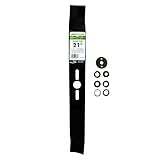
Overview: The Maxpower 331951B offers a universal solution for 21-inch gas-powered mowers at an attractive price point. This 3-in-1 blade handles bagging, discharging, and mulching functions with a single design, measuring 21 inches long and 2-1/4 inches wide with a 1-inch center hole. The package includes a comprehensive set of reducing washers covering seven different sizes, ensuring compatibility with most major mower brands without requiring additional hardware purchases.
What Makes It Stand Out: True universality sets this blade apart. The inclusion of a cover washer plus six reducing washers (ranging from 3/16" to 5/8") eliminates multiple trips to the hardware store. The 3-in-1 design provides year-round versatility without needing separate blades for different mowing conditions. This adaptability makes it particularly valuable for homeowners with older mowers or those unsure of their exact spindle specifications, simplifying seasonal maintenance.
Value for Money: At $16, this blade significantly undercuts OEM replacements while delivering comparable functionality. The included hardware alone would cost $5-8 separately, making the effective blade price under $10. While premium blades might offer longer edge retention, the cost-per-use ratio heavily favors this Maxpower option for budget-conscious consumers. It’s an ideal choice for those who replace blades annually or maintain multiple mowers.
Strengths and Weaknesses: Pros include exceptional versatility, comprehensive hardware kit, straightforward installation, and outstanding affordability. Cons involve the “fits most” caveat requiring careful measurement, potentially shorter lifespan than premium steel, and incompatibility with electric or battery-powered mowers. The universal design may sacrifice some optimized performance characteristics of brand-specific blades, particularly in extreme mowing conditions.
Bottom Line: For gas mower owners seeking an economical, versatile replacement blade, the Maxpower 331951B delivers remarkable value. It’s ideal for those comfortable with minor compatibility verification and prioritizing function over brand loyalty. This blade excels as a reliable seasonal workhorse.
7. Husqvarna 586859604 Lawn Mower 21-in Deck Blade Genuine Original Equipment Manufacturer (OEM) Part

Overview: The Husqvarna 586859604 represents authentic OEM engineering for 21-inch deck mowers. As a genuine manufacturer part, this blade ensures exact specifications, metallurgy, and balance characteristics that aftermarket alternatives cannot replicate. Designed specifically for Husqvarna’s engineering tolerances, it maintains the precise cutting geometry intended for optimal grass discharge and mulching performance, preserving your mower’s original capabilities.
What Makes It Stand Out: OEM authenticity guarantees zero compatibility guesswork. The blade’s metallurgical composition and heat treatment process match original equipment standards, ensuring consistent hardness and edge retention. This precision manufacturing maintains factory-specified airflow patterns critical for proper deck performance, preventing issues like uneven cutting or clogging that often plague generic replacements. The part number verification system ensures you receive exactly what your mower requires.
Value for Money: At $25, this blade commands a 40-50% premium over universal options, but the investment protects your mower’s engineered performance. For machines under warranty, using OEM parts is often mandatory. The extended service life and maintained cutting quality offset the higher initial cost, particularly for premium mowers where performance degradation would be more noticeable. It’s insurance for your equipment’s longevity.
Strengths and Weaknesses: Pros include guaranteed fit and finish, superior material quality, maintained warranty compliance, and predictable performance. Cons center on the higher price point, single-blade packaging, and the need to consult manuals for proper identification. Availability can sometimes be limited compared to universal alternatives, requiring planning ahead for seasonal maintenance.
Bottom Line: This blade is non-negotiable for warranty-conscious owners and those prioritizing factory-specified performance. The premium is justified for maintaining your Husqvarna mower’s engineered capabilities. Accept no substitutes if you demand original equipment precision and reliability.
8. budrash 942-0741A Mulching Blade Fits for Craftsman 21" Deck, 942-0741 Mower Blades for Troy Bilt TB130 TB230 410 Craftsman 247 Series Push Mower, SC700E Self Propelled, 2 Pack

Overview: The budrash 942-0741A two-pack delivers exceptional value for Craftsman and Troy-Bilt 21-inch mower owners. These 3-in-1 mulching blades come pre-sharpened and ready for installation, featuring contoured surfaces designed to recirculate clippings for superior mulching performance. The package includes two blades, effectively halving the per-blade cost compared to individual OEM purchases while providing an immediate spare for future use or twin-blade deck systems.
What Makes It Stand Out: The dual-blade packaging is the headline feature, providing an immediate spare for future use or simultaneous replacement on twin-blade decks. Pre-sharpened edges save time and ensure optimal cutting geometry from first use. The extensive compatibility list covers multiple Craftsman 247 series, Troy-Bilt TB models, and various MTD variants, making these blades versatile across entire mower families. The bow-tie center hole ensures secure mounting.
Value for Money: At $25.59 for two blades, the per-unit cost of approximately $12.80 undercuts most OEM singles while delivering comparable functionality. This represents a 35-40% savings for households needing multiple replacements or wanting a backup. The included functionality for bagging, discharging, and mulching eliminates the need for separate specialized blades, maximizing seasonal versatility without additional investment.
Strengths and Weaknesses: Pros include dual-blade packaging, pre-sharpened edges, broad compatibility across major brands, and excellent cost efficiency. Cons involve the aftermarket brand’s unproven long-term durability compared to OEM, potential variance in steel quality, and the need for careful model verification despite the extensive list. Some users may find the thinner 1/8" steel less robust than original equipment.
Bottom Line: This two-pack offers the best value for Craftsman/Troy-Bilt owners needing reliable replacements. Buy these if you want immediate savings plus a spare blade for future seasons. The convenience of pre-sharpened blades and comprehensive compatibility makes it a smart maintenance choice.
9. Maxpower 331528B Mulching Blade for some 21 Inch Cut MTD/Cub Cadet/Troy-Bilt Replaces 742-0741, 942-0741, CMXGZAM100067

Overview: The Maxpower 331528B targets MTD, Cub Cadet, and Troy-Bilt 21-inch mower owners with laser-focused compatibility. This mulching blade replaces numerous OEM numbers including 742-0741, 942-0741, and CMXGZAM100067, featuring a distinctive bow-tie center hole pattern that ensures proper mounting alignment. The blade’s design emphasizes recirculation for fine mulching performance, making it ideal for maintaining lawn health through natural fertilization.
What Makes It Stand Out: Maxpower’s exhaustive model compatibility list stands out, spanning dozens of specific mower models across multiple brands and series. This precision eliminates guesswork for owners of listed machines. The bow-tie center hole design with 5/16" outside holes spaced 2.5" apart provides a secure, non-slip mounting interface that maintains blade balance at high RPMs, critical for consistent cutting performance and reduced vibration during operation.
Value for Money: Priced at $17.99, this blade positions itself between budget universals and premium OEM parts. For owners of compatible models, it offers OEM-level specificity without the OEM price tag. The cost savings of 20-30% over dealer pricing makes it attractive for routine maintenance, especially when replacing blades annually. The targeted design ensures you’re not paying for unnecessary universal features.
Strengths and Weaknesses: Pros include precise compatibility documentation, secure bow-tie mounting, reputable Maxpower quality, and focused brand expertise. Cons require careful OEM number matching, single-blade packaging, and potential gaps in coverage for very recent or obscure models. The “must match current blade OEM number” disclaimer demands diligent verification to avoid return hassles.
Bottom Line: This blade perfectly serves Cub Cadet, Troy-Bilt, and MTD owners who’ve confirmed compatibility. It’s the smart middle-ground between cheap universals and expensive OEM parts, offering brand-specific engineering at aftermarket pricing. Verify your model number first, then purchase with confidence.
10. Maxpower 331538B Mower Blades, Replaces OEM # 942-0641, Black

Overview: The Maxpower 331538B proudly carries a “Made in USA” designation while serving as a direct replacement for OEM #942-0641. This 21-inch blade fits select MTD, Cub Cadet, and Troy-Bilt mowers, offering domestic manufacturing quality at an import-competitive price point. The blade maintains standard dimensions of 21" length and 2-1/4" width with a bow-tie center hole pattern that ensures proper mounting security and rotational balance.
What Makes It Stand Out: Domestic production ensures stricter quality control and steel sourcing transparency compared to many imports. The blade’s specific targeting of OEM #942-0641 makes it a precision replacement rather than a universal compromise. For buyers prioritizing American manufacturing, this represents one of the few affordable options in the aftermarket blade market, combining patriotism with performance in a category dominated by overseas production.
Value for Money: At $16.56, this USA-made blade matches or beats many import prices, delivering exceptional value for domestically-produced hardware. The price point undercuts OEM equivalents by 30-40% while supporting domestic manufacturing. For budget-conscious consumers who prefer American products, it’s a rare win-win scenario that doesn’t sacrifice quality for cost, offering both economic and patriotic returns on investment.
Strengths and Weaknesses: Pros include American manufacturing, precise OEM replacement specification, competitive pricing, and Maxpower’s established reputation for reliability. Cons involve extremely limited compatibility (only replaces 942-0641/742-0641), single-blade packaging, and potential stock limitations due to domestic production constraints. The narrow focus means it’s useless for mowers requiring different OEM numbers.
Bottom Line: Choose this blade if your mower requires OEM #942-0641 and you value American-made products. It’s a niche product that excels within its specific application, offering patriotic purchasing power without premium pricing. For the right mower, it’s an unbeatable combination of value and values.
Understanding Universal Mower Blades
Universal mower blades represent one of the most practical innovations in lawn care equipment maintenance. Unlike manufacturer-specific OEM blades that lock you into proprietary systems, universal options feature standardized dimensions with adaptable mounting configurations. These blades typically measure 21 inches in cutting length—the most common residential deck size—but incorporate multiple center hole patterns, slotted adapters, or universal bushings to fit various crankshaft sizes and star patterns.
What Makes a Blade “Universal”?
The true genius lies in the center hole design. Quality universal blades often feature a large primary hole (typically 5/8-inch or 1/2-inch) accompanied by nested adapter rings or star-shaped cutouts that accommodate 6-point, 5-point, and rectangular mounting systems. Some advanced designs include slotted holes that allow slight adjustments for blade positioning, ensuring proper timing on dual-blade systems. The blade’s width (usually 2-1/4 to 2-1/2 inches) and thickness (generally 0.149 to 0.187 inches) follow industry standards that work across major brands like Honda, Toro, Craftsman, Husqvarna, and Troy-Bilt.
Why 21-Inch Decks Are the Industry Standard
The 21-inch measurement has become the sweet spot for residential walk-behind mowers due to its optimal balance of maneuverability and cutting efficiency. This size allows homeowners to navigate gates, around trees, and through tight spaces while still covering substantial ground with each pass. Manufacturers have coalesced around this dimension because it works perfectly with common engine outputs (140cc to 190cc) and produces ideal blade tip speeds for clean cuts without excessive power consumption.
From a replacement perspective, this standardization means blade manufacturers can achieve economies of scale, producing high-quality steel blades at competitive prices. The ubiquity of 21-inch decks also drives innovation in universal design, as the potential market justifies the engineering investment required to create truly adaptable mounting systems.
Key Features to Evaluate Before Purchasing
Selecting the right universal blade requires looking beyond the “fits most mowers” marketing claim. Savvy buyers examine several critical specifications that determine real-world performance and longevity. Blade weight indicates steel quality—heavier blades typically use higher-grade steel that holds an edge longer and resists bending. The manufacturing process matters too; laser-cut or stamped blades offer different structural characteristics.
Blade Dimensions and Tolerances
While length is fixed at 21 inches, pay close attention to width and thickness variations. A 2-1/2-inch wide blade generates more lift than a 2-1/4-inch version, which matters for bagging performance. Thickness affects durability; 0.187-inch commercial-grade steel withstands rock strikes and root impacts far better than thinner 0.149-inch consumer-grade metal. Check the blade’s offset—the distance the cutting edge sits below the center line—as this affects deck clearance and cutting height range.
Center Hole Configuration Complexity
Examine the adapter system carefully. The best universal blades include multiple nested bushings that snap securely into the primary hole. These should be made from hardened steel, not plastic, and fit snugly without wobble. Some designs feature a “universal star” pattern that combines multiple shapes into a single reinforced cutout. Avoid blades with overly complex adapter stacks that can loosen during operation.
Material Thickness and Durability Standards
Professional-grade universal blades use hardened carbon steel, typically 50-60 HRC (Hardness Rockwell C) at the cutting edge, with a softer, more impact-resistant spine. This differential hardening prevents chipping while maintaining flexibility. Look for blades with reinforced edges—sometimes called “fusion edges” or “hard edges”—that extend sharpening intervals by 40-60% compared to standard steel.
Blade Design Types and Applications
Your lawn’s specific needs dictate which blade design delivers optimal results. Universal blades come in four primary configurations, each engineered for distinct cutting conditions and discharge preferences.
Standard 2-in-1 Blades
These versatile workhorses handle both side-discharging and bagging adequately. They feature a moderate lift profile with gently curved airfoils along the trailing edge. For homeowners who alternate between bagging and mulching based on grass conditions, 2-in-1 blades offer the best compromise. Their balanced design produces clean cuts without excessive air movement, making them ideal for dry conditions and moderate grass heights.
Mulching Blades
Also called 3-in-1 blades, these feature aggressive serrated edges and pronounced curvature that recirculates clippings multiple times before discharge. The extended cutting surface and unique lift design create a vortex effect within the deck, pulverizing grass into fine particles that decompose quickly. For universal applications, ensure the mulching blade’s aggressive profile doesn’t interfere with deck baffles—some 21-inch decks lack the internal clearance for optimal mulching performance.
High-Lift Bagging Blades
Characterized by steep, pronounced wings along the trailing edge, high-lift blades generate maximum airflow to propel clippings through the discharge chute into collection bags. This design excels with wet, heavy grass but increases engine load and fuel consumption. When selecting a universal high-lift blade, verify the lift wings clear the deck’s internal components—some aggressive designs can contact baffles or reinforcements on certain mower models.
Commercial-Grade Heavy-Duty Options
These blades use thicker steel (up to 0.250 inches) and often feature reinforced mounting areas. While heavier and more expensive, they maintain sharpness through demanding conditions and resist damage from debris. For property managers or homeowners with rough terrain, the extended lifespan justifies the premium. Note that the added weight may affect spindle bearing wear on lighter-duty mowers.
Hidden Compatibility Factors
Even “universal” blades can fail if you overlook subtle compatibility issues that manufacturers don’t advertise prominently. The most common frustration involves crankshaft length and blade adapter stack height.
Crankshaft Size and Blade Boss Design
Most 21-inch mowers use 3/4-inch or 1-inch crankshafts with a keyway, but the blade boss (the flat surface where the blade seats) varies in thickness. Some universal blades sit too high or low on the boss, affecting cutting height calibration. Check your mower’s manual for the boss thickness and compare it to the blade’s center hole depth. Additionally, some Honda models use a unique crankshaft thread that requires specific adapter bushings—generic universal kits may not include these.
Material Science: Steel Grades and Coatings
The metallurgy of your mower blade directly impacts performance, maintenance frequency, and replacement costs. Understanding steel specifications helps you distinguish between bargain blades that dull quickly and premium options that deliver lasting value.
Most quality universal blades use high-carbon steel (0.60-0.80% carbon content) that balances hardness with toughness. Some premium options incorporate boron or chromium for enhanced wear resistance. The manufacturing process—whether the steel is heat-treated after stamping or laser-cut from pre-hardened stock—affects the blade’s ability to hold an edge.
Corrosion Protection Technologies
Blade coatings extend life by preventing rust, but not all coatings are equal. Powder coating provides excellent coverage but can chip, exposing bare metal. Zinc plating offers sacrificial protection but wears away over time. The latest ceramic-based coatings bond molecularly to the steel, providing superior protection without affecting blade balance. For universal blades, ensure coating thickness doesn’t interfere with adapter fit—some thick coatings can reduce center hole diameter by several thousandths of an inch.
Performance Characteristics That Matter
Beyond compatibility, evaluate how blade design affects cutting quality, engine strain, and overall mowing experience. Blade tip speed, typically 18,000-19,000 FPM (feet per minute) on 21-inch mowers, interacts with blade design to determine cutting efficiency.
High-lift designs increase engine load by 10-15%, which may strain older or lower-powered engines. Mulching blades require more torque than standard designs, potentially causing bogging on thick grass. The blade’s weight distribution affects spindle bearing life—imbalanced or overly heavy blades accelerate wear. Look for blades with laser-etched part numbers and balance marks, indicating quality control during manufacturing.
Proper Installation Best Practices
Installing a universal blade correctly ensures safety and optimal performance. Always disconnect the spark plug wire before beginning work—this prevents accidental starts that cause thousands of injuries annually.
Tools You’ll Need
Gather a socket wrench (typically 9/16-inch or 5/8-inch), torque wrench, blade lock tool or wood block, and work gloves. A blade balancer, either cone-style or magnetic, helps verify proper installation. Keep the mower’s manual handy for torque specifications, which typically range from 38-50 foot-pounds.
Step-by-Step Mounting Process
Position the mower on a level surface and tilt it with the air filter up to prevent oil contamination. Clean the blade boss thoroughly, removing any grass buildup or rust. Install the appropriate adapter bushing into the blade’s center hole, ensuring it seats flush. Position the blade with the cutting edges toward the grass and the lift wings upward. Hand-thread the bolt to prevent cross-threading, then tighten to the manufacturer’s specified torque using a crisscross pattern if your mower uses multiple blades.
Maintenance for Extended Blade Life
A quality universal blade can last several seasons with proper care, making your investment more economical than repeatedly replacing cheap blades. Establish a maintenance schedule based on mowing frequency and property conditions.
Sharpening Angles and Frequency
Maintain the factory sharpening angle, typically 30-35 degrees for most residential blades. Sharpen after every 8-10 hours of mowing time, or immediately after striking a solid object. Use a file or bench grinder, removing equal material from both ends to preserve balance. Avoid overheating the steel—blue discoloration indicates temper loss and premature dulling. For universal blades with reinforced edges, you may need a diamond file or specialized grinding wheel.
Cleaning and Storage Protocols
After each use, scrape off grass buildup with a putty knife or wire brush—dried clippings hold moisture and accelerate rust. Before winter storage, sharpen the blade, apply a light coat of oil to the cutting edges, and store in a dry location. Hang the blade rather than storing it on a concrete floor, which can draw moisture and cause rust.
Critical Safety Considerations
Mower blades spin at speeds exceeding 200 mph, storing tremendous kinetic energy. Never compromise on safety when selecting or installing universal blades. Inspect new blades for manufacturing defects—cracks, improper heat treatment, or poor adapter fit can cause catastrophic failure.
Always wear heavy gloves when handling blades, and eye protection during installation. Check blade balance after sharpening by hanging it on a nail through the center hole—a balanced blade remains level. An unbalanced blade causes excessive vibration, damaging spindle bearings and creating a safety hazard. Replace any blade that shows cracks, deep nicks, or excessive wear near the mounting hole.
Cost-Value Analysis
Universal blades range from $12 for basic stamped steel to $40+ for premium commercial-grade options. While OEM blades typically cost $25-35, quality universal alternatives often match or exceed their performance at 30-50% savings. The key is calculating cost-per-hour of mowing.
A $15 blade requiring replacement after 20 hours costs $0.75/hour, while a $30 blade lasting 60 hours costs $0.50/hour. Factor in sharpening time and replacement frequency. For most homeowners, mid-range universal blades ($20-25) offer the best balance of durability, performance, and economy. Property managers with multiple mowers benefit from buying commercial-grade universals in bulk, simplifying inventory and reducing downtime.
Warranty and Return Policy Insights
Reputable universal blade manufacturers stand behind their products with warranties ranging from 90 days to lifetime coverage. Read the fine print carefully—some warranties cover manufacturing defects but not normal wear or damage from striking objects. Others require professional installation to remain valid.
Return policies prove crucial when buying universal blades, as compatibility issues sometimes arise despite careful measurement. Retailers offering 90-day no-questions-asked returns provide valuable insurance. Keep packaging and receipt until you’ve successfully installed and tested the blade. Some manufacturers offer fitment guarantees—if their “universal” blade doesn’t fit your specific model, they’ll refund your purchase and pay return shipping.
Environmental Impact and Disposal
Responsible blade disposal benefits both the environment and your community safety. Steel blades are 100% recyclable—most scrap metal yards accept them, and some retailers offer trade-in programs. Never throw blades in household trash where they can injure waste workers.
Consider the environmental cost of manufacturing. Premium blades that last longer reduce resource consumption and waste. Some manufacturers now use recycled steel and eco-friendly coatings. When your blade reaches end-of-life, remove any plastic adapters before recycling the steel. Check local regulations—some areas classify mower blades as hazardous waste due to their sharp edges and require special handling.
Troubleshooting Common Issues
Even properly selected universal blades can present challenges. Vibration often indicates improper balance or a bent blade—remove and check balance immediately. Uneven cutting usually means the blade is installed upside down or the adapter isn’t seated correctly.
Poor bagging performance with a high-lift blade suggests insufficient engine power or a clogged deck—clean thoroughly and verify blade rotation speed. Mulching blades that leave clumps may indicate mowing when grass is too wet or the deck lacks proper mulching baffles. If the blade contacts deck components, the adapter may be too thick or the blade offset incorrect for your mower model.
Replacement vs. Sharpening: The Decision Framework
Knowing when to replace rather than sharpen saves money and ensures cut quality. Sharpen blades when edges become rounded or after minor impacts. Replace them when the cutting edge has been sharpened back to the sail (lift wing), when cracks appear, or when the blade has bent significantly.
A good rule: if you’ve removed more than 1/8-inch of material through repeated sharpenings, replace the blade. Performance degradation becomes noticeable—instead of slicing cleanly, the shortened blade tears grass, causing brown tips and disease vulnerability. For property managers, implementing a rotation system—keeping sharp spares ready while dull blades are sharpened in batches—maximizes efficiency and ensures optimal cut quality.
Frequently Asked Questions
1. Will a universal blade void my mower’s warranty?
No, using a universal blade typically doesn’t void your warranty unless the blade directly causes damage. The Magnuson-Moss Warranty Act protects your right to use aftermarket parts. However, if a defective universal blade damages your spindle or engine, that specific repair may not be covered.
2. How do I know if my mower needs a right-hand or left-hand blade?
Most 21-inch mowers use right-hand thread blades that rotate clockwise from the operator’s perspective. Check your manual or look for rotation arrows stamped on the old blade. When in doubt, most universal blades work in either direction, but proper orientation ensures the cutting edge leads through the grass.
3. Can I use a mulching blade on a mower without a mulching plug?
Yes, but results will be mediocre. Mulching blades perform best when the deck is sealed to recirculate clippings. Without a plug, the blade will still cut, but clippings discharge before being fully pulverized. Consider purchasing a mulching plug for your specific deck model.
4. Why does my new universal blade vibrate excessively?
Vibration indicates imbalance, incorrect installation, or a bent blade. Remove and check balance using a blade balancer. Ensure adapter bushings seat completely flush and the blade sits squarely against the boss. Never operate a vibrating mower—it damages bearings and poses safety risks.
5. How tight should I torque the blade bolt?
Most 21-inch mowers require 38-50 foot-pounds of torque. Under-tightening allows the blade to slip; over-tightening can crack the mounting hole or damage the crankshaft. Always use a torque wrench and follow your mower’s specific specification.
6. Are coated blades worth the extra cost?
Quality coatings extend blade life by 30-50% by preventing rust, especially if you mow damp grass. Ceramic-based coatings offer the best protection. However, coating quality varies widely—cheap painted blades chip quickly. Read reviews focusing on coating durability before purchasing.
7. Can I use a universal blade on a self-propelled mower?
Absolutely. Self-propelled drive systems are independent of the blade and deck. The same universal blades fit push, self-propelled, and even some electric 21-inch mowers. Just ensure the blade clears any deck-mounted sensors or safety features specific to electric models.
8. How often should I replace my mower blade?
With proper maintenance, a quality blade lasts 2-3 seasons for average homeowners. Replace annually if you mow rocky terrain or have over an acre of grass. Commercial users may replace blades monthly. The key indicator is cutting performance—when sharpening no longer restores a clean cut, replace the blade.
9. What’s the difference between stamped and laser-cut blades?
Stamped blades are punched from steel sheets, which can create microscopic stress points. Laser-cut blades are precisely cut with heat, which can also affect temper at the edges. Both methods produce quality blades when properly heat-treated. Laser-cutting allows more complex designs but typically costs more.
10. Can I sharpen a universal blade to a different angle than factory?
Stick to the original 30-35 degree angle. Steeper angles create sharper but more fragile edges that dull quickly. Shallower angles require more power and tear grass rather than cutting it. The factory angle optimizes cutting efficiency, edge retention, and engine load for 21-inch mowers.