Tackling a hillside lawn isn’t just another weekend chore—it’s a physics problem disguised as yard work. Every slope introduces a unique set of challenges that can turn a routine mow into a dangerous, exhausting battle against gravity. The wrong equipment doesn’t just make the job harder; it can turn your property into a safety hazard where a moment’s loss of control sends a heavy machine tumbling toward your prized flower beds—or worse.
That’s why self-propelled mowers have become the gold standard for homeowners with sloped terrain. Unlike their push-mower cousins, these machines do the heavy lifting, converting engine power into controlled traction that keeps you safely uphill while delivering a clean, even cut. But not all self-propelled mowers are created equal when it comes to conquering inclines. Understanding the engineering behind hillside performance will save you money, prevent injuries, and transform your relationship with that challenging slope you’ve been avoiding.
Top 10 Self-Propelled Hillside Mowers
Detailed Product Reviews
1. Cordless Remote Control Lawn Mower – Self-Propelled Electric Lawn Mower with Dual 3Ah Batteries, Remote Control, Adjustable 2“–3” Cutting Height & All-Wheel Traction for 45° Slopes

Overview:
The Cordless Remote Control Lawn Mower represents a paradigm shift in lawn care automation, offering hands-free operation via remote control. This innovative electric mower targets users with physical limitations or challenging terrain, particularly steep slopes. With dual 3Ah batteries and all-wheel traction, it promises to handle inclines up to 45 degrees while eliminating the physical strain of traditional mowing.
What Makes It Stand Out:
The remote control functionality is the star feature, allowing users to operate the mower from a distance without walking behind or pushing. This is particularly valuable for seniors, those with mobility issues, or anyone managing hazardous hillside properties. The 45° slope climbing capability combined with all-wheel traction addresses a niche that few electric mowers dare to tackle, making steep inclines accessible and safer to maintain.
Value for Money:
At $469.99, this mower sits in the mid-to-high range for battery-powered units. The price is justified by its specialized remote operation and slope-handling capabilities, features typically found in much more expensive robotic mowers. For users with steep yards, this represents significant savings compared to hiring professional landscaping services.
Strengths and Weaknesses:
Strengths: Hands-free remote operation; excellent slope performance up to 45°; lightweight and maneuverable; dual battery system; no emissions or noise pollution
Weaknesses: Limited 2"-3" cutting height range; smaller battery capacity (3Ah) may limit runtime; narrow cutting path; remote reliance could be problematic if signal is lost
Bottom Line:
This mower is ideal for seniors, individuals with physical limitations, or homeowners with steep, challenging terrain. While it sacrifices some cutting versatility, its remote operation and slope mastery make it a worthwhile investment for its target audience.
2. Electric Lawn Mower, Self-propelled Lawn Mower Cordless 40V(2x20V) 18.5" Brushless Mower with Electric Cutting Height Adjustment, Higher Rotation Speed, 2 x 4.0Ah Battery and Rapid Charge Included

Overview:
This Electric Lawn Mower delivers impressive power through its 40V brushless system, featuring innovative Easysurge Technology that achieves 4100 RPM for tackling tough grass. The 18.5-inch cutting deck with electric height adjustment and self-propelled functionality positions it as a user-friendly option for small to medium lawns, offering modern convenience at an accessible price point.
What Makes It Stand Out:
The Easysurge Technology’s 4100 RPM speed rivals gas mowers, while the world’s first 6-position electric cutting height adjustment eliminates bending—perfect for users with back issues. The T-shaped single rod handle folds quickly for effortless storage, solving a common pain point with dual-rod designs. Variable speed control (1.3-2.9 MPH) provides tailored pacing for different terrains and user preferences.
Value for Money:
At $218.99, this mower is exceptionally priced, undercutting most competitors by $100-200. It includes two 4.0Ah batteries and rapid charger, offering tremendous value. The 30-minute runtime suits properties up to 1/6 acre, making it perfect for suburban lots without paying for excess capacity you’ll never use.
Strengths and Weaknesses:
Strengths: Outstanding price-to-performance ratio; innovative electric height adjustment; powerful 4100 RPM motor; convenient folding design; variable speed control; includes dual batteries
Weaknesses: Limited 30-minute runtime; 18.5" deck narrower than standard 21"; runtime varies significantly with conditions; may struggle with very thick, wet grass on max speed
Bottom Line:
An unbeatable value for budget-conscious buyers seeking modern features. Perfect for small to medium lawns where its runtime suffices. The electric height adjustment alone makes it worth considering over similarly priced competitors.
3. Greenworks 60V 21" Self-Propelled Cordless Lawn Mower, Brushless Motor, LED Lights, Includes 2X 4.0Ah Batteries & Rapid Dual-Port Charger(75+ Tool Compatibility, 45Min Runtime)

Overview:
The Greenworks 60V 21" Self-Propelled Mower represents the premium tier of battery-powered lawn care, offering professional-grade performance with comprehensive features. This mower combines a robust 60V platform with LED headlights, 4-in-1 versatility, and exceptional warranty coverage, making it a compelling choice for serious homeowners invested in the Greenworks ecosystem.
What Makes It Stand Out:
The 4-in-1 versatility (mulch, bag, side discharge, turbo leaf pickup) provides unmatched flexibility compared to typical 3-in-1 mowers. LED headlights enable dawn-to-dusk operation, extending your mowing window. The 75+ tool compatibility means the included 4.0Ah batteries power an entire yard tool collection. The industry-leading 4-year tool and battery warranty demonstrates exceptional manufacturer confidence.
Value for Money:
At $499.99, this mower commands a premium but delivers commensurate value. The 45-minute runtime, dual batteries, rapid dual-port charger, and ecosystem benefits justify the cost. When factoring in the warranty and tool compatibility, it’s cheaper than buying separate batteries for multiple tools. Comparable performance from gas mowers would cost $400+ plus ongoing fuel and maintenance.
Strengths and Weaknesses:
Strengths: Powerful 60V system; 4-in-1 versatility; LED headlights for low-light mowing; extensive tool ecosystem; excellent 4-year warranty; quiet operation; maintenance-free
Weaknesses: Higher upfront cost; 45-minute runtime may be insufficient for large properties; heavier than 40V models; Greenworks ecosystem lock-in limits cross-brand battery use
Bottom Line:
A top-tier choice for homeowners committed to the Greenworks 60V platform. The versatility, warranty, and ecosystem benefits make it worth the premium for medium to large lawns and those wanting a complete cordless solution.
4. Greenworks 40V 21" Brushless Cordless (Smart Pace / Self-Propelled) Lawn Mower (75+ Compatible Tools), (2) 4.0Ah Batteries and Charger Included

Overview:
The Greenworks 40V 21" Smart Pace Mower balances performance and intelligence, offering a sophisticated self-propelled experience that adapts to your walking speed. With a durable steel deck, dual battery system with automatic switchover, and vertical storage capability, this mower targets homeowners seeking gas-like power without the maintenance hassles, backed by extensive tool compatibility.
What Makes It Stand Out:
The Smart Pace technology automatically adjusts to your walking speed, creating a seamless mowing experience that feels intuitive rather than mechanical. The dual battery ports with automatic switchover eliminate manual battery swaps, providing uninterrupted 60-minute runtime. Vertical storage reduces garage space usage by 70%, solving a major storage challenge. The 21" steel deck offers durability and wide coverage that plastic decks can’t match.
Value for Money:
At $529.99, this is the most expensive battery mower here, but it justifies the premium through intelligent features and build quality. The 60-minute runtime, steel deck, and Smart Pace technology exceed most competitors. For large properties requiring extended mowing sessions, the seamless battery switchover alone is worth the extra cost over manual-swap models.
Strengths and Weaknesses:
Strengths: Intelligent Smart Pace system; automatic dual battery switchover; durable 21" steel deck; 60-minute runtime; vertical storage; quiet operation; extensive tool compatibility
Weaknesses: Highest price point; 40V system less powerful than 60V alternatives; Smart Pace may not suit all walking speeds; weight increases with steel deck
Bottom Line:
Perfect for large lawns where uninterrupted runtime and intelligent features matter. The Smart Pace and automatic battery switchover create a premium experience that justifies the cost for discerning homeowners prioritizing convenience and build quality.
5. BILT HARD 21 Inch Self Propelled Lawn Mower, 3-in-1 Gas Lawnmower with 201cc 4-Cycle Engine, Bagging, Mulching and Side Discharge, Adjustable 8-Positions Cutting Height, Easy Start

Overview:
The BILT HARD 21" Self-Propelled Gas Mower offers traditional combustion power with modern conveniences, featuring a robust 201cc 4-cycle engine and 3-in-1 versatility. This mower targets users who prioritize raw power and unlimited runtime over battery limitations, delivering reliable performance for large properties with varied cutting conditions and height requirements.
What Makes It Stand Out:
The 201cc engine delivering 9.0 ft·lb of torque provides uncompromising power for thick, wet, or overgrown grass that challenges electric mowers. The 8-position cutting height adjustment (1.2"-3.75") offers superior versatility compared to electric models’ limited ranges. The no-choke, no-primer design simplifies starting, addressing a major gas mower frustration. Rear-wheel drive ensures excellent traction on uneven terrain.
Value for Money:
At $439.99, this gas mower undercuts premium battery models while offering unlimited runtime and superior power. For properties exceeding 1/3 acre or with heavy grass, it avoids the $500+ investment in high-capacity batteries. However, ongoing fuel and maintenance costs add $50-100 annually, narrowing the long-term value gap with battery alternatives.
Strengths and Weaknesses:
Strengths: Powerful 201cc engine handles any grass condition; unlimited runtime; superior 8-position height adjustment; excellent traction; lower upfront cost than premium battery mowers; reliable 4-cycle design
Weaknesses: Gas emissions and noise; requires maintenance (oil changes, spark plugs); heavier than electric models; ongoing fuel costs; less eco-friendly; no tool ecosystem benefits
Bottom Line:
Ideal for large properties, tough grass conditions, or users needing maximum cutting height flexibility. Choose this over battery models if runtime limits and power concerns outweigh the convenience of electric operation.
6. Greenworks 80V 21" Self-Propelled Cordless Lawn Mower – Brushless Motor, LED Lights, 4.0Ah Battery & Rapid Charger (75+ Compatible Tools)

Overview: The Greenworks 80V mower represents the premium tier of battery-powered lawn care, designed for homeowners seeking gas-like performance without emissions or noise. This self-propelled model targets medium-sized properties up to half an acre, offering a complete cordless solution with its 4.0Ah battery and rapid charger.
What Makes It Stand Out: The 80V platform delivers exceptional power that rivals many gas mowers, while integrated LED headlights extend mowing hours from dawn to dusk. Its 4-in-1 versatility (mulch, bag, side discharge, turbo leaf pickup) surpasses most competitors, and compatibility with over 75 Greenworks tools makes the battery investment highly economical for expanding your yard care arsenal.
Value for Money: At $599.99, this is a premium purchase, but the math works for eco-conscious buyers. Eliminating gas, oil, spark plugs, and annual tune-ups yields significant long-term savings. When factoring in the rapid charger and 4.0Ah battery (worth $200+ separately), the mower itself costs roughly $400—competitive with mid-tier gas models while offering superior convenience.
Strengths and Weaknesses:
- Strengths: Whisper-quiet operation (3x quieter than gas), instant push-button start, zero emissions, lower maintenance, highly efficient brushless motor, durable steel deck, expandable 80V battery ecosystem.
- Weaknesses: High upfront cost, limited runtime for properties larger than half an acre, battery replacement expense after 3-5 years, heavier than plastic-deck competitors.
Bottom Line: This mower justifies its premium price for homeowners committed to the cordless ecosystem. If you own or plan to buy other Greenworks 80V tools, it’s an excellent investment delivering gas-matching power with modern convenience.
7. SENIX LSSG-M9 21-inch Gas Self-Propelled Lawn Mower - 140 cc 4-Cycle Briggs & Stratton Engine, Bagging, Mulching, and Side Discharge, 6-Position Lever Height Adjustment

Overview: The SENIX LSSG-M9 positions itself as a reliable gas-powered workhorse for small to medium yards, leveraging the trusted Briggs & Stratton 140cc engine. This front-wheel-drive mower offers traditional mowing capabilities with modern conveniences like tool-less height adjustment and a 3-in-1 cutting system.
What Makes It Stand Out: The Briggs & Stratton engine is the star here, providing proven reliability and easy maintenance with the Prime N’ Pull starting system. The included 16-gallon bagger and mulch plug offer immediate versatility without additional purchases. A 2-year limited warranty provides peace of mind uncommon at this price point.
Value for Money: At $499.00, the SENIX sits in the competitive mid-range gas mower category. You’re paying primarily for the engine brand name, which historically delivers better parts availability and service network access than generic motors. Comparable store-brand gas mowers save $50-75 but lack the Briggs & Stratton pedigree and warranty support.
Strengths and Weaknesses:
- Strengths: Reliable Briggs & Stratton engine brand, straightforward mechanical design, comprehensive included accessories, 2-year warranty, good maneuverability on flat terrain.
- Weaknesses: 140cc engine slightly underpowered for thick grass, front-wheel drive reduces traction on inclines, inherent gas mower maintenance requirements, noise and vibration compared to electric.
Bottom Line: For buyers prioritizing engine reliability and brand recognition over cutting-edge features, the SENIX delivers solid value. It’s an honest, no-frills gas mower that will serve typical suburban lawns well for years with proper maintenance.
8. NovorikX 60V Self-Propelled Lawn Mower 21-Inch, Brushless Cordless Mower for Large Yards, Electric with LED Headlight, 5.0Ah Battery & Rapid Charger
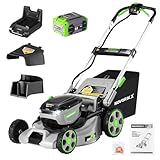
Overview: The NovorikX 60V mower aggressively undercuts premium cordless competitors while delivering impressive specifications. Targeting budget-conscious buyers wanting electric convenience, it packages a 5.0Ah battery, LED headlight, and self-propelled drive into a sub-$400 mower designed for half-acre properties.
What Makes It Stand Out: This mower’s standout feature is value—offering a larger 5.0Ah battery than many pricier competitors and a second battery slot for expandable runtime. The LED headlight and rapid 60-75 minute charging are premium features rarely seen at this price. It challenges the notion that cordless must mean expensive.
Value for Money: At $379.99, the NovorikX presents exceptional value, costing $220 less than the Greenworks 80V while offering similar cutting width and larger battery capacity. The rapid charger inclusion adds another $50+ value. For homeowners with modest yards, it delivers 90% of the premium cordless experience at 60% of the cost.
Strengths and Weaknesses:
- Strengths: Affordable cordless entry point, generous 5.0Ah battery capacity, rapid 60-75 minute charging, second battery slot for expansion, quiet brushless motor operation.
- Weaknesses: Lesser-known brand with unproven long-term durability, 60V system less powerful than 80V alternatives, questionable service network support, potential parts availability issues.
Bottom Line: If you’re willing to trust a newer brand for substantial savings, the NovorikX is a compelling cordless option. It’s perfect for first-time electric mower buyers prioritizing budget over brand heritage.
9. CRAFTSMAN Gas Mower, Self-Propelled, Forward, 163cc, 21-in., M220C (CM12A-A2C2093)

Overview: The CRAFTSMAN M220C leverages a storied brand name with commercial-grade engine features in a mid-priced gas mower. The 163cc engine with cast iron cylinder liner targets buyers wanting durability without stepping up to professional-grade pricing, offering traditional 3-in-1 functionality for standard suburban lawns and reliable performance.
What Makes It Stand Out: CRAFTSMAN’s reputation for reliability and serviceability distinguishes this mower from generic alternatives. The commercial-inspired engine features—cast iron liner and automatic compression release—promise extended lifespan and easier starting. The adjustable loop handle provides ergonomic customization uncommon in this class, enhancing user comfort.
Value for Money: Priced at $399.00, the M220C sits between budget and premium gas mowers. The CRAFTSMAN brand commands a modest premium but offers better parts availability and resale value. While lacking some conveniences of competitors, the robust engine components suggest lower long-term repair costs, potentially offsetting the initial investment over time.
Strengths and Weaknesses:
- Strengths: Trusted CRAFTSMAN brand name, durable cast iron cylinder liner, straightforward mechanical design for DIY maintenance, good parts availability, better resale value.
- Weaknesses: Unspecified drive system (likely front-wheel), lacks premium features (LED lights, quick-fold), basic manual choke starting, heavier than electric alternatives.
Bottom Line: The CRAFTSMAN M220C suits traditionalists valuing brand heritage and engine durability over modern features. It’s a reliable, repairable workhorse that will serve well but won’t impress with innovation.
10. AMERISUN Self Propelled Gas Lawn Mower, 21" with 170cc 4-Cycle OHV Engine 3-in-1 RWD Self-Propelled Lawn Mower (AV8621S1)

Overview: The AMERISUN AV8621S1 disrupts the gas mower market by pairing the most powerful engine in this comparison (170cc) with the lowest price tag ($349.99). This rear-wheel-drive mower arrives fully assembled, targeting budget-conscious buyers unwilling to sacrifice cutting power or traction.
What Makes It Stand Out: The 170cc OHV engine out-muscles competitors costing $50-150 more, while rear-wheel drive delivers superior traction on inclines compared to front-wheel systems. The fully assembled delivery eliminates setup frustration, and the single-lever height adjustment simplifies operation. This combination of power, traction, and convenience at this price is unmatched.
Value for Money: At $349.99, the AMERISUN presents extraordinary value. You’re getting a larger engine and better drive system than the $499 SENIX and $399 CRAFTSMAN while saving $50-150. The fully assembled state saves 30-60 minutes of setup time. Even if long-term durability proves slightly less than premium brands, the initial savings could fund significant repairs while still breaking even.
Strengths and Weaknesses:
- Strengths: Exceptional 170cc engine power for price, rear-wheel drive traction, fully assembled delivery, single-lever height adjustment, auto-choke easy start system.
- Weaknesses: Unknown brand reputation, potential quality control inconsistencies, lower resale value, basic feature set compared to premium competitors.
Bottom Line: For pure performance-per-dollar value, the AMERISUN is unbeatable. It’s ideal for buyers prioritizing power and traction over brand prestige, delivering professional-grade specifications at a budget price point.
Why Hillside Mowing Demands Specialized Equipment
The Physics of Slope Mowing: Safety First
Gravity becomes your adversary the moment you tilt a mower onto an incline. A 200-pound mower on a 25-degree slope experiences forces that make it feel closer to 400 pounds when you’re fighting to keep it stable. Traditional push mowers force you to become the anchor, straining your legs and back while providing zero assistance against roll-back. Self-propelled systems fundamentally change this equation by using the machine’s own power to maintain controlled movement, but the type of propulsion system determines whether you’re actually making the job safer or just adding complexity.
Understanding Incline Ratings and What They Mean
Manufacturers often advertise slope capabilities, but those numbers require scrutiny. A “15-degree maximum incline” rating might refer to engine lubrication limits rather than safe operating angles. Most residential self-propelled mowers handle 15-20 degrees reliably, while commercial-grade machines can manage 25-30 degrees when properly equipped. Always measure your slope using a digital inclinometer app—eyeballing it consistently underestimates steepness by 30-40%. Anything beyond 30 degrees typically requires specialized slope-mowing equipment or professional services.
Self-Propelled vs. Push Mowers: The Hillside Advantage
How Transmission Systems Work on Slopes
Self-propelled mowers transfer engine power through a belt or gear system to the wheels, creating forward motion independent of your pushing force. On hills, this becomes critical because the transmission actively works against gravity’s pull. Hydrostatic transmissions offer infinite speed control and maintain consistent power delivery even as resistance increases, making them superior for variable terrain. Gear-driven systems, while more affordable, provide fixed speeds that may be too fast for steep descents or too slow for efficient uphill climbs.
Variable Speed Control: Your Best Friend on Inclines
Look for mowers with intuitive speed adjustment that lets you modulate pace without stopping. A thumb-lever or squeeze-control system allows micro-adjustments as terrain changes—a feature that becomes invaluable when transitioning from a gentle rise to a steep pitch. Fixed-speed mowers often force you to choose between crawling uphill and dangerously jogging downhill, neither of which produces quality results or safe operation.
All-Wheel Drive vs. Front-Wheel Drive vs. Rear-Wheel Drive
All-Wheel Drive Systems for Maximum Traction
All-wheel drive (AWD) mowers power all four wheels simultaneously, delivering unparalleled grip on steep, slippery slopes. These systems automatically redistribute power when a wheel loses traction, preventing the spin-out that sends other mowers sliding sideways. The trade-off comes in weight and complexity—AWD systems add 15-25 pounds and require more maintenance. They shine on consistently steep properties with mixed terrain, especially where morning dew or shade keeps grass damp.
Rear-Wheel Drive: The Sweet Spot for Most Hills
Rear-wheel drive (RWD) hits the practical balance for most homeowners. With the mower’s weight concentrated over the drive wheels (especially when the bag fills), RWD maintains traction better than front-wheel systems while remaining lighter and more maneuverable than AWD. The rear placement also provides natural stability on descents, as the pulling action keeps the mower tracking straight rather than pushing uncontrollably.
When Front-Wheel Drive Makes Sense
Front-wheel drive (FWD) mowers excel on flat terrain but lose effectiveness on slopes. As you push down on the handles to maintain control uphill, you inadvertently lift weight off the front wheels, causing them to spin uselessly. However, FWD offers superior maneuverability for flat areas and costs significantly less. Consider FWD only if your property features gentle slopes under 10 degrees or wide, flat areas with occasional small rises.
Engine Power and Torque: The Heart of Hill Performance
Gas vs. Electric: Power Delivery on Slopes
Gas engines deliver consistent torque across varying loads, making them reliable for sustained uphill cutting. A 160cc Honda or Briggs & Stratton engine provides the low-end grunt needed to maintain blade speed when the transmission demands power. Electric mowers, while quieter and cleaner, face challenges on hills—battery voltage sags under sustained high load, reducing both propulsion and cutting power. However, modern brushless motors with high-capacity batteries (60V and above) now rival gas performance on moderate slopes, especially when paired with efficient blade designs.
CCs and Torque Ratings: Decoding the Numbers
Don’t fixate on engine displacement alone. A 140cc engine with high torque output can outperform a 190cc engine with peaky power delivery. Look for gross torque ratings—9-10 ft-lbs handles most residential hills, while 12+ ft-lbs tackles steep, dense terrain. Electric mower specs should highlight “max torque” figures rather than just voltage; a 60V system delivering 5 Nm of torque provides more hill-climbing ability than an 80V system with 3 Nm.
Cutting Deck Considerations for Uneven Terrain
Deck Size: Finding the Balance Between Speed and Stability
Wider decks cut more grass per pass but become unwieldy on slopes. A 22-inch deck offers the optimal compromise for most hillside properties—wide enough for efficiency, narrow enough to navigate around obstacles without destabilizing. Anything beyond 24 inches increases the risk of scalping on uneven ground and makes the mower harder to control during turns. For severely uneven terrain with bumps and depressions, consider dropping to a 20-inch deck for maximum stability.
Floating Decks vs. Fixed Decks
Floating decks use a pivot system that allows the deck to follow ground contours independently of the mower body, preventing scalping on rolling hills. This design adds cost and complexity but delivers superior cut quality on uneven terrain. Fixed decks, bolted directly to the frame, work fine on smooth slopes but will dig into high spots and miss low areas, creating an uneven, patchy appearance that undermines your entire mowing effort.
Traction and Tire Technology
Aggressive Tread Patterns That Grip
Standard lawn mower tires feature shallow turf-friendly treads that slip easily on slopes. Look for deep-lug tires with directional patterns designed to bite into grass without tearing it. Some premium models offer knobby, ATV-style tires that transform traction on steep, damp hills. The rubber compound matters too—softer compounds grip better but wear faster, while harder compounds last longer but slide more easily on wet grass.
Tire Width and Stability on Side Hills
Wider tires distribute weight over more surface area, reducing ground pressure and preventing the mower from sinking into soft turf on slopes. This becomes critical on side hills where lateral forces try to pull the mower downhill. A 2-inch wide tire provides noticeably more stability than a 1.5-inch standard tire. Some manufacturers offer optional wheel weights that combine with wider tires to create an incredibly stable platform for challenging terrain.
Safety Features That Matter Most
Blade Brake Clutch Systems
A blade brake clutch (BBC) stops the blade within three seconds when you release the handle, while keeping the engine running. On hills, this prevents the mower from rolling away with a spinning blade if you lose your footing. Without a BBC, you must restart the engine after every stop, tempting you to take dangerous shortcuts. This feature adds $100-150 to the price but pays for itself the first time you need to quickly clear debris from your path on a steep incline.
Operator Presence Controls
Modern mowers require constant pressure on a bail bar or handle to maintain operation. On slopes, ensure this control feels natural and doesn’t require white-knuckle gripping that fatigues your hands. Look for ambidextrous designs that work comfortably whether you’re mowing across a slope left-to-right or right-to-left. Some premium models feature pressure-sensitive controls that adapt to your grip strength, reducing fatigue during long hillside sessions.
Roll-Back Protection and Hill-Hold Features
Advanced transmissions now include hill-hold functionality that automatically engages a brake when you stop on an incline, preventing the mower from rolling backward over your feet. This electronic assistance proves invaluable when you need to pause mid-slope to adjust your stance or clear an obstacle. Manual parking brakes serve a similar function but require you to remember to engage them—a dangerous assumption when you’re focused on maintaining balance.
Ergonomics and Maneuverability
Adjustable Handle Heights for Comfort
Hillside mowing forces you into awkward postures. Multiple handle height positions let you maintain a neutral spine whether you’re pushing uphill (where you naturally lean forward) or controlling descent (where you lean back). Look for tool-free adjustment systems that let you tweak handle position on the fly as terrain changes. Ergonomic handle shapes with vibration dampening reduce hand numbness that can cause you to lose control at critical moments.
Turn Radius and Pivot Control on Slopes
Tight turn radius matters less on hills than controlled pivot capability. The best hillside mowers allow you to unlock one wheel for zero-turn-style rotation at the end of each pass, but automatically re-engage both wheels for straight-line stability. This hybrid approach prevents the uncontrolled slides that happen when you try to turn both wheels simultaneously on a slope. Test this feature by making figure-eights on a moderate incline—smooth, predictable turns indicate good hillside design.
Battery Technology for Cordless Hillside Mowers
Voltage, Amp-Hours, and Runtime Reality
Battery specs can mislead. A 60V, 5Ah battery stores 300 watt-hours of energy, but hillside mowing may consume 400-500 watts continuously versus 200 watts on flat ground. This means your “45-minute runtime” could drop to 25 minutes on slopes. For properties with significant hills, prioritize mowers with dual battery ports that automatically switch to a second pack, or invest in rapid-charger systems that refresh a battery in 30 minutes rather than 90.
Swappable Battery Systems for Extended Work
Proprietary battery ecosystems lock you into one brand but offer advantages for hill work. A standardized 40V or 80V platform lets you hot-swap batteries between mower, trimmer, and blower, ensuring you always have fresh cells ready. For large hillside properties, calculate your total energy needs: if your slope work requires 600 watt-hours but each battery holds 200, you need three batteries minimum to avoid mid-mow power loss that leaves half your hill uncut.
Maintenance Challenges on Sloped Properties
Oil Starvation and Engine Lubrication
Standard splash-lubrication engines can starve for oil on steep side hills, where oil pools in the crankcase corners rather than reaching the pump pickup. Look for engines specifically rated for “all-angle” or “360-degree” operation—these use pressurized lubrication systems that maintain oil flow regardless of tilt. Check your manual’s slope limits; exceeding them voids warranties and risks seizing the engine mid-mow, creating a dangerous, immobile machine on a steep incline.
Air Filter Contamination on Dusty Hillsides
Mowing hills kicks up more dust and debris than flat lawns, clogging air filters faster. Dual-element air filters with foam pre-cleaners extend service intervals from 10 hours to 25 hours. Some commercial models feature cyclonic air filtration that spins out debris before it reaches the filter—worth the premium if your hillside features exposed soil or gravel edges. Check and clean filters after every 2-3 hillside sessions, not just seasonally.
Cost vs. Value: Investing in the Right Features
Premium Features Worth the Splurge
Hydrostatic transmission, BBC, and AWD each add cost but deliver disproportionate value on hills. A $600 mower without these features becomes a $600 liability on steep terrain, while an $800 mower equipped properly pays dividends in safety and cut quality. Prioritize spending on propulsion and safety systems over cosmetic upgrades like electric start or washout ports. The best investment is always the feature that keeps the mower stable when gravity works against you.
Budget-Friendly Must-Haves
If your budget caps at $400, focus on rear-wheel drive with aggressive tires and a reliable engine. Skip electric start and plastic wheels, but insist on a BBC and at least three handle height positions. Many value-priced RWD mowers outperform expensive FWD models on slopes simply because the drivetrain placement works with physics rather than against it. Consider last year’s commercial models—they often sell for homeowner prices but include robust components designed for daily slope use.
Environmental Considerations
Emissions and Fuel Efficiency on Slopes
Gas engines run rich under hill-climbing load, increasing emissions by 20-30% compared to flat-ground operation. California CARB-compliant engines use sophisticated fuel injection to maintain cleaner burn angles, reducing your environmental impact while improving fuel economy. For steep properties, calculate that you’ll use 1.5-2x more fuel per square foot than flat lawns—electric mowers eliminate this multiplier entirely, though they shift emissions to the power grid.
Electric Options for Eco-Conscious Hill Owners
Modern battery mowers now compete with gas on slopes up to 20 degrees, especially when using high-lift blades that improve cutting efficiency. The environmental equation includes noise pollution—electric mowers operate at 65-75 decibels versus 85-95 for gas, a significant factor if you mow early morning or have noise-sensitive neighbors. Factor in lifetime cost: while electric mowers cost more initially, eliminating fuel, oil, and spark plugs saves $50-75 annually, with batteries lasting 5-7 years before replacement.
Professional vs. Homeowner-Grade Equipment
When to Step Up to Commercial Build Quality
If your hillside exceeds a quarter-acre or features slopes over 20 degrees, commercial-grade components become necessary rather than optional. Thicker gauge steel decks resist flexing on uneven ground, commercial transmissions handle sustained high-load operation without overheating, and serviceable wheel bearings last seasons rather than months. The $300-500 premium over homeowner models amortizes quickly when you factor in replacement costs and downtime.
Warranty Considerations for Slope Use
Read warranty fine print carefully—many manufacturers exclude slope-related damage or limit coverage to inclines under 15 degrees. Commercial warranties often cover “any angle operation” explicitly. Document your property’s slope measurements before purchasing; if a warranty claim gets denied due to “improper use,” you’ll need evidence that your terrain falls within advertised specifications. Some brands offer extended warranties specifically for hillside use, a worthwhile investment for peace of mind.
Frequently Asked Questions
How steep is too steep for a self-propelled mower?
Most residential self-propelled mowers safely handle 15-20 degree slopes. Between 20-25 degrees, you need all-wheel drive and specialized features like hill-hold assist. Slopes steeper than 25 degrees require professional slope-mowing equipment or manual alternatives like string trimmers. Always measure with an inclinometer—visual estimates are notoriously inaccurate.
Will mowing side-to-side damage my hillside?
Mowing horizontally across slopes causes less soil compaction than vertical passes but increases rollover risk. Alternate your mowing pattern each session—horizontal one week, diagonal the next—to distribute wear. On slopes over 15 degrees, mow vertically uphill only, then carefully control your descent with the transmission in neutral to avoid creating ruts.
Do I need special blades for hillside mowing?
High-lift blades improve cut quality on slopes by creating stronger airflow that stands grass upright before cutting. Mulching blades work fine on moderate hills but can clog when grass is damp. Avoid low-lift “bagging” blades—they lack the power to discharge clippings effectively uphill, leaving clumps that smother grass.
Can electric mowers really handle steep hills?
Modern 60V-80V brushless mowers handle 15-20 degree slopes effectively, but runtime drops by 40-50% compared to flat ground. For consistent steep work, choose models with dual battery ports. Gas still dominates for sustained 20+ degree mowing, but electric technology improves annually.
Why does my mower bog down going uphill?
Uphill mowing increases load on both engine and blade. Causes include dull blades, clogged air filters, or insufficient engine torque. Check blade sharpness first—hills magnify cutting inefficiency. If the engine still struggles, you may need higher torque ratings or a mower with a gear-reduction transmission that trades speed for climbing power.
How do I prevent my mower from sliding sideways on slopes?
Wider, aggressive-tread tires provide the best lateral stability. Reduce tire pressure by 2-3 PSI to increase contact patch, and mow when grass is dry. AWD systems automatically correct slide, while RWD requires you to maintain steady forward momentum. Never attempt to turn mid-slope; always reach flat ground before changing direction.
Is a heavier or lighter mower better for hills?
Heavier mowers (90+ pounds) offer more stability on moderate slopes but become dangerous if they start rolling. Lighter mowers (60-70 pounds) are easier to control in a runaway situation but can feel twitchy on side hills. The sweet spot for most users is 75-85 pounds with a low center of gravity—achieved through careful engine placement and fuel tank positioning.
Should I mow my hillside when the grass is wet?
Never mow slopes when grass is wet. Traction drops by 60-70%, clippings clump and clog, and you risk serious injury from slips. Wait until dew evaporates and the soil firms up. If you must mow damp grass, use a side-discharge mode and reduce speed by 50% to maintain control.
How often should I service my mower used on hills?
Halve the manufacturer’s recommended service intervals for hillside use. Change oil every 25 hours instead of 50, clean air filters every 5 hours, and check blade sharpness weekly. Slopes accelerate wear on transmissions, belts, and wheel bearings—inspect these monthly for signs of stress cracking or excessive play.
What’s the most important feature for a hillside mower?
A hydrostatic transmission with variable speed control and a blade brake clutch. This combination gives you infinite speed adjustment for controlled operation and the ability to stop the blade instantly without killing the engine. These two features alone prevent 90% of hillside mowing accidents and make the experience significantly less exhausting.