There’s something almost meditative about pushing a mower across a perfectly manicured patch of grass. For homeowners with modest lawns, the dream of achieving that pristine, golf-course aesthetic isn’t just possible—it’s surprisingly attainable with the right approach. Unlike their bulky riding counterparts, push mowers offer surgical precision and intimate control that transforms lawn care from a chore into a craft.
The secret to that coveted golf green finish isn’t magic; it’s the marriage of proper technique with equipment designed for excellence. While your neighbor wrestles with a heavy, overpowered machine that scalps corners and misses edges, you could be gliding effortlessly, leaving behind a carpet of uniformly cut blades that would make a groundskeeper proud. Let’s explore how to select and master the perfect push mower for your tiny lawn.
Top 10 Push Mowers for Tiny Lawns
Detailed Product Reviews
1. American Lawn Mower Company 1204-14 14-Inch 4-Blade Push Reel Lawn Mower, Red

Overview: The American Lawn Mower Company 1204-14 delivers traditional reel mowing in a compact 14-inch package. Weighing just 19 pounds with 8.5-inch polymer wheels, this manual mower targets homeowners with small lawns who prioritize environmental responsibility. Its four-blade cutting system operates at adjustable heights from 0.5 to 1.75 inches, making it suitable for maintaining most turf grasses when used correctly.
What Makes It Stand Out: This mower’s standout feature is its exceptional lightness combined with a respectable 14-inch cutting width. The scissor-like cutting action preserves grass health by avoiding the tearing associated with rotary blades. Its pollution-free, noise-free operation represents the purest form of eco-friendly lawn care, requiring no fuel, oil, batteries, or complex maintenance—just occasional blade sharpening.
Value for Money: At $89.99, this model sits in the mid-range for manual reel mowers. While cheaper than powered alternatives, it competes directly with similar reel models. The long-term value proposition is strong: zero operating costs and minimal maintenance expenses offset the initial investment within the first year compared to gas or electric mowers.
Strengths and Weaknesses: Strengths include its featherlight design, maneuverability, silent operation, and health-conscious cutting mechanism. It excels on flat, small lawns with regularly maintained grass. Weaknesses are significant: the narrow height range struggles with taller grass, wet conditions render it ineffective, and the 14-inch width demands more passes. It requires frequent mowing—never removing more than one-third of blade length—which demands user commitment.
Bottom Line: The 1204-14 suits eco-conscious homeowners with small, flat yards who mow religiously every 5-7 days. For those willing to adapt their mowing schedule, it delivers a pristine, healthy lawn without emissions or noise. Avoid if your lawn exceeds 2,000 square feet or contains stubborn weeds.
2. LawnMaster LMRM1401 Push Reel Lawn Mower 14-Inch 5-Blade

Overview: The LawnMaster LMRM1401 offers a budget-conscious entry into manual lawn care with its 14-inch five-blade reel system. Designed for small urban and suburban lawns, this lightweight mower features 10-inch front wheels and four cutting positions ranging from 1 to 2 inches. The hardened steel blades promise durability while maintaining the eco-friendly, motorless design reel mowers are known for.
What Makes It Stand Out: The five-blade configuration provides a noticeably cleaner cut than typical four-blade models, creating denser turf with fewer passes. The oversized 10-inch wheels improve maneuverability over uneven terrain and small obstacles, addressing a common pain point with smaller-wheeled competitors. Its tool-less height adjustment system enables quick customization without wrestling with complex mechanisms.
Value for Money: At $74.99, this is the most affordable quality reel mower in its class, undercutting most competitors by $10-15. The hardened steel construction ensures longevity, while the elimination of fuel, electricity, and maintenance costs makes it exceptionally economical over its lifespan. For budget-minded homeowners, it delivers premium features without the premium price tag.
Strengths and Weaknesses: Strengths include its aggressive pricing, superior five-blade cut quality, larger wheels for better handling, and straightforward operation. The hardened steel blades retain sharpness longer than standard steel. Weaknesses include a relatively narrow 1-2 inch height range that may not suit all grass types, and like all reel mowers, it struggles with tall grass, weeds, and wet conditions. The 14-inch deck requires multiple passes on anything beyond tiny lawns.
Bottom Line: The LMRM1401 is the ideal starter reel mower for homeowners with lawns under 1,500 square feet. Its combination of price, performance, and build quality makes it the best value proposition in manual mowing. Choose this if you want to test reel mowing without significant financial commitment.
3. Great States 204-14 Hand Reel 14 Inch Push Lawn Mower
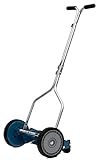
Overview: The Great States 204-14 represents a middle-ground option in the manual reel mower category, combining traditional design with modern materials. This 14-inch, four-blade mower features 8.5-inch polymer wheels and offers height adjustment from 0.5 to 1.75 inches. Weighing approximately 20 pounds, it positions itself as a reliable, planet-friendly alternative to powered mowers for conscientious homeowners.
What Makes It Stand Out: The mower’s heat-treated alloy steel blades differentiate it from competitors, promising exceptional edge retention that can last years before requiring sharpening. When maintenance becomes necessary, the blades can be professionally sharpened rather than replaced, extending the mower’s lifespan indefinitely. Its scissor-action cut delivers professional-grade results on properly maintained grass.
Value for Money: Priced at $79.45, the Great States 204-14 offers a sweet spot between budget and premium reel mowers. It’s $10 less than the American Lawn Mower equivalent while providing comparable features. The durable blade material and timeless mechanical design ensure decades of service with minimal upkeep, delivering outstanding long-term value for eco-minded consumers.
Strengths and Weaknesses: Key strengths include the premium blade steel, lightweight portability, zero emissions, and virtually silent operation. Assembly is straightforward, and the mower stores easily in compact spaces. Weaknesses mirror other reel mowers: polymer wheels lack the durability of steel alternatives, performance drops significantly on grass over 4 inches, and wet conditions make pushing difficult. The height adjustment mechanism can be stiff initially.
Bottom Line: The Great States 204-14 suits homeowners seeking a durable, environmentally responsible mower without premium pricing. It’s perfect for maintaining small to medium flat lawns up to 2,000 square feet. If you value blade longevity and simple mechanics, this mower deserves serious consideration.
4. ROYAL GARDEN 13 Inch Lawn Mower Cordless Electric Walk Behind Push Mower with 5-Height Adjust Portable & Lightweight Push Battery Powered Lawn Mower (4.0AH Battery & Charger Included)

Overview: The ROYAL GARDEN Cordless Electric Mower bridges the gap between manual reel mowers and gas-powered machines. This 13-inch battery-powered mower features a brushless motor, five-position height adjustment (0.78-2.36 inches), and a 30-liter grass catcher. At 23.7 pounds, it promises effortless operation for users of all strengths, covering up to 1,700 square feet on a single charge.
What Makes It Stand Out: The brushless motor technology delivers superior power efficiency and longevity compared to brushed alternatives. Its five-height adjustment range offers greater versatility than most reel mowers, accommodating various grass types and seasonal conditions. The inclusion of a 30L grass catcher and 4.0AH battery with charger at this price point provides exceptional out-of-the-box readiness.
Value for Money: At $109.99, this cordless mower competes directly with premium reel models while offering powered convenience. The complete package eliminates additional purchases, and brushless motors typically outlast traditional designs. However, the 15-minute runtime significantly limits its value proposition for larger properties, potentially requiring multiple charging sessions.
Strengths and Weaknesses: Strengths include cordless freedom, lightweight design, adjustable cutting heights, and the grass collection system. The brushless motor runs quietly and efficiently. Critical weaknesses center on the abysmal 15-minute runtime—insufficient for even modest suburban lawns. The 13-inch cutting width demands numerous passes, and battery degradation over time will further reduce capacity. Performance on thick or overgrown grass drains the battery rapidly.
Bottom Line: The ROYAL GARDEN mower works for tiny urban lawns under 1,500 square feet or as a secondary trim mower. Its runtime limitation makes it unsuitable as a primary mower for most homeowners. Consider only if you prioritize lightweight electric operation over coverage area and have minimal grass to maintain.
5. LawnMaster LMRM1801 Push Reel Lawn Mower 18-Inch 5-Blade

Overview: The LawnMaster LMRM1801 scales up the reel mower concept to tackle medium-sized lawns with its impressive 18-inch cutting width. This five-blade manual mower features nine cutting positions ranging from 1.1 to 2.5 inches, providing unprecedented versatility for a reel design. Ten-inch front wheels and durable steel construction create a stable, efficient platform for eco-conscious homeowners needing broader coverage.
What Makes It Stand Out: The 18-inch deck significantly reduces mowing time compared to 14-inch models, making reel mowing viable for lawns up to 3,000 square feet. The nine-position height adjustment system accommodates diverse grass species and seasonal growth patterns far better than competitors offering only four or five settings. The five-blade configuration ensures a clean, scissor-like cut that promotes healthier turf density.
Value for Money: At $109.99, this mower matches the price of the cordless model while offering unlimited runtime and lower long-term costs. The wider deck translates to fewer passes and less time spent mowing, effectively increasing your hourly productivity. For homeowners with lawns too large for standard reel mowers but too small to justify gas power, it hits the value sweet spot.
Strengths and Weaknesses: Major strengths include the expansive cutting width, exceptional height adjustability, durable steel blades, and stable 10-inch wheels. It maintains reel mower benefits: zero emissions, silent operation, and minimal maintenance. Weaknesses include increased weight and storage requirements compared to 14-inch models. Like all reel mowers, it struggles with tall weeds, sticks, and wet grass. The wider frame can be cumbersome in tight spaces.
Bottom Line: The LMRM1801 is the top choice for medium-sized lawns where environmental impact matters. It successfully bridges the gap between compact reel mowers and powered alternatives. Choose this if you have 2,000-3,000 square feet of grass and want exercise, quiet operation, and zero emissions without sacrificing efficiency.
6. American Lawn Mower Company 1804-18 18-Inch 5-Blade Walk Behind Reel Lawn Mower with Grass Catcher

Overview: The American Lawn Mower Company 1804-18 is a classic manual reel mower designed for environmentally conscious homeowners with small to medium lawns. Its 18-inch cutting path and five-blade reel system deliver a precise, scissor-like cut without gas, oil, or electricity. This walk-behind mower includes a grass catcher and offers adjustable cutting heights from ½ inch to 2¾ inches, making it versatile for various grass types.
What Makes It Stand Out: The five-blade reel design stands out for its ability to create a clean, healthy cut that promotes better lawn growth compared to rotary mowers. The ergonomic U-style handle with cushion grip significantly reduces hand and wrist fatigue during extended use. Its eco-friendly operation produces zero emissions and minimal noise, while the included grass catcher adds convenience rarely found standard with reel mowers at this price point.
Value for Money: At $131.01, this mower sits in the mid-range for quality reel mowers. While requiring physical effort, it eliminates ongoing fuel costs, oil changes, and engine maintenance expenses. Over a typical mowing season, users save hundreds compared to gas-powered alternatives. The durable construction ensures years of reliable service, making the initial investment worthwhile for those committed to manual lawn care.
Strengths and Weaknesses: • Strengths: Whisper-quiet operation; zero environmental impact; scissor-cut precision promotes healthier turf; minimal maintenance requirements; comfortable ergonomic handle; included grass catcher. • Weaknesses: Not suitable for tall or thick weeds; requires consistent mowing schedule; physical exertion on hilly terrain; grass catcher capacity is limited; blade sharpening needed periodically.
Bottom Line: Ideal for eco-conscious users with flat, small-to-medium lawns who prioritize exercise and environmental stewardship over convenience. Not recommended for those with large, uneven, or frequently overgrown yards.
7. Greenworks 40V 16" Cordless Lawn Mower, Ultra-Light Push Mower with 4.0Ah Battery & Charger(75+ Tool Compatibility, 45Min Runtime)

Overview: The Greenworks 40V 16" Cordless Mower delivers gas-like performance without the maintenance headaches, targeting homeowners with up to ½ acre lawns. Weighing 35% less than comparable gas mowers, this ultra-lightweight push mower features a 4.0Ah battery providing 35-45 minutes of runtime. The package includes the battery, fast charger, and grass bag, backed by a three-year warranty on both tool and battery.
What Makes It Stand Out: The Smart Cut Adjustment System with single-lever five-position height control (1.25"-3.375") adapts effortlessly to any grass type. Its true differentiator is the 75+ tool compatibility within the Greenworks 40V ecosystem, allowing the battery to power trimmers, blowers, and chainsaws. The whisper-quiet operation under 75dB enables early morning or evening mowing without disturbing neighbors.
Value for Money: Priced at $239.99, this mower offers exceptional value. Users save over $200 annually in gas, oil, and maintenance costs. The included battery and charger alone represent significant value, and the three-year warranty provides peace of mind. When factoring in the expandable tool ecosystem, the long-term investment becomes even more attractive compared to buying separate gas-powered equipment.
Strengths and Weaknesses: • Strengths: Lightweight and maneuverable; instant push-button start; zero emissions; minimal maintenance; quiet operation; versatile height adjustment; excellent warranty coverage; battery ecosystem compatibility. • Weaknesses: Limited runtime may require multiple batteries for larger lawns; 16" deck requires more passes than wider models; battery performance degrades over time; not ideal for extremely thick or wet grass.
Bottom Line: Perfect for small to medium lawns and users wanting to transition from gas to cordless. The ecosystem value and low operating costs make it a smart investment for budget-conscious, environmentally aware homeowners.
8. Great States 815-18 18-Inch 5-Blade Push Reel Lawn Mower, 18-Inch, 5-Blade, Grey

Overview: The Great States 815-18 is a no-frills manual reel mower offering an 18-inch cutting width with five alloy steel blades designed to stay sharp longer. This grey push mower features adjustable cutting heights from 0.5 to 2.75 inches, 10-inch composite wheels, and a loop-style handle with cushioned grips. As a motorless design, it provides an eco-friendly, low-maintenance solution for small lawn owners who prefer physical activity over engine power.
What Makes It Stand Out: The high-quality alloy steel blades with ball-bearing construction deliver exceptionally smooth operation and superior cutting performance compared to lower-end reel mowers. The 10-inch composite wheels provide better maneuverability over uneven surfaces than smaller-wheeled competitors. Its tool-free assembly and loop-handle design make it approachable for users intimidated by complex machinery, while the planet-friendly operation appeals to environmentally conscious buyers.
Value for Money: At $116.00, this is one of the most affordable quality reel mowers available. The price point undercuts electric alternatives significantly while eliminating all fuel and electricity costs. The durable alloy steel blades reduce sharpening frequency, lowering long-term maintenance expenses. For budget-minded consumers with small, flat lawns, this represents exceptional long-term value despite the physical effort required.
Strengths and Weaknesses: • Strengths: Extremely affordable; sharp, durable alloy steel blades; smooth ball-bearing operation; lightweight at under 30 pounds; zero emissions; virtually silent; easy assembly; low lifetime cost. • Weaknesses: Requires significant physical effort; struggles with tall grass and weeds; not suitable for large or hilly yards; limited cutting height range; grass catcher sold separately; blades need periodic adjustment.
Bottom Line: An excellent entry-level reel mower for small, flat lawns. Best suited for physically active users who mow regularly and prioritize environmental impact and cost savings over convenience and power.
9. BLACK+DECKER 3-in-1 Corded Lawn Mower, String Trimmer & Edger, 12-Inch (BESTA512CM)

Overview: The BLACK+DECKER BESTA512CM is a unique 3-in-1 corded electric tool combining a lawn mower, string trimmer, and edger in one ultra-lightweight 9.9-pound package. Designed for tiny yards and tight spaces, it features a 12-inch cutting width, 1.6-inch maximum cutting height, and 8000 RPM motor. The automatic feed spool and built-in cord retention system enhance usability, though the extension cord must be purchased separately.
What Makes It Stand Out: This tool’s unparalleled versatility eliminates the need for separate trimmers and edgers, making it ideal for urban dwellers with minimal storage space. The automatic feed spool prevents bumping interruptions, while the adjustable handle and height positions accommodate various user preferences. At under 10 pounds, it’s accessible for elderly users or those with limited strength, and the unlimited runtime ensures you won’t run out of power mid-job.
Value for Money: At $89.00, this is the most budget-friendly option for yard maintenance. It costs less than most standalone string trimmers while offering three functions. The corded design means zero battery replacement costs and unlimited operation time. For apartment dwellers or homeowners with small patches of grass, this represents unbeatable value, though its capabilities are limited compared to dedicated mowers.
Strengths and Weaknesses: • Strengths: Extremely lightweight and compact; three tools in one; unlimited runtime; cheapest option available; automatic line feed; easy storage; no battery degradation. • Weaknesses: Very small 12" cutting width; low power struggles with thick growth; cord management is cumbersome; 1.6" max height limits grass types; not a true mower replacement; extension cord not included.
Bottom Line: Perfect for tiny lawns, townhomes, or as a supplemental tool. Not suitable as a primary mower for anything beyond small patches of grass. Excellent value for specific niche applications where space and budget are primary concerns.
Why Push Mowers Are Perfect for Tiny Lawns
The Precision Advantage
Push mowers put you in direct contact with your lawn, giving you immediate feedback on every inch of turf. This tactile connection allows you to spot subtle changes in grass health, soil moisture, and problem areas before they become visible from the street. For lawns under 2,000 square feet, this hands-on approach isn’t just preferable—it’s the professional standard used on putting greens worldwide.
Environmental and Neighborly Benefits
Your tiny lawn doesn’t need a gas-guzzling engine that announces its presence at 7 AM. Modern push mowers operate at whisper-quiet levels, especially manual reel models that produce nothing but the satisfying snick-snick of blades. This means you can mow at dawn without becoming the neighborhood pariah, and you’ll eliminate emissions that seem disproportionate for such a small patch of grass.
Cost-Effectiveness for Small Spaces
Why pay for horsepower you’ll never use? Push mowers cost significantly less than riding mowers, both upfront and over their lifetime. With fewer moving parts, minimal fuel or electricity costs, and the elimination of professional sharpening services you can do yourself, the savings accumulate faster than clippings in your catcher.
Understanding the “Golf Green” Standard
What Makes a Lawn Look Like a Golf Green
That mesmerizing stripe pattern and velvety texture comes down to three factors: consistent height, clean cuts, and directional mowing. Golf greens are mowed daily at heights between 0.125 and 0.15 inches—impossible for residential lawns but instructive for our goals. The principle remains: frequent mowing at lower heights (while respecting the one-third rule) encourages lateral growth and creates that dense, carpet-like appearance.
The Role of Mowing in Achieving That Look
Your mower is both scissors and training tool. Each cut signals the grass to grow thicker rather than taller. Using a push mower allows you to vary your pattern easily—essential for preventing grain and encouraging upright growth. The result is optical depth and that professional striping effect that makes passersby do a double-take.
Types of Push Mowers for the Perfect Cut
Reel Mowers: The Classic Choice
Manual reel mowers operate like a fleet of tiny scissors, cutting each blade cleanly rather than tearing. This scissor-action prevents the brown tips that betray a dull rotary blade and reduces disease entry points. For tiny lawns, a 16-18 inch reel mower weighing under 30 pounds can deliver professional results while providing a light workout.
Electric Rotary Push Mowers: Modern Convenience
Battery-powered rotary mowers bridge the gap between manual precision and powered convenience. Look for brushless motors that maintain torque under load and lithium-ion batteries that deliver consistent power until depletion. These mowers typically weigh 35-50 pounds—substantial enough to press down minor irregularities but light enough to hang on a garage wall.
Gas-Powered Push Mowers: Power in a Small Package
While overkill for most tiny lawns, compact gas mowers offer unlimited runtime and maximum power for challenging conditions like thick Bermuda or slight slopes. The key is selecting a model with a modest engine (140cc or less) and a compact deck that won’t overwhelm your storage space or your ability to maneuver around landscaping.
Cutting Width: Finding the Sweet Spot for Tiny Lawns
Why Bigger Isn’t Always Better
A 21-inch deck might seem efficient, but on a 500-square-foot lawn, you’ll spend more time wrestling around tight corners than actually cutting grass. For tiny lawns, a 14-18 inch cutting width hits the sweet spot—wide enough to make progress, narrow enough to navigate between rose bushes and along fence lines without leaving uncut strips.
Maneuverability in Tight Spaces
Consider the turning radius and overall footprint. A mower that’s 24 inches wide with handles might struggle through a 30-inch gate. Measure your narrowest passage before shopping, and remember that smaller decks make it easier to create those signature stripe patterns that define the golf green aesthetic.
The Cutting Height Sweet Spot for Golf Green Results
Understanding the One-Third Rule
Never remove more than one-third of the grass blade in a single mow. On a tiny lawn, this means mowing more frequently—perhaps twice weekly during peak growth. For cool-season grasses like fescue, maintain 2.5-3 inches; for warm-season varieties like Bermuda, 1-1.5 inches creates that tight, dense appearance.
Micro-Adjustments Matter
The difference between a good lawn and a golf-green lawn is measured in eighths of an inch. Look for mowers with height adjustments in 0.25-inch increments rather than broad 0.5-inch steps. This precision lets you gradually lower height through the season, training your grass to become progressively denser.
Weight Considerations for Easy Operation
Lightweight vs. Heavy-Duty Builds
A mower under 30 pounds allows you to mow with one hand while steering with the other, essential for intricate pattern work. However, some heft helps maintain contact with uneven terrain. The ideal golf-green mower for tiny lawns weighs 25-40 pounds—enough to press down minor bumps but light enough for vertical storage and fatigue-free operation.
Storage Solutions for Small Spaces
Consider mowers with folding handles or vertical storage capabilities. Some modern push mowers collapse to just 12 inches deep, sliding neatly between your car and garage wall. For apartment dwellers with shared outdoor space, a 20-pound reel mower can hang on a sturdy wall hook, taking up no floor space at all.
Blade Technology and Sharpness
Cylinder Blades vs. Rotary Blades
Reel mowers with 5-7 helical blades create the cleanest cut but require periodic adjustment of the bed knife. Rotary blades are more forgiving of small sticks and debris but must be sharpened more frequently. For golf-green results, consider a reel mower’s scissor cut non-negotiable—it’s the difference between a torn blade tip that turns brown and a surgically precise cut that heals invisibly.
The Importance of Regular Sharpening
A dull blade is the fastest way to sabotage your golf green ambitions. Rotary blades need sharpening every 20-25 hours of use; reel mower blades require adjustment every 30-40 hours. Invest in a blade sharpening kit and learn to do it yourself—professional sharpening costs add up quickly on a mower you use weekly.
Grass Clippings Management
Mulching vs. Bagging vs. Side Discharge
For tiny lawns aiming for golf-green perfection, mulching is your secret weapon. Finely chopped clippings decompose rapidly, returning nitrogen and organic matter to the soil. This natural fertilization promotes the dense, healthy growth that defines premium turf. Bagging should be reserved for when grass has grown excessively long, and side discharge is rarely useful on small properties.
The Case for Grasscycling on Small Lawns
Grasscycling with a mulching mower can provide up to 25% of your lawn’s nitrogen needs. On a tiny lawn, this means you might eliminate synthetic fertilizers entirely after your soil improves. The key is mowing frequently enough that clippings are short—another argument for the push mower’s convenience and quiet operation.
Terrain and Maneuverability Features
Wheels That Work With You
Large rear wheels (8-10 inches) roll smoothly over minor bumps and make turning effortless. Ball-bearing wheels maintain their glide season after season, while plastic bushings can develop flat spots that create annoying vibrations. For golf-green results, look for mowers with front wheels that don’t leave indentations—lightweight models with wide, soft tires distribute weight evenly.
Handling Slopes and Obstacles
Even tiny lawns often have challenging micro-terrain. A mower with adjustable wheel heights helps maintain consistent cut across slight undulations. For lawns with trees or garden beds, consider a mower with a front bumper guard—pushing against roots or edging won’t damage the deck or knock the blades out of adjustment.
Build Quality and Durability
Materials That Last
Steel decks last decades but rust if stored wet. Aluminum decks won’t rust but can dent. High-impact polymer decks are surprisingly durable and lightweight but may flex under stress. For the golf-green enthusiast, an aluminum or quality polymer deck makes sense—you’re not mowing rocks and debris, you’re maintaining a pristine surface.
Weather Resistance for Outdoor Storage
If garage space is non-existent, look for mowers with stainless steel hardware and UV-resistant plastics. A quality cover is essential for outdoor storage. Some manufacturers now offer decks with lifetime warranties against rust-through, a worthwhile feature for a tool you’ll keep for decades.
Noise Levels and Local Regulations
Quiet Operation for Residential Areas
Manual reel mowers operate at about 55 decibels—quieter than a conversation. Battery mowers run at 65-75 decibels, while gas mowers can exceed 90 decibels. Many municipalities now restrict gas mower usage during early morning and evening hours. A quiet mower lets you mow when conditions are optimal: cool, calm mornings when grass is dry but before the afternoon heat stress.
Best Mowing Times for Community Harmony
The golf-green lawn requires frequent mowing, but your neighbors require peace. Early morning (7-9 AM) and early evening (6-8 PM) offer ideal grass conditions but can violate noise ordinances or neighborly goodwill. A whisper-quiet push mower solves this dilemma, letting you mow at 7 AM on Saturday without a single curtain twitch.
Maintenance Requirements
Daily and Weekly Maintenance Tasks
After each mow, brush clippings from the deck and blades. Weekly, check blade sharpness by inspecting grass tips—brown, frayed ends mean it’s time to sharpen. Monthly, clean air filters on powered models and oil any moving parts. This 5-minute routine prevents 95% of performance issues and keeps your mower cutting like new.
Seasonal Care and Winterization
For manual reel mowers, winterization means a quick wipe-down and a drop of oil on moving parts. Battery mowers need batteries stored indoors at 50% charge. Gas mowers require fuel stabilizer or complete draining. Regardless of type, end-of-season sharpening means you start spring with a tool ready to create that perfect first cut.
Blade Sharpening Frequency
The golf-green standard demands sharp blades. For reel mowers, back-lapping every 6 months maintains the edge. Rotary users should sharpen monthly during growing season. A simple sharpening kit costs less than two professional sharpenings and pays for itself in the first season.
Budget Considerations and Value
Initial Investment vs. Long-Term Costs
A premium manual reel mower ($150-250) costs less than one season of professional lawn service and lasts decades with minimal maintenance. Battery mowers ($300-500) cost more upfront but eliminate gas and oil expenses. Calculate cost per mow—on a tiny lawn mowed 30 times yearly, even a $400 mower costs just $13 per use in year one, dropping to pennies annually over its lifespan.
When to Splurge vs. When to Save
Invest in blade quality and height adjustment precision. Save on engine size and cutting width—you don’t need either for a tiny lawn. A $200 reel mower with excellent blades outperforms a $400 rotary mower for golf-green results. The money saved can fund soil amendments that matter more than mower features.
Safety Features to Look For
Blade Braking Systems
Electric mowers should have instant-stop blade brakes that halt rotation within 3 seconds of handle release. This protects pets, children, and your own feet during quick stops. Manual reel mowers naturally stop when you stop pushing, offering inherent safety that powered models must engineer.
Child-Safety Considerations
If kids share your tiny yard, look for mowers with safety keys that prevent unauthorized starting. Reel mowers win here too—they’re harmless when not in motion. Some battery models now feature PIN-code starts, ensuring little hands can’t accidentally activate blades.
Creating Your Mowing Strategy for Golf Green Perfection
The Mowing Pattern That Pros Use
Start by mowing the perimeter, then work in straight, slightly overlapping passes. Alternate your direction weekly—north-south one week, east-west the next. This prevents grain and encourages upright growth. On tiny lawns, use the “double-cut” method: mow once at a higher setting, then immediately mow again at your target height in the opposite direction. This creates the striped effect and catches any missed blades.
Frequency Recommendations for Tiny Lawns
During peak growth, mow every 3-4 days rather than weekly. This maintains the one-third rule at lower heights and trains grass to grow dense rather than tall. The golf-green look comes from consistency, not aggressive cutting. A 15-minute mowing session twice weekly yields better results than an hour-long weekly battle.
Frequently Asked Questions
How small does my lawn need to be for a push mower to make sense? Push mowers excel on lawns up to 2,000 square feet. Beyond that, mowing time and fatigue become factors. For a true golf-green aesthetic on a tiny lawn (under 1,000 square feet), a push mower isn’t just sensible—it’s essential for the precision required.
Can I really achieve golf-green quality without professional equipment? Absolutely. Golf greens are cut daily at extremely low heights, but the same principles apply residentially: frequent mowing, sharp blades, consistent height, and alternating patterns. Your push mower can achieve 90% of the visual quality at a fraction of the maintenance intensity.
How often should I sharpen my mower blades for the best results? For rotary mowers, sharpen every 20-25 hours of use—roughly monthly during growing season. Reel mowers need bed knife adjustment every 30-40 hours. If grass tips look brown or frayed 24 hours after mowing, your blades are dull regardless of schedule.
What’s better for a tiny lawn: reel or electric rotary? For pure golf-green results, a manual reel mower is superior. Its scissor-action cut prevents tip browning and encourages dense growth. Electric rotary mowers are better if you have physical limitations, slightly uneven terrain, or prefer powered convenience over absolute perfection.
How low should I cut for that golf-course look? Never below 1 inch for most residential grasses, and higher for cool-season varieties. The “golf green” illusion comes from density and uniformity, not extremely low height. Cut at the lowest healthy height for your grass type, then maintain it religiously.
Can I use a push mower on a lawn with slopes? Yes, for gentle slopes under 15 degrees. Manual reel mowers work well on slight inclines. For steeper areas, consider a lightweight battery mower with good traction. Always mow across slopes, not up and down, for safety and even cutting.
Why does my lawn look striped after mowing? Stripes occur when grass blades bend in different directions, reflecting light differently. The effect is more pronounced with rear rollers, which push blades forward. Alternate mowing directions weekly to create a checkerboard pattern that screams “professional maintenance.”
How do I prevent my push mower from leaving wheel marks? Mow when grass is dry, maintain proper tire pressure (if applicable), and vary your path slightly each time. Lightweight mowers (under 30 pounds) rarely leave marks. If marks persist, your soil may be too soft—top-dress with sand to firm up the surface.
Is it worth buying a mower with a grass catcher for a tiny lawn? Generally, no. Mulching returns nutrients and organic matter. Only bag clippings if you’ve let the grass grow excessively long or if you’re dealing with disease. For golf-green results, frequent mowing makes clippings so fine they disappear into the turf.
How long should a quality push mower last? A well-maintained manual reel mower can last 30+ years. Battery mowers typically last 8-10 years before battery replacement needs consideration. The key is consistent maintenance: clean after each use, store indoors, and address rust spots immediately. Your tiny lawn mower should be a lifetime tool, not a disposable appliance.