When your livelihood depends on creating crisp, clean lines that separate pristine turf from walkways and flower beds, settling for subpar equipment isn’t an option. Professional landscapers understand that a premium gas-powered lawn edger represents far more than a simple tool—it’s a revenue-generating asset that must deliver reliable performance through long workdays, challenging soil conditions, and countless miles of edging each season. The right machine transforms a labor-intensive task into an efficient, profitable operation while elevating the finished quality that defines your reputation.
Investing in professional-grade equipment requires looking beyond marketing claims and understanding the engineering details that separate durable workhorses from disappointing purchases. This comprehensive guide walks through the critical features, specifications, and design elements that matter most to professional operators. Whether you’re upgrading existing equipment or expanding your commercial fleet, these insights will help you evaluate options based on performance metrics that directly impact your bottom line, operator fatigue, and long-term maintenance costs.
Top 10 Gas Powered Lawn Edgers
Detailed Product Reviews
1. EARTHQUAKE 41273 79cc 4-Cycle Walk-Behind Edger, Red/Black

1. EARTHQUAKE 41273 79cc 4-Cycle Walk-Behind Edger, Red/Black
Overview: The EARTHQUAKE 41273 is a heavy-duty walk-behind edger engineered for serious landscaping tasks. Its 79cc 4-cycle Viper engine eliminates fuel mixing while delivering robust power to a tri-tip steel blade spinning at 3400 RPM. This unit handles precision lawn edging, driveway borders, and even light trenching for underground cables or fencing. The four-wheel design ensures exceptional stability, while the multi-position pivoting head offers five cutting angles from 70-110 degrees, accommodating everything from standard grasses to aggressive creeping varieties. Depth control adjusts from 0.5 to 3.5 inches via a single-hand lever. A durable chain debris guard protects operators, and an integrated tool holder adds convenience.
What Makes It Stand Out: The combination of 4-cycle convenience, multi-angle cutting capability, and professional-grade depth range distinguishes this edger. The ability to customize cutting angles for specific grass types ensures clean edges in any condition, while the wheeled chassis provides balance that handheld units cannot match.
Value for Money: Positioned as a premium residential/professional tool, it justifies its higher price through commercial-grade construction and versatility that eliminates separate trenching equipment. It competes with units costing hundreds more.
Strengths and Weaknesses: Strengths include powerful 4-cycle engine, exceptional stability, versatile angle and depth adjustments, and robust build quality. Weaknesses include heavier weight, louder operation, and premium pricing that may exceed casual users’ needs.
Bottom Line: Perfect for large properties, professional landscapers, or serious DIYers demanding commercial performance. The 4-cycle convenience and adjustable features make it worth the investment for frequent, demanding use.
2. Wild Badger Power Sidewalk Edger Lawn Tool Gas 31cc WB31CCED, Blue

2. Wild Badger Power Sidewalk Edger Lawn Tool Gas 31cc WB31CCED, Blue
Overview: The Wild Badger Power WB31CCED provides an accessible entry into gas-powered edging for budget-conscious homeowners. Its 31cc engine drives a 9.5-inch blade at 9800 RPM, delivering sufficient power for routine sidewalk, driveway, and lawn perimeter maintenance. Weighing only 29.6 pounds, this walk-behind edger emphasizes maneuverability over brute force. The ergonomic handle design reduces user fatigue during extended operation, while the easy-start system reliably ignites within five pulls. Three cutting height settings and five depth levels offer reasonable customization for typical residential tasks. The compact design stores easily in standard garages or sheds.
What Makes It Stand Out: The lightweight construction combined with high blade speed creates an optimal balance of power and portability rarely found in gas edgers. The ergonomic focus makes it accessible for users of varying strength and experience levels.
Value for Money: This unit occupies the entry-level price tier for gas edgers, making gasoline power affordable for typical homeowners. While it sacrifices some durability and advanced features, it delivers core edging functionality at a compelling price point.
Strengths and Weaknesses: Strengths include lightweight design, impressive RPM output, comfortable operation, reliable easy-start, and budget-friendly pricing. Weaknesses include a smaller engine that struggles with thick overgrowth, potentially reduced lifespan under heavy use, and limited cutting angle adjustments.
Bottom Line: An excellent choice for homeowners with modest properties seeking gas convenience without premium costs. While not commercial-grade, it handles typical residential edging effectively and offers outstanding value for occasional to moderate use.
3. Husqvarna 122LKE Gas Edger, Multi-Purpose Tool with Lawn Edger Attachment, Features 6-Inch Adjustable Wheel and Curved Shaft

3. Husqvarna 122LKE Gas Edger, Multi-Purpose Tool with Lawn Edger Attachment, Features 6-Inch Adjustable Wheel and Curved Shaft
Overview: The Husqvarna 122LKE redefines versatility as a multi-purpose tool with a detachable edger attachment. This gas-powered unit features a curved shaft and 6-inch adjustable wheel, engineered for homeowners who prioritize tool consolidation. The 2.5-inch cutting depth handles most residential edging tasks efficiently. Smart Start technology reduces starter cord resistance by 40%, ensuring reliable ignition with minimal effort. The ergonomic curved shaft enhances balance and reduces fatigue during extended operation. As part of Husqvarna’s attachment system, it converts to hedge trimmer or pole saw functionality with additional purchases.
What Makes It Stand Out: The modular attachment system maximizes yard tool value while saving storage space. The proven Smart Start system and premium ergonomics demonstrate Husqvarna’s engineering focus on user experience.
Value for Money: Though pricier than single-use edgers, it delivers exceptional value for buyers planning multiple attachments. Quality construction ensures longevity, justifying the initial investment for comprehensive yard care.
Strengths and Weaknesses: Strengths include exceptional versatility, superior ergonomics, reliable starting, premium brand reputation, and space-saving design. Weaknesses include less power than dedicated walk-behind edgers, additional attachment costs, and component-switching requirements.
Bottom Line: Ideal for homeowners seeking a modular yard care system rather than a single-purpose tool. If you value versatility and plan tool expansion, this Husqvarna multi-tool represents a smart, efficient investment that grows with your needs.
4. 43cc Gas Weed Wacker, 2-Stroke String Trimmer/Edger Single Cylinder Air Cooled Engine with Heavy Duty Straight Shaft Lawn Mower Strings for Home Lawn Orchard Tea Garden Mowing

4. 43cc Gas Weed Wacker, 2-Stroke String Trimmer/Edger Single Cylinder Air Cooled Engine with Heavy Duty Straight Shaft Lawn Mower Strings for Home Lawn Orchard Tea Garden Mowing
Overview: This 43cc Gas Weed Wacker targets users needing versatile vegetation management across diverse applications. The 2-stroke engine generates 1.25kW at 8500 RPM, powering both a 2T cutting blade with roller for field work and a multi-purpose mowing head for orchard use. The cordless design enables unrestricted mobility across large properties, while the adjustable handle and carrying strap improve ergonomics. The straight shaft provides extended reach for ditch banks and fence lines. Simple assembly and a detachable design facilitate storage and transport. This tool handles everything from lawn trimming to crop field maintenance, rice harvesting, and bush cutting.
What Makes It Stand Out: The dual-blade system and agricultural-grade versatility distinguish it from typical residential trimmers. It bridges the gap between homeowner and commercial agricultural equipment.
Value for Money: For rural property owners needing multiple functions, this tool offers significant capability at a moderate price. However, as a dedicated edger, it lacks precision and stability compared to purpose-built units.
Strengths and Weaknesses: Strengths include powerful 43cc engine, dual blade versatility, excellent portability, and wide application range. Weaknesses include 2-stroke fuel mixing requirements, heavier weight for prolonged edging, and inferior edge precision versus wheeled edgers.
Bottom Line: Better suited as a heavy-duty trimmer with occasional edging capability than as a primary edger. Recommended for rural properties or agricultural users needing versatile vegetation management, but homeowners seeking pristine lawn edges should invest in a dedicated edger.
5. WORX 12 Amp 7.5’’ Electric Lawn Edger & Trencher, Corded, WG896
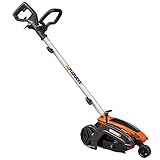
5. WORX 12 Amp 7.5’’ Electric Lawn Edger & Trencher, Corded, WG896
Overview: The WORX WG896 electric edger delivers corded consistency for homeowners wanting professional results without gas engine maintenance. Its 12-amp motor spins a 7.5-inch blade at 4700 RPM, providing steady power for driveway, sidewalk, and garden bed edging. The cutting line indicator helps maintain perfectly straight edges, a standout feature in this class. Three depth settings from 1 to 1.5 inches handle various tasks, while the adjustable shaft and D-grip accommodate different user heights. The tool operates quietly with zero emissions and minimal vibration.
What Makes It Stand Out: The cutting line guide significantly improves accuracy for novice users, while the adjustable shaft ensures ergonomic comfort. The 12-amp motor delivers near-gas performance for typical residential applications.
Value for Money: Exceptional value eliminates fuel costs, oil changes, and engine maintenance while providing reliable performance. The competitive price makes professional-looking edges accessible to most homeowners.
Strengths and Weaknesses: Strengths include instant start, consistent power, lightweight design, low maintenance, and superior ergonomics. The cutting guide is genuinely useful. Weaknesses include cord management challenges, reduced power for heavy overgrowth, and limited depth compared to gas alternatives.
Bottom Line: The ideal choice for eco-conscious homeowners with small to medium yards and accessible power outlets. It delivers clean, precise edges with minimal fuss, making it perfect for regular maintenance without the noise, weight, and maintenance demands of gas-powered equipment.
6. CRAFTSMAN Cordless Edger Lawn Tool, 20V MAX Battery, Charger and Blade Included, Lightweight Lawn Edger, 7.5 in Cutting Width, 1000 Ft of Edging per Charge (CMCED400D1)

6. CRAFTSMAN Cordless Edger Lawn Tool, 20V MAX Battery, Charger and Blade Included, Lightweight Lawn Edger, 7.5 in Cutting Width, 1000 Ft of Edging per Charge (CMCED400D1)
Overview: The CRAFTSMAN CMCED400D1 cordless edger delivers gas-free convenience in a lightweight package. This 20V MAX tool features a 7.5-inch cutting blade and includes a 2.0Ah battery, charger, and integrated edge guide for precise trimming along sidewalks and driveways.
What Makes It Stand Out: Its V20 battery platform compatibility sets it apart, allowing the same battery to power over 75 CRAFTSMAN tools. The VERSATRACK hook enables wall-mounted storage, while the 8-pound design ensures effortless maneuverability. The tool promises up to 1,000 linear feet of edging per charge.
Value for Money: At its price point, this edger offers excellent value for homeowners already invested in the V20 ecosystem. Compared to gas models, you save on fuel, oil, and maintenance costs. The included battery and charger alone represent significant value, eliminating hidden costs.
Strengths and Weaknesses: Pros: Zero emissions, quiet operation, instant start, lightweight design, battery platform versatility, and organized storage solution. Cons: Limited runtime may restrict large properties, less power than gas equivalents, 7.5-inch cutting width requires more passes, and battery life degrades over time.
Bottom Line: Ideal for small to medium lawns and existing CRAFTSMAN V20 users, this edger excels at routine maintenance. For heavy overgrowth or expansive properties, consider a more powerful option. It’s a smart investment for eco-conscious homeowners prioritizing convenience.
7. WILD BADGER POWER 26cc Weed Wacker Gas Powered, 3 in 1 String Trimmer/Edger 17’’ with 10’’ Brush Cutter,Rubber Handle & Shoulder Strap Included

7. WILD BADGER POWER 26cc Weed Wacker Gas Powered, 3 in 1 String Trimmer/Edger 17’’ with 10’’ Brush Cutter,Rubber Handle & Shoulder Strap Included
Overview: The WILD BADGER POWER 26cc gas trimmer is a versatile 3-in-1 landscaping solution combining a 17-inch string trimmer, edger, and 10-inch brush cutter. Powered by a full crank 2-cycle engine, it targets homeowners needing professional-grade flexibility without multiple tool purchases.
What Makes It Stand Out: The full crank engine design doubles typical engine lifespan while improving fuel efficiency. Tool-free air filter access simplifies maintenance, and the attachment compatibility transforms it into a multi-function power base. The included shoulder strap and rubber handle enhance comfort during extended use.
Value for Money: This unit delivers exceptional value by replacing three separate tools. The full crank engine’s extended durability justifies the investment over cheaper half-crank models. For properties with diverse vegetation, the combined functionality eliminates $200-300 in additional equipment costs.
Strengths and Weaknesses: Pros: Powerful 26cc engine, three functions in one, durable full crank design, easy start system (within 5 pulls), and attachment expandability. Cons: Requires gas/oil mixing, heavier than electric models, produces noise and emissions, and needs regular engine maintenance.
Bottom Line: Perfect for larger properties or heavy-duty tasks, this tool rewards users comfortable with gas maintenance. The full crank engine and 3-in-1 design make it a workhorse for diverse landscaping needs. Electric options better suit noise-restricted neighborhoods or small yards.
8. Champion Power Equipment 9 Inch 79cc Lawn Edger with Curb Hop Feature

8. Champion Power Equipment 9 Inch 79cc Lawn Edger with Curb Hop Feature
Overview: The Champion Power Equipment edger features a robust 79cc 4-stroke OHV engine designed for serious lawn care enthusiasts. With a 9-inch blade, this dedicated edging tool offers professional features including curb hop capability and multi-angle bevel adjustments for decorative landscaping.
What Makes It Stand Out: The 4-stroke engine eliminates fuel mixing while delivering superior torque. Five-position depth adjustment (up to 2.5 inches) and 15-degree left/right bevel settings provide unmatched precision. The curb hop wheel adjustment effortlessly transitions over curbs, while 7-inch never-flat wheels ensure durability.
Value for Money: This dedicated edger competes with commercial units at a consumer price point. The 4-stroke engine reduces operating costs and maintenance headaches compared to 2-stroke models. The 2-year warranty and lifetime technical support add significant long-term value.
Strengths and Weaknesses: Pros: Powerful 79cc engine, no fuel mixing required, precision depth and angle controls, curb hop feature, durable wheels, and excellent warranty. Cons: Single-function tool limits versatility, heavier than multi-function units, gas engine requires maintenance, and higher initial cost than electric models.
Bottom Line: For homeowners prioritizing pristine edges and professional results, this dedicated tool delivers. The 4-stroke engine and precision controls justify the investment for large properties or frequent use. Consider alternatives if you need trimming and brush cutting capabilities.
9. PROYAMA 26cc Weed Eater/Wacker Gas Powered, 2-Cycle Gas String Trimmer/Edger, 3 in 1 Brush Cutter with 17’’ Cutting Path, Grass Trimmer Light Weight

9. PROYAMA 26cc Weed Eater/Wacker Gas Powered, 2-Cycle Gas String Trimmer/Edger, 3 in 1 Brush Cutter with 17’’ Cutting Path, Grass Trimmer Light Weight
Overview: The PROYAMA 26cc 3-in-1 gas trimmer offers EPA-certified power in a versatile package combining string trimming, edging, and brush cutting functions. Its 17-inch cutting path and quick-start system target environmentally-conscious users seeking gas performance with reduced emissions.
What Makes It Stand Out: EPA certification ensures cleaner operation and improved fuel efficiency over standard 2-stroke engines. The quick-release split shaft enables compact storage and easy transportation. Handlebar design improves control, while the upgraded quick-start system reduces pull-start frustration.
Value for Money: This mid-range gas tool balances performance with environmental responsibility. The 3-in-1 design eliminates separate tool purchases, while EPA compliance may meet local emission regulations. It’s priced competitively against non-certified competitors.
Strengths and Weaknesses: Pros: EPA-certified engine reduces emissions, easy starting mechanism, versatile 3-in-1 design, split shaft for storage, and handlebar for control. Cons: Still requires gas/oil mixing, produces more noise and emissions than electric, engine maintenance needed, and build quality may not match premium brands.
Bottom Line: A solid choice for users wanting gas power with environmental considerations. The EPA certification and 3-in-1 versatility make it practical for medium properties. For heavy-duty use, consider a full crank engine. Electric models remain better for noise-sensitive areas.
10. 26cc 2-Stroke Gas Weed Trimmer, Air-Cooled 2-Stroke Cordless Lawn Edger Gas String Trimmer with Handle & Shoulder for Lawn & Edging (2 Blade Heads)

10. 26cc 2-Stroke Gas Weed Trimmer, Air-Cooled 2-Stroke Cordless Lawn Edger Gas String Trimmer with Handle & Shoulder for Lawn & Edging (2 Blade Heads)
Overview: This generic 26cc 2-stroke gas trimmer positions itself as a specialized mowing solution with two distinct blade heads for different applications. Delivering 0.65kW at 8,500 RPM, it targets agricultural and orchard environments where precise, safe cutting matters.
What Makes It Stand Out: The dual blade system includes a 2T cutting edge with roller for paddy ridges and a multi-purpose head protecting saplings in orchards. The throttle safety lock prevents accidental acceleration, while the adjustable handle and shoulder strap improve ergonomics. Its detachable design aids storage.
Value for Money: As a budget-conscious gas option, it offers specialized blades typically found on more expensive professional equipment. The competitive pricing makes it accessible for small farms or large rural properties needing targeted cutting solutions.
Strengths and Weaknesses: Pros: Two specialized blade heads, high operating speed (8500 RPM), safety throttle lock, adjustable handle, shoulder strap included, and detachable for storage. Cons: Generic brand limits support and parts availability, basic 2-stroke engine lacks durability features, no EPA certification mentioned, and unclear warranty terms.
Bottom Line: Suitable for specific agricultural applications requiring blade versatility on a budget. The safety features and specialized heads are compelling for orchard use. Homeowners seeking a general lawn tool should opt for established brands with better support and emission controls.
Understanding What Makes an Edger “Professional-Grade”
Professional lawn edgers differ fundamentally from homeowner models in every component, from the engine block to the blade guard. These machines are engineered for continuous operation, often running 6-8 hours daily in harsh conditions. The distinction lies in reinforced components, commercial-spec engines, and design philosophies prioritizing serviceability over planned obsolescence. When evaluating equipment, look for welded steel frames rather than stamped metal, sealed bearings throughout the drivetrain, and engines with commercial-duty air filtration systems that can handle dusty conditions without premature wear.
Power Output and Performance Metrics
Professional edgers typically deliver 3.5 to 5 horsepower, translating to blade speeds of 3,400-4,200 RPM under load. This power range ensures consistent cutting performance through dense clay, compacted soil, and overgrown edges without bogging down. Torque ratings matter more than peak horsepower for edging applications, as constant blade resistance requires sustained power delivery rather than occasional bursts. Evaluate torque curves rather than single horsepower numbers—machines that maintain torque at lower RPMs provide smoother operation and better fuel efficiency during extended use.
Commercial vs. Residential Construction Differences
The chassis construction reveals much about an edger’s professional credentials. Commercial units feature tubular steel frames with continuous welds, powder-coated finishes, and reinforced stress points where vibration concentrates. Look for solid steel drive shafts instead of flexible cables, which stretch and fail under commercial workloads. Professional models also incorporate sealed, permanently lubricated bearings at every pivot point, eliminating the weekly greasing routines that homeowner models require. These construction differences explain why commercial edgers weigh 30-50% more than their residential counterparts—the mass represents durability, not inefficiency.
Engine Technology and Specifications
The engine represents the heart of your investment and determines reliability, fuel costs, and maintenance intervals. Professional-grade edgers utilize engines specifically designed for commercial outdoor power equipment, featuring cast iron cylinder sleeves, heavy-duty recoil starters, and sophisticated air filtration systems. These powerplants often exceed 200-hour service intervals between major maintenance, compared to 50-hour intervals on consumer engines.
Two-Stroke vs. Four-Stroke Engines
Two-stroke engines offer simplicity, higher power-to-weight ratios, and the ability to operate at extreme angles without oil starvation concerns. They excel in lightweight, high-mobility applications but consume more fuel and require oil mixing. Four-stroke engines deliver superior fuel economy, lower emissions, and quieter operation—significant advantages for professionals working in noise-sensitive residential areas. Modern commercial four-strokes also feature pressurized lubrication systems with oil pumps and filters, dramatically extending engine life. Your choice depends on operational priorities: two-strokes for maximum portability and raw power, four-strokes for efficiency and neighborhood-friendly operation.
Displacement and Horsepower Considerations
Engine displacement for professional edgers typically ranges from 25cc to 35cc for two-strokes and 140cc to 190cc for four-strokes. Displacement directly impacts torque production—critical for maintaining blade speed through tough cutting conditions. However, larger displacement doesn’t always mean better performance. Engine efficiency, carburetor design, and exhaust tuning significantly impact real-world power delivery. A well-tuned 160cc four-stroke often outperforms a poorly designed 190cc unit while consuming 20% less fuel. Focus on power-to-weight ratios and specific output (horsepower per cc) rather than raw displacement numbers.
Starting Systems and Carburetor Design
Professional edgers feature advanced starting systems including decompression valves that reduce pulling force by 30-40%, commercial-grade recoil springs rated for thousands of pulls, and electronic ignition modules that ensure reliable spark in all weather conditions. Carburetors should be adjustable for altitude and fuel quality, with large fuel filters and primer bulbs that deliver consistent fuel delivery. Some premium models incorporate automatic choke systems that prevent flooding—a common issue when operators repeatedly start and stop equipment throughout the workday.
Cutting Mechanism Essentials
The business end of your edger determines cut quality, depth consistency, and blade longevity. Professional cutting systems feature precision-machined components, multiple adjustment points, and robust blade retention systems that maintain alignment under heavy loads. Understanding these elements helps you evaluate how well a machine will perform on diverse properties with varying soil conditions and edge types.
Blade Materials and Tooth Design
Commercial edger blades utilize hardened steel alloys, typically 8-10 inches in diameter with 20-40 teeth. Look for blades with carbide-tipped teeth or heat-treated steel that maintains sharpness through hundreds of linear feet of edging. Tooth geometry matters—aggressive hook angles cut faster but require more power and create more vibration. Professional blades often feature alternating tooth patterns that balance cutting speed with smooth operation. Replaceable tooth segments on premium blades reduce operating costs by allowing individual tooth replacement rather than complete blade changes.
Cutting Depth and Width Adjustability
Professional applications demand cutting depths from 2.5 to 4.5 inches to accommodate different edging styles and soil conditions. Look for machines with tool-less depth adjustment using positive-locking detents that prevent drift during operation. Width adjustability, typically 0.5 to 1.5 inches, allows operators to match blade exposure to specific tasks—narrow settings for refined bed edges, wider cuts for establishing new landscape lines. Premium models feature graduated scales and locking mechanisms that maintain settings despite vibration and transport bumps.
Pivot and Angle Mechanisms
The ability to pivot the cutting head 15-90 degrees transforms a basic edger into a versatile landscape tool. Professional units feature cast aluminum pivot housings with sealed bearings and positive-locking angle adjustments that don’t slip under load. Look for machines offering both vertical edging and horizontal trimming positions, enabling trenching for irrigation lines and bevel cuts along curbs. The pivot mechanism should operate smoothly with minimal play, as loose pivots create wavy, inconsistent edges that reflect poorly on your workmanship.
Ergonomic Design for All-Day Use
Operator fatigue directly impacts productivity and edge quality, especially during 8-hour shifts. Professional edgers incorporate extensive ergonomic features that reduce vibration, minimize strain, and accommodate operators of different heights and preferences. These design elements often determine whether a machine becomes a trusted favorite or a dreaded chore.
Vibration Dampening Systems
Excessive vibration causes operator fatigue, reduces precision, and contributes to long-term health issues like hand-arm vibration syndrome. Premium edgers employ multiple vibration isolation strategies: rubber-mounted engines, foam-filled handles, counterbalanced crankshafts, and spring-loaded mounting systems that absorb vibration before it reaches the operator. Look for machines with vibration ratings below 5 m/s² at the handles—this specification indicates serious engineering attention to operator comfort. Some models feature floating handle designs that isolate the operator from 70-80% of chassis vibration.
Handle Configurations and Adjustability
Professional edgers offer U-shaped, bicycle-style, or loop handles with multiple adjustment points. The best configurations allow independent adjustment of handle height, angle, and lateral position without tools. This customization ensures proper posture for operators from 5'2" to 6'6", preventing back strain and promoting precise control. Premium handles feature thick, vibration-dampening grips with ergonomic contours and integrated controls positioned for thumb operation without hand repositioning. Look for handle-mounted depth and angle controls that let operators make adjustments while maintaining proper stance.
Weight Distribution and Balance
A well-balanced edger feels lighter than its actual weight and maneuvers easily around obstacles. Professional models position the engine forward of the rear wheels but close to the cutting head, creating a neutral balance point near the operator’s hands. This distribution reduces the effort needed to lift the blade over obstacles and pivot the machine. Premium designs incorporate adjustable ballast systems or fuel tank positioning that maintains balance as fuel levels change. Test potential purchases by simulating actual edging motions—lifting, pivoting, and walking—the machine should feel intuitive, not cumbersome.
Durability Factors That Matter
Commercial landscaping environments punish equipment with dust, vibration, impacts, and continuous operation. Professional edgers justify their premium price through component durability that translates to years of reliable service. Evaluating build quality requires looking beyond surface finishes to the materials and engineering protecting critical systems.
Frame and Housing Materials
Professional-grade frames use welded steel tubing with wall thicknesses of 1/8" or greater, providing the rigidity needed to maintain alignment under stress. Engine housings and blade guards should be cast aluminum rather than stamped steel—aluminum resists corrosion, dissipates heat better, and maintains structural integrity after impacts. Look for powder-coated finishes with UV inhibitors that prevent chalking and fading after years in the sun. Premium models feature stainless steel hardware throughout, eliminating rust issues that plague lesser equipment.
Bearing Quality and Protection
Every rotating component relies on bearings, making their quality critical to longevity. Professional edgers use sealed, permanently lubricated ball bearings rated for 5,000+ hours of operation in dusty environments. These bearings feature rubber seals that exclude debris while retaining grease, eliminating the need for frequent lubrication. The cutting head spindle should ride on two bearings spaced widely apart to handle side loads without premature wear. Ask about bearing ratings and replacement intervals—a reputable manufacturer provides this data openly.
Air Filtration Systems
Dust is the primary killer of small engines, making air filtration crucial for longevity. Professional edgers feature multi-stage filtration systems with pre-cleaners that eject large particles, foam elements that trap fine dust, and paper filters for final cleaning. Look for filter systems with tool-less access for field cleaning, as operators often work in extremely dusty conditions. Premium models incorporate cyclonic pre-separation that removes 80-90% of debris before it reaches the filter element, extending service intervals from daily to weekly in moderate conditions. Filter capacity should match the engine’s air consumption—undersized filters clog quickly, causing power loss and increased fuel consumption.
Operational Efficiency Features
Time is money in professional landscaping, making operational efficiency critical to profitability. Premium edgers incorporate features that reduce fuel stops, speed transport between sites, and minimize disruptions from noise complaints or regulatory issues. These practical considerations often determine real-world productivity more than raw cutting power.
Fuel Capacity and Runtime
Professional operations require 2-3 hours of continuous runtime between fuel stops. Look for fuel tanks of 40-60 ounces, providing sufficient capacity for half-day operation. Four-stroke engines typically consume 0.3-0.4 gallons per hour under load, while two-strokes use 0.5-0.6 gallons. Premium models feature translucent tanks with large fill openings and debris screens, enabling quick visual checks and spill-free refueling. Some professional units incorporate fuel gauges or low-fuel warning systems that prevent unexpected shutdowns mid-job. Consider fuel line routing—professional designs use fuel lines routed away from hot engine components, preventing vapor lock in hot weather.
Transport and Storage Considerations
Professional crews transport equipment daily, making compact storage and secure tie-down points essential. Premium edgers feature folding handles that reduce storage length by 30-40%, allowing more units per trailer. Look for integrated lift handles at the balance point and wheel-lock mechanisms that prevent rolling during transport. Some models offer quick-release wheels for compact vertical storage. Consider weight—a 70-90 pound machine requires two-person lifting or ramp systems for safe trailer loading. Premium designs incorporate lifting points that accept hoist straps for crane-equipped trucks.
Noise Level Management
Increasingly stringent noise ordinances and customer expectations make quiet operation a business necessity. Four-stroke engines typically operate 5-8 dB quieter than two-strokes, with premium models producing 85-92 dB at the operator’s ear. Look for muffler systems with spark arrestors and sound-dampening materials that reduce tonal harshness without restricting exhaust flow. Some professional edgers incorporate engine shrouding that directs cooling air away from the operator while reducing noise projection toward homes. Consider purchasing decibel-reducing blade designs that cut efficiently with less rotational speed, further reducing overall noise signatures.
Maintenance and Serviceability
Professional equipment must remain operational with minimal downtime, making maintenance accessibility and parts availability crucial considerations. Premium edgers are designed for field serviceability with logical component layouts and standardized fasteners. Understanding maintenance requirements before purchase prevents future frustrations and unexpected costs.
Routine Maintenance Intervals
Professional-grade engines typically require oil changes every 100 hours (four-stroke) or air filter cleaning every 25 hours. Premium models feature hour meters that track usage automatically, eliminating guesswork. Look for tool-less access to spark plugs, air filters, and fuel filters—common service points that shouldn’t require wrenches. Cutting head maintenance includes blade sharpening every 20-30 hours and bearing inspection every 50 hours. Professional designs allow blade removal with a single bolt and provide grease fittings (if equipped) positioned for easy access without removing guards.
Parts Availability and Dealer Networks
Even the best equipment eventually needs parts. Evaluate manufacturers based on dealer network density—having a parts source within 30 miles can mean the difference between same-day repairs and multi-day downtime. Premium brands maintain parts inventories for 10+ years after model discontinuation, protecting your investment. Look for parts manuals with exploded diagrams and part numbers, enabling online ordering from multiple sources. Professional-grade edgers use standardized fasteners and bearings available from industrial suppliers, not just OEM dealers, providing procurement flexibility.
DIY vs. Professional Servicing
Commercial operators often perform routine maintenance in-house but rely on dealers for major repairs. Premium edgers are designed with this reality in mind, featuring modular components that simplify troubleshooting. Look for machines with separate engine, transmission, and cutting head assemblies that can be removed independently. This design allows swapping components between units to isolate problems and minimizes shop time. Consider purchasing service manuals—professional-grade documentation provides torque specifications, diagnostic procedures, and wiring diagrams that empower competent mechanics to handle most repairs without dealer involvement.
Investment and Value Analysis
Premium gas-powered edgers represent significant capital investments, typically ranging from $800 to $1,800. This price differential reflects engineering quality, component durability, and performance capabilities that directly impact profitability. Understanding value beyond sticker price ensures you invest wisely for your specific operation.
Price Range Expectations
Entry-level professional edgers start around $800, offering commercial engines and basic durability. Mid-range units at $1,200-1,400 incorporate enhanced ergonomics, better vibration isolation, and more sophisticated depth adjustment systems. Premium models exceeding $1,600 feature advanced four-stroke engines, exceptional build quality, and innovative features like pivoting heads and tool-less adjustments. Consider total cost of ownership—a $1,500 edger lasting 3,000 hours costs $0.50/hour, while an $800 unit requiring replacement after 1,000 hours costs $0.80/hour plus downtime expenses.
ROI for Professional Operations
Calculate return on investment based on productivity gains and durability. A premium edger that edges 20% faster due to better power delivery and operator comfort allows completing one additional $50 job daily. Over a 200-day season, this generates $10,000 additional revenue—repaying the price premium many times over. Factor in reduced maintenance costs: professional engines often run 500 hours between major services versus 100 hours for consumer models, saving 15-20 maintenance events over the machine’s life. Warranty coverage also impacts ROI—commercial warranties of 2-3 years with no hour limits protect against early failures that could otherwise require premature replacement.
Warranty Coverage Evaluation
Professional warranties differ significantly from consumer coverage. Look for 2-3 year commercial warranties that explicitly cover commercial use without hour restrictions. Premium manufacturers offer warranties covering both engine and chassis components, with some providing lifetime warranties on welded frames. Understand warranty service requirements—some require dealer maintenance records, while others are less restrictive. Consider warranty transferability if you plan to upgrade equipment periodically; transferable warranties increase resale value by 15-25%. Read warranty exclusions carefully—some policies exclude wear items like blades and belts, while others provide pro-rated coverage.
Safety and Compliance
Professional operations face liability exposure and regulatory oversight that hobbyists avoid. Premium edgers incorporate safety features protecting operators, bystanders, and property while ensuring compliance with workplace regulations. These considerations are non-negotiable for legitimate businesses.
Essential Safety Features
Look for blade guards that fully enclose the cutting disc except for the working edge, with deflectors that direct debris downward. Professional models include deadman switches that stop the blade within 3 seconds of release, meeting ANSI safety standards. Some incorporate blade brake systems that provide even faster stopping. Consider visibility features—premium edgers use bright colors on guards and handles to increase machine visibility to operators and bystanders. Look for models with integrated safety shields protecting the operator from thrown debris, especially when working near windows or vehicles.
Regulatory Compliance
OSHA requires hearing protection for operators exposed to noise levels exceeding 85 dB for 8 hours—most gas edgers exceed this threshold. Premium manufacturers provide documented decibel ratings and recommend appropriate hearing protection. EPA emissions regulations also impact equipment choices; four-stroke engines typically meet stricter standards, ensuring compliance in areas with emissions testing or restrictions. Some municipalities require spark arrestors on all gas-powered equipment used in commercial operations—verify that prospective purchases include certified spark arrestor mufflers. Professional-grade equipment includes compliance documentation and emissions certification stickers required for commercial operation permits.
Making Your Professional Decision
Selecting the right premium edger requires matching machine capabilities to your specific operational needs, client base, and crew preferences. The “best” edger varies by business model—what excels for large commercial properties may prove cumbersome for residential maintenance routes.
Assessing Your Specific Needs
Consider your typical job mix: residential lawns with narrow gates require compact, lightweight machines, while commercial properties demand maximum power and cutting depth. Evaluate your crew—variable handle adjustments accommodate different operators, reducing fatigue and injury risk. Analyze your trailer space and transport method; folding handles and compact dimensions matter for multi-unit operations. Factor in your maintenance capabilities—if you lack in-house mechanical expertise, prioritize brands with strong dealer support. Calculate your hourly edging requirements; high-volume operations justify premium features that boost productivity, while smaller volumes may not recoup the investment.
Demo and Evaluation Strategies
Never purchase professional equipment without hands-on testing. Reputable dealers provide demo units for field evaluation—use them on your actual job sites, not just showroom floors. Test on your most challenging soil conditions, measuring cutting speed, operator fatigue after 30 minutes, and fuel consumption. Bring multiple crew members to evaluate ergonomics across different body types. Pay attention to starting ease after the unit sits for an hour—this simulates real-world stop-and-start operations. Check vibration levels by operating without gloves; excessive vibration becomes painful quickly. Document blade changes, depth adjustments, and other common tasks to assess field serviceability. Professional purchases often include 30-day return policies—use this period to validate performance claims before committing long-term.
Frequently Asked Questions
How long should a professional-grade gas edger last?
With proper maintenance, premium commercial edgers typically deliver 2,000-3,000 hours of operation. This translates to 5-7 years for full-time commercial use or 10+ years for part-time professional operations. Engine longevity often exceeds chassis life; many professionals rebuild engines at 2,000 hours while continuing to use the original frame and cutting components.
What’s the realistic difference in productivity between residential and professional edgers?
Professional models typically edge 25-40% faster due to higher blade speeds, greater cutting depth, and reduced downtime. More significantly, they maintain consistent performance throughout the day without power fade, while residential units bog down in heavy soil and overheat during continuous use. The real productivity gain comes from reliability—professional edgers start reliably and run continuously, eliminating the 10-15 minute delays that plague underpowered equipment.
Are four-stroke engines worth the additional cost for commercial use?
For most professionals, yes. Four-stroke engines reduce fuel costs by 30-40% and eliminate oil mixing errors that damage equipment. They operate 5-8 dB quieter, reducing hearing protection requirements and customer complaints. The longer service intervals (100 hours vs. 50 hours for two-strokes) save 10-15 maintenance events over the machine’s life. However, two-strokes remain viable for specialized applications requiring extreme portability or operation at severe angles.
How often should commercial edger blades be sharpened or replaced?
Sharpen blades every 20-30 hours of operation or when you notice performance decline. Replace blades when tooth length diminishes by 30% or after 150-200 hours. Carbide-tipped blades last 3-4 times longer than standard steel but cost 2-3 times more. Many professionals keep two sets of blades, rotating them for sharpening to eliminate downtime. Always replace blades showing cracks, missing teeth, or excessive wobble.
What maintenance can crews perform in the field versus requiring shop service?
Field maintenance includes daily air filter cleaning, blade sharpening, depth adjustment lubrication, and visual inspections. Oil changes, spark plug replacement, and carburetor adjustments typically require shop facilities. Cutting head bearing replacement and engine repairs generally need dealer service. Premium edgers simplify field maintenance with tool-less filter access and clearly marked service points.
How do I calculate the true hourly cost of operating a premium edger?
Divide purchase price by expected hours (2,500 for quality units) = $0.60/hour for a $1,500 edger. Add fuel consumption (0.4 gallons/hour × $3.50/gallon = $1.40/hour). Include maintenance: oil changes, filters, and blades average $0.30/hour. Total operating cost: approximately $2.30/hour. Compare this to labor costs and productivity gains—a professional edger’s efficiency can easily justify the investment through completing one additional $50 job weekly.
What safety certifications should I look for when purchasing?
Verify ANSI B71.1 compliance for walk-behind edgers, which mandates blade guarding, deadman controls, and operator presence systems. Look for EPA emissions certification for your operating region. OSHA requires equipment meet manufacturer safety standards; using non-compliant equipment increases liability. Some states require CARB compliance; four-stroke engines typically meet these stricter standards. Reputable manufacturers provide certification documentation with each unit.
Can one edger handle both residential and commercial properties effectively?
Yes, premium edgers with adjustable cutting depths and widths excel across applications. Look for models offering 2.5-4.5 inch depth range and variable width settings. Compact dimensions (under 24 inches wide) navigate residential gates while commercial power handles large properties. The key is versatility—quick-adjust features let you optimize settings for each property type without wasting time on modifications.
What trailer setup works best for transporting multiple edgers?
Install E-track or D-ring tie-downs at 24-inch intervals for secure mounting. Use wheel chocks to prevent rolling. Folding handles reduce required space by 40%, allowing 4-6 units in a 6×12 foot trailer. Consider vertical storage systems for shops—some premium edgers feature removable wheels for upright storage. Always transport with fuel tanks empty or nearly empty to reduce spill risks and fire hazards.
How do I evaluate dealer support before purchasing?
Visit the dealer unannounced and assess parts inventory—reputable dealers stock common wear items and service engines on-site. Ask about loaner policies during warranty repairs; premium dealers provide loaner units to minimize downtime. Check technician certifications—factory-trained mechanics ensure proper repairs. Evaluate response time promises; some offer 24-hour turnaround for warranty work. Contact other local professionals for dealer reputation feedback. Strong dealer support often justifies paying 10-15% more for the same equipment.