When your property spans multiple acres or your grass grows thick and fast from seasonal rains, ordinary walk-behind mowers quickly reveal their limitations. The engine strains, the deck clogs, and what should be a straightforward weekly chore becomes an hours-long battle of attrition. This is where premium gas-powered mowers justify their price tag—not through flashy marketing, but through raw cutting power, commercial-grade components, and engineering that transforms lawn maintenance from drudgery into efficient, almost satisfying work.
Investing in a heavy-duty gas mower represents a significant financial commitment, yet the returns extend far beyond a well-manicured lawn. These machines deliver time savings, reduced physical strain, and decade-long lifespans that make their cost-per-year surprisingly reasonable. Understanding what separates true premium models from mid-tier pretenders requires looking past horsepower numbers and examining the synergy between engine design, deck construction, drive systems, and ergonomic features. This guide breaks down the essential elements that define worth-the-investment mowers for demanding properties, empowering you to recognize quality regardless of brand names or showroom presentations.
Top 10 Gas Mowers for Heavy-Duty Grass


Detailed Product Reviews
1. PowerSmart Gas Lawn Mower 21-Inch 144cc OHV Engine 3-in-1 Push Mower with Bagging

1. PowerSmart Gas Lawn Mower 21-Inch 144cc OHV Engine 3-in-1 Push Mower with Bagging
Overview: The PowerSmart 21-inch gas push mower delivers reliable cutting performance for homeowners with small to medium-sized lawns. Its 144cc 4-cycle OHV engine provides adequate power for routine maintenance, while the all-steel deck ensures durability season after season. The foldable design reduces storage space by 70%, making it ideal for garages with limited room.
What Makes It Stand Out: This mower’s 3-in-1 versatility is its primary advantage, seamlessly switching between mulching, bagging, and side discharge without additional attachments. The auto choke system eliminates primer pumps and manual adjustments, ensuring consistent starts with minimal effort. Dual-lever height adjustment offers six positions from 1.5 to 3.9 inches, providing precise control over cutting depth for various grass types.
Value for Money: Priced competitively within the push mower category, this model offers features typically found on more expensive units. The combination of steel construction, triple-function capability, and space-saving design represents solid value compared to single-function alternatives that require separate purchases for bagging or mulching kits.
Strengths and Weaknesses: Strengths include reliable starting, versatile discharge options, and compact storage. The steel deck outlasts plastic competitors, while the auto choke reduces user error. Weaknesses involve its push-only design, which requires physical effort on inclines, and the 144cc engine may bog down in thick, wet grass. Assembly instructions could be clearer for novice users.
Bottom Line: An excellent choice for flat to moderately sloped yards under half an acre. The 3-in-1 functionality and durable construction make it a smart investment for budget-conscious homeowners prioritizing versatility over self-propelled convenience.
2. AMERISUN 21 Inch Gas Push Lawn Mower, 2-in-1 Mulching & Side Discharge, 144cc 4-Stroke OHV Engine, 6-Position Height Adjustment, Lightweight Push Mower for Small to Medium Yards

2. AMERISUN 21 Inch Gas Push Lawn Mower, 2-in-1 Mulching & Side Discharge, 144cc 4-Stroke OHV Engine, 6-Position Height Adjustment, Lightweight Push Mower for Small to Medium Yards
Overview: The AMERISUN 21-inch push mower targets homeowners seeking a lightweight, maneuverable solution for suburban lawn care. Weighing just 63 pounds, this 144cc-powered unit reduces operator fatigue during extended mowing sessions. Its 2-in-1 design handles mulching and side discharge, making it suitable for routine maintenance of small to medium yards.
What Makes It Stand Out: At only 63 pounds, this mower is exceptionally easy to push, turn, and transport. The single-lever height adjustment simplifies cutting height changes across six positions from 1.5 to 3.9 inches. Its foldable handle collapses quickly for compact vertical storage, maximizing garage space during off-seasons.
Value for Money: This mower competes aggressively on price, undercutting many 3-in-1 models while delivering essential functionality. The weight savings alone justify the cost for users with limited strength or those navigating tight landscaping. However, the absence of bagging capability may require separate leaf collection equipment.
Strengths and Weaknesses: Strengths include lightweight construction, easy maneuverability, and simple height adjustment. The recoil start proves reliable, and assembly takes under 30 minutes. Weaknesses are the lack of bagging option for pristine lawn finishes, and the push design becomes taxing on slopes over 15 degrees. The steel deck, while durable, transmits more vibration than heavier models.
Bottom Line: Perfect for flat, open lawns where ease of handling trumps collection capability. Ideal for seniors, smaller users, or anyone prioritizing storage convenience and straightforward operation over advanced features.
3. SENIX 20" Gas Lawn Mower, 144 cc Gas Powered Lawnmower, 4-Cycle Engine Walk-Behind Push Lawn Mowers, 3 Position Height Adjustment for Yard and Garden, cortadora de pasto
<img src=“https://m.media-amazon.com/images/I/41DodyuVy0L._SL160_.jpg" alt=“SENIX 20” Gas Lawn Mower, 144 cc Gas Powered Lawnmower, 4-Cycle Engine Walk-Behind Push Lawn Mowers, 3 Position Height Adjustment for Yard and Garden, cortadora de pasto” style=“display: block; margin: 15px auto; max-width: 250px; width: 100%; height: auto; border-radius: 8px; box-shadow: 0 4px 8px rgba(0,0,0,0.1);">

3. SENIX 20” Gas Lawn Mower, 144 cc Gas Powered Lawnmower, 4-Cycle Engine Walk-Behind Push Lawn Mowers, 3 Position Height Adjustment for Yard and Garden, cortadora de pasto
Overview: The SENIX 20-inch push mower distinguishes itself with a terrain-focused design and straightforward operation. Its 144cc 4QL engine delivers sufficient power for typical residential lawns, while the compact 20-inch deck navigates gates and tight spaces more easily than wider models. This mower emphasizes durability and warranty support for budget-conscious buyers.
What Makes It Stand Out: Equal-sized 7-inch front and rear wheels improve stability on uneven ground, reducing scalping on bumps and dips. The 2-year warranty provides peace of mind uncommon in this price segment. Quick installation gets you mowing within minutes of unboxing, and the Spanish/English labeling broadens accessibility.
Value for Money: The slightly narrower deck and limited height positions reflect cost savings, making this an entry-level option. While it lacks bagging capability, the robust engine and warranty coverage offset these omissions for users focused on basic mowing needs rather than lawn perfection.
Strengths and Weaknesses: Strengths include excellent terrain handling, warranty protection, and compact storage footprint. The 4QL engine design offers reliable performance. Weaknesses involve only three height settings (1.35, 2.3, 3.15 inches), limiting fine-tuning for turf health. The absence of bagging and side discharge may leave clippings visible on formal lawns. The 20-inch width increases mowing time versus 21-inch alternatives.
Bottom Line: Best suited for uneven, smaller properties where maneuverability and reliability outweigh cutting width and discharge versatility. A solid entry point for first-time homeowners or those with challenging terrain.
4. AMRISUN 21-Inch Self-Propelled Gas Lawn Mower for Large Yard, 170cc 4-Stroke Engine, 6-Position Adjustable Cutting Height, 3-in-1 Mulching, Side Discharge & Rear Bag for Garden Landscaping
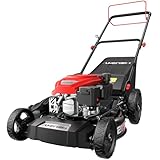
4. AMRISUN 21-Inch Self-Propelled Gas Lawn Mower for Large Yard, 170cc 4-Stroke Engine, 6-Position Adjustable Cutting Height, 3-in-1 Mulching, Side Discharge & Rear Bag for Garden Landscaping
Overview: The AMRISUN self-propelled mower addresses the needs of homeowners with medium to large yards featuring varied topography. Its 170cc engine and rear-wheel drive system reduce physical strain while maintaining consistent cutting power across slopes and thick grass. The 21-inch steel deck covers substantial ground efficiently.
What Makes It Stand Out: Self-propulsion transforms mowing from chore to manageable task, especially on inclines. High-wheel design (10-inch rear, 7-inch front) glides over uneven terrain and obstacles that stop standard mowers. The 3-in-1 system includes mulching, side discharge, and rear bagging with a generous 1.4-bushel capacity, minimizing emptying trips.
Value for Money: The price premium over push models is justified by the 170cc engine and self-propelled mechanism, which saves time and physical wear. Comparable self-propelled units often cost 20-30% more, making this a strong value for large properties where manual pushing would be impractical.
Strengths and Weaknesses: Strengths include effortless hill climbing, versatile discharge options, and durable steel construction. The six-position height adjustment accommodates all grass species. Weaknesses involve added weight (roughly 80+ pounds) making manual lifting difficult, and the self-propel system requires periodic belt maintenance. Fuel consumption runs higher than push models.
Bottom Line: Highly recommended for properties exceeding a quarter-acre with slopes or uneven terrain. The self-propelled feature and powerful engine justify the investment for users wanting professional results without professional effort.
5. 3-in-1 Gas Lawn Mower, 173CC Self Propelled Lawn Mower with 60L Grass Bag, 20" Cutting Deck, Adjustable Cutting Height Foldable Clearance Lawns Mowers Cordless for Yard Lawns Care 2800rpm Red (173CC)
<img src=“https://m.media-amazon.com/images/I/51ilf77kGbL._SL160_.jpg" alt=“3-in-1 Gas Lawn Mower, 173CC Self Propelled Lawn Mower with 60L Grass Bag, 20” Cutting Deck, Adjustable Cutting Height Foldable Clearance Lawns Mowers Cordless for Yard Lawns Care 2800rpm Red (173CC)” style=“display: block; margin: 15px auto; max-width: 250px; width: 100%; height: auto; border-radius: 8px; box-shadow: 0 4px 8px rgba(0,0,0,0.1);">

5. 3-in-1 Gas Lawn Mower, 173CC Self Propelled Lawn Mower with 60L Grass Bag, 20” Cutting Deck, Adjustable Cutting Height Foldable Clearance Lawns Mowers Cordless for Yard Lawns Care 2800rpm Red (173CC)
Overview: This 173cc self-propelled mower delivers maximum power for demanding lawn conditions. The 20-inch cutting deck balances coverage with maneuverability, while the rear-wheel-drive system tackles slopes and thick vegetation confidently. A massive 60L grass bag extends mowing sessions between emptying, making it ideal for large, overgrown properties.
What Makes It Stand Out: The 173cc engine operating at 2800rpm provides superior torque for cutting through brambles, weeds, and dense growth that stalls lesser mowers. The 60L collection bag is among the largest in its class, reducing interruptions significantly. Rear-wheel drive ensures consistent traction on slopes up to 20 degrees, outperforming front-drive competitors.
Value for Money: Despite premium specifications, this mower competes with mid-range self-propelled models, offering professional-grade power without professional pricing. The large bag and terrain capability eliminate need for separate brush cutters on moderately overgrown areas, consolidating lawn care expenses.
Strengths and Weaknesses: Strengths include exceptional power, large collection capacity, and stable traction on uneven ground. The foldable design aids storage despite its capabilities. Weaknesses involve the 20-inch deck being slightly narrower than standard 21-inch models, and the high power output increases fuel consumption and noise levels. The red color scheme may not suit all tastes.
Bottom Line: Perfect for large, challenging yards with thick vegetation or significant slopes. The power and collection capacity make it a workhorse for properties where standard mowers struggle, offering commercial capability at residential pricing.
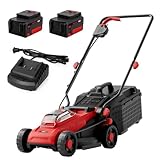
6. MZK 20V 13" Electric Lawn Mower, Brushless Cordless Lawn Mower with 4-Position Height Adjustment, Walk-Behind Push Mowers with 8 Gallon Grass Bag, 2 x 4.0Ah Batteries & Charger Included, LM13B8, Red
<img src=“https://m.media-amazon.com/images/I/41bn6ghaLLL._SL160_.jpg" alt=“MZK 20V 13” Electric Lawn Mower, Brushless Cordless Lawn Mower with 4-Position Height Adjustment, Walk-Behind Push Mowers with 8 Gallon Grass Bag, 2 x 4.0Ah Batteries & Charger Included, LM13B8, Red” style=“display: block; margin: 15px auto; max-width: 250px; width: 100%; height: auto; border-radius: 8px; box-shadow: 0 4px 8px rgba(0,0,0,0.1);">

6. MZK 20V 13” Electric Lawn Mower, Brushless Cordless Lawn Mower with 4-Position Height Adjustment, Walk-Behind Push Mowers with 8 Gallon Grass Bag, 2 x 4.0Ah Batteries & Charger Included, LM13B8, Red
Overview: The MZK 20V 13-inch cordless mower targets homeowners with small to medium lawns seeking a lightweight, maintenance-free alternative to gas. Weighing just 24.3 pounds, this electric mower includes two 4.0Ah batteries and a brushless motor for extended runtime. Its compact 13-inch deck and 30-liter grass bag make it ideal for tight spaces and urban yards where storage is premium.
What Makes It Stand Out: Exceptional portability defines this mower. At under 25 pounds, nearly anyone can maneuver it effortlessly. The two-step safety activation prevents accidental starts, a thoughtful feature for households with children. The brushless motor design enhances efficiency while reducing long-term maintenance concerns compared to brushed alternatives, ensuring smoother operation season after season.
Value for Money: Positioned in the entry-level electric segment, this offers solid value for small property owners. The inclusion of two batteries eliminates immediate additional costs. While it can’t match gas power for large or thick lawns, it undercuts gas mower prices while eliminating fuel and oil expenses. Comparable cordless models often cost 20-30% more without dual batteries included.
Strengths and Weaknesses: Strengths include ultra-lightweight design, quiet operation, zero emissions, low maintenance, and safety features. Weaknesses are the narrow 13-inch cutting path requiring more passes, limited height adjustment range, and potential struggles with dense or wet grass. Runtime may also be insufficient for yards over 1/4 acre without recharging.
Bottom Line: Perfect for small, flat lawns under 2,500 square feet. If you prioritize lightweight convenience over raw power and have minimal storage space, this MZK mower delivers. For larger properties or challenging terrain, consider a more robust gas or wider electric model.
7. 24 in. 201cc Electric Start Select PACE 6 Speed CVT High Wheel RWD 3-in-1 Gas Walk Behind Self Propelled Lawn Mower

7. 24 in. 201cc Electric Start Select PACE 6 Speed CVT High Wheel RWD 3-in-1 Gas Walk Behind Self Propelled Lawn Mower
Overview: This 24-inch gas mower represents a premium self-propelled solution for large properties. Powered by a 201cc engine with electric start, it eliminates pull-cord frustration. The industry-leading CVT transmission with six speeds and rear-wheel drive adapts to your walking pace while providing superior traction on inclines. Its 3-in-1 versatility handles bagging, mulching, or side discharge with professional efficiency.
What Makes It Stand Out: The massive 24-inch cutting deck dramatically reduces mowing time on large lawns. The CVT transmission is genuinely superior to standard gear systems, offering seamless speed adjustment. Rear-wheel drive delivers better hill-climbing ability than front-wheel alternatives. The electric start combined with the CVT creates an exceptionally user-friendly experience for a gas mower, reducing physical strain significantly.
Value for Money: This is a premium-priced machine, likely exceeding $500. For properties over half an acre, the time savings justify the investment. The durable steel deck and high-end transmission suggest longevity that cheaper mowers lack. While expensive upfront, it costs less than riding mowers while approaching their efficiency on large flat areas, making it a smart intermediate choice.
Strengths and Weaknesses: Strengths include wide cutting path, excellent traction, smooth CVT operation, electric start convenience, and robust construction. Weaknesses are significant weight (making manual pushing difficult if self-propel fails), higher maintenance requirements of gas engines, noise and emissions, and premium pricing. The large size demands substantial storage space.
Bottom Line: Ideal for homeowners with expansive lawns who want professional-grade features without the riding mower price tag. If you have slopes and need maximum cutting efficiency, this investment pays dividends. For smaller yards, the size and cost are overkill.
8. YARDMAX 22 in. 201cc Select PACE 6 Speed CVT High Wheel FWD 3-in-1 Gas Walk Behind Self Propelled Lawn Mower, Black (YG2860)
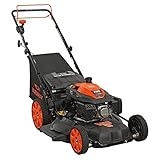
8. YARDMAX 22 in. 201cc Select PACE 6 Speed CVT High Wheel FWD 3-in-1 Gas Walk Behind Self Propelled Lawn Mower, Black (YG2860)
Overview: The YARDMAX 22-inch mower balances power and maneuverability for medium to large lawns. Its 201cc engine features an automatic choke system for simplified starting without priming. The front-wheel-drive CVT with six speeds adjusts to your stride, while aggressive spiked tread tires improve traction. The 3-in-1 design offers flexible grass management for various lawn conditions and seasonal needs.
What Makes It Stand Out: The specialized rubber tires with spiked tread pattern provide noticeably better grip than standard smooth tires, especially on damp grass or slight inclines. The automatic choke eliminates a common gas mower frustration—no more flooding engines. The CVT transmission remains a standout feature typically found on more expensive models, offering smooth speed transitions that enhance mowing comfort.
Value for Money: This mower sits in the upper-mid price range, likely $450-500. You get premium features like CVT and enhanced tires without the top-tier cost of 24-inch models. The 22-inch deck offers a sweet spot for most suburban lots. Compared to standard self-propelled mowers, the advanced transmission and tire design justify the modest premium over basic gear-drive systems.
Strengths and Weaknesses: Strengths include excellent traction tires, smooth CVT operation, easy-start automatic choke, deck cleanout port, and solid 3-in-1 versatility. Weaknesses: front-wheel drive can lose traction on steep hills when the bag fills and adds weight to the rear, and it’s heavier than push mowers. Some users may prefer rear-wheel drive for superior climbing ability on challenging terrain.
Bottom Line: A smart choice for typical quarter-to-half-acre suburban lawns with varied terrain. The enhanced tires and CVT make mowing noticeably easier. Skip it for steep properties where rear-wheel drive is essential. Otherwise, it offers excellent feature-to-value ratio for discerning homeowners.
9. 3 in 1 Gas Lawn Mower Self Propelled Self Propelled Gas Lawn Mower, 131cc Engine with Air Cooling, 50L Grass Tank, Foldable Design Red, Big Wheels & Easy Start
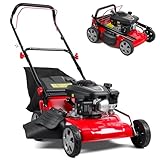
9. 3 in 1 Gas Lawn Mower Self Propelled Self Propelled Gas Lawn Mower, 131cc Engine with Air Cooling, 50L Grass Tank, Foldable Design Red, Big Wheels & Easy Start
Overview: This budget-friendly 20-inch gas mower targets cost-conscious homeowners seeking self-propelled convenience. The 131cc engine powers rear-wheel drive for adequate traction on moderate terrain. Its 3-in-1 capability and 50-liter collection bag handle standard mowing tasks. The foldable design aids storage in tight garages, making it practical for urban dwellers with limited space.
What Makes It Stand Out: The rear-wheel drive system on a budget mower is notable—many competitors use front-wheel drive at this price point. The 50-liter grass bag capacity is generous for the class. The foam-wrapped angled handle reduces fatigue during longer mowing sessions. The foldable design is genuinely practical for urban storage constraints where every inch matters.
Value for Money: Likely priced under $350, this represents one of the most affordable self-propelled gas options available. The rear-wheel drive alone justifies the cost over similarly-priced push mowers. While the 131cc engine lacks the power of 200cc+ models, it’s sufficient for regularly maintained lawns. You’re trading performance and durability for upfront savings that appeal to budget-conscious buyers.
Strengths and Weaknesses: Strengths include low price, rear-wheel drive traction, large grass bag, foldable storage, and comfortable handle design. Weaknesses are the underpowered 131cc engine struggling with thick or tall grass, questionable long-term durability, confusing product description mentioning brush cutter attachments, and potentially shorter lifespan than premium brands with better quality control.
Bottom Line: Suitable for flat, small-to-medium lawns on a tight budget. If your grass stays regularly trimmed and you need self-propelled assistance without breaking the bank, it’s adequate. For demanding terrain or thick grass, invest in a more powerful model. The vague specifications raise legitimate quality concerns.
10. BILT HARD 21 Inch 201cc 4-Cycle Engine Push Lawn Mower, 3-in-1 Gas Lawn Mower with Bagging, Mulching and Side Discharge, Easy Start with Adjustable 8-Positions Cutting Height for Lawn, Yard, Garden

10. BILT HARD 21 Inch 201cc 4-Cycle Engine Push Lawn Mower, 3-in-1 Gas Lawn Mower with Bagging, Mulching and Side Discharge, Easy Start with Adjustable 8-Positions Cutting Height for Lawn, Yard, Garden
Overview: The BILT HARD 21-inch push mower delivers gas power without the complexity of self-propelled systems. Its 201cc 4-stroke OHV engine provides robust performance for medium lawns. The standout feature is eight cutting height positions from 1.2 to 3.75 inches, offering precise customization. The 3-in-1 deck handles bagging, mulching, or side discharge flexibly for various lawn care preferences.
What Makes It Stand Out: The extensive height adjustment range surpasses most competitors, allowing meticulous lawn care from scalping to high-cut preservation. The no-choke, no-primer starting system simplifies operation significantly. Double ball bearing wheels roll remarkably smoothly, reducing pushing effort despite lacking self-propulsion. The powerful engine matches those on self-propelled models costing significantly more.
Value for Money: Positioned in the $350-400 range, this offers excellent engine-to-price ratio. You’re getting premium 201cc power and exceptional height versatility without paying for self-propelled mechanics you might not need on flat terrain. Maintenance costs remain lower than complex CVT transmissions. It outperforms electric mowers at similar prices for larger or tougher lawns, making it a practical middle-ground choice.
Strengths and Weaknesses: Strengths include powerful engine, unparalleled height adjustment range, smooth-rolling wheels, simple starting, and solid construction. Weaknesses: being push-only makes it tiring for large or hilly yards, heavier than electric alternatives, and produces noise and emissions. No deck washout port is mentioned, which would be a convenient maintenance feature.
Bottom Line: Perfect for flat quarter-acre lots where you want gas power and precision cutting without self-propelled premium pricing. If you’re physically able and don’t mind the exercise, it’s an excellent value. For slopes or larger properties, opt for self-propelled. The height versatility is unmatched in this class.
Understanding Heavy-Duty Mowing Requirements
Before evaluating any mower’s specifications, you need to clearly define what “heavy-duty” means for your specific situation. Properties with challenging terrain, dense grass varieties, or extensive acreage place radically different demands on equipment than typical suburban lawns.
Assessing Your Property’s Unique Challenges
Start by mapping your mowing area’s most demanding characteristics. Do you navigate slopes steeper than 15 degrees? Are you cutting through thick fescue, Bermuda, or native grasses that grow in clumps? Do you encounter hidden obstacles like tree roots, rocks, or uneven ground that jar standard mowers? Properties over half an acre with any of these factors qualify for heavy-duty equipment. The premium mower you select must handle your worst-case scenarios, not just average conditions.
Calculating Time and Efficiency Factors
A premium mower’s value proposition hinges significantly on time savings. A machine that cuts your mowing time from three hours to ninety minutes frees up 78 hours annually—nearly two full work weeks. Consider your hourly time value when evaluating price differences. Heavy-duty mowers with wider decks, faster ground speeds, and superior cutting systems deliver compound efficiency gains that quickly offset higher purchase prices for busy property owners.
Engine Performance: The Heart of Heavy-Duty Cutting
The engine determines whether your mower powers through thick grass or bogs down mid-cut. Premium models distinguish themselves through more than just displacement numbers.
Displacement vs. Torque: What Actually Matters
While marketing materials emphasize cubic centimeters, torque output at critical RPM ranges tells the real story. Heavy-duty mowers need engines that maintain blade speed under load, typically delivering 8.5 to 10.5 ft-lbs of gross torque. Look for commercial-grade engines with cast-iron cylinder sleeves, premium bearings, and overhead valve designs that run cooler during extended sessions. These features prevent power fade when tackling dense, wet grass during early morning cuts.
Advanced Fuel and Ignition Systems
Premium mowers incorporate electronic fuel injection (EFI) systems that optimize performance across temperature and altitude variations while improving fuel efficiency by 25% compared to carbureted models. Digital ignition systems with variable timing ensure reliable starting and smooth power delivery. These technologies eliminate choke adjustments and reduce emissions—a worthwhile upgrade for properties requiring frequent mowing.
Deck Construction and Materials Engineering
The mower deck houses the cutting blades and determines how effectively grass is lifted, cut, and discharged. Heavy-duty applications expose decks to impacts, corrosion, and constant debris abrasion.
Steel Gauge and Welding Quality
Commercial-grade decks use 10-gauge steel for the deck shell and 7-gauge reinforced edges where impacts occur most frequently. Look for continuous welds rather than spot welding, particularly around spindle mounting points and anti-scalp wheel brackets. Premium decks feature reinforced leading edges that prevent deformation when striking hidden obstacles—a common failure point in residential-grade equipment.
Deck Design and Aerodynamics
Deep-domed decks (5+ inches) with precision-engineered baffles create superior airflow that lifts grass blades for cleaner cuts and prevents clumping. Heavy-duty mowers often feature fabricated decks built from multiple steel pieces welded together, offering superior strength compared to stamped decks. The internal baffling system should direct clippings efficiently toward discharge chutes or mulching chambers without sacrificing suction power.
Drive Systems and Maneuverability
Moving a 150+ pound mower across uneven terrain requires robust propulsion systems that maintain control without operator fatigue.
Hydrostatic Transmissions: The Professional Standard
Premium heavy-duty mowers exclusively use hydrostatic transmissions rather than belt-driven systems. These provide infinite speed control through foot pedals or levers, allowing precise speed adjustments when navigating around landscaping or climbing hills. Look for commercial-grade hydrostatic units with integrated cooling fans and replaceable filters—features that extend service life beyond 1,000 hours.
All-Wheel Drive and Traction Control
For slopes, damp conditions, or uneven ground, all-wheel-drive systems distribute power to all four wheels, preventing spinouts and reducing turf damage. Advanced systems feature automatic traction control that senses wheel slip and redirects power instantly. This technology proves invaluable when mowing early morning dew or maintaining properties with varied topography.
Cutting System Innovations
The actual cutting mechanism determines finish quality and handling of different grass conditions. Premium mowers integrate several advanced features.
Blade Design and Spindle Engineering
Heavy-duty mowers use thicker, high-lift blades (0.25 inches or more) with precision-balanced designs that reduce vibration. Commercial spindles feature cast-iron housings with greasable bearings rated for 500+ hours before service. Quick-change blade systems allow safe, tool-free removal for sharpening or replacement—essential for maintaining cutting performance during peak growth periods.
Height Adjustment Mechanisms
Premium models offer single-lever deck height adjustment with quarter-inch increments, typically ranging from 1 to 4.5 inches. The mechanism should feel solid, with no wobbling or slippage under vibration. Heavy-duty mowers include deck-leveling gauges and adjustment points that maintain parallelism between blades and ground, ensuring even cutting across the entire width.
Durability and Build Quality Indicators
A mower’s lifespan depends on component quality throughout the machine, not just the engine and deck.
Frame Construction and Component Mounting
Look for fully welded tubular steel frames rather than bolted-together stampings. The engine should mount on vibration-isolating pads, and the transmission should be integrated into the frame rather than hanging from the deck. Premium mowers feature powder-coated finishes with multiple layers, including zinc-rich primers that prevent rust even when scratched down to bare metal.
Caster Wheels and Axle Systems
Heavy-duty caster wheels use sealed ball bearings and grease fittings, mounted on solid steel forks with reinforced mounting plates. The front axle should be cast iron or thick steel with adjustable bushings that take up wear over time. These details prevent the wobbling and premature wear common in residential mowers after a few seasons of rough use.
Operator Comfort and Ergonomics
Extended mowing sessions demand features that reduce fatigue and physical strain, directly impacting safety and cut quality.
Vibration Damping and Handle Design
Premium mowers isolate the handle from engine and deck vibration through rubber bushings or spring-loaded mounts. Handles should adjust to multiple height positions and feature ergonomic grips with integrated controls positioned for natural hand placement. Look for padded operator presence levers that don’t dig into your hands during hour-long sessions.
Seating and Standing Options for Larger Models
For properties exceeding one acre, premium walk-behind mowers often offer optional sulky platforms or velke carts that let operators ride behind the unit. On larger zero-turn models, high-back seats with armrests, lumbar support, and suspension systems become standard. These features transform all-day mowing from exhausting to manageable.
Mulching, Bagging, and Discharge Versatility
Heavy-duty mowers must adapt to varying grass conditions and seasonal cleanup tasks without performance penalties.
High-Capacity Collection Systems
Premium bagging systems feature powered blower units that actively push clippings into bags, preventing clogs in thick grass. Look for collection systems with 3+ bushel capacity and easy dump mechanisms. The best designs allow switching between bagging, mulching, and side discharge without tools, using quick-change baffles and chute covers.
Commercial Mulching Performance
True heavy-duty mulching requires dedicated mulching kits with multiple blades and chambered decks that recirculate clippings until they’re finely chopped. Premium systems can mulch grass that would choke standard mowers, returning nutrients to soil without thatch buildup. This capability eliminates disposal costs and time spent emptying bags.
Maintenance and Serviceability
A mower’s total cost of ownership includes maintenance time and parts replacement. Premium designs simplify these tasks.
Tool-Free Maintenance Access
Heavy-duty mowers provide quick-access panels for oil changes, air filter cleaning, and spark plug replacement without removing shrouds or using tools. Premium models position oil drains and filters for clean, easy access, and include hour meters that track maintenance intervals accurately. These features encourage proper maintenance, extending engine life significantly.
Dealer Support and Parts Availability
Consider manufacturer support networks before purchasing. Premium brands maintain dealer networks with factory-trained technicians and comprehensive parts inventories. Look for warranties covering commercial use (typically 2-3 years) and engines with separate manufacturer warranties up to 3 years. This support infrastructure proves invaluable when you depend on your mower for property maintenance.
Price vs. Value Analysis
Premium mowers range from $1,500 to $4,000+ for walk-behind models, representing substantial investments that require careful justification.
Total Cost of Ownership Calculations
Factor in fuel efficiency (EFI saves $150+ annually), reduced maintenance time (tool-free access saves 5+ hours yearly), and extended lifespan (premium mowers last 15+ years vs. 5-7 for residential models). A $2,500 premium mower costing $167 annually over 15 years often proves cheaper than replacing $800 residential mowers every five years, especially when adding time savings and superior cutting results.
Resale Value Retention
Quality heavy-duty mowers retain 40-60% of their value after five years of residential use, while cheap models often become worthless. This resale value offsets initial purchase prices. Models with commercial-grade components and documented maintenance histories command premium prices in the used market, effectively reducing your net investment.
Making Your Final Selection Decision
Armed with technical knowledge, you can evaluate mowers based on construction quality and feature sets rather than marketing claims.
Test-Driving and Hands-On Evaluation
Never purchase without operating the mower on terrain similar to your property. Test driveability on slopes, check how easily the deck adjusts, and assess vibration levels through the handles. Listen for unusual noises and feel for sloppy controls. Premium mowers feel solid and responsive, with smooth power delivery and precise handling that justifies their cost within minutes of operation.
Matching Features to Your Specific Needs
Prioritize features addressing your property’s biggest challenges. Hills demand all-wheel drive and weight balance. Thick grass requires torque and deck airflow. Large properties need fuel capacity and comfort features. The “best” premium mower depends entirely on your unique combination of challenges, not universal rankings or review scores.
Frequently Asked Questions
What makes a gas mower truly “premium” for heavy-duty use?
Premium status comes from commercial-grade engines with cast-iron sleeves, fabricated steel decks with reinforced edges, hydrostatic transmissions, and serviceable components designed for 1,000+ hour lifespans. These mowers use thicker materials, better bearings, and advanced engineering throughout—not just cosmetic upgrades.
How much horsepower do I need for dense, thick grass?
Focus on torque rather than horsepower. Look for engines delivering 8.5 to 10.5 ft-lbs of gross torque, which maintains blade speed under load. This typically translates to 160-200cc displacement in modern commercial engines. EFI systems provide better real-world performance than larger carbureted engines.
Are all-wheel drive mowers worth the extra cost for hilly properties?
For slopes exceeding 15 degrees or consistently damp conditions, all-wheel drive provides essential safety and performance benefits. It prevents spinouts, reduces turf damage, and cuts mowing time by maintaining consistent speeds. The investment pays for itself through reduced slip-related rework and safer operation.
How long should a premium gas mower last with proper maintenance?
Commercial-grade mowers typically last 1,500-2,000 hours before major overhauls. For residential use mowing 2-3 hours weekly, this translates to 15-20 years. Key factors include regular oil changes, air filter maintenance, and proper off-season storage with fuel stabilizer.
What’s the advantage of electronic fuel injection over carburetors?
EFI systems automatically adjust fuel mixture for temperature, altitude, and load conditions, improving fuel efficiency by 25% and eliminating choke adjustments. They start reliably in cold weather, run smoother, and reduce emissions. The fuel savings typically recoup the $200-300 price premium within 2-3 years.
Can premium walk-behind mowers handle properties over an acre efficiently?
Yes, 30-36 inch commercial walk-behind mowers efficiently handle 1-2 acre properties, especially when paired with sulky platforms for operator comfort. Their maneuverability around obstacles often makes them faster than larger zero-turn mowers on complex properties with landscaping.
What deck width is optimal for heavy-duty residential use?
For properties 0.5-1.5 acres, 30-36 inch decks offer the best balance of maneuverability and cutting efficiency. Larger decks cut wider swaths but struggle on slopes and around tight landscaping. Commercial 36-inch mowers often outpace 42-inch residential models in real-world conditions due to superior power and traction.
How important is vibration damping for extended mowing sessions?
Excessive vibration causes operator fatigue within 30-45 minutes, reducing concentration and cut quality. Premium mowers with isolated handles and balanced components allow 2-3 hour sessions without numbness or discomfort. This feature directly impacts safety and the ability to maintain consistent cutting heights.
What maintenance tasks should I perform weekly during heavy use?
Check and clean air filters, inspect blades for damage, grease all fittings, check oil levels, and clean debris from the deck and engine cooling fins. Premium mowers make these tasks tool-free and accessible, encouraging compliance. Neglecting weekly maintenance halves mower lifespan in demanding conditions.
Do premium mowers really save money compared to replacing cheaper models?
Over 15 years, a $2,500 premium mower typically costs less than three $800 residential mowers when factoring in fuel savings, reduced maintenance time, and resale value. The time savings alone—often 40+ hours annually on large properties—provide additional value that makes premium mowers financially sensible for serious property owners.