If you’ve ever watched your drip irrigation system transform a wilting garden into a thriving oasis, you know the magic of precise water delivery. But here’s what most gardeners don’t realize: that magic fails without one unsung hero working behind the scenes. Pressure regulators are the silent guardians that ensure every emitter, dripper, and micro-sprinkler receives exactly the right amount of water—no more, no less. Without proper pressure control, your carefully planned system becomes a lottery of overwatered mud pits and parched plants gasping for moisture.
This year, as water conservation becomes non-negotiable and gardeners demand professional-grade results from their irrigation systems, understanding pressure regulators has never been more critical. Whether you’re nurturing a backyard vegetable patch or managing acres of crops, the right pressure regulator doesn’t just save water—it saves plants, time, and money. Let’s dive deep into what makes these devices indispensable and how to choose the perfect one for your system’s unique demands.
Top 10 Pressure Regulators for Drip Systems
Detailed Product Reviews
1. Rain Bird HT07525PSI Drip Irrigation 25 PSI Pressure Regulator, 3/4" Female Hose Thread x 3/4" Male Hose Thread

Overview:
The Rain Bird HT07525PSI is a single-unit pressure regulator designed to maintain consistent 25 PSI output for drip irrigation systems. Engineered by one of the most trusted names in irrigation, this component connects easily to any standard 3/4" hose thread faucet or fitting, delivering up to 20 gallons per minute flow capacity. Its robust construction ensures reliable performance season after season.
What Makes It Stand Out:
This regulator distinguishes itself through Rain Bird’s proven engineering heritage and exceptional flow capacity. The 20 GPM throughput significantly exceeds typical residential drip system requirements, making it suitable for larger zones or future expansion. The UV and chemical-resistant materials demonstrate professional-grade durability, while the precise 25 PSI calibration protects sensitive emitters from pressure damage.
Value for Money:
At $7.45 for a single unit, this represents a mid-range investment in quality. While generic multi-packs offer lower per-unit pricing, the Rain Bird name brings decades of irrigation expertise and reliable customer support. The superior flow rating and material longevity justify the modest premium over bargain alternatives, particularly for critical system zones where failure isn’t an option.
Strengths and Weaknesses:
Strengths include trusted brand reputation, high flow capacity, excellent chemical resistance, and precise pressure control. The single-piece construction eliminates leak points. Weaknesses center on the single-unit packaging—those needing multiple regulators will find better bulk value elsewhere. It also lacks an integrated filter, requiring separate purchase for complete system protection.
Bottom Line:
Ideal for gardeners prioritizing reliability and performance over absolute lowest cost. The Rain Bird HT07525PSI excels as a foundation component for serious drip irrigation systems where consistent pressure and long-term durability matter most.
2. Rain Bird PRF07530S Drip Irrigation in-Line 30 PSI Pressure Regulating Y Filter, 3/4" Male Pipe Thread

Overview:
The Rain Bird PRF07530S revolutionizes system design by combining pressure regulation and filtration into one compact Y-shaped unit. Delivering 30 PSI output while simultaneously filtering debris through a 200-mesh stainless steel screen, this device simplifies installation and reduces connection points. The 3/4" male pipe thread interfaces with professional-grade irrigation valves and manifolds.
What Makes It Stand Out:
Integration is the key innovation—eliminating separate filter and regulator components saves space, reduces potential leak points, and accelerates installation. The Y-configuration allows easy access for maintenance; the threaded cap removes without tools for quick cleaning. The 200-mesh (75 micron) stainless filter provides exceptional protection against clogging in hard water areas or when using well water.
Value for Money:
Priced at $23.00, this unit commands a premium over separate components but delivers tangible benefits. The combined functionality typically costs $15-18 when purchased individually, making the $5-8 upcharge reasonable for the streamlined design and reduced installation labor. For DIY installers, the time savings alone offset the higher price point.
Strengths and Weaknesses:
Major strengths include space-saving design, tool-free maintenance, professional-grade filtration, and reduced connection complexity. The 30 PSI output suits most drip applications while providing slightly higher pressure for longer runs. Weaknesses include the higher initial cost and male pipe thread format, which may require adapters for standard hose connections. The single-unit packaging limits bulk savings.
Bottom Line:
Perfect for enthusiasts and professionals seeking a clean, efficient installation. The PRF07530S justifies its premium through intelligent design and maintenance convenience, making it the smart choice for permanent, high-performance drip systems.
3. 2pcs Garden Hose Pressure Regulator 25 PSI, 3/4" FHT × 3/4“ MHT, Pressure Reducer, Great for Drip Irrigation System Distributing Regulator drip Irrigation Parts emitters for drip line (2 Pack 15psi)

Overview:
This dual-pack of 25 PSI regulators offers an economical solution for multi-zone drip irrigation systems. Each unit features standard 3/4" hose thread connections and high-strength ABS construction. Designed to compensate for input pressures ranging from 30-100 PSI, these regulators protect delicate emitters while ensuring uniform water distribution across extensive garden layouts.
What Makes It Stand Out:
The value proposition shines—two complete regulators for under $10 enables redundant system design or simultaneous multi-zone operation. The broad pressure compensation range accommodates fluctuating municipal water supplies without performance degradation. ABS construction provides adequate durability while keeping weight minimal for portable or seasonal installations.
Value for Money:
Exceptional affordability defines this offering at $9.99 for two units ($5.00 each). This pricing undercuts name-brand single units by 30-40% while delivering comparable baseline functionality. For gardeners establishing multiple zones or maintaining backup components, the per-unit cost represents compelling savings. The trade-off comes in unknown long-term brand reliability versus established manufacturers.
Strengths and Weaknesses:
Strengths include unbeatable multi-unit pricing, universal hose thread compatibility, wide pressure compensation range, and lightweight design. The two-pack configuration supports complex system layouts economically. Weaknesses involve generic brand ambiguity—quality consistency may vary between production batches. ABS durability, while adequate, likely won’t match premium UV-resistant polymers for decade-long exposure.
Bottom Line:
An outstanding budget choice for expanding or redundant drip systems. These regulators deliver essential functionality at minimal cost, making them ideal for experimental layouts, secondary zones, or cost-conscious gardeners willing to accept slightly higher replacement risk.
4. 2pcs Garden Hose Pressure Regulator 25 PSI, 3/4" FHT × 3/4“ MHT, Pressure Reducer, Great for Drip Irrigation System Distributing Regulator drip Irrigation Parts emitters for drip line (2 Pack)

Overview:
This straightforward two-pack delivers essential pressure regulation for drip irrigation without brand premium pricing. Each regulator reduces household water pressure to a consistent 25 PSI output through 3/4" standard hose threads. The high-strength ABS construction withstands typical outdoor conditions while maintaining compatibility with timers, backflow preventers, and filters for complete system integration.
What Makes It Stand Out:
Simplicity and value dominate this offering. The clean product specification focuses on core functionality without marketing fluff, providing exactly what most residential drip systems require. The pressure compensation range (30-100 PSI input) handles variable municipal supplies effectively, while the dual-pack format encourages proper system segmentation—separating vegetable beds from ornamental zones, for instance.
Value for Money:
At $9.99 ($5.00 per unit), this represents aggressive value positioning. The pricing structure makes it practical to install dedicated regulators for each zone rather than splitting pressure from a single source. Compared to purchasing two name-brand units at $7-8 each, the savings approach 40% while sacrificing only marginal material sophistication. For systems requiring 2-4 regulators, the cumulative savings fund additional emitters or tubing.
Strengths and Weaknesses:
Key strengths include sharp pricing, adequate pressure range, universal threading, and straightforward installation. The two-unit package matches common residential zone counts. Weaknesses mirror generic product realities: limited warranty support, potential quality variation, and ABS plastic that may become brittle after 5+ years of intense sun exposure. The minimalist packaging lacks detailed performance specifications.
Bottom Line:
A pragmatic, cost-effective solution for standard residential drip systems. These regulators prioritize affordability over brand prestige, making them perfect for homeowners seeking functional performance without financing corporate marketing budgets.
5. MCSDFN 3 Pcs Drip Irrigation Pressure Regulator 25 PSI, 3/4" Female Hose Thread x 3/4" Male Hose Thread Drip Irrigation Pressure Reducer, Garden Hose Pressure Regulator

Overview:
The MCSDFN three-pack delivers exceptional quantity value for extensive drip irrigation projects. Each regulator maintains 25 PSI output through standard 3/4" hose threads, constructed from UV-resistant ABS plastic. The package addresses multi-zone systems comprehensively, allowing simultaneous regulation for separate garden sections, greenhouse lines, and container zones without pressure competition between circuits.
What Makes It Stand Out:
Unmatched unit count at this price point—three regulators for $9.99 drops the per-unit cost to $3.33, enabling comprehensive system design previously cost-prohibitive. The explicit UV-resistance specification provides confidence for exposed installations. This package essentially removes economic barriers to installing dedicated pressure regulation at every system branch, optimizing performance and simplifying troubleshooting.
Value for Money:
This offering redefines budget expectations. At $3.33 per regulator, it’s cheaper than many replacement washers or small fittings. The value multiplies for large gardens—purchasing three name-brand units would cost $20-25 versus this $10 package. Even accounting for potentially shorter lifespan, replacing these twice still undercuts premium single-unit pricing. The math overwhelmingly favors bulk purchasing for any project needing multiple zones.
Strengths and Weaknesses:
Strengths include industry-leading per-unit pricing, UV-resistant formulation, comprehensive three-unit coverage, and standard compatibility. The package quantity suits complex layouts perfectly. Weaknesses involve generic brand track record uncertainty and ABS construction that prioritizes cost over maximum durability. Performance specifications lack the detail provided by premium manufacturers, and quality control may be less rigorous.
Bottom Line:
The definitive choice for large-scale installations or gardeners wanting spare components on hand. MCSDFN’s three-pack makes financial sense even if one unit serves as a backup, delivering functional pressure regulation at a price point that renders DIY repairs virtually disposable.
6. MCSDFN 3 Pcs Drip Irrigation Pressure Regulator 15 PSI, 3/4" Female Hose Thread x 3/4" Male Hose Thread Drip Irrigation Pressure Reducer, Garden Hose Pressure Regulator

Overview: The MCSDFN 3-pack pressure regulator set delivers essential pressure control for drip irrigation systems, dropping incoming water pressure to a gentle 15 PSI. Each unit features standard 3/4-inch hose threading, making them compatible with most garden faucets and irrigation components.
What Makes It Stand Out: This package offers exceptional quantity value—three regulators for the price competitors charge for one. The 15 PSI output is ideal for delicate drip systems, preventing emitter blowouts while ensuring consistent water delivery. Constructed from UV-resistant ABS plastic, these regulators withstand prolonged sun exposure without degrading.
Value for Money: At $11.99 for three units ($4.00 each), this represents outstanding economy. Individual regulators typically retail for $8-15, making this bundle perfect for multi-zone systems or as backup spares. The corrosion-resistant design ensures seasons of reliable service, maximizing return on investment.
Strengths and Weaknesses: Strengths include the unbeatable three-pack pricing, tool-free installation, and universal hose threading. The UV-stabilized plastic construction offers decent durability for residential use. Weaknesses: 15 PSI may be insufficient for systems requiring higher pressure; plastic construction won’t match brass longevity; and the male/female thread configuration limits certain installation options compared to dual-female designs.
Bottom Line: For budget-conscious gardeners managing multiple irrigation zones, this three-pack offers unbeatable value. While not industrial-grade, these regulators perform admirably for residential drip systems, delivering reliable pressure control at a fraction of individual unit costs.
7. 25 PSI Pressure Regulator for Drip Irrigation and Sprinkler System, 3/4" FPT Female Pipe Threads, Garden Hose Water Low Flow Reducer, Professional Landscape Grade Irrigation Parts

Overview: This 25 PSI pressure regulator targets professional landscape applications, delivering moderate pressure reduction for both drip and sprinkler systems. With dual 3/4-inch female pipe threads, it integrates into permanent irrigation lines rather than standard hose connections.
What Makes It Stand Out: The regulator’s 0.5-15 GPM flow range accommodates everything from single drip lines to multi-zone sprinkler systems. The 25 PSI setting hits the sweet spot for many commercial-grade emitters and micro-sprayers. Its professional landscape-grade designation suggests robust performance for demanding installations.
Value for Money: At $11.99 for a single unit, pricing aligns with mid-range plastic regulators. The versatile flow range effectively replaces multiple specialized regulators, potentially saving money on separate components. However, comparable brass units start around $15, offering superior longevity for slightly more investment.
Strengths and Weaknesses: Strengths include the broad flow range, optimal 25 PSI rating for mixed systems, and secure female-threaded connections that won’t separate under pressure. The landscape-grade build quality exceeds basic residential models. Weaknesses: plastic construction limits lifespan; FPT threading requires adapters for standard hose bibs; performance drops outside specified flow range; and single-unit packaging offers less value than multi-packs.
Bottom Line: A solid choice for serious gardeners and light commercial applications needing reliable 25 PSI control. Ensure your system’s flow rate falls within the 0.5-15 GPM window, and consider brass alternatives for maximum durability in permanent installations.
8. Raindrip 45100UB Pressure Regulator, 3/4-Inch FPT X 3/4-Inch FPT, 20 PSI, for Drip Irrigation Systems, Attach to Outdoor Faucet, Hose Bibb, Black

Overview: Raindrip’s 45100UB regulator brings trusted brand engineering to residential drip irrigation, maintaining a steady 20 PSI output. The dual 3/4-inch female pipe thread design suits permanent installations rather than quick hose connections.
What Makes It Stand Out: Raindrip’s decades-long specialization in drip irrigation shows in this regulator’s refined design. The 20 PSI preset matches most manufacturer recommendations for emitter performance. UV-inhibited ABS construction prevents the cracking and fading common in lesser plastic regulators after seasons of sun exposure.
Value for Money: At $18.99 for a single unit, this commands premium pricing over generic alternatives. The investment buys proven reliability and brand support rather than just hardware. For gardeners building permanent systems, the consistent performance justifies the cost, though budget-conscious buyers may prefer multi-pack generics.
Strengths and Weaknesses: Strengths include Raindrip’s reputable brand backing, optimal 20 PSI rating for most drip systems, superior UV protection, and clear directional flow arrows for foolproof installation. The FPT connections provide secure, leak-free integration. Weaknesses: higher price point; female threads require additional adapters for standard hose bibs; plastic construction still can’t match brass longevity; and single-unit packaging offers less value than bulk options.
Bottom Line: Worth the premium for gardeners prioritizing brand reliability and UV resistance in permanent installations. If building a long-term drip system, this regulator’s consistent performance and durability justify the extra cost over budget competitors.
9. Pronese LF Brass Drip irrigation Inline Water Pressure Reducer Regulator 20~30PSI - Protect Drip System from High-Pressure Faucet Water,3/4" GHT Connector
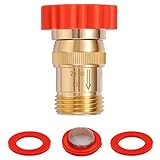
Overview: The Pronese LF Brass regulator distinguishes itself with durable lead-free brass construction and an adjustable 20-30 PSI range. Standard 3/4-inch garden hose threading enables direct connection to outdoor faucets without adapters.
What Makes It Stand Out: Brass construction at a plastic-regulator price point makes this exceptional value. The lead-free design ensures drinking-water safety while delivering metal durability. The adjustable pressure range provides flexibility across different system requirements, from drip irrigation to RV water connections.
Value for Money: At $11.99, this undercuts many plastic competitors while offering superior brass longevity. The included silicone washers and Teflon tape add immediate installation value. Comparable brass regulators typically cost $15-25, making this a budget-friendly upgrade that doesn’t compromise on material quality.
Strengths and Weaknesses: Strengths include robust brass construction, drinking-water-safe lead-free material, versatile GHT threading, useful 20-30 PSI range, and comprehensive installation accessories. The metal build withstands temperature extremes and physical impact better than plastic. Weaknesses: lesser-known brand may raise reliability questions; the PSI range is approximate rather than precisely calibrated; and brass adds weight compared to plastic alternatives.
Bottom Line: An outstanding value proposition for those wanting brass durability without the typical premium price. Ideal for gardeners seeking long-term reliability and drinking-water safety. The adjustable range and included accessories make this a smart purchase for various applications.
10. Senninger Pressure Regulator 25 PSI 3/4" Hose Thread Drip Irrigation Pressure Reducer Low Flow Valve - Landscape Grade High Performance White

Overview: Senninger’s landscape-grade regulator represents professional irrigation engineering in a compact package. Made in the USA from engineering-grade thermoplastics, it maintains precise 25 PSI output for low-flow applications.
What Makes It Stand Out: Senninger’s worldwide reputation for irrigation reliability shines through with 100% water testing for accuracy. The 0.5-7 GPM flow range is specifically optimized for drip lines and soaker hoses, preventing the pressure fluctuations common with mismatched regulators. The all-plastic design eliminates external metal parts, ensuring corrosion-free performance.
Value for Money: At $13.29, this positions itself between budget generics and premium brass units. The made-in-USA quality control and brand reputation justify the modest premium over $10-12 alternatives. For professional landscapers or serious gardeners, the consistent accuracy delivers long-term value that outweighs initial cost.
Strengths and Weaknesses: Strengths include Senninger’s proven brand reliability, precise 25 PSI calibration, optimized low-flow performance, superior corrosion resistance, and rigorous factory testing. The landscape-grade designation indicates professional durability. Weaknesses: plastic construction limits maximum pressure handling; 7 GPM maximum may restrict larger systems; white color shows dirt; and pricing exceeds generic competitors.
Bottom Line: A top-tier choice for drip irrigation purists seeking American-made precision. Ideal for dedicated low-flow systems where accuracy and corrosion resistance matter more than maximum flow capacity. The brand reputation justifies the investment for critical applications.
Why Pressure Regulation is Critical for Drip Irrigation Success
The Science Behind Water Pressure and Drip Emitters
Drip emitters are precision instruments designed to release water at specific rates—typically between 0.5 and 4 gallons per hour. This delicate operation depends entirely on stable incoming pressure. Most residential water systems deliver pressure between 40 and 80 PSI, while drip components function optimally at just 15-30 PSI. When pressure exceeds these limits, emitters essentially “panic,” releasing far more water than rated and creating uneven distribution patterns. The physics is straightforward: higher pressure forces more water through the same opening, but the relationship isn’t linear. A small pressure increase can result in a disproportionately large flow increase, throwing your entire irrigation schedule into chaos.
Consequences of Improper Pressure in Drip Systems
The domino effect of unregulated pressure begins with emitter blowout—literally. Micro-tubing can disconnect, emitters can pop off lines, and delicate internal components can fracture. Beyond immediate physical damage, you’ll witness waterlogged root zones in some areas while other plants receive barely a trickle. This inconsistency promotes disease, wastes water, and creates maintenance nightmares. High pressure also accelerates wear on filters, valves, and backflow preventers, turning a minor oversight into a system-wide failure that could cost hundreds in replacements.
Understanding Pressure Regulator Basics
What Exactly Is a Pressure Regulator?
A pressure regulator is a hydromechanical device that automatically reduces and stabilizes incoming water pressure to a predetermined, consistent output level. Think of it as a gatekeeper that never sleeps—constantly monitoring and adjusting to maintain perfect equilibrium. Unlike simple valves that you manually adjust, true regulators respond dynamically to pressure fluctuations in your main water supply, ensuring your drip system receives steady pressure even when household demand varies.
How Pressure Regulators Work in Drip Systems
Inside every quality regulator, a spring-loaded diaphragm or piston mechanism senses downstream pressure. When pressure rises above the set point, the mechanism constricts an internal passageway, restricting flow until pressure normalizes. When pressure drops, it opens slightly to maintain consistent output. This continuous feedback loop happens in milliseconds, responding to changes you can’t even detect. The result is a smooth, predictable pressure curve that keeps your emitters performing exactly as designed.
Types of Pressure Regulators for Drip Irrigation
Inline Pressure Regulators
Inline models install directly into your main supply line, typically after the backflow preventer and filter but before zone valves. These workhorses handle your entire system’s flow and are ideal for single-zone setups or as master regulators for multi-zone systems. Their compact design makes them perfect for buried valve boxes, and most quality versions feature robust housings that withstand constant moisture and temperature fluctuations.
Preset vs. Adjustable Pressure Regulators
Preset regulators come factory-set to a specific PSI—usually 20, 25, or 30 PSI—and offer simplicity and reliability. You install them and forget them, knowing they’ll maintain that exact pressure indefinitely. Adjustable models feature a screw or knob that lets you fine-tune output pressure across a range, typically 10-50 PSI. These shine when you’re experimenting with different emitter types or need to optimize pressure for specialty crops with unique requirements.
High-Flow vs. Low-Flow Models
Flow capacity determines how much water a regulator can process while maintaining stable pressure. High-flow regulators (10+ GPM) serve large systems with hundreds of emitters, while low-flow versions (2-5 GPM) suit modest gardens. Using an undersized regulator creates pressure drop and inconsistency; oversized models waste money and may not regulate effectively at very low flows. The sweet spot matches your peak demand plus a 20% safety margin.
Key Features to Evaluate When Choosing a Regulator
Pressure Range and Accuracy
Look for regulators that maintain ±2 PSI accuracy across your operating range. Premium models achieve ±1 PSI precision, crucial for systems using pressure-compensating emitters. The usable pressure range should extend from 10 PSI below to 20 PSI above your target, giving you flexibility for system modifications. Accuracy degrades at the extreme ends of a regulator’s range, so choose one whose sweet spot aligns with your needs.
Flow Rate Capacity
Calculate your total flow by adding the GPH rating of all emitters in your largest zone, converting to GPM (divide by 60). Your regulator should handle this flow at your target pressure without significant pressure loss. Check the performance curve—reputable manufacturers publish charts showing output pressure at various flow rates. A steep decline in pressure as flow increases indicates an undersized or poorly designed unit.
Material Construction and Durability
The internal components face constant water flow and pressure cycling. Brass internals offer superior longevity and temperature stability compared to plastic, though high-grade thermoplastics provide excellent corrosion resistance. External housings should be UV-stabilized plastic or powder-coated metal. Avoid regulators with visible seams or thin-walled construction that can crack under pressure spikes.
Connection Types and Compatibility
Most residential systems use 3/4-inch threaded connections, but commercial setups may require 1-inch or larger. Ensure thread types match (NPT vs. BSP) and consider quick-connect options for systems requiring seasonal disassembly. Some advanced regulators feature dual-size ports with reducing bushings, offering installation flexibility without additional fittings.
Performance Factors That Matter
Pressure Compensation vs. Non-Compensation
Pressure-compensating regulators maintain set pressure regardless of inlet pressure variations, making them ideal for municipal water supplies prone to fluctuations. Non-compensating models provide relative pressure reduction—if inlet pressure drops 10 PSI, outlet pressure drops proportionally. These work acceptably with stable well systems but fail miserably on unpredictable city water.
Response Time and Sensitivity
Rapid response prevents pressure spikes from reaching your emitters. Quality regulators react in under 100 milliseconds to pressure changes. Sensitivity determines how small a pressure change triggers adjustment—look for units sensitive to ±0.5 PSI changes. Slow or insensitive regulators allow damaging pressure surges to pass through during valve opening or when other household fixtures shut off.
Temperature and Environmental Considerations
Water temperature affects regulator performance—cold water is more viscous, requiring slightly different internal geometry. If your system handles both winter irrigation and summer heat, choose regulators rated from 40°F to 120°F ambient temperature. For buried installations, ensure the unit withstands soil chemicals and moisture. Above-ground models need UV protection and freeze-resistant materials.
Sizing Your Pressure Regulator Correctly
Calculating Your System’s Flow Requirements
Start with a detailed emitter inventory. Count every dripper, sprayer, and bubbler, noting their GPH ratings. Multiply quantities by flow rates, sum the totals, then divide by 60 for GPM. Add 15-20% for future expansion and to account for mineral buildup that increases effective flow over time. This final number is your minimum regulator capacity—size up to the next standard model.
Matching Regulator Size to Zone Size
Each zone should have its own regulator if flow exceeds 80% of a single unit’s capacity or if zones operate at different pressures. For example, vegetable beds using 20 PSI emitters need separate regulation from shrub zones using 30 PSI micro-sprayers. Master regulators work for zones with identical pressure requirements, but individual zone regulators provide ultimate flexibility and redundancy.
Understanding PSI Requirements for Different Emitters
Pressure-compensating emitters maintain flow across a pressure range but still have optimal PSI for longevity. Non-compensating emitters are pressure-sensitive and require precise regulation. Micro-sprinklers typically need 25-30 PSI, standard drippers prefer 15-20 PSI, and misters may require 35+ PSI. Match your regulator to the most pressure-sensitive component in each zone.
Installation Best Practices
Where to Position Your Pressure Regulator
Install regulators after the backflow preventer and filter but before zone valves and pressure-compensating emitters. This sequence protects the regulator from debris and prevents pressure spikes from traveling downstream. Mount horizontally with the adjustment screw accessible for service. In valve boxes, elevate the regulator 2-3 inches above the box floor to prevent submersion during heavy rains.
Step-by-Step Installation Guidelines
First, shut off the main water supply and relieve pressure. Install the regulator with flow direction arrows pointing toward your drip system. Use thread sealant tape on male threads, tightening firmly but not excessively—over-tightening cracks plastic housings. Install a pressure gauge downstream to verify performance. Flush the system before final connection to clear installation debris. Test at full flow, checking for leaks and measuring output pressure.
Common Installation Mistakes to Avoid
Never install a regulator backwards—flow direction matters critically. Avoid placing regulators where they’ll be submerged regularly; water intrusion corrodes internal springs. Don’t skimp on fittings—every connection is a potential leak point. Never bypass the regulator with a parallel pipe, as this creates pressure bypass during high-demand periods. Finally, don’t forget to remove protective caps before pressurizing—this seems obvious but destroys many new regulators annually.
Maintenance and Longevity
Routine Inspection Checkpoints
Check downstream pressure monthly during peak season using a gauge. Inspect for external leaks, corrosion, or cracking. Listen for unusual whistling or chattering sounds indicating internal wear. Verify that adjustment screws haven’t vibrated loose. Annual professional inspection should include disassembly (if designed for service) to check diaphragm condition and spring tension.
Cleaning and Winterization Procedures
Mineral buildup reduces regulator effectiveness. Soak removable components in white vinegar annually to dissolve calcium deposits. For winter, drain the regulator completely—trapped water expands when frozen, cracking housings. Remove and store adjustable regulators indoors if possible. Preset models can remain installed if fully drained and insulated in climate zones above 20°F.
Signs Your Regulator Needs Replacement
Persistent pressure fluctuations despite adjustment indicate worn internal components. External leaks from the housing signal cracks or seal failure. Inability to maintain pressure below 30 PSI when set lower suggests spring fatigue. Visible corrosion on brass models or UV degradation on plastic units means replacement is imminent. If cleaning doesn’t restore performance after two seasons, invest in a new unit.
Troubleshooting Common Issues
Fluctuating Pressure Problems
Upstream pressure instability is the usual culprit—install a pressure gauge before the regulator to confirm. If inlet pressure is stable but outlet fluctuates, the regulator’s diaphragm may be torn or debris-laden. Disassemble and clean, or replace the unit. In multi-zone systems, pressure drops when valves open indicate an undersized regulator or clogged filter upstream.
Dealing with Clogs and Debris
Even with filtration, fine sediment can lodge in the regulator seat. Symptoms include pressure that slowly rises over days or weeks. Install a secondary 200-mesh filter immediately before the regulator. For severe mineral water, consider a regulator with removable seat components that can be cleaned. Never attempt to clear clogs by increasing pressure—this damages emitters downstream.
Noise and Vibration Concerns
Chattering or humming indicates water hammer or cavitation inside the regulator. Install a water hammer arrestor upstream. Vibration often stems from turbulent flow—ensure straight pipe runs of at least 10 pipe diameters before and after the regulator. If noise persists, the regulator may be oversized for your flow rate, causing the internal mechanism to hunt for equilibrium.
Advanced Considerations for Professional Systems
Integrating with Automation and Controllers
Smart controllers can monitor downstream pressure via sensor feedback, alerting you to failures before plants suffer. Some advanced systems use solenoid-activated regulators that adjust pressure based on zone requirements, programmed through your central controller. This integration allows dynamic pressure optimization throughout the day, compensating for municipal pressure variations automatically.
Multi-Zone System Strategies
For systems with diverse pressure needs, consider a dual-stage approach: a master regulator at the main line set to your highest zone pressure, with individual zone regulators stepping down further as needed. This reduces wear on zone regulators and provides redundancy. Use manifold-mounted regulators for compact installations, saving space and simplifying wiring in valve boxes.
Pressure Regulation vs. Flow Control
These are distinct functions. Regulators maintain constant pressure; flow control valves limit maximum flow rate. Some devices combine both, but understanding the difference prevents misapplication. Use flow control valves to balance zones with different emitter counts, and regulators to maintain emitter-specific pressure. Confusing these roles leads to inconsistent performance and frustrated troubleshooting.
Budget and Value Analysis
Understanding Price vs. Performance Tradeoffs
Budget regulators ($10-20) use basic plastic construction and may last 2-3 seasons. Mid-range options ($25-40) offer brass internals and 5-7 year lifespans. Premium regulators ($50-100) feature stainless steel components, replaceable parts, and decade-long durability. Calculate cost per year—premium models often prove cheaper long-term when factoring in replacement labor and plant losses from failure.
Warranty and Support Considerations
Top manufacturers back their regulators with 3-5 year warranties covering defects and premature wear. Read warranty terms carefully—some exclude mineral buildup or freeze damage. Companies offering technical support hotlines and detailed installation guides provide value beyond the product itself. Consider availability of replacement parts; serviceable regulators can be rebuilt rather than replaced, reducing long-term costs and environmental impact.
Frequently Asked Questions
1. Can I use a standard pressure regulator from the hardware store for my drip system?
Standard household pressure regulators are designed for much higher flows (toilets, showers) and lack the precision drip systems require. They typically regulate to 50-60 PSI, far too high for emitters. Drip-specific regulators maintain lower pressures (15-30 PSI) with greater accuracy and are built to handle continuous low-flow operation without hunting or failure.
2. How do I know if my pressure regulator is failing?
Install a pressure gauge downstream and monitor readings weekly. If pressure creeps up over time, fluctuates more than ±3 PSI, or won’t adjust below 30 PSI, your regulator is likely failing. Visual signs include water seeping from the housing, cracked plastic, or a seized adjustment screw. Plant stress patterns—some areas waterlogged while others are dry—also indicate regulation problems.
3. Should I install a pressure regulator before or after my filter?
Always install the regulator after the filter. This protects the regulator’s sensitive internal components from debris and sediment. The correct sequence is: backflow preventer → filter → pressure regulator → zone valves → emitters. Installing the regulator first subjects it to unfiltered water, causing rapid wear and potential failure within months.
4. Can one pressure regulator serve multiple zones?
Yes, if all zones operate at the same pressure and the regulator’s flow capacity exceeds the combined peak demand of all zones operating simultaneously. However, individual zone regulators provide better control and redundancy. If the master regulator fails, all zones fail; zone-specific regulators isolate problems and allow different pressures for different plant needs.
5. What’s the difference between a pressure regulator and a pressure-reducing valve?
In drip irrigation, these terms are often used interchangeably, but technically, a pressure-reducing valve simply lowers pressure, while a pressure regulator actively maintains constant output despite inlet fluctuations. For drip systems, you need true regulation, not just reduction. Check product specifications for phrases like “maintains constant outlet pressure” to ensure you’re getting regulation capability.
6. How long should a quality pressure regulator last?
With proper installation and annual maintenance, a quality brass or stainless steel regulator should last 7-10 years in residential systems. Plastic models typically last 3-5 years. Hard water conditions can reduce lifespan by half due to mineral buildup. Serviceable regulators with replaceable diaphragms and springs can last indefinitely with occasional rebuilds.
7. Do I need a pressure regulator if my water pressure is already low?
Even “low” municipal pressure can spike above 30 PSI during off-peak hours. Measure your pressure at different times of day—if it ever exceeds your emitters’ maximum rating (usually 30-40 PSI), you need regulation. Additionally, regulators protect against pressure surges from water hammer when valves close, which can occur even in low-pressure systems.
8. Can I adjust my pressure regulator while the system is running?
Yes, adjustable regulators are designed for live adjustment. However, make small 1/4-turn adjustments and wait 30 seconds for pressure to stabilize before rechecking with a gauge. Rapid adjustments can confuse the internal mechanism and cause temporary pressure spikes. Preset regulators cannot be adjusted and must be replaced if you need different pressure.
9. Why does my pressure regulator make noise?
Noise usually indicates water hammer, cavitation, or turbulent flow. Install the regulator with straight pipe runs (10x pipe diameter) before and after to smooth flow. Water hammer arrestors eliminate hammer noise. If the regulator is oversized for your flow rate, it may “hunt” for equilibrium, creating a humming sound. Size the regulator to operate in the middle of its flow range.
10. Are digital or smart pressure regulators worth the investment?
For most residential gardens, traditional mechanical regulators provide adequate performance at lower cost. However, smart regulators with pressure sensors and remote adjustment capability shine in large systems, commercial operations, or situations with highly variable water supply. They allow real-time monitoring and adjustment without physical access, saving labor and preventing crop loss from undetected failures.