The morning you wake up to a push notification that your greenhouse temperature dropped to 38°F overnight is the morning you’ll wonder how you ever managed without remote monitoring. Whether you’re nurturing heirloom tomatoes through a polar vortex or coaxing tropical orchids through a heat dome, the ability to know—immediately—when climate conditions shift can mean the difference between a thriving harvest and a season of setbacks. Phone-alert enabled thermometers and hygrometers have revolutionized greenhouse management, transforming growers from reactive problem-solvers into proactive climate controllers.
But not all wireless monitoring systems are created equal. The market overflows with devices promising “instant alerts” and “pinpoint accuracy,” yet the difference between a $30 sensor and a $300 professional unit involves far more than just price tags. Understanding the nuanced technology behind these tools—everything from connectivity protocols to data security—empowers you to make informed decisions that protect your investment in both equipment and plants. This guide dives deep into the critical features, technical specifications, and real-world considerations that separate reliable greenhouse monitoring systems from gadgets that’ll leave you sweating (or shivering) when it matters most.
Top 10 Greenhouse Thermometers with Phone Alerts
Detailed Product Reviews
1. ThermoPro Bluetooth Thermometer Hygrometer, 260FT Range Temperature Sensor Greenhouse Thermometer, Remote App Control Temperature and Humidity Monitor with 2-Year Data Logging Export (TP351)

Overview: The ThermoPro TP351 is a Bluetooth-enabled environmental monitor designed for greenhouse, incubator, and home use. This compact sensor pairs with your smartphone to deliver precise temperature and humidity readings across a 260-foot range. With its advanced NTC sensor providing accuracy within ±0.5°F and ±2% RH, it offers professional-grade monitoring at a consumer price point.
What Makes It Stand Out: The TP351’s standout feature is its seamless auto-connection technology that eliminates frustrating pairing processes. The device includes two years of onboard data logging with export capabilities, making it ideal for long-term trend analysis. Its feature-rich companion app provides customizable alerts, comfort indexing, and battery monitoring without requiring any subscription fees. The 10-second refresh rate ensures you’re always viewing current conditions.
Value for Money: At $12.99, this sensor delivers exceptional value. Comparable Bluetooth monitors typically cost $20-30 without offering the same data logging capacity or app sophistication. The inclusion of batteries and no hidden subscription costs makes it a budget-friendly choice for both casual users and serious greenhouse enthusiasts.
Strengths and Weaknesses: Strengths include effortless setup, impressive accuracy, extensive data history, and reliable 260-foot range. The app interface is intuitive across all age groups. Weaknesses: Bluetooth connectivity requires proximity within range, and the lack of WiFi means no remote access when away from home. The plastic housing feels somewhat lightweight.
Bottom Line: The ThermoPro TP351 is an excellent choice for anyone needing reliable, accurate environmental monitoring without complexity. Its combination of precision, data logging, and user-friendly operation at under $13 makes it a top contender for home and greenhouse applications.
2. ThermoPro Hygrometer Thermometer for House TP350, Bluetooth Room Indoor Greenhouse Thermometer Monitor Up to 260FT, Backlit Humidity Meter Temperature Sensor with 2-Year Data Export

Overview: The ThermoPro TP350 is a Bluetooth room thermometer and hygrometer designed for indoor monitoring. This device lets you track temperature and humidity from up to 260 feet away using the ThermoPro app. With its backlit display and comfort indicator, it provides at-a-glance environmental status for bedrooms, baby rooms, and specialized spaces like cigar humidors or instrument rooms.
What Makes It Stand Out: Unlike many competitors, the TP350 requires no user registration, prioritizing your privacy while delivering robust functionality. The large backlit display ensures readability in dark conditions, and the face-icon comfort indicator instantly communicates environmental status. Its 2-year data storage capability helps you anticipate needs like adjusting humidifiers or adding clothing layers based on historical trends.
Value for Money: Priced at $13.64, this sensor sits comfortably in the budget-friendly category. It offers features typically found in more expensive units: backlit display, extensive data logging, and high-precision sensors. The privacy-first approach and included batteries add value without recurring costs, making it slightly more expensive than its TP351 sibling but still highly competitive.
Strengths and Weaknesses: Strengths include the clear backlit display, privacy-focused app design, accurate readings (±0.9°F, ±2% RH), and versatile placement options. The 10-second refresh rate keeps data current. Weaknesses: Bluetooth-only connectivity limits remote access, the slightly lower temperature accuracy compared to the TP351, and the app lacks some advanced analytics features of premium competitors.
Bottom Line: The ThermoPro TP350 is a solid choice for privacy-conscious users seeking reliable indoor climate monitoring. Its display readability and straightforward operation make it ideal for bedrooms and nurseries, though the minor price premium over the TP351 is hard to justify unless you need the backlight.
3. WiFi Temperature Humidity Sensor: Indoor Thermometer Hygrometer with App Alert, Free Data Storage Export, Smart Temperature Humidity Monitor for Home Pet Greenhouse, Compatible with Alexa (1-Pack)
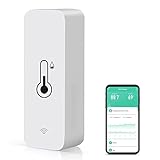
Overview: This WiFi Temperature Humidity Sensor offers cloud-connected environmental monitoring without requiring a hub. Operating on 2.4 GHz WiFi networks, it enables true remote monitoring from anywhere via a smartphone app. The compact design fits virtually anywhere, from plant pots to reptile vivariums, while Alexa integration allows voice queries for current conditions.
What Makes It Stand Out: The sensor’s smart scene capabilities set it apart, allowing automated triggers for other devices when thresholds are exceeded. You can program your AC to activate when temperature limits are reached or start a dehumidifier based on humidity levels. This transforms it from a passive monitor into an active home automation component. Free data storage and export eliminate subscription fees common with cloud-based systems.
Value for Money: At $12.99, this WiFi sensor delivers remarkable value, undercutting many Bluetooth models while offering superior remote access. The hub-free design reduces initial investment, and the automation potential adds functionality typically reserved for premium ecosystems costing twice as much. Alexa compatibility further enhances its integration value.
Strengths and Weaknesses: Strengths include true remote monitoring, smart home integration, compact form factor, and no subscription requirements. The low-power design with included batteries is convenient. Weaknesses: WiFi-only connectivity (no Bluetooth backup), 2.4 GHz limitation may confuse some users, and the app interface feels less polished than established brands. Setup can be tricky with certain router configurations.
Bottom Line: This WiFi sensor is a steal for smart home enthusiasts wanting affordable automation triggers. While it lacks the refinement of premium brands, its combination of remote access, Alexa support, and scene creation at $12.99 makes it an unbeatable entry point into intelligent environmental monitoring.
4. YoLink Smart Wireless Thermometer Hygrometer, 3-Pack, Wide Temp Range for Freezer, Fridge, Green House, Pet Cage, App Alerts, Emails, Text/SMS alerts, 5 Years Battery Life- Hub Included
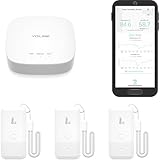
Overview: The YoLink 3-Pack Smart Sensors utilize LoRa technology instead of WiFi, creating a long-range monitoring system ideal for challenging environments like freezers, fridges, and greenhouses. The included hub connects via Ethernet or WiFi, while sensors communicate up to 1/4 mile in open air. This kit provides comprehensive coverage for multiple locations requiring reliable temperature and humidity tracking.
What Makes It Stand Out: LoRa’s exceptional range and low power consumption enable placement where WiFi fails—inside metal refrigerators, basements, or outdoor greenhouses. The staggering 5-year battery life minimizes maintenance, while customizable alerts via text, email, or push notification (with iOS Critical Alerts) ensure you never miss critical changes. The system supports IFTTT integration for advanced automation workflows.
Value for Money: At $59.99 for three sensors plus hub ($20 per unit), YoLink positions itself as a premium yet accessible solution. While pricier than basic Bluetooth sensors, the extended range, exceptional battery life, and multi-channel alerts justify the cost for critical applications. Competing LoRa systems often cost 50-100% more, making this an economical entry into professional-grade monitoring.
Strengths and Weaknesses: Strengths include unmatched range, 5-year battery life, versatile alert options, reliable performance in challenging environments, and IFTTT integration. The hub-based architecture ensures stable connectivity. Weaknesses: Higher upfront cost, LoRa protocol requires brand commitment (won’t integrate with other ecosystems), Alexa only supports temperature queries, and SMS alerts have monthly limits (15 free per month per hub+sensor).
Bottom Line: The YoLink 3-Pack is perfect for users needing reliable monitoring in WiFi-challenged locations. The long battery life and robust alerts make it ideal for freezers, greenhouses, and remote spaces. While the investment is higher, the performance and reliability justify the price for critical monitoring applications where failure isn’t an option.
5. YoLink Smart Temp & Humidity Sensor, LoRa Long Range, 2 Year Battery, Indoor Monitoring for Wine Cellar, Bedroom, Nursery, Greenhouse, RV, with App, Email & SMS Alerts, Alexa IFTTT, 2 Pack + Hub

Overview: The YoLink 2-Pack with Hub delivers LoRa-based environmental monitoring for indoor spaces like wine cellars, nurseries, and greenhouses. This system provides up to 1/4 mile range in open air while maintaining a 2-year battery life. The included hub enables instant device pairing via QR codes and supports Ethernet or 2.4 GHz WiFi connectivity for flexible installation.
What Makes It Stand Out: YoLink’s ecosystem approach allows seamless expansion from temperature monitoring to door, leak, and power sensors using the same hub. The long-range connectivity works reliably through walls and metal enclosures, making it superior to WiFi for basements and outbuildings. iOS Critical Alerts bypass silent mode, ensuring urgent notifications reach you even during meetings or sleep.
Value for Money: At $39.98 for two sensors and a hub ($19.99 per unit), this kit offers an economical smart home upgrade path. The price per sensor is competitive with premium Bluetooth models while delivering superior range and integration potential. The 2-year battery life reduces maintenance costs, and the included 20 free monthly SMS alerts provide value without subscription fees.
Strengths and Weaknesses: Strengths include exceptional range, reliable performance in difficult environments, easy QR code setup, Alexa/IFTTT support, and flexible alert options. The expandable ecosystem is future-proof. Weaknesses: Indoor-use limitation, Alexa only reports temperature, requires hub investment, and SMS alerts have monthly caps. The 2-year battery life, while good, falls short of the 5-year version.
Bottom Line: This YoLink starter kit is ideal for homeowners wanting to build a comprehensive monitoring system. The long-range performance and expansion capabilities make it a smart foundation for whole-home protection. While limited to indoor use, its reliability and integration features offer excellent value for those ready to commit to the YoLink ecosystem.
6. Govee Bluetooth Hygrometer Thermometer, Wireless Thermometer, Mini Humidity Sensor with Notification Alert, Data Storage and Export, 262 Feet Connecting Range

Overview:
The Govee Bluetooth Hygrometer Thermometer is a compact, budget-friendly environmental monitoring solution that delivers impressive accuracy for its price point. This mini sensor leverages Bluetooth connectivity to provide real-time temperature and humidity data directly to your smartphone within a 262-foot range, making it ideal for indoor applications where WiFi isn’t necessary or available.
What Makes It Stand Out:
Its Swiss-made sensor sets a new standard for budget sensors, delivering professional-grade accuracy of ±0.54°F and ±3%RH with updates every two seconds. The 20-day onboard data storage combined with two-year export capability provides excellent trend analysis for a Bluetooth device. Its truly compact design with integrated hanging hole offers unmatched placement flexibility.
Value for Money:
At $14.99, this sensor punches well above its weight class. Comparable accuracy typically costs twice as much, and the data storage features rival premium WiFi models. While it lacks remote access beyond Bluetooth range, the price-to-performance ratio is exceptional for single-room or localized monitoring needs.
Strengths and Weaknesses:
Strengths include exceptional accuracy, compact design, excellent data storage capabilities, and affordable pricing. Weaknesses are Bluetooth-only connectivity limiting remote monitoring, 262-foot range claim assumes no obstacles, and no WiFi means no alerts when you’re away from home.
Bottom Line:
Perfect for homeowners needing accurate, localized environmental monitoring without WiFi complexity. Ideal for wine cellars, guitar rooms, or baby nurseries where Bluetooth range suffices. If remote access isn’t critical, this offers premium features at a bargain price.
7. YoLink Smart Freezer Thermometer, LoRa Wireless Fridge Temperature Sensor 3-Pack, Ideal for Refrigerator, Freezer, Greenhouse, Pet Cage, App & SMS Alerts, 5-Year Battery, Hub Included

Overview:
The YoLink Smart Freezer Thermometer 3-Pack revolutionizes remote temperature monitoring through innovative LoRa technology. Unlike conventional WiFi sensors, this system operates on a proprietary long-range, low-power protocol that reaches up to a quarter-mile in open air while preserving network bandwidth. The included hub connects three sensors, making it perfect for comprehensive property monitoring.
What Makes It Stand Out:
LoRa technology delivers game-changing range that penetrates refrigerators, freezers, and even gun safes without signal degradation. The five-year battery life virtually eliminates maintenance concerns, while SMS alert capability ensures you receive critical notifications even without internet. The hub’s included status provides immediate value for multi-location monitoring.
Value for Money:
At $58.99 for three sensors plus hub ($19.66 per unit), this represents excellent value for serious monitoring applications. Individual WiFi sensors with similar range would cost significantly more and consume far more power. The five-year battery life alone saves substantial replacement costs compared to annual battery changes typical of competitors.
Strengths and Weaknesses:
Strengths include exceptional range, five-year battery life, included hub, SMS alerts, and interference-free operation. Weaknesses are higher upfront cost, LoRa protocol requires dedicated hub, limited to temperature only (no humidity), and SMS alerts have monthly caps.
Bottom Line:
Ideal for property managers, serious homesteaders, or anyone monitoring critical temperature zones beyond WiFi reach. The LoRa advantage justifies the investment for reliable, long-term remote monitoring where WiFi fails.
8. Smart Wireless Temperature Sensor/Humidity Sensor Wide Range (-22 to 158 Degrees) for Fridge Monitoring Pet Cage/Tank Monitoring, Smartphone Alerts, Compatible with Alexa IFTTT - Hub Included

Overview:
This Smart Wireless Temperature/Humidity Sensor leverages LoRa technology to solve monitoring challenges that defeat standard WiFi devices. Designed for extreme environments from -22°F to 158°F, it maintains reliable connectivity through metal barriers like refrigerator walls and operates up to a quarter-mile away. The included hub enables instant setup for monitoring fridges, greenhouses, pet enclosures, and more.
What Makes It Stand Out:
Its ability to function inside metal enclosures while delivering years-long battery life sets it apart from conventional smart sensors. The LoRa protocol’s low-power consumption combined with extreme range creates monitoring possibilities WiFi simply cannot match. The plug-and-play hub with Ethernet option ensures robust connectivity without WiFi congestion.
Value for Money:
While price isn’t specified, the value proposition centers on transforming any appliance into a smart device for a fraction of replacement cost. Preventing a single freezer failure could save thousands in spoiled food, making this economical insurance. Compared to built-in smart refrigerators costing hundreds more, this offers superior flexibility at minimal investment.
Strengths and Weaknesses:
Strengths include extreme temperature range, metal-penetrating signal, exceptional battery life, included hub, and Alexa/IFTTT integration. Weaknesses are unspecified pricing, requires dedicated hub, Alexa only reports temperature (not humidity), and cannot trigger Alexa routines.
Bottom Line:
Transformative solution for monitoring critical environments where WiFi fails. Essential for off-grid locations, metal enclosures, or extreme temperatures. The LoRa advantage makes this a worthwhile investment for anyone serious about remote environmental awareness beyond conventional smart home limits.
9. Govee WiFi Thermometer Hygrometer H5051, Bluetooth Indoor Temperature Humidity Monitor with App Notification Alert, Smart Humidity Sensor for Greenhouse Wine Cellar, 2 Years Free Data Storage Export

Overview:
The Govee WiFi Thermometer Hygrometer H5051 bridges the gap between basic Bluetooth sensors and professional monitoring systems. Supporting both 2.4GHz WiFi and Bluetooth connectivity, it enables true remote monitoring from anywhere with internet access. The Swiss-made sensor delivers the same impressive accuracy as its Bluetooth sibling, while WiFi capability transforms it into a comprehensive property monitoring solution.
What Makes It Stand Out:
Dual connectivity modes provide flexibility for both local and remote monitoring scenarios. The clear LCD display offers at-a-glance readings without opening the app, while two years of free cloud data storage surpasses many subscription-based competitors. The ability to export data in customizable intervals makes it valuable for detailed environmental analysis.
Value for Money:
At $34.99, it commands a $20 premium over the Bluetooth version but delivers genuine remote monitoring capability. This price point undercuts most WiFi-enabled competitors while maintaining professional-grade accuracy. For anyone needing alerts while traveling or monitoring vacation properties, the upgrade pays for itself in peace of mind.
Strengths and Weaknesses:
Strengths include true remote monitoring, dual connectivity, LCD display, generous data storage, and Swiss sensor accuracy. Weaknesses are 2.4GHz WiFi only (no 5GHz), requires stable internet for remote alerts, higher price than Bluetooth alternatives, and no mention of battery life.
Bottom Line:
The sweet spot for smart home enthusiasts wanting reliable remote monitoring without monthly fees. Perfect for wine cellars, greenhouses, or second homes where WiFi access enables critical alert delivery. Worth the premium over Bluetooth-only models.
10. Temtop Humidity Meter T1, Indoor Thermometer for Room Temperature, Bluetooth Hygrometer with Notification Alerts, Data Export, Digital Gauge for Home, Office, Greenhouse, Garage, Baby Nursery, Gift

Overview:
The Temtop Humidity Meter T1 focuses on indoor comfort monitoring with a user-friendly approach that prioritizes display clarity and energy efficiency. This Bluetooth-enabled hygrometer features a bright 3-inch LCD with intuitive color-coded humidity indicators, making environmental conditions instantly understandable without consulting an app. Its Swiss-made sensor provides reliable accuracy for home and office applications.
What Makes It Stand Out:
The exceptional 180-day battery life from a rechargeable lithium cell sets a new standard for sustainability and convenience. The three-color humidity comfort indicator (dry/comfortable/humid) offers immediate visual feedback, while the magnetic stand provides versatile mounting options. OTA update support ensures the device improves over time, a rare feature in this price class.
Value for Money:
At $14.99, it matches the Govee Bluetooth model’s price while offering superior display readability and rechargeable battery convenience. The 100-day data history and OTA capability provide added value for users wanting more than basic monitoring. For indoor applications where display visibility matters, this delivers premium features at entry-level pricing.
Strengths and Weaknesses:
Strengths include excellent display, long rechargeable battery life, magnetic mounting, humidity comfort indicator, and OTA support. Weaknesses are Bluetooth-only limiting remote access, slightly lower accuracy than competitors (±0.9°F, ±5%RH), shorter data history than some rivals, and no mention of range specifications.
Bottom Line:
Ideal for living spaces, offices, and nurseries where visual monitoring takes priority over remote access. The rechargeable battery and superior display make it perfect for permanent indoor placement. Choose this for comfort monitoring rather than critical temperature control applications.
Why Remote Monitoring Has Become Essential for Modern Greenhouses
The traditional method of walking into your greenhouse each morning with a manual thermometer tells you what happened hours ago, not what’s happening now. Modern cultivation demands precision timing—certain crops can suffer irreversible damage within 30 minutes of exposure to temperatures just 5 degrees outside their optimal range. Phone alerts provide that critical window for intervention, whether you’re at the grocery store or sleeping soundly in bed. Beyond emergency notifications, these systems generate the data patterns that reveal inefficiencies in your heating, cooling, and ventilation systems, often paying for themselves through reduced energy costs alone.
Understanding the Core Technology: How Phone Alerts Work
At their foundation, these devices are IoT (Internet of Things) sensors that convert environmental data into digital signals, then transmit them through various pathways to reach your smartphone. The journey from sensor to screen involves multiple technologies working in concert: the measurement component (thermistor or capacitive humidity sensor), a microcontroller, a wireless transmission module, cloud-based servers, and finally, push notification services like Apple Push Notification Service or Firebase Cloud Messaging. The reliability of your alerts depends on every link in this chain functioning flawlessly.
Wi-Fi vs. Bluetooth vs. Cellular: Which Connectivity Suits Your Setup?
Wi-Fi connectivity offers the most feature-rich experience for greenhouses within router range, enabling real-time data streaming, firmware updates, and integration with smart home ecosystems. However, Wi-Fi’s range limitations and power consumption can be drawbacks for larger operations. Bluetooth devices conserve battery life dramatically but require you to be within 30-100 feet to receive alerts—defeating the purpose of remote monitoring unless paired with a dedicated hub. Cellular-enabled sensors represent the gold standard for off-grid or expansive properties, using 4G/5G networks to transmit data from anywhere with cell service, though they require data plans and generally cost more upfront.
The Role of Cloud-Based Platforms in Data Management
The cloud service backing your device determines everything from alert speed to data retention policies. Premium platforms store historical data indefinitely, allowing you to analyze seasonal trends across multiple growing cycles. They also handle the complex logic of alert escalation—sending a text if you don’t acknowledge a push notification within 10 minutes, then calling a backup contact if still unresolved after 30 minutes. Free-tier services often limit you to 24 hours of data history and basic email alerts, which may suffice for hobbyists but proves inadequate for commercial operations requiring compliance documentation.
Key Accuracy Metrics: What “Precision” Really Means
Manufacturers love to boast about accuracy, but those percentages require context. A sensor accurate to ±0.5°F sounds impressive until you realize that specification only applies under laboratory conditions of 70°F and 50% relative humidity. In the dynamic environment of a greenhouse—where condensation, direct sunlight, and temperature swings challenge sensors—real-world accuracy often degrades. Look for devices that specify accuracy across their entire operating range, not just at a single calibration point.
Temperature Accuracy Standards for Horticulture
For most greenhouse applications, ±1°F accuracy suffices, but certain propagation stages and sensitive species demand ±0.3°F precision. The measurement resolution (how small a change the device can detect) matters as much as accuracy; 0.1°F resolution lets you spot trends before they become problems, while 1°F resolution might miss early warning signs. Consider whether the device measures ambient air temperature or includes a probe for soil/substrate temperature, as root zone conditions often differ dramatically from air readings.
Humidity Readings: Why ±3% RH Can Make or Break Your Crop
Humidity sensors naturally drift over time, with capacitive polymer sensors typically degrading 1-2% RH per year. Professional-grade units combat this with replaceable sensor modules or automatic calibration routines that reference known saturation points. For disease prevention, you need accuracy within ±3% RH; anything less precise makes it impossible to maintain the narrow humidity bands that keep powdery mildew and botrytis at bay. Pay attention to the sensor’s response time too—some units take 5-10 minutes to register changes, while high-end models update every 30 seconds.
Essential Features That Separate Professional-Grade from Hobbyist Devices
Beyond basic alerts, sophisticated systems offer conditional logic that prevents alert fatigue. Instead of buzzing your phone every time humidity spikes above 80%, professional devices can be programmed to alert only when humidity remains above 80% for more than 15 minutes AND temperature is below 65°F—conditions that actually foster disease. Look for devices with configurable measurement intervals; sampling every minute provides better data but drains batteries faster, while adjustable intervals let you balance precision against power consumption.
Alert Customization: Beyond Simple Threshold Notifications
The best systems offer multi-level alerting: informational nudges for minor deviations, urgent warnings for moderate issues, and critical alarms for emergency conditions. They also support “return to normal” notifications, confirming when your intervention succeeded. Escalation chains prove invaluable—if you don’t respond within a set timeframe, the system automatically alerts a spouse, employee, or neighbor. Some advanced units even integrate with greenhouse automation, triggering exhaust fans or heaters directly without human intervention.
Data Logging and Historical Analysis Capabilities
Storage capacity varies wildly. Entry-level devices might retain 7 days of data with 15-minute intervals, while professional systems store years of minute-by-minute readings. The ability to export this data as CSV or integrate with platforms like Excel, Google Sheets, or specialized horticultural software transforms raw numbers into actionable insights. Look for devices that calculate Growing Degree Days, Vapor Pressure Deficit, and other derived metrics automatically—these calculations save hours of manual spreadsheet work and provide deeper understanding of plant stress.
Multi-Zone Monitoring: Scaling Your System
A single sensor tells you about one point in space, but greenhouses develop microclimates. Professional operations use multiple sensors per zone, with the ability to group devices logically (propagation bench, mature plants, seedling area) and receive zone-specific alerts. The master dashboard should display all zones simultaneously, with color-coded status indicators visible at a glance. Consider whether the system supports unlimited devices or caps you at 5-10 sensors—expanding your operation shouldn’t require replacing your entire monitoring infrastructure.
Power Options and Battery Life: Planning for Continuous Operation
Nothing defeats the purpose of monitoring like a dead sensor. Battery life spans from 2 months to 2 years depending on connectivity type, measurement frequency, and environmental conditions. Cold temperatures reduce battery capacity by 30-50%, so that “1-year battery life” claim may shrink to 6 months in winter. Lithium batteries perform better in temperature extremes than alkaline, while some units accept external power supplies for permanent installations.
Solar Solutions for Off-Grid Greenhouses
For remote greenhouses lacking electrical infrastructure, solar-powered sensors with battery backup offer uninterrupted operation. The key specification isn’t the solar panel size but the battery capacity relative to power consumption—a 2000mAh battery can run a sensor for weeks without sun, while a 500mAh battery might fail after three cloudy days. Look for panels rated at least 5V/1W with MPPT (Maximum Power Point Tracking) controllers that optimize charging in low-light conditions common to winter months.
Backup Power Systems and Failover Protection
Enterprise-grade systems include power failure alerts that trigger when the device switches to battery backup, warning you of broader electrical issues affecting fans or heaters. Some units monitor their own battery voltage and send low-power warnings a week before shutdown, giving you time to replace batteries proactively. For critical operations, consider sensors with redundant power—simultaneous AC adapter and battery with automatic failover.
App Ecosystem: What to Expect from Mobile Software
The hardware is only as good as the software interpreting its data. Premium apps offer customizable dashboards where you can prioritize the metrics that matter most to your operation. They support multiple user accounts with role-based permissions—employees might view data but only managers can change alert thresholds. Offline mode is crucial; the app should cache recent data locally so you can review conditions even when cellular service is spotty.
User Interface Design and Accessibility
A cluttered interface leads to missed alerts. The best apps use intuitive visual design: large, color-coded numbers for current conditions, trend graphs that load instantly, and alert summaries that explain the problem in plain language (“High humidity risk: 85% RH for 20+ minutes”) rather than just displaying raw numbers. Accessibility features like voice announcements, high-contrast modes, and text size adjustment ensure you can monitor effectively while wearing gloves or working in bright sunlight.
Data Export and Third-Party Integration
Your monitoring data becomes more powerful when combined with other systems. Look for APIs that allow integration with greenhouse controllers (Argus, Priva), irrigation systems, or farm management software like AgriWebb. The ability to automatically email daily summary reports to stakeholders or upload data to cloud storage services provides documentation for organic certification, insurance claims, or research purposes. Some platforms even support IFTTT (If This Then That) for custom automations.
Installation Best Practices for Reliable Performance
Even the most accurate sensor delivers garbage data if installed poorly. Mount sensors in radiation shields to prevent direct sunlight from artificially inflating temperature readings by 10-15°F. Ensure shields have adequate ventilation—passive shields work for most applications, but aspirated shields with small fans provide superior accuracy in high-sun locations. Install sensors at plant canopy height, not near the roof where temperatures fluctuate more dramatically.
Strategic Sensor Placement in Different Greenhouse Zones
Place propagation sensors near heat mats and misting systems, where microclimates differ from the main growing area. For mature plants, position sensors in the densest foliage where humidity accumulates. Avoid mounting directly above irrigation lines or near exhaust fans, as these create localized anomalies. In gutter-connected greenhouses, install sensors every 2,000-3,000 square feet to capture variation across bays. Always place a “control” sensor near your thermostat to correlate HVAC performance with actual growing conditions.
Calibration Protocols for Long-Term Accuracy
Plan to verify accuracy quarterly using reference standards. For temperature, an ice bath test (32°F) and boiling water test (212°F at sea level) provide simple validation points. For humidity, saturated salt solutions create known RH environments—magnesium chloride generates 33% RH, sodium chloride 75% RH. Some professional sensors include built-in calibration modes that adjust offsets based on these references. Document all calibrations; drift patterns help predict when sensors need replacement before they fail critically.
Security Considerations for IoT Devices in Agricultural Settings
Every connected device represents a potential entry point for cyber threats. Cheap sensors often use unencrypted data transmission and default passwords, making them vulnerable to hijacking. Professional systems implement end-to-end encryption (AES-256), two-factor authentication for app access, and regular security patches. Consider whether the manufacturer has a documented vulnerability disclosure program and how quickly they release updates. For commercial operations, ensure the system complies with data privacy regulations like GDPR or CCPA if you operate internationally.
Price vs. Value: Making Smart Investment Decisions
Budget sensors ($30-60) offer basic alerting but typically lack data export, have shorter battery life, and use less accurate sensors. Mid-range options ($100-200) balance features with reliability, suitable for serious hobbyists and small commercial operations. Professional systems ($300+) provide the accuracy, durability, and support that commercial growers need, often including warranty replacements and technical support. Calculate total cost of ownership: a $50 sensor requiring annual replacement may cost more over five years than a $200 sensor lasting a decade.
Troubleshooting Common Connectivity Issues
Intermittent Wi-Fi disconnects plague many installations. First, check if your greenhouse’s metal frame and moisture-laden air create a Faraday cage effect; you may need a Wi-Fi extender with external antenna mounted outside. For cellular devices, verify that your carrier has adequate signal strength; a $20 signal strength meter helps identify dead zones before installation. Bluetooth sensors that drop connections often suffer from interference with other 2.4GHz devices; changing your router’s channel or using a dedicated hub can resolve conflicts. Always test alert delivery by deliberately triggering thresholds during setup—don’t wait for a real emergency to discover your phone number was entered incorrectly.
Future Trends: AI and Machine Learning in Climate Monitoring
The next generation of greenhouse sensors won’t just alert you to problems—they’ll predict them. Machine learning algorithms analyzing your historical data can forecast when cooling systems will likely fail based on subtle performance patterns, or predict disease outbreaks by correlating humidity trends with weather forecasts. Some systems already offer “digital twin” technology, creating a virtual model of your greenhouse that simulates different scenarios. While these features currently command premium prices, they’re rapidly becoming accessible to smaller operations, transforming monitoring from reactive alerts to proactive crop protection.
Frequently Asked Questions
How many sensors do I actually need for my greenhouse?
Start with one sensor per distinct climate zone, typically one per 1,000-2,000 square feet for uniform greenhouses. Add dedicated sensors for propagation areas, shade houses, and any spots with known microclimate issues. You can always expand; prioritize coverage over quantity initially.
Will these devices work during power outages?
Battery-powered sensors continue monitoring and will send alerts if they have cellular connectivity or if your Wi-Fi router is on a UPS (uninterruptible power supply). However, you won’t receive alerts if both your greenhouse power and home internet are down unless the sensor has cellular backup.
Can I use indoor smart home sensors in my greenhouse?
Indoor sensors lack weatherproofing and their operating ranges often stop at 104°F, making them unsuitable for greenhouse conditions. They also typically can’t handle condensation, which quickly destroys electronics. Always choose sensors rated for outdoor or greenhouse use.
How do I prevent false alarms from brief temperature spikes?
Use alert delay settings—program the system to only trigger after conditions exceed thresholds for a specified duration (e.g., 10 minutes). This filters out temporary fluctuations from doors opening or brief equipment cycling while still catching genuine problems.
What’s the typical data plan cost for cellular-enabled sensors?
Most sensors use 50-200 MB monthly, costing $5-15 per device on IoT-specific plans. Some manufacturers bundle the first year free. Avoid sensors that require full smartphone data plans ($30+/month); look for low-bandwidth IoT plans instead.
How accurate are phone alerts versus what the sensor actually reads?
The sensor measurement itself is the accurate part; alerts simply report that data. Alert delivery typically takes 5-30 seconds depending on connectivity. The real question is sensor placement—ensure your sensor reflects actual plant conditions, not wall temperature.
Can multiple people receive the same alerts?
Yes, most systems support multiple contacts with customizable escalation. You can set primary and backup recipients, with alerts rotating through contacts until someone acknowledges them. Some systems also support group notifications via SMS, email, and push simultaneously.
Do I need a separate hub for each brand of sensor?
Generally yes—sensor ecosystems are proprietary. However, some platforms like SmartThings or Hubitat can bridge multiple brands. For simplicity, standardize on one ecosystem that meets all your needs rather than mixing devices that can’t communicate.
How often should I replace the sensors?
The electronics last 5-10 years, but humidity sensors degrade faster—plan on replacing or recalibrating them every 2-3 years for critical applications. Temperature sensors remain stable longer but should be verified annually against a reference thermometer.
Are there privacy concerns with cloud-connected greenhouse data?
Reputable manufacturers encrypt data and don’t sell it to third parties. However, free services may anonymize and aggregate your data for research. Read privacy policies carefully; for commercial operations, consider self-hosted solutions where data never leaves your property.