For decades, the deep growl of a gas engine was the unofficial soundtrack of weekend lawn care. But listen closely to neighborhoods across America, and you’ll hear something revolutionary: the quiet whir of electric riding mowers delivering pristine cuts without the exhaust fumes, oil changes, or ear-splitting noise. The technology has matured far beyond early experiments, with today’s battery-powered machines offering torque curves and runtimes that genuinely rival their combustion counterparts. Whether you’re managing a half-acre suburban lot or several acres of rural property, the electric revolution isn’t coming—it’s already here, and it’s redefining what we should expect from lawn maintenance equipment.
This shift represents more than just swapping fuel sources; it’s a fundamental reimagining of how riding mowers are designed, operated, and maintained. Understanding the nuances of battery technology, power delivery, and total cost of ownership will help you make an informed decision that could transform your mowing experience for the next decade. Let’s explore what makes modern electric riding mowers a legitimate alternative to gas power, and what features deserve your attention when making this significant investment.
Top 10 Electric Riding Mowers
Detailed Product Reviews
1. EGO Power+ Electric Riding Lawn Mower, 42" Deck with Zero Turn Radius, Includes (4) 56V 10.0Ah Batteries and Charger - ZT4204L

Overview: The EGO ZT4204L represents the cutting edge of residential electric zero-turn mowers, delivering gas-equivalent 22 horsepower performance without emissions or noise. This 42-inch deck mower targets homeowners managing up to two acres, offering expandable battery capacity for larger properties. The package includes four 10.0Ah batteries and a rapid two-hour charger, making it a complete solution for most suburban estates.
What Makes It Stand Out: EGO’s Peak Power+ technology intelligently combines battery output for consistent cutting performance. The intuitive LCD interface offers three driving modes (Standard, Control, Sport), while ten cutting height positions from 1.5 to 4.5 inches provide exceptional versatility. The 3-in-1 deck handles mulching, bagging, and side discharge. Most impressive is the ecosystem approach—adding batteries extends runtime to 3, 4, or 5+ acres without hardware upgrades.
Value for Money: At $5,499, this sits in the premium electric category but justifies its price through build quality, performance, and the EGO ecosystem compatibility. Comparable gas zero-turns cost $3,500-$5,000 plus ongoing fuel and maintenance expenses. The rapid two-hour recharge and inclusion of four batteries eliminates hidden costs.
Strengths and Weaknesses: Pros: True gas-equivalent power; whisper-quiet operation; zero emissions; expandable battery system; fast charging; versatile cutting options; intuitive controls. Cons: High initial investment; stamped steel deck (not fabricated); limited to 2 acres without additional batteries; learning curve for zero-turn newbies.
Bottom Line: Perfect for eco-conscious homeowners with 1-2 acre properties who want commercial-grade features. The expandable battery system future-proofs your investment, making it the smartest long-term electric zero-turn choice.
2. Greenworks 60V 42” Cordless Electric CrossoverZ Zero Turn Riding Mower, (4) 8.0Ah Batteries and (2) Dual Port Turbo Chargers

Overview: Greenworks enters the electric zero-turn market aggressively with the CrossoverZ, offering 24 horsepower equivalent performance at a competitive price point. This 42-inch mower targets budget-conscious buyers seeking gas-free operation without sacrificing cutting speed or power. The innovative “Mow, Swap, and Go” system with dual chargers enables continuous operation by rotating between four 8.0Ah batteries.
What Makes It Stand Out: The CrossoverZ boasts the industry’s fastest 8 MPH cutting speed while maintaining a constant 17,000 FT/min blade speed for superior cut quality. Operating at 90 dB, it’s four times quieter than gas mowers. The included dual-port turbo chargers maximize uptime, while the highly efficient brushless motor delivers more torque and longer life than brushed alternatives.
Value for Money: At $3,799.99, this is the most affordable zero-turn in our comparison, undercutting competitors by $700-$1,700. You’re getting 24 HP performance, rapid charging capability, and commercial-inspired features at a consumer price. The 1.5-acre capacity suits most suburban lots perfectly.
Strengths and Weaknesses: Pros: Excellent price-to-performance ratio; fastest cutting speed; quiet operation; continuous mowing system; dual chargers included; constant blade speed. Cons: Smaller 8.0Ah batteries limit runtime; only 1.5-acre capacity; less established electric mower brand; no height adjustment details provided.
Bottom Line: The CrossoverZ delivers exceptional value for homeowners with 1-1.5 acre properties. If you want zero-turn maneuverability and gas-like performance without premium pricing, this is your best entry point into electric riding mowers.
3. PRORUN 60V Zero Turn Riding Lawn Mower

Overview: PRORUN’s 60V zero-turn mower carves a middle path between budget and premium electric riders, offering intelligent power management in a 42-inch package. With 20 horsepower equivalent output and up to 70 minutes of runtime, it handles approximately two acres efficiently. The six battery ports with automatic switchover represent a unique approach to extending mowing sessions without manual battery swaps.
What Makes It Stand Out: The intelligent auto-switchover system seamlessly transitions between batteries, eliminating the need to stop and manually change packs. Four high-efficiency brushless motors maximize both performance and lifespan. The 14-gauge stamped steel deck includes a convenient washout port for easy cleaning—an often-overlooked maintenance feature that extends deck life.
Value for Money: Priced at $3,899.99, the PRORUN costs only $100 more than the Greenworks CrossoverZ but adds intelligent battery management and a heavier-duty deck. For properties approaching two acres, the auto-switchover feature alone justifies the modest premium, preventing mid-mow interruptions.
Strengths and Weaknesses: Pros: Smart auto-switchover battery system; sturdy 14-gauge steel deck; washout port; competitive 2-acre runtime; four brushless motors. Cons: Lower 20 HP power rating; lesser-known brand; battery specifications unclear; fewer dealer support locations; no charging time details.
Bottom Line: Ideal for tech-savvy homeowners who value convenience and intelligent design. The auto-switchover system solves a real pain point, making this a smart choice for 1.5-2 acre properties where uninterrupted mowing matters.
4. Greenworks 60V 42” Cordless Electric CrossoverT Riding Mower, (4) 8.0Ah Batteries and (2) Dual Port Turbo Chargers

Overview: The CrossoverT brings Greenworks’ electric mower technology to a traditional tractor-style configuration for operators preferring steering wheels over lap bars. Sharing the same powertrain as its zero-turn sibling, this 42-inch mower delivers 24 horsepower equivalent performance with familiar tractor controls. The package includes four 8.0Ah batteries and dual-port turbo chargers for continuous mowing.
What Makes It Stand Out: Greenworks adapts its “Mow, Swap, and Go” system to a tractor platform, offering 8 MPH cutting speeds and constant 17,000 FT/min blade speed. Operating at 90 dB, it maintains the 4x quieter advantage over gas tractors. The highly efficient brushless motor provides superior torque and longevity while the tractor design appeals to users uncomfortable with zero-turn learning curves.
Value for Money: At $4,499.99, the CrossoverT commands a $700 premium over its zero-turn counterpart. You’re paying for the traditional steering mechanism and potentially wider dealer support for tractor-style mowers. For 1.5-acre properties, the price remains competitive with gas tractors while eliminating fuel and maintenance costs.
Strengths and Weaknesses: Pros: Familiar tractor steering; same powerful performance as CrossoverZ; quiet operation; dual chargers; constant blade speed; no lap bar learning curve. Cons: Less maneuverable than zero-turn; same battery capacity limitations; tractor design can’t match zero-turn agility; premium price over Z model.
Bottom Line: Choose the CrossoverT if you prioritize familiar controls over maximum maneuverability. It’s perfect for 1-1.5 acre properties where tractor steering feels more natural than zero-turn lap bars.
5. EGO Power+ Electric Riding Lawn Mower, 52" Deck with Zero Turn Radius, Includes (6) 56V 12.0Ah Batteries and Charger - ZT5207L

Overview: EGO’s ZT5207L stands as the flagship of residential electric mowers, featuring a massive 52-inch deck and 25 horsepower equivalent power. Designed for serious acreage, it cuts up to four acres on a single charge using six included 12.0Ah batteries. This platform-compatible system works with any EGO 56V battery, making it the most expandable electric zero-turn available.
What Makes It Stand Out: Peak Power+ Technology combines six batteries for unprecedented runtime and power delivery. The 52-inch deck covers 24% more area per pass than 42-inch models, dramatically reducing mowing time on large properties. As the world’s first platform-compatible rider, it leverages existing EGO batteries from your other tools, potentially reducing costs for brand loyalists.
Value for Money: At $6,999, this commands a premium but delivers proportional value for 3-4 acre property owners. Equivalent gas zero-turns with 52-inch decks cost $5,000-$7,000 plus ongoing expenses. The included six batteries alone represent nearly $2,000 in value, making the mower itself competitively priced.
Strengths and Weaknesses: Pros: Largest cutting capacity; widest deck; most powerful electric option; platform battery compatibility; eliminates gas for large properties; rapid coverage. Cons: Very expensive; overkill for under 2 acres; requires substantial storage space; heavy machine; steep learning curve.
Bottom Line: The ultimate solution for large property owners ready to abandon gas completely. If you manage 3-4 acres and want the best electric zero-turn available, the ZT5207L justifies its premium price through unmatched capability and ecosystem integration.
6. Husqvarna TS 142 (42") 22HP Briggs Lawn Tractor 960430345

Overview: The Husqvarna TS 142 is a robust lawn tractor designed for homeowners managing medium-sized properties up to two acres. Powered by a reliable 22HP Briggs & Stratton EXi series engine, this machine delivers consistent performance with minimal maintenance thanks to its innovative design that eliminates oil changes. The 42-inch stamped two-blade mower deck provides an excellent balance between cutting efficiency and maneuverability, while the Tuff Torq hydrostatic transmission ensures smooth, pedal-controlled speed adjustments without shifting gears.
What Makes It Stand Out: This tractor distinguishes itself through its premium engine technology and user-friendly operation. The Briggs EXi series features ReadyStart technology for dependable starting and requires no oil changes—just top-offs. The integrated hydrostatic transmission offers automotive-like control, making it accessible for users of all experience levels. Husqvarna’s reputation for durability shines through in the reinforced steel frame and cast iron front axle, built to withstand years of residential use.
Value for Money: At $3,215, the TS 142 sits in the mid-range category for lawn tractors, offering professional-grade features without commercial pricing. Compared to entry-level models, you’re investing in superior engine reliability, better transmission quality, and enhanced durability. The reduced maintenance requirements translate to long-term savings, while the 3-gallon fuel capacity minimizes refueling interruptions during extended mowing sessions.
Strengths and Weaknesses: Strengths include the powerful, low-maintenance engine; smooth hydrostatic transmission; comfortable high-back seat; and excellent parts availability. Weaknesses are the stamped deck (less durable than fabricated alternatives), modest 5 mph forward speed, and limited maneuverability compared to zero-turn models. The turning radius, while decent for a tractor, can’t match the agility of ZTR mowers.
Bottom Line: The Husqvarna TS 142 is an excellent investment for homeowners seeking reliable, comfortable performance on medium properties. While not the cheapest option, its quality components and reduced maintenance make it a smart long-term choice for those prioritizing durability over cutting-edge maneuverability.
7. Husqvarna Z254 (54") 24HP Briggs Zero Turn Lawn Mower 970797401

Overview: The Husqvarna Z254 is a commercial-inspired zero-turn mower built for large property owners demanding professional-level efficiency. Its 24HP Briggs & Stratton Endurance V-Twin engine powers a substantial 54-inch three-blade deck, making quick work of expansive lawns up to 3-4 acres. The Hydro-Gear EZT transmission delivers responsive control through dual lap bars, while impressive ground speeds of 6.5 mph forward slash mowing time dramatically compared to traditional tractors.
What Makes It Stand Out: This machine’s standout feature is its zero-turn capability combined with a wide cutting deck, allowing you to navigate obstacles and reverse direction instantly without uncut patches. The V-Twin OHV engine provides smooth, powerful operation with reduced vibration and enhanced longevity. The 3.5-gallon fuel capacity supports extended runtime, while the commercial-grade steel frame and fabricated deck design ensure durability under demanding conditions.
Value for Money: Priced at $3,894, the Z254 represents strong value for property owners with significant acreage. The productivity gains from its 54-inch deck and high speeds offset the premium over smaller mowers. While more expensive than lawn tractors, it competes favorably with other zero-turns in its class, offering commercial features at a residential price point. The time saved each mowing session justifies the investment for those managing large properties weekly.
Strengths and Weaknesses: Strengths include exceptional maneuverability, wide cutting path, powerful V-Twin engine, high ground speeds, and robust construction. Weaknesses involve a learning curve for zero-turn controls, reduced traction on slopes, and being overkill for properties under one acre. The stamped deck, while reinforced, isn’t as robust as fully fabricated commercial options.
Bottom Line: For homeowners with large properties seeking maximum efficiency, the Husqvarna Z254 delivers professional performance at a consumer price. The productivity gains and time savings make it a worthwhile investment, provided you have the space to justify its capabilities and are willing to master zero-turn handling.
8. Ryobi 38 inches 100 Ah Battery Electric Rear Engine Riding Lawn Mower RY48111
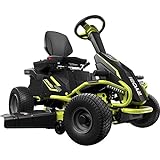
Overview: The Ryobi RY48111 represents a paradigm shift in residential mowing, offering a fully electric riding mower that eliminates gas, oil, and emissions entirely. Powered by a 100Ah lead-acid battery bank and three brushless motors, this rear-engine rider delivers up to 2.5 hours of runtime, sufficient for approximately 2.5 acres on a single charge. The 38-inch two-blade deck provides adequate cutting width while maintaining a compact footprint ideal for gated properties.
What Makes It Stand Out: This mower’s completely electric operation sets it apart, producing just 70dB of noise—comparable to a conversation. The rear-engine configuration provides excellent visibility and a tighter turning radius than traditional tractors. Charging through any standard 120-volt outlet eliminates special equipment, while the brushless motors ensure efficient power delivery with minimal maintenance. The LED headlights and USB charging port add modern convenience.
Value for Money: At $4,999.95, the initial investment exceeds comparable gas riders, but operational costs plummet to pennies per charge versus expensive gasoline. Eliminating oil changes, filter replacements, and engine maintenance saves hundreds annually. For environmentally conscious consumers or those prioritizing quiet operation, the premium proves justifiable. However, the lead-acid battery technology, while reliable, lacks the longevity of modern lithium alternatives.
Strengths and Weaknesses: Strengths include zero emissions, whisper-quiet operation, minimal maintenance, low running costs, and excellent maneuverability. Weaknesses are the high purchase price, limited runtime restricting larger properties, lengthy recharge times (8-12 hours), and reduced power compared to gas equivalents. The lead-acid batteries require periodic water checks and eventual replacement.
Bottom Line: The Ryobi RY48111 is ideal for eco-conscious homeowners with 1-2 acre properties seeking quiet, maintenance-free operation. While the upfront cost stings, the long-term savings and environmental benefits make it a compelling alternative to gas riders for those within its runtime envelope.
9. Craftsman 36" Gas Riding Lawn Mower with 11.5 HP* Briggs and Stratton Single-Cylinder Engine, Gas Lawn Tractor with 7-Speed Transmission, Red/Black (13AC77XYA93)

Overview: The Craftsman 36-inch riding mower addresses a specific niche: homeowners with small yards and narrow gates where larger tractors simply won’t fit. Powered by an 11.5 HP Briggs & Stratton single-cylinder engine, this compact tractor efficiently maintains up to two acres despite its modest power. The 36-inch reinforced stamped steel deck navigates through 40-inch gates while the seven-speed manual transmission provides gear selection for various mowing conditions.
What Makes It Stand Out: Its uniquely narrow deck is the primary selling point, solving access problems for fenced yards that prohibit standard 42-inch riders. The manual transmission, while dated, offers simplicity and reliability with minimal service requirements. Craftsman’s inclusion of a mulching kit adds value, enabling professional finishing without additional purchases. The 18-inch turning radius, though not zero-turn agile, remains respectable for a tractor this size.
Value for Money: At $2,178, this represents one of the most affordable entry points into riding mowers. For property owners constrained by gate width, it’s essentially the only practical option without resorting to walk-behind mowers. While lacking hydrostatic convenience and substantial power, the price reflects its basic feature set appropriately. You’re paying for accessibility rather than performance, making it a smart choice for specific spatial limitations.
Strengths and Weaknesses: Strengths include compact dimensions, gate-friendly width, affordable pricing, reliable Briggs engine, and included mulching capability. Weaknesses involve the underpowered engine for thick grass, manual transmission inconvenience, smaller deck requiring more passes, and basic comfort features. The single-cylinder engine vibrates more than V-Twin alternatives.
Bottom Line: This Craftsman mower serves a very specific buyer: those with narrow access points and small to medium yards. If gate width isn’t a constraint, better options exist. However, for fenced properties, it delivers reliable riding mower convenience where others simply cannot operate, making it a practical problem-solver despite its limitations.
10. Greenworks 40V 16" Cordless Lawn Mower, Ultra-Light Push Mower with 4.0Ah Battery & Charger(75+ Tool Compatibility, 45Min Runtime)

Overview: The Greenworks 40V 16-inch mower revolutionizes small lawn care through extreme lightweight design and battery-powered convenience. Weighing 35% less than comparable gas mowers, this push mower handles up to half-acre properties with effortless maneuverability. The 4.0Ah battery delivers 35-45 minutes of runtime, while the single-lever height adjustment and 2-in-1 mulching/bagging system provide versatility for various grass types and conditions.
What Makes It Stand Out: This mower’s standout feature is its integration into the Greenworks 40V ecosystem, sharing batteries across 75+ tools. The ultra-lightweight construction reduces user fatigue dramatically, making it accessible for elderly users or those with limited strength. Whisper-quiet operation under 75dB allows early morning or evening mowing without disturbing neighbors. The push-button start eliminates pull-cord frustration entirely.
Value for Money: At $239.99 including battery and charger, this mower pays for itself through eliminated gas and oil costs within the first year. Greenworks claims $200+ annual savings versus gas alternatives, which proves accurate for typical users. The three-year warranty on both tool and battery exceeds industry standards, protecting your investment. For small lawns, it delivers premium features at an entry-level price point.
Strengths and Weaknesses: Strengths include exceptional lightness, zero maintenance, quiet operation, instant start, ecosystem compatibility, and low operating costs. Weaknesses involve limited runtime restricting larger areas, narrow 16-inch deck requiring more passes, reduced power for overgrown conditions, and battery recharge time between sessions. It’s unsuitable for thick, wet grass or commercial applications.
Bottom Line: For homeowners with small lawns seeking hassle-free operation, the Greenworks 40V mower is nearly unbeatable. Its lightweight design and maintenance-free operation make mowing enjoyable rather than chore-like. While limited in scope, it perfectly serves its target market, offering exceptional value and convenience that gas mowers simply cannot match.
The Electric Revolution in Lawn Care
The transition from gas to electric in the riding mower market mirrors what we’ve seen in the automotive industry, but with unique considerations for outdoor power equipment. Early battery-powered mowers struggled with insufficient runtime and anemic cutting power, relegating them to small, flat lawns. Today’s models leverage advanced lithium-ion chemistries and sophisticated power management systems that deliver instant torque and sustained performance across varied terrain.
How Battery Technology Closed the Gap
The breakthrough came with high-density battery packs that can sustain 48-72 volts of power while maintaining capacity ratings of 50-100 amp-hours or more. This isn’t just about storing more energy—it’s about delivering consistent voltage under load. When your blades hit thick, wet grass, the battery management system maintains steady current flow, preventing the power sag that plagued earlier generations. Modern electric riding mowers now feature thermal management systems that keep batteries operating optimally even in 90-degree heat, a critical factor for summer mowing marathons.
Understanding Power Equivalency: Electric vs Gas HP
Here’s where confusion often sets in. A 25-horsepower gas engine and a battery-powered system with “equivalent” performance aren’t measured the same way. Gas engines are rated by gross horsepower at a specific RPM, while electric systems are measured in continuous and peak kilowatt output. The secret weapon for electric mowers is torque delivery—100% of available torque from zero RPM. This means blade engagement is instantaneous and doesn’t bog down under load the way gas engines do. When evaluating models, look for continuous power ratings between 5-10 kW, which typically translates to gas-equivalent performance in the 18-25 HP range for real-world mowing conditions.
Key Performance Metrics That Matter
Moving beyond simplistic horsepower comparisons requires understanding the specific metrics that impact your actual mowing experience. The numbers that matter most might surprise you if you’re accustomed to shopping for gas-powered equipment.
Torque Delivery: The Real Story
Gas engines need to rev up to reach peak torque, often around 2,400-2,800 RPM. Electric motors deliver maximum torque the moment you engage the blades. This becomes immediately noticeable when cutting through overgrown sections or mulching leaves in fall. The blade tip speed, measured in feet per minute (FPM), becomes a more reliable performance indicator than traditional horsepower. Look for electric models maintaining 16,000-18,000 FPM under load—this is where the clean cut quality rivals commercial gas equipment.
Cutting Width and Efficiency
Electric riding mowers typically offer decks from 30 to 54 inches, but the efficiency equation changes without a gas engine’s power band constraints. Wider decks demand more energy, creating a direct trade-off between cutting width and runtime. A 42-inch deck often represents the sweet spot for properties up to two acres, balancing coverage with battery conservation. Some advanced models feature electronically controlled deck lifts that automatically adjust height based on terrain, reducing unnecessary power draw compared to manually adjusted decks that might scalp hills.
Speed and Handling Considerations
Forward speeds of 5-7 mph are standard, but electric mowers shine in maneuverability. Without a heavy engine block and transmission, weight distribution centers around the battery pack, often positioned low in the chassis. This creates a lower center of gravity and improved stability on slopes. Pay attention to turning radius specifications—many electric models achieve 12-14 inch turning circles, rivaling zero-turn gas mowers, thanks to independent rear wheel motors in premium configurations.
Battery Technology Deep Dive
The battery pack is the heart of your electric riding mower, and understanding the technology helps you evaluate long-term value beyond the spec sheet numbers.
Voltage, Ah, and What They Mean for You
Voltage determines power potential—think of it as the pressure pushing electricity to the motor. Most residential electric riding mowers operate at 48V or 56V, while commercial-grade models push 72V or higher. Amp-hours (Ah) measure capacity, or how long the battery can sustain a specific current draw. A 56V, 100Ah pack stores 5.6 kWh of energy, theoretically delivering 2-4 hours of runtime depending on conditions. But real-world performance depends heavily on discharge rates and temperature management.
Lithium-Ion vs Lead-Acid: Making the Right Choice
While most modern electric mowers use lithium-ion, some budget models still employ lead-acid batteries similar to car batteries. Lithium-ion offers 3-4 times the cycle life (800-1,000 full charges vs 200-300), maintains voltage throughout discharge, and charges 3-5 times faster. Lead-acid batteries are cheaper initially but suffer from voltage sag as they deplete, meaning your mower loses power toward the end of the charge. The weight difference is substantial too—lithium packs are 60% lighter, improving maneuverability and reducing turf compaction.
Swappable Battery Systems: Game Changer or Gimmick?
Some manufacturers offer removable battery packs you can swap mid-job. This sounds appealing for large properties, but consider the practicalities: battery packs can weigh 50-80 pounds, and high-quality lithium packs cost $800-$1,500 each. For most homeowners, investing in faster Level 2 charging makes more economic sense than buying a spare battery. However, for lawn care professionals or properties exceeding three acres, swappable systems eliminate downtime and might justify the premium.
Runtime Realities and Charging Strategies
The number one concern for potential electric mower buyers is runtime anxiety. Understanding actual energy consumption helps set realistic expectations.
Calculating Your Actual Mowing Time
Runtime specifications from manufacturers often assume ideal conditions: flat terrain, moderate grass height, and moderate temperatures. Real-world factors dramatically impact consumption. Cutting thick, damp grass can increase power draw by 40-60%. Hilly terrain adds another 20-30% energy cost. A mower rated for 2.5 hours of runtime might deliver 90 minutes on a challenging property. Calculate your needs by timing your current mowing sessions and adding a 25% buffer for battery aging over 3-5 years.
Level 1 vs Level 2 Charging at Home
Most electric mowers include a Level 1 charger that plugs into a standard 120V outlet, typically requiring 10-16 hours for a full charge. Upgrading to Level 2 charging (240V) cuts this to 3-4 hours but requires a dedicated circuit and possibly electrical panel upgrades. The investment—$300-$800 for equipment and installation—pays dividends in convenience. Some municipalities offer rebates for EV charging equipment that can apply to electric mower charging stations, since they use the same J1772 connector standard.
Opportunity Charging Between Jobs
Smart charging habits extend effective runtime without buying extra batteries. Topping off during lunch breaks or while trimming edges with a push mower can add 30-50% charge in an hour with Level 2. Some advanced models feature regenerative braking that recaptures energy when descending hills or decelerating, adding 5-10% runtime in hilly conditions. This isn’t enough to skip charging but provides a helpful buffer on challenging terrain.
Cutting Deck Innovations
The cutting deck’s design and construction directly impact cut quality, and electric mowers have spurred innovations impossible with traditional gas platforms.
Fabricated vs Stamped Decks in Electric Models
Fabricated decks, built from welded steel plates, offer superior durability and are standard on higher-end electric models. They handle the instant torque of electric motors without flexing, maintaining consistent blade spacing. Stamped decks, formed from a single steel sheet, are lighter and more common on entry-level models. While adequate for flat, well-maintained lawns, they can flex under heavy loads, slightly compromising cut quality in thick grass. The weight difference—fabricated decks add 30-50 pounds—has less impact on electric mowers since they don’t struggle with the weight like gas engines do.
Deck Height Adjustment Mechanisms
Electric mowers often feature electronic height adjustment with presets you can control from the driver’s seat. This convenience factor becomes a performance feature when combined with sensors that detect terrain changes and automatically raise the deck to prevent scalping. Some systems even link deck height to battery state-of-charge, slightly raising the cut in low battery conditions to extend runtime by reducing power draw—a smart compromise when you need to finish the job.
Mulching, Bagging, and Side-Discharge Performance
Electric motors maintain consistent blade speed, improving mulching performance compared to gas engines that slow under load. The finely mulched clippings decompose faster, returning nutrients to your lawn. For bagging, electric mowers often use a separate electric blower motor rather than relying on deck airflow, maintaining suction even when blades encounter resistance. This creates more consistent bagging performance but uses additional battery energy—typically reducing runtime by 15-20% when bagging versus side-discharging.
Terrain and Traction Capabilities
Your property’s topography plays a crucial role in determining which electric riding mower configuration will serve you best.
Hill Handling and Slope Ratings
Most residential electric mowers are rated for slopes up to 15 degrees (approximately 27% grade), comparable to gas tractors. However, the low center of gravity from floor-mounted battery packs improves stability. For steeper terrain, look for models with dual rear wheel motors providing independent traction control—essentially electronic all-wheel-drive that prevents wheel slip without the mechanical complexity of gas-powered AWD systems. These can handle 20-degree slopes confidently while maintaining consistent blade speed.
Tire Technology for Electric Platforms
Electric mowers benefit from turf-saving tires that distribute weight more evenly, crucial since battery packs concentrate mass. Look for turf tread patterns with larger contact patches and softer compounds that grip without tearing grass. Some premium models feature foam-filled tires that eliminate flats while providing better weight distribution than traditional pneumatic tires. The reduced vibration from electric motors means these softer tires don’t create the handling mushiness you’d experience on a gas tractor.
All-Wheel Drive Electric Systems
True AWD electric mowers use separate motors for each wheel, eliminating mechanical differentials and drive shafts. This reduces weight and maintenance while providing superior traction control. The system can instantly shift power between wheels based on slip detection, something mechanical AWD cannot match. However, this sophistication adds $1,500-$2,500 to the purchase price and increases battery consumption by 10-15%. For most properties under two acres with moderate slopes, a well-designed rear-wheel-drive electric mower proves sufficient.
Build Quality and Longevity
Evaluating durability requires looking beyond the motor to the entire chassis and component ecosystem.
Frame Construction Materials
Commercial-grade electric mowers use fully welded steel frames with reinforced stress points, similar to professional gas equipment. Residential models might use bolted construction in non-critical areas to reduce costs. Check the gauge of steel used in the main frame—11-gauge (0.119 inch) indicates heavy-duty construction while 13-gauge (0.089 inch) is adequate for lighter duty. The absence of engine vibration actually reduces frame stress over time, potentially extending chassis life compared to gas counterparts.
Weatherproofing and IP Ratings
Electric mowers must withstand rain, dust, and grass clippings that can compromise electrical connections. Look for IPX4 or higher ratings, which certify resistance to water splashes from any direction. Critical electrical connections should feature sealed connectors and dielectric grease protection. The battery compartment needs active ventilation to prevent moisture buildup while keeping out debris. Some manufacturers offer optional wash-down kits that let you safely clean the mower with a hose—a feature requiring careful sealing of all electrical components.
Expected Lifespan of Electric Components
Quality lithium-ion battery packs typically retain 80% capacity after 800-1,000 charge cycles, translating to 8-12 years for average homeowners mowing weekly. Brushless electric motors are rated for 10,000+ hours—essentially lifetime components. Electronic controllers and displays are the weak links, with typical lifespans of 5-7 years. The good news? These components are modular and replaceable, often costing less than rebuilding a gas engine. Keep firmware updated, as manufacturers release improvements that optimize battery management and motor efficiency.
The True Cost of Ownership
Sticker shock often deters potential electric mower buyers, but the financial equation extends far beyond the initial purchase.
Initial Investment Analysis
Quality electric riding mowers currently range from $2,500 for entry-level 30-inch models to $6,000+ for 54-inch commercial-grade machines. This represents a 20-40% premium over comparable gas mowers. However, manufacturers and utilities increasingly offer rebates—some up to $500—that narrow the gap. Consider the electric model’s price as a capital investment in a decade of reduced operating costs, similar to calculating ROI on solar panels.
Energy Costs vs Fuel Expenses
Operating costs flip the script completely. A gas mower consuming 1.5 gallons per hour at $3.50/gallon costs $5.25 per hour to run. An electric mower using 3 kWh per hour at $0.13/kWh costs just $0.39 per hour—a 93% reduction. For a property requiring 2 hours of weekly mowing over a 28-week season, that’s $294 in gas versus $22 in electricity annually. Over ten years, you save enough in fuel alone to pay for a battery replacement.
Maintenance Savings Breakdown
Gas mowers require annual oil changes ($30), air filters ($15), spark plugs ($10), and fuel stabilizer ($10). Over ten years, that’s $650 in basic maintenance, not including carburetor cleanings, belt replacements, or engine repairs. Electric mowers eliminate all engine-related maintenance. Your only regular expenses are blades ($50/year) and occasional deck cleaning. Battery replacement after 8-10 years costs $800-$1,200, but even factoring this in, total ten-year operating costs are typically 60-70% lower than gas.
Maintenance: What You Need to Know
While electric mowers dramatically reduce maintenance, they’re not maintenance-free. Understanding the specific requirements prevents premature wear and protects your investment.
Battery Care Best Practices
Never store batteries fully charged or completely depleted—maintain 40-60% charge for winter storage. Extreme temperatures degrade lithium cells; store the mower in a climate-controlled space when possible. If garage temperatures drop below freezing, bring the battery packs indoors (if removable) or ensure the mower’s built-in heater maintains cell temperature. Avoid rapid charging when the battery is hot from use; let it cool for 30 minutes first. Most modern systems manage this automatically, but manual intervention extends cell life.
Blade Maintenance Differences
Electric motors don’t tolerate blade imbalance as well as gas engines. A slightly bent blade can cause vibration that damages motor bearings. Inspect blades every 10 hours of operation and sharpen or replace as needed. Since electric mowers run quieter, you’ll hear blade damage more easily—a metallic rattle indicates immediate attention is required. Always use manufacturer-specified blades; aftermarket options might not be balanced to the precise tolerances electric motors require.
Winter Storage Protocols
Beyond battery storage, electric mowers need specific winterization. Clean the deck thoroughly and apply anti-corrosion spray to the underside. Disconnect the main battery terminals if the system allows. Update firmware before storing, as manufacturers often release winter storage optimizations. Cover the charging port with its protective cap and store the charger indoors. In spring, perform a full system diagnostic if your model includes self-test features, ensuring all connections remain secure after months of temperature cycling.
Environmental and Health Benefits
The “without the fumes” promise extends beyond convenience to tangible health and environmental impacts.
Zero Emissions at Point of Use
A gas riding mower produces as much pollution in one hour as driving a modern car for 100 miles. Electric mowers eliminate direct emissions, improving air quality in your immediate environment. This matters most for operators—studies show lawn care workers using gas equipment have elevated exposure to carcinogenic compounds like benzene and formaldehyde. For homeowners, this means mowing without inhaling exhaust, particularly important if you mow during calm weather when fumes linger.
Noise Pollution Reduction
Electric mowers operate at 65-75 decibels, compared to 90-100 decibels for gas models. This difference is dramatic—every 10-decibel reduction halves the perceived loudness. You can mow early morning or evening without disturbing neighbors, and hearing protection becomes optional rather than mandatory. This noise reduction benefits local wildlife too; birds and beneficial insects aren’t driven from your yard during mowing, supporting ecosystem health.
Carbon Footprint Over Product Lifetime
While manufacturing lithium batteries has an environmental cost, lifecycle analyses show electric mowers break even with gas models at 50-75 hours of operation and produce 60-70% fewer emissions over a ten-year lifespan. As the electrical grid incorporates more renewable energy, this advantage increases. If you charge from home solar, the carbon footprint becomes negligible. Consider the battery’s end-of-life too—many manufacturers now offer recycling programs recovering 95% of lithium and cobalt for reuse.
Practical Ownership Considerations
Beyond performance specs, everyday usability factors determine whether an electric mower truly fits your lifestyle.
Garage and Storage Space Requirements
Electric mowers are often more compact than gas models, with some designs eliminating the traditional hood and engine compartment. However, you must account for charging station placement. The charging unit requires wall space near a 120V or 240V outlet, with cable management to prevent tripping hazards. Battery packs should be stored above freezing, so unheated garages in cold climates may require insulation or heating. Measure your storage area and ensure 2-3 feet of clearance around the mower for ventilation and easy access.
Neighborhood Noise Ordinances
Many municipalities restrict gas mower operation to daytime hours, typically 8 AM to 7 PM. Electric mowers often fall below noise thresholds entirely, giving you flexibility to mow during cooler morning or evening hours in summer. Check local ordinances—some communities offer rebates specifically for electric lawn equipment, and a few progressive HOAs provide incentives for noise reduction. This flexibility also means you can split mowing sessions across multiple days without the hassle of restarting a cold gas engine.
Resale Value Trends
The used market for electric mowers is still developing, but early data shows they retain value better than gas models. A five-year-old quality electric mower typically sells for 40-50% of original price, compared to 25-35% for gas. Buyers value the lower operating costs and remaining battery life. Keep detailed maintenance records and document battery health diagnostics to maximize resale value. As battery replacement costs decrease and technology improves, resale values should strengthen further.
Safety Features Unique to Electric Models
Electric powertrains enable safety innovations impossible with mechanical gas engines, but also introduce new considerations.
Instant Torque Management
The same instant torque that provides cutting power can surprise new users. Electric mowers accelerate from zero to full speed without the gradual build-up of gas engines. This requires sensitive foot pedal programming to prevent jerky starts. Look for models with programmable acceleration profiles—some offer “learning modes” that gradually increase responsiveness as you adapt. For families, consider mowers with PIN-code ignition to prevent unauthorized use by children who might not respect the instant power delivery.
Emergency Shutoff Systems
Electric mowers feature multiple redundant shutoff systems. The traditional seat switch still cuts power when you dismount, but battery disconnects can also trigger from tip sensors, rollover detection, or even smartphone app commands. This multi-layered approach improves safety, but requires understanding reset procedures. If the system trips, you may need to cycle the ignition or even disconnect and reconnect the battery. Practice emergency procedures in a safe area before you need them.
Battery Management Safety
High-voltage battery packs require robust safety systems. Quality models feature isolation detection that shuts down the mower if electrical faults occur. The battery compartment should be physically separated from the operator area and feature reinforced casing to prevent puncture. Thermal runaway protection—where the system detects overheating cells and safely shuts down—is critical. While rare, lithium battery fires are serious; ensure your model is certified to UL 2271 standards for battery safety and keep a Class D fire extinguisher accessible in your garage.
Warranty and Support Landscape
The electric mower market includes both established manufacturers and new direct-to-consumer brands, creating a complex warranty environment.
Battery Warranty Nuances
Battery warranties are separate from machine warranties and typically shorter. A 5-year mower warranty might include only 3 years of full battery replacement, with prorated coverage after that. Understand the degradation threshold—most warranties cover replacement only if capacity drops below 70% within the warranty period. Document your battery’s baseline capacity when new and test annually. Some manufacturers require authorized dealer installation of firmware updates to maintain warranty coverage, so factor in service costs.
Dealer Network vs Direct-to-Consumer Support
Traditional dealers offer hands-on service but may have limited electric mower expertise. Direct-to-consumer brands provide phone support and ship replacement parts, but you’re responsible for diagnostics and installation. Consider your mechanical aptitude. If you prefer dealer service, choose brands with certified electric equipment technicians in your area. Ask dealers specifically about their training on battery systems—some have invested heavily while others treat electric mowers as afterthoughts.
Extended Protection Plans
Third-party extended warranties for electric mowers are still evolving. Some exclude batteries entirely, while others offer comprehensive coverage including accidental damage. Read exclusions carefully—water damage from pressure washing might void coverage, as might using non-OEM blades. Given the high cost of battery replacement, a well-structured extended plan can pay for itself if it includes battery coverage beyond the manufacturer’s prorated period.
Making Your Final Decision
With technology explained and features evaluated, the final decision comes down to matching capabilities to your specific situation.
Assessing Your Property’s Specific Needs
Map your property’s challenges: measure slope angles, identify tight spaces requiring maneuverability, and calculate total mowing area. Properties under one acre with flat terrain work well with entry-level 30-42 inch models. Two to three acres with moderate hills demand 48-54 inch decks and higher capacity batteries. For properties over three acres, honestly evaluate whether a single electric mower fits your workflow, or if a hybrid approach—electric for main areas, gas for occasional rough cutting—makes sense.
Test Driving: What to Look For
Schedule demonstrations with multiple dealers. Bring your own property map and ask to test on similar terrain. Pay attention to acceleration smoothness, blade engagement response, and how the mower handles your specific grass type. Test the charging connection—some are awkwardly placed or require precise alignment. Evaluate display readability in bright sunlight and whether controls feel intuitive. A 30-minute test drive reveals more than hours of spec sheet research.
Financing and Incentive Options
Many manufacturers offer 0% financing for 12-24 months, making the initial price premium more manageable. Check with your electric utility—over 50 utilities nationwide offer rebates for electric lawn equipment, typically $100-$300. Some states have additional incentives through environmental agencies. The IRS doesn’t currently offer federal tax credits for residential electric mowers, but legislation is pending. Calculate total incentives before negotiating final price, as dealers may factor expected rebates into financing offers.
Frequently Asked Questions
How long do batteries really last in electric riding mowers?
Quality lithium-ion battery packs typically maintain 80% of original capacity after 800-1,000 complete charge cycles. For average homeowners mowing weekly, this translates to 8-12 years before noticeable performance degradation. Battery management systems prevent overcharging and deep discharge, the two factors that accelerate aging. Expect to replace batteries once during a mower’s 15-20 year usable lifespan.
Can electric riding mowers handle wet grass?
Yes, but with caveats. Electric motors maintain blade speed better than gas engines in wet conditions, but power consumption increases 40-60%. This reduces runtime significantly. More importantly, wet grass clippings stick to the deck and discharge chute, requiring frequent cleaning. The electrical components are weather-sealed to IPX4 standards or higher, preventing water damage during operation. However, avoid mowing in heavy rain, and always store and charge the mower under cover.
What happens if I run out of battery mid-mow?
Unlike gas mowers that can be refueled instantly, a depleted battery requires charging. Most systems prevent complete discharge, shutting down with 5-10% reserve to protect battery health. This gives you a few minutes of low-power operation to return to your garage. If you’re stranded, you’ll need to wait 30-60 minutes on Level 2 charging to gain enough power for a short trip back. Planning is essential—monitor battery percentage and mow high-draw areas early in your session.
Are electric riding mowers powerful enough for thick or tall grass?
Modern electric mowers deliver superior torque for tackling overgrown areas. The instant blade engagement and sustained speed prevent the bogging common with gas engines. However, thick grass dramatically reduces runtime—expect 50-70% of normal mowing time in these conditions. For regularly maintained lawns, electric mowers cut as well or better than gas. For occasional field mowing, consider a brush-cutting attachment designed for electric motors, which handles thick growth more efficiently than standard blades.
How much does it cost to charge an electric riding mower?
Using the national average electricity rate of $0.13 per kWh, a full charge for a typical 5 kWh battery costs about $0.65. With 2 hours of runtime per charge, that’s $0.33 per hour of operation. Even in high-cost areas at $0.25/kWh, you’re spending only $1.25 per full charge. Compare this to $5-$7 per hour for gas mowers, and the savings become substantial over a season. Solar panel owners can effectively charge for free during daylight hours.
Do electric riding mowers work in hot weather?
Quality models include active thermal management that keeps battery cells within optimal operating temperatures (60-90°F) even in 100°F ambient conditions. Cooling fans draw air through the battery compartment, and some systems limit power output if temperatures approach critical levels to prevent damage. The operator benefits too—without engine heat radiating upward, summer mowing stays cooler. Just avoid charging immediately after hot operation; let the battery cool first to maximize lifespan.
What’s the learning curve for switching from gas to electric?
Most users adapt within 1-2 mowing sessions. The biggest adjustments are instant acceleration, quieter operation, and digital displays. Without engine noise, you’ll hear blade engagement more clearly and notice when you hit obstacles. The reduced vibration decreases operator fatigue, but the different sound profile takes getting used to. Electric mowers often feature cruise control and programmable speed limits, which actually simplify operation once configured. Plan for an adjustment period but expect to prefer electric within a month.
Can I use my electric riding mower for snow removal or other attachments?
Many electric mowers support snow blades, blowers, and tow-behind carts. However, snow removal drains batteries extremely quickly—expect 30-45 minutes of runtime per charge in heavy snow. Some manufacturers offer dedicated winter battery modes that optimize power delivery for cold conditions. Attachments requiring PTO (power take-off) work seamlessly since electric motors provide instant torque. Check attachment compatibility before buying; some electric models use proprietary mounting systems, and weight distribution differs from gas tractors.
How do electric riding mowers perform on uneven terrain?
The low center of gravity from floor-mounted batteries improves stability on uneven ground. Independent suspension systems, more common on electric models due to weight distribution advantages, keep the deck level across bumps and depressions. However, the heavier overall weight (batteries are dense) can cause more turf compaction in wet conditions. Wide, turf-friendly tires mitigate this. For very rough terrain, look for models with articulating frames that allow the deck to float independently, maintaining consistent cutting height.
Will my homeowner’s insurance cover electric riding mowers?
Most standard policies cover electric riding mowers under “personal property” or “lawn equipment” riders, similar to gas mowers. However, the higher replacement value of electric models may require adjusting coverage limits. The lithium battery introduces new considerations—some policies have exclusions for battery-related fires, though this is rare. Document your purchase with photos and serial numbers. If you charge in an attached garage, ensure your policy covers electrical fire damage. Consider a separate rider for expensive commercial-grade models exceeding $5,000.