Transforming a patchwork of flowerbeds into a cohesive, thriving landscape requires more than just a green thumb—it demands precision hydration that respects each plant’s unique needs. Multi-zone drip irrigation manifolds are the unsung heroes behind those envy-inducing gardens you see in lifestyle magazines, quietly distributing water with surgical accuracy while you sip coffee on your porch. Whether you’re managing sun-drenched perennials alongside shade-loving ferns, or coordinating raised beds with ground-level borders, the right manifold system eliminates the daily guesswork of hand-watering and the wastefulness of broadcast sprinklers.
Understanding how these systems work isn’t just for irrigation professionals anymore. Today’s homeowner faces an overwhelming array of options, from basic manual valves to Wi-Fi-enabled controllers that adjust watering based on weather forecasts. The difference between a mediocre setup and a truly efficient system often comes down to manifold selection—a decision that impacts everything from water bills to bloom quality. Let’s explore what makes these devices indispensable for complex flowerbed configurations and how to choose features that align with your garden’s personality.
Top 10 Drip Irrigation Manifolds for Multi-Zone Flowerbeds
Detailed Product Reviews
1. Rain Bird MANIFRE6S Drip Irrigation 6-Port Manifold, Unregulated Free Flow

Overview: The Rain Bird MANIFRE6S is a straightforward 6-port manifold designed for gardeners seeking simple, reliable drip irrigation expansion without complicated features. This unregulated unit connects six 1/4-inch distribution lines to a standard 1/2-inch threaded riser, making it ideal for basic watering zones where pressure is already controlled at the source through external regulators.
What Makes It Stand Out: Its no-frills design and trusted Rain Bird brand name make this manifold appealing for DIY installers who prioritize reliability over fancy features. The free-flow configuration maximizes water delivery when paired with a pressure-regulated supply, while the barbed outlets accept any 1/4-inch tubing brand, ensuring universal compatibility without proprietary limitations that lock you into one ecosystem.
Value for Money: At $6.99, this represents exceptional value for budget-conscious gardeners building simple systems. However, the true cost requires factoring in an external pressure regulator if your water source exceeds 40 PSI. Compared to integrated models, you’ll save money initially but sacrifice individual port control and built-in regulation that more advanced systems offer.
Strengths and Weaknesses: Pros: Extremely affordable price point; simple, durable construction; trusted brand reputation; universal tubing compatibility; easy installation for beginners. Cons: No individual flow control; requires external pressure regulation; limited to 40 PSI operating pressure; cannot shut off individual lines when not needed.
Bottom Line: Perfect for straightforward drip systems where simplicity and cost matter most. If you already have pressure regulation upstream, this reliable manifold delivers excellent performance without unnecessary complexity that complicates maintenance.
2. Orbit 2-Pack 67000 Adjustable Flow 8-Port Drip Irrigation Manifold for 1/4 Inch Tube - Customized Watering for Your Garden

Overview: The Orbit 67000 two-pack provides adjustable 8-port manifolds for customized garden watering solutions. Each unit enables precise control over individual drip lines for targeted plant care, connecting to standard 1/2-inch risers with 1/4-inch distribution tubing for versatile installation options across multiple garden zones.
What Makes It Stand Out: The 360-degree rotating barbs are a game-changer for installation flexibility, eliminating kinked tubing frustrations that plague fixed-barb designs. The two-pack configuration offers immediate value for multi-zone expansion, while adjustable flow rates let you fine-tune water delivery for different plant types, from thirsty vegetables to drought-tolerant perennials in the same system.
Value for Money: At $17.61 for two units ($8.80 each), this package provides solid mid-range value for serious gardeners. You’re paying a premium over basic manifolds for adjustability and convenience features. The rotating barbs alone justify the cost by reducing installation time and tubing waste, making it worthwhile for most homeowners planning expansive systems.
Strengths and Weaknesses: Pros: Individual flow adjustment per port; rotating barbs ease positioning; two-pack offers zone expansion capability; compatible with major brands; excellent for spot watering applications. Cons: No built-in pressure regulation; requires separate filter/regulator; slightly higher per-unit cost than non-adjustable models; Orbit brand tubing recommended for best fit and sealing.
Bottom Line: An excellent choice for gardeners wanting customization without breaking the bank. The rotating barbs and dual-pack make this ideal for expanding existing systems with professional-level flexibility and long-term reliability that justifies the moderate investment.
3. 2 Pack - Orbit Adjustable Flow 8-Port Drip Irrigation Manifold for 1/4 Inch Tube

Overview: This two-pack of Orbit 8-port manifolds appears nearly identical to the 67000 model, offering adjustable flow control for precision watering applications. Designed for 1/4-inch drip tubing, these units connect to standard 1/2-inch risers for versatile garden irrigation across multiple zones or garden beds with different watering requirements.
What Makes It Stand Out: The adjustable flow capability across eight ports provides exceptional customization for container gardens and landscape beds with diverse plantings. The two-pack format supports multiple watering zones simultaneously, while the brand recognition ensures compatibility with Orbit’s ecosystem of irrigation components and accessories for seamless system integration.
Value for Money: Priced at $17.71, this represents comparable value to similar Orbit dual-packs. The ten-cent difference from the 67000 model suggests minimal variation, likely in packaging or distribution channels rather than functionality. Cost per manifold remains under $9, positioning this in the mid-range category for adjustable manifolds with decent feature sets.
Strengths and Weaknesses: Pros: Eight adjustable ports per manifold; two-unit package for convenient zone expansion; likely features rotating barbs (standard on Orbit models); trusted brand compatibility; good for mixed plantings and container gardens. Cons: Product details are sparse; lacks explicit pressure regulation; may require separate filter/regulator; ambiguous differentiation from similar Orbit models.
Bottom Line: A solid choice if you need adjustable flow control across multiple zones. Verify specifications match your requirements, as limited feature documentation creates some uncertainty compared to explicitly detailed alternatives in the competitive drip irrigation market.
4. Orbit 3-Pack 67005 4-Port Drip Irrigation Manifold for 1/4 Inch Tube - Efficient Water Distribution for Your Garden

Overview: The Orbit 67005 three-pack delivers three 4-port manifolds for efficient water distribution across segmented garden zones. Each unit provides precise flow control for non-pressure compensating emitters, connecting to 1/2-inch risers with 1/4-inch distribution lines for targeted watering in specific garden areas.
What Makes It Stand Out: The three-pack configuration excels for gardeners designing zone-based systems, allowing different watering schedules per manifold location. The emphasis on debris prevention demonstrates professional-grade thinking, while 360-degree rotating barbs simplify tubing installation in tight spaces and reduce strain on connections during seasonal adjustments.
Value for Money: At $17.99 for three units ($6 each), this offers the lowest per-manifold cost in the Orbit lineup. The trade-off is fewer ports per unit, making this ideal for compartmentalized gardens rather than high-density plantings. You’ll need additional filters, but the base price is attractive for large-scale installations requiring multiple control points.
Strengths and Weaknesses: Pros: Lowest cost per manifold available; three units enable zone separation; rotating barbs for easy installation; precise flow control for each port; strong debris management guidance for longevity. Cons: Only four ports per unit limits high-density applications; no pressure regulation; requires additional components for optimal performance; packaging may exceed needs for small gardens.
Bottom Line: Perfect for gardeners planning distinct watering zones. The three-pack value shines in larger landscapes where compartmentalized control outweighs port quantity per manifold, making it a smart choice for systematic garden designs and professional installations.
5. Rain Bird MANIFPRPS2 Drip Irrigation 9-Port Manifold, 25 PSI Pressure Regulating, Adjustable Flow and ON/Off

Overview: The Rain Bird MANIFPRPS2 is a premium 9-port manifold with integrated 25 PSI pressure regulation and individual port control. This professional-grade unit connects to standard 1/2-inch risers while providing unprecedented customization for serious irrigation systems and discerning gardeners managing complex landscapes.
What Makes It Stand Out: Individual levers offering on/off/variable flow control for each port set this apart from all competitors in its class. The built-in pressure regulator eliminates external component needs, while nine ports maximize distribution from a single connection point. Flow rates adjustable from 0-20 GPH per port provide surgical precision for diverse plant requirements in mixed gardens.
Value for Money: At $23.07, this is the most expensive single manifold option but justifies cost through integrated regulation and individual port control. You’re essentially getting a regulator ($10-15 value) plus advanced manifold functionality, making it competitively priced against buying separate components while reducing installation complexity and potential failure points.
Strengths and Weaknesses: Pros: Built-in 25 PSI regulation; individual port on/off/flow control; nine ports for maximum distribution; professional-grade construction; eliminates external regulator need completely. Cons: Highest upfront cost; overkill for simple gardens; more complex installation; may require professional planning for optimal use and system balancing.
Bottom Line: The ultimate solution for dedicated gardeners and professionals. If you demand individual plant control and want to eliminate external pressure regulators, this premium manifold delivers unmatched capability and long-term value for sophisticated irrigation systems that require precision management.
6. Orbit Drip Irrigation Manifold

Overview: The Orbit Drip Irrigation Manifold serves as an entry-level distribution hub for DIY gardeners venturing into precision watering. Designed to connect with 1/4-inch drip tubing, this manifold channels water directly to trees, shrubs, and container plants. The generic product listing suggests multiple port configurations are available, though this specific $4.79 variant appears to be a baseline model. Its compatibility with both spray and drip setups makes it a flexible starting point for customized irrigation zones.
What Makes It Stand Out: The 360-degree rotating barbs are the star feature, allowing effortless tubing insertion and positioning without kinking. Unlike fixed manifolds, these rotating connectors save considerable installation time and frustration. The availability of flow control versions caters to professional contractors needing precise water management for non-pressure compensating emitters. Orbit’s modular approach lets users expand systems gradually, adding manifolds as garden layouts evolve.
Value for Money: At under $5, this manifold offers one of the lowest price points in the drip irrigation market. However, the hidden cost lies in required accessories—120-mesh filters and pressure regulators are sold separately and essential for preventing clogging. When factoring these necessities, the total investment approaches $15-20 per zone. Compared to all-in-one kits, the à la carte pricing benefits those who already own filtration components.
Strengths and Weaknesses: Strengths include rock-bottom pricing, user-friendly rotating barbs, and versatile configuration options. The polymer construction withstands typical backyard conditions. Weaknesses involve the vague product description that doesn’t specify port count, forcing buyers to guess suitability. The mandatory separate filter purchase adds complexity for beginners. Non-pressure compensating emitters may require frequent flow adjustments.
Bottom Line: This manifold works best as an expansion component for experienced users who understand drip irrigation fundamentals. Budget-conscious gardeners will appreciate the low entry cost, but first-timers should consider complete starter kits that include filtration. Verify your needed port count before purchasing this ambiguously listed model.
7. Orbit 2- Pack Adjustable Flow 8-Port Drip Irrigation Manifold for 1/4" Tube - 61008P
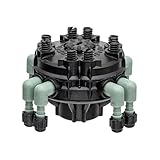
Overview: The Orbit 61008P delivers professional-grade irrigation distribution in a convenient two-pack configuration. Each manifold features eight individual ports for 1/4-inch drip tubing, enabling targeted “point source” watering for garden beds, containers, and landscape plantings. This model specifically addresses the needs of gardeners managing multiple zones simultaneously, providing centralized control for up to sixteen drip lines across two manifolds. The adjustable flow design accommodates non-pressure compensating emitters commonly used in custom installations.
What Makes It Stand Out: Eight ports per manifold far exceed standard 2-4 port models, reducing the number of connection points needed in complex layouts. The 360-degree rotating barbs simplify installation in tight spaces, allowing precise tubing direction without strain. Adjustable flow capability lets users fine-tune water delivery for different plant types on the same manifold—ideal for mixed gardens with varying water needs. The two-pack bundling offers immediate savings over individual purchases.
Value for Money: At $17.50 for two units ($8.75 each), this pack provides excellent per-unit value compared to smaller manifolds. The eight-port density maximizes water distribution efficiency, potentially eliminating the need for additional splitters. However, like all Orbit manifolds, it requires separate filter and pressure regulator purchases, adding $10-15 to the total cost. For larger gardens, this still represents savings over buying multiple 2-port models.
Strengths and Weaknesses: Strengths include high port density, flow adjustability, and bulk pricing. The rotating barbs prevent installation headaches. Weaknesses include potential overkill for small patios, and the lack of included filtration components. Some users report flow adjustment knobs can loosen over time. The manifold works only with non-pressure compensating systems.
Bottom Line: Perfect for serious gardeners and landscape contractors managing extensive drip systems. The eight-port design and two-pack value make it economical for large projects. Ensure you purchase compatible filters and regulators, and verify your system’s pressure requirements match this non-pressure compensating model. For small gardens, consider fewer ports.
8. Orbit 67035 Drip Irrigation 2-Port Manifold MPT

Overview: The Orbit 67035 is a minimalist’s approach to drip irrigation distribution, offering just two ports for 1/4-inch tubing connections. Its MPT (Male Pipe Thread) inlet provides direct attachment to standard irrigation risers or PVC fittings, making it ideal for simple expansions or repairs to existing systems. This bare-bones manifold targets gardeners needing only a couple of additional drip lines for isolated trees, shrubs, or container groups. The ultra-low price point removes financial barriers for small-scale irrigation projects.
What Makes It Stand Out: The MPT threading distinguishes it from barb-only manifolds, allowing secure threaded connections that won’t pop off under pressure. The 360-degree rotating barbs, borrowed from Orbit’s premium line, make tubing insertion remarkably easy even in cramped installations. Its compact size fits virtually anywhere, perfect for retrofitting into established landscapes without disturbing surrounding plants. The single-unit pricing lets users buy exactly what they need without overstocking.
Value for Money: At $3.50, this is among the cheapest reliable manifolds available. For gardeners needing just one or two additional lines, it beats buying multi-port units that would go unused. The cost-effectiveness diminishes if you need many ports—ten of these cost $35 versus $17.50 for the 8-port two-pack. Factor in the required separate filter and regulator, which cost 3-4 times the manifold itself.
Strengths and Weaknesses: Strengths include unbeatable price, MPT versatility, rotating barbs, and compact design. Weaknesses involve extremely limited port count, generic product description that doesn’t highlight specific features, and the mandatory separate filtration purchase. The two-port limitation makes it inefficient for garden beds requiring multiple emitters.
Bottom Line: An excellent choice for targeted irrigation projects and system expansions where only one or two lines are needed. The MPT connection adds security over barb-only designs. However, bulk-buying multi-port manifolds offers better value for larger installations. Pair with proper filtration to prevent emitter clogging.
9. Orbit 5-Pack 67005 4-Port Drip Irrigation Manifold for 1/4 Inch Tube - Efficient Water Distribution for Your Garden
Overview: The Orbit 67005 five-pack delivers middle-ground versatility for gardeners scaling up their drip irrigation systems. Each manifold provides four ports for 1/4-inch tubing, balancing distribution capacity with compact size. This bulk packaging targets users installing multiple zones simultaneously—whether across extensive landscapes, community gardens, or shared purchases among neighbors. The consistent four-port design simplifies planning and maintenance compared to mixing different manifold sizes. Like other Orbit products, it supports both spray and drip configurations for flexible watering strategies.
What Makes It Stand Out: Bulk packaging reduces per-unit cost to approximately $6.04, offering savings over individual purchases while avoiding the extreme port density of eight-port models. The four-port layout perfectly suits typical garden beds requiring 2-3 emitters plus a spare for expansion. Rotating barbs across all units ensure uniform installation ease. This pack eliminates the frustration of mid-project store runs when you discover needing one more manifold.
Value for Money: At $30.19 for five units, the per-manifold price beats most individual 4-port competitors. For projects requiring exactly five manifolds, it’s optimal. However, the upfront cost may deter small gardeners who need only one or two. The value proposition weakens if you need fewer than four units, making the 2-pack 8-port option potentially more economical. Required separate filter and regulator purchases remain a hidden cost multiplier.
Strengths and Weaknesses: Strengths include bulk savings, consistent components, versatile four-port design, and rotating barbs. Weaknesses involve potentially buying more than needed, vague model-specific details, and lack of included filtration. The non-pressure compensating design requires careful system balancing.
Bottom Line: Ideal for medium-to-large garden installations requiring multiple four-port distribution points. The five-pack offers genuine savings and planning simplicity. Verify your total port needs before purchasing, and ensure you budget for necessary filters and pressure regulators. For smaller projects, consider individual manifolds instead.
10. Raindrip 13800UB, Hydro-Port Adjustable Eight-Outlet Bubbler, Drip Irrigation Emitters for Drip Irrigation Gardening Systems, up to 30 GPH Per Outlet, 1/2-Inch FPT Inlet, Black/Blue

Overview: The Raindrip 13800UB Hydro-Port Bubbler takes a fundamentally different approach than traditional manifolds by converting existing underground sprinkler risers into precision drip distribution points. Featuring eight individually adjustable outlets delivering 0-30 GPH each, this device repurposes high-flow sprinkler lines into efficient micro-irrigation systems. The 1/2-inch FPT inlet threads directly onto standard sprinkler risers, eliminating the need for separate water sources or complex plumbing. Made from UV-stabilized ABS plastic, it’s engineered for long-term subsurface exposure.
What Makes It Stand Out: Each outlet’s independent 0-30 GPH adjustment provides unprecedented control, allowing simultaneous watering of thirsty trees and delicate flowers from the same unit. The integrated removable filter prevents emitter clogging—a feature Orbit manifolds lack. Swivel arms position outlet tubing precisely where needed, reducing strain and kinking. Conversion capability saves hundreds compared to installing entirely new drip infrastructure.
Value for Money: At $11.61, it costs slightly more than basic manifolds but includes built-in filtration and adjustment capability, offsetting separate component purchases. For homeowners with existing sprinkler systems, it eliminates trenching and new line installation costs. The per-outlet cost of $1.45 compares favorably to buying individual adjustable emitters. However, it requires a functional sprinkler system, limiting its audience.
Strengths and Weaknesses: Strengths include adjustable flow per outlet, built-in filter, swivel positioning, and sprinkler system conversion. Weaknesses involve ABS plastic construction that may become brittle over time, incompatibility with non-sprinkler water sources, and potential flow limitations if converting high-pressure zones.
Bottom Line: Perfect for homeowners transitioning from sprinklers to efficient drip irrigation without major renovation. The adjustable outlets and integrated filter justify the modest price premium. Verify your sprinkler riser threading and water pressure compatibility before purchasing. For new installations without existing sprinklers, traditional manifolds remain more appropriate.
Understanding Drip Irrigation Manifolds
What Is a Drip Irrigation Manifold?
A drip irrigation manifold functions as the central nervous system of your garden’s watering infrastructure. Think of it as a traffic controller that takes water from your main supply line and distributes it strategically across multiple independent zones. Each zone connects to its own valve within the manifold assembly, allowing you to customize watering duration, frequency, and flow rate based on specific plant requirements. Unlike simple splitter valves that divide water simultaneously, true manifolds operate zones sequentially, maintaining adequate pressure for each section to receive proper coverage.
Why Multi-Zone Flowerbeds Demand Specialized Solutions
Flowerbeds rarely present uniform watering challenges. That south-facing rose garden might need 45 minutes of deep soaking three times weekly, while your shade-dwelling hostas prefer 15 minutes of gentle misting every other day. A single-zone system forces you to overwater some plants while underwatering others, creating stress that invites disease and stunts growth. Multi-zone manifolds solve this by letting you group plants with similar hydration needs, accounting for variables like sun exposure, soil composition, root depth, and plant maturity. This segmentation becomes critical when you’re managing more than 500 square feet of diverse plantings.
Key Components That Make Manifolds Effective
Valve Configuration and Zone Control
The heart of any manifold lies in its valve arrangement. Most residential systems use 24-volt AC solenoid valves that respond to commands from your irrigation controller. The valve count typically ranges from two to eight zones, though expandable systems allow future additions. Look for valves with manual bleed screws—these let you activate zones by hand for testing without powering the controller. Internal diaphragm quality determines longevity; reinforced rubber or EPDM constructions resist mineral buildup and chlorine degradation better than standard plastic components.
Pressure Regulation and Flow Management
Unregulated household water pressure often exceeds 60 PSI, which can blow out drip emitters and cause uneven distribution. Quality manifolds integrate pressure regulators that step down pressure to optimal levels—usually between 20-40 PSI for most drip applications. Some advanced models feature zone-specific pressure adjustment, invaluable when running high-pressure misters in one zone and low-pressure soaker hoses in another. Flow control knobs on individual valves let you fine-tune volume, preventing water hammer and ensuring each zone receives its designed GPM without starving downstream zones.
Filtration Integration
Even clean municipal water contains particulates that clog drip emitters over time. Manifolds with built-in filtration systems protect your entire network from the start. Y-filter designs offer easier cleaning than inline filters, with stainless steel mesh screens ranging from 120-150 mesh being ideal for drip irrigation. Some premium units include flush caps that let you purge debris without disassembly. If your manifold lacks integrated filtration, you’ll need to install a separate filter upstream, adding cost and potential leak points.
Critical Features to Evaluate Before Purchasing
Material Durability and UV Resistance
Manifolds live in harsh environments—scorching sun, freezing temperatures, and constant moisture. PVC construction offers affordability but becomes brittle with UV exposure, typically lasting 3-5 years before cracking. ABS plastic provides better impact resistance, while glass-filled nylon delivers professional-grade durability with 10+ year lifespans. Metal manifolds, usually brass or stainless steel, excel in extreme climates but require dielectric fittings to prevent galvanic corrosion when connecting to copper pipes. Regardless of material, look for UV inhibitors in the plastic formulation and protective housing for solenoid valves.
Port Count and Expandability
Count your current zones, then add two more. This golden rule prevents premature system obsolescence as your garden evolves. Manifolds with expansion ports let you snap in additional valves without replumbing the entire assembly. Some modular systems use a master base unit with stackable valve add-ons, growing from four to twelve zones as needed. Pay attention to inlet and outlet port sizes—3/4-inch is standard for residential systems, but 1-inch manifolds support higher flow rates for large properties. Threaded versus slip connections affect installation complexity; threaded fittings allow easier repairs but require more careful sealing to prevent leaks.
Flow Rate Capacity
Each valve’s flow rating must exceed your zone’s total emitter output by at least 20%. Calculate your needs by adding up all drip emitters, soaker hose lengths, and micro-sprinklers in a zone. A typical 3/4-inch valve handles 8-12 GPM, sufficient for most residential beds. However, zones with extensive micro-spray systems or long-run soaker hoses might need 1-inch valves rated for 15-20 GPM. Undersized valves create pressure drops that leave distant plants thirsty while over-sized ones cost more and may not open reliably at low flow rates.
Pressure Rating Compatibility
Your manifold’s pressure rating must match or exceed your water source’s static pressure. Most residential units are rated for 75-150 PSI working pressure, but well systems with pressure tanks can experience spikes above 200 PSI during pump cycling. Check your pressure with a gauge before purchasing. Manifolds with lower ratings require a pressure-reducing valve upstream, adding another component that can fail. Look for units with built-in pressure relief valves that vent excess pressure during system shutdown, protecting both the manifold and downstream components.
Types of Manifold Systems for Different Garden Scales
Pre-Assembled vs. Custom-Built Manifolds
Pre-assembled manifolds arrive ready to install, with valves pre-plumbed and tested. They save hours of assembly time and eliminate guesswork about component compatibility. However, they offer limited customization—valve spacing, orientation, and filtration options are fixed. Custom-built manifolds, assembled from individual components, let you tailor every aspect to your garden’s exact specifications. This approach suits irregular layouts or specialized applications like fertilizer injection systems. The trade-off is complexity; you’ll need to understand thread types, solvent welding techniques, and proper valve sequencing.
Manual vs. Automated Control Systems
Manual manifolds use hand-operated ball valves for each zone, costing under $50 but requiring physical presence to operate. They’re practical for small gardens where you’re watering daily anyway. Automated systems connect to electronic controllers, offering programmable schedules, rain delays, and remote access via smartphone apps. The automation premium—typically $200-500 more—pays for itself through water savings and plant health improvements within two growing seasons. Hybrid systems combine manual override capability with automatic scheduling, providing flexibility during controller malfunctions or power outages.
Compact Manifolds for Small Spaces
Urban gardeners and those with limited utility areas benefit from compact manifold designs that mount vertically or feature stacked valve arrangements. These units fit inside valve boxes as small as 10 inches square, preserving precious patio or pathway space. Some models integrate the manifold and controller into a single weatherproof enclosure, eliminating separate mounting and wiring runs. The compact design does limit expandability and can make maintenance more challenging, as components are tightly packed. For spaces under 200 square feet, consider mini-manifolds with 1/2-inch connections that serve 2-3 zones from a single hose bib.
Zoning Strategies for Optimal Flowerbed Hydration
Sun Exposure-Based Zoning
Divide your flowerbeds by daily sun exposure—full sun (6+ hours), partial shade (3-6 hours), and full shade (less than 3 hours). South and west-facing zones typically need 30-50% more water than north and east-facing areas. This approach prevents the common mistake of overwatering shade plants just to satisfy sun-loving varieties. When designing your manifold layout, place high-demand zones on separate valves from low-demand areas. This segmentation allows you to run sun zones longer during heat waves without drowning your ferns and hostas.
Plant Water Needs Segmentation
Group plants by their physiological water requirements. Thirsty hydrangeas and annuals belong on high-output zones with frequent watering cycles. Mediterranean herbs like lavender and rosemary thrive on zones with deep, infrequent watering that mimics their native climate. Native perennials often need minimal supplemental irrigation once established. Creating these botanical communities lets you tailor not just duration but also emitter types—drippers for deep-rooted shrubs, micro-sprays for shallow annuals, and soaker hoses for ground covers. Your manifold becomes the tool that executes this horticultural strategy.
Soil Type Considerations
Sandy soils drain quickly and need shorter, more frequent watering cycles—perfect for zones programmed for 10-minute sessions twice daily. Clay soils retain moisture and require slow, deep watering to prevent runoff, benefiting from 60-minute cycles every three days. If your property has mixed soil types, treat each as a separate zone even if plant types are similar. Manifolds with programmable delay between zones give clay soil time to absorb water before the next cycle begins, preventing puddling and erosion.
Installation Best Practices for Long-Term Success
Proper Placement and Mounting
Mount your manifold at the highest point in your irrigation system to facilitate drainage and prevent siphoning. Install it 12-18 inches above ground level inside a valve box with gravel base for drainage—never bury it directly in soil. Position the manifold within 5 feet of your controller to minimize wire runs and voltage drop. Ensure the valve box lid sits flush with ground level to avoid lawnmower damage while remaining accessible for winterization. For freeze-prone regions, locate the manifold in a heated garage or install it with automatic drain valves on each zone line.
Winterization and Drainage
Water left in manifold valves expands when frozen, cracking housings and destroying solenoids. Install union fittings on each side of the manifold for easy removal and indoor storage in cold climates. For permanent installations, add a master drain valve at the lowest system point and use compressed air (50 PSI maximum) to blow out zone lines before first freeze. Manifolds with built-in check valves prevent backflow that can fill lines with water after winterization. In moderate climates, insulating the valve box with foam panels and ensuring proper drainage often suffices.
Wiring and Controller Integration
Use direct-burial irrigation wire with at least 18-gauge conductors for runs under 100 feet, stepping up to 16-gauge for longer distances. Each zone needs its own hot wire plus a common ground shared across all valves. Waterproof wire connectors with silicone gel prevent corrosion at splice points. When connecting to the controller, label wires clearly at both ends—future you will thank present you when troubleshooting. Install a surge protector on the controller to protect against lightning strikes that can travel through underground wires and destroy manifold solenoids.
Maintenance Protocols That Extend Manifold Lifespan
Seasonal Inspection Checklists
Every spring, manually activate each zone and observe valve operation. Listen for clicking solenoids that indicate electrical function, and watch for smooth water flow without spurting or hesitation. Check for cracks in the manifold body, especially around pressure regulator housings. Tighten any loose fittings and replace deteriorated wire connectors. In fall, after system shutdown, remove and clean filter screens, inspecting for mineral scale or debris. Test manual bleed screws to ensure they turn freely—stiff operation suggests internal corrosion that may require valve replacement before next season.
Cleaning and Descaling Procedures
Hard water deposits accumulate inside valves, restricting flow and preventing proper sealing. Every two years, disconnect the manifold and soak valve components in a 50/50 white vinegar solution for 4-6 hours to dissolve calcium buildup. For severe scaling, use a commercial irrigation line descaler following manufacturer dilution ratios. Never use metal tools to scrape valve seats—nylon brushes and toothpicks remove debris without scratching surfaces. After cleaning, lubricate O-rings with silicone grease (not petroleum-based products that degrade rubber) before reassembly.
Seal and O-Ring Replacement
O-rings and diaphragms typically last 3-5 years before losing elasticity. Purchase rebuild kits specific to your manifold model—generic parts often have slightly different dimensions that cause leaks. When disassembling valves, photograph each step; the spring-and-diaphragm assembly can be tricky to reorient correctly. Replace all seals in a valve simultaneously; mixing old and new components creates uneven wear patterns. After rebuilding, pressurize the system and check for weeping around valve bonnets and connections before burying the valve box.
Troubleshooting Common Multi-Zone Issues
Uneven Water Distribution
When one zone’s plants thrive while another’s struggle, first verify manifold pressure at each valve outlet using a pressure gauge with a hose thread adapter. Pressure differences exceeding 5 PSI between zones indicate clogged filters or failing pressure regulators. Check that flow control knobs are fully open on underperforming zones—previous owners may have adjusted them. If all zones show low pressure, the manifold inlet screen may be blocked; disconnect the supply line and flush debris. For intermittent issues, examine wire connections at the manifold—loose splices cause voltage drops that prevent solenoids from fully opening.
Pressure Drop Problems
Sudden pressure loss across all zones often stems from a failing manifold pressure regulator. Test by temporarily bypassing the regulator with a threaded nipple—if pressure returns, replace the regulator. Gradual pressure decline usually indicates filter clogging; clean or replace filter elements. In systems without integrated filters, debris may have lodged in the manifold’s internal passages. Remove valve bonnets and flush the manifold body with a garden hose, directing water backward through the outlet ports to dislodge sediment. Always reinstall valves in their original positions to maintain zone mapping.
Electrical Valve Failures
A zone that won’t activate electrically but works manually points to solenoid or wiring issues. Test the solenoid by swapping it with a known working zone—if the problem moves, replace the solenoid. Use a multimeter to check voltage at the manifold wire connections; you should read 24-28 VAC when the controller activates that zone. Lower voltage indicates wire damage or controller overload. If voltage is correct but the valve won’t open, the solenoid plunger may be stuck. Remove the solenoid, tap it gently on a hard surface to free the plunger, and test again before replacing.
Advanced Features Worth the Investment
Smart Technology Integration
Wi-Fi-enabled manifolds with built-in controllers eliminate separate timer boxes and let you adjust zones from anywhere. These systems integrate with weather services, automatically skipping watering before rain or increasing duration during heatwaves. Look for models compatible with smart home ecosystems like Alexa or Google Home for voice control. The real value lies in water usage analytics—apps that show gallons per zone help identify leaks and optimize schedules. Some systems even use soil moisture sensors that communicate directly with the manifold, creating closed-loop irrigation that responds to actual plant needs rather than timers.
Leak Detection and Auto-Shutoff
High-end manifolds incorporate flow sensors that learn your system’s normal operation. When they detect flow outside expected parameters—like a burst pipe or severed line—they automatically shut off that zone and send alerts to your phone. This feature pays for itself by preventing one major leak that could waste thousands of gallons. The technology also identifies slow leaks from cracked emitters or loose fittings by reporting consistently higher flow rates than baseline. For vacation homes or frequent travelers, this autonomous monitoring provides peace of mind that traditional systems can’t match.
Flow Monitoring and Water Usage Tracking
Integrated flow meters at each valve outlet provide precise data for water budgeting and plant health diagnostics. By comparing weekly usage patterns, you can spot stressed plants before they show visual symptoms—sudden increases suggest heat stress or pest damage, while decreases may indicate clogged emitters. Some manifolds display this data on built-in LCD screens; others transmit it to cloud dashboards. For municipal water users facing tiered pricing, this granular tracking helps schedule watering during off-peak hours to minimize costs. The data also supports sustainability certifications for eco-conscious homeowners.
Cost-Benefit Analysis for Home Gardeners
Initial Investment vs. Water Savings
A quality 4-zone manifold system costs $150-300, with professional installation adding $200-400. Compare this to potential water savings of 30-50% versus hand-watering or oscillating sprinklers. In areas with water rates of $5 per 1,000 gallons, a typical 1,000-square-foot flowerbed using 500 gallons weekly saves $390-650 annually. The system pays for itself in 1-2 years. Factor in plant replacement costs—proper irrigation reduces annual plant loss from 20% to under 5%, saving $100-300 in replacements for a moderately planted yard. The math becomes even more compelling in drought-prone regions with watering restrictions.
DIY Installation Savings
Installing your own manifold requires basic plumbing skills and about 4-6 hours of labor. You’ll need PVC primer and cement, Teflon tape, wire strippers, and a trenching shovel. The learning curve is manageable with manufacturer videos and online tutorials. Professional installation guarantees proper function and often includes a one-year warranty on workmanship. For complex situations—connecting to main water lines, installing backflow preventers, or running wires through finished walls—hire a licensed irrigator. Many jurisdictions require permits for irrigation work, and professionals handle this bureaucracy. The middle ground: DIY the manifold assembly and zone line installation, but hire a plumber for the main connection and a certified backflow tester.
Professional Installation Considerations
When hiring professionals, request a manifold with union connections that allow you to remove and service components without cutting pipes. Ensure they install a master valve upstream of the manifold—this shuts off all water when the system isn’t running, preventing leaks and meeting most municipal codes. Ask for a detailed zone map and as-built drawings showing wire routes and pipe depths. Reputable installers pressure-test the manifold at 1.5 times working pressure for 30 minutes before backfilling. They should also program initial controller settings based on your plant types and soil conditions, fine-tuning during a follow-up visit after plants establish.
Environmental Impact and Water Conservation
Precision Watering Benefits
Multi-zone manifolds deliver water directly to root zones, reducing evaporation losses from 50% (typical of spray irrigation) to under 10%. This efficiency translates to 25-40% less water usage for equivalent plant health. By eliminating overspray onto sidewalks and driveways, you prevent runoff that carries fertilizers and pesticides into storm drains. The targeted approach also reduces weed growth between plants since surrounding soil stays dry, decreasing the need for herbicides. For wildlife gardeners, precise watering maintains the dry surface conditions beneficial to ground-nesting bees while keeping deep-rooted nectar plants thriving.
Reducing Runoff and Evaporation
Manifolds enable cycle-and-soak programming—splitting long watering durations into multiple short cycles with rest periods between. This technique allows heavy clay soils to absorb water gradually, eliminating the puddling and sheet flow that erodes soil and wastes water. In sloped gardens, zoning with separate valves for upper and lower beds prevents water from cascading downhill, ensuring even distribution. Early morning scheduling, easily managed through manifold controllers, takes advantage of calm air and cool temperatures, cutting evaporative losses by 15% compared to midday watering. These cumulative savings matter in water-scarce regions and demonstrate responsible stewardship.
Supporting Pollinator Habitats
Thoughtful zoning creates microhabitats that support diverse pollinator populations. A dedicated zone for native wildflowers can be programmed for minimal water, mimicking natural drought cycles that many beneficial insects prefer. Separate zones for butterfly host plants ensure caterpillars have consistent moisture without overwatering adjacent nectar sources. Manifolds with fine-tuned flow control prevent soil compaction around ground-nesting bee sites while delivering adequate moisture to nearby flowering plants. By reducing fungal diseases through proper watering, you decrease the need for treatments that harm pollinators, creating a healthier ecosystem overall.
Frequently Asked Questions
How many zones can I realistically control with one manifold?
Most residential manifolds handle 4-8 zones effectively. Beyond eight zones, consider installing a second manifold fed from a separate supply line to avoid pressure and flow limitations. Commercial properties often use multiple manifolds grouped in a central location, each serving a distinct garden area.
What’s the difference between a manifold and a simple hose splitter?
Hose splitters divide water flow simultaneously, reducing pressure to each outlet and offering no scheduling capability. Manifolds operate zones independently, maintaining full pressure to one zone at a time while others remain closed, and integrate with automatic controllers for precise timing.
Can I add zones to my manifold later, or do I need to buy a bigger one initially?
Look for manifolds with expansion ports or modular designs that accept additional valve cartridges. However, adding more than two zones to an existing manifold often requires upgrading your supply line and may exceed the controller’s capacity. Planning for 20% more zones than currently needed is more cost-effective than retrofitting later.
How do I know if my water pressure is compatible with a drip manifold?
Test static pressure with a gauge attached to an outdoor spigot. Readings between 30-80 PSI work with most manifolds. Below 30 PSI, you’ll need a pump-assisted system. Above 80 PSI, install a pressure regulator before the manifold to prevent damage. Dynamic pressure drops when zones activate, so test with other household water running to simulate real conditions.
Why does one zone have lower pressure than others even with a manifold?
This indicates a problem specific to that zone, not the manifold itself. Check for partially closed flow control knobs, clogged filters at the zone’s start point, or undersized tubing. The manifold delivers equal pressure to each valve; restrictions downstream affect individual zones. A leak in that zone’s line can also cause apparent pressure loss.
How long should a quality drip irrigation manifold last?
With proper maintenance, expect 7-10 years from a good residential manifold. Professional-grade units can last 15+ years. UV exposure is the primary degradation factor, so manifolds installed in shaded valve boxes last significantly longer. Hard water reduces lifespan by 20-30% due to scale buildup, making filtration and periodic descaling crucial.
Is it necessary to winterize my manifold if I live in a mild climate?
In zones where temperatures rarely drop below freezing, you can often leave manifolds pressurized year-round. However, shut off the water supply and open manual bleed screws to release trapped water. This prevents freeze damage during unexpected cold snaps and extends component life by reducing constant pressure stress on seals and diaphragms.
Can I use a manifold with a rain barrel or gravity-fed system?
Standard manifolds require 15+ PSI to operate solenoid valves reliably. Gravity systems rarely provide adequate pressure unless barrels are elevated 30+ feet. For low-pressure applications, choose manifolds designed for 5-15 PSI operation with larger solenoids, or use manual ball valve manifolds that don’t need electricity. Adding a small booster pump solves this issue for most rain barrel setups.
What size manifold do I need for 500 square feet of flowerbeds?
A 4-zone manifold typically serves 500 square feet effectively, assuming moderate plant density. Calculate your total emitter output: 500 sq ft with mixed plantings usually needs 10-15 GPM total flow. A 3/4-inch manifold rated for 12 GPM handles this comfortably. If your design includes high-flow micro-sprinklers or soaker hoses, upgrade to a 1-inch manifold for safety margin.
How do I prevent algae and bacterial growth inside my manifold?
Stagnant water in manifold valves breeds biofilm. Run your system at least every three days, even briefly, to flush valves. Install a chlorine injector or use hydrogen peroxide treatments monthly during warm weather. Choose manifolds with minimal dead space inside valve bodies where water can collect. Transparent valve covers let you spot growth early before it clogs solenoid ports.